Kirjojen hintavertailu. Mukana 12 489 852 kirjaa ja 12 kauppaa.

Kirjailija

Amy K. Kaminsky

Kirjat ja teokset yhdessä paikassa: 3 kirjaa, julkaisuja vuosilta 2008-2022, suosituimpien joukossa The Other/Argentina. Vertaile teosten hintoja ja tarkista saatavuus suomalaisista kirjakaupoista.

3 kirjaa

Kirjojen julkaisuhaarukka 2008-2022.

The Other/Argentina

The Other/Argentina

Amy K. Kaminsky

STATE UNIVERSITY OF NEW YORK PRESS
2022
pokkari
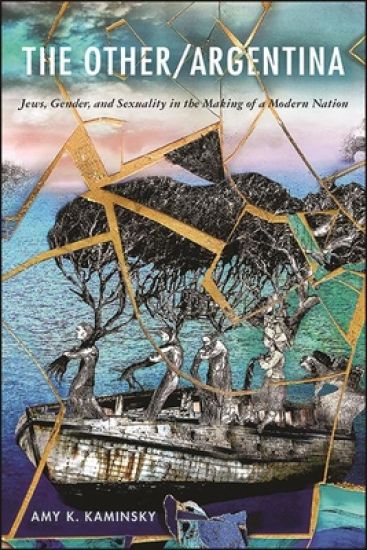
Argues that Jewishness is an essential element of Argentina's self-fashioning as a modern nation.The Other/Argentina looks at literature, film, and the visual arts to examine the threads of Jewishness that create patterns of meaning within the fabric of Argentine self-representation. A multiethnic yet deeply Roman Catholic country, Argentina has worked mightily to fashion itself as a modern nation. In so doing, it has grappled with the paradox of Jewishness, emblematic both of modernity and of the lingering traces of the premodern. By the same token, Jewishness is woven into, but also other to, Argentineity. Consequently, books, movies, and art that reflect on Jewishness play a significant role in shaping Argentina's cultural landscape. In the process they necessarily inscribe, and sometimes confound, norms of gender and sexuality.Just as Jewishness seeps into Argentina, Argentina's history, politics, and culture mark Jewishness and alter its meaning. The feminized body of the Jewish male, for example, is deeply rooted in Western tradition; but the stigmatized body of the Jewish prostitute and the lacerated body of the Jewish torture victim acquire particular significance in Argentina. Furthermore, Argentina's iconic Jewish figures include not only the peddler and the scholar, but also the Jewish gaucho and the urban mobster, troubling conventional readings of Jewish masculinity.As it searches for threads of Jewishness, richly imbued with the complexities of gender and sexuality, The Other/Argentina explores the patterns those threads weave, however overtly or subtly, into the fabric of Argentine national meaning, especially at such critical moments in Argentine history as the period of massive state-sponsored immigration, the rise of labor and anarchist movements, the Perón era, and the 1976–83 dictatorship. In arguing that Jewishness is an essential element of Argentina's self-fashioning as a modern nation, the book shifts the focus in Latin American Jewish studies from Jewish identity to the meaning of Jewishness for the nation.This book is freely available in an open access edition thanks to the National Endowment for the Humanities Fellowships Open Book Program-a limited competition designed to make outstanding humanities books available to a wide audience. Learn more at the Fellowships Open Book Program website at: https://www.neh.gov/grants/odh/FOBP, and access the book online at the SUNY Open Access Repository at http://hdl.handle.net/20.500.12648/1711.
The Other/Argentina

The Other/Argentina

Amy K. Kaminsky

State University of New York Press
2021
sidottu
Argues that Jewishness is an essential element of Argentina's self-fashioning as a modern nation.The Other/Argentina looks at literature, film, and the visual arts to examine the threads of Jewishness that create patterns of meaning within the fabric of Argentine self-representation. A multiethnic yet deeply Roman Catholic country, Argentina has worked mightily to fashion itself as a modern nation. In so doing, it has grappled with the paradox of Jewishness, emblematic both of modernity and of the lingering traces of the premodern. By the same token, Jewishness is woven into, but also other to, Argentineity. Consequently, books, movies, and art that reflect on Jewishness play a significant role in shaping Argentina's cultural landscape. In the process they necessarily inscribe, and sometimes confound, norms of gender and sexuality.Just as Jewishness seeps into Argentina, Argentina's history, politics, and culture mark Jewishness and alter its meaning. The feminized body of the Jewish male, for example, is deeply rooted in Western tradition; but the stigmatized body of the Jewish prostitute and the lacerated body of the Jewish torture victim acquire particular significance in Argentina. Furthermore, Argentina's iconic Jewish figures include not only the peddler and the scholar, but also the Jewish gaucho and the urban mobster, troubling conventional readings of Jewish masculinity.As it searches for threads of Jewishness, richly imbued with the complexities of gender and sexuality, The Other/Argentina explores the patterns those threads weave, however overtly or subtly, into the fabric of Argentine national meaning, especially at such critical moments in Argentine history as the period of massive state-sponsored immigration, the rise of labor and anarchist movements, the Perón era, and the 1976–83 dictatorship. In arguing that Jewishness is an essential element of Argentina's self-fashioning as a modern nation, the book shifts the focus in Latin American Jewish studies from Jewish identity to the meaning of Jewishness for the nation.This book is freely available in an open access edition thanks to the National Endowment for the Humanities Fellowships Open Book Program-a limited competition designed to make outstanding humanities books available to a wide audience. Learn more at the Fellowships Open Book Program website at: https://www.neh.gov/grants/odh/FOBP, and access the book online at the SUNY Open Access Repository at http://hdl.handle.net/20.500.12648/1711.

Argentina

Argentina

Amy K. Kaminsky

University of Minnesota Press
2008
nidottu
By the end of the twentieth century, Argentina’s complex identity-tango and chimichurri, Eva Perón and the Mothers of the Plaza de Mayo, the Falklands and the Dirty War, Jorge Luis Borges and Maradona, economic chaos and a memory of vast wealth-has become entrenched in the consciousness of the Western world. In this wide-ranging and at times poetic new work, Amy K. Kaminsky explores Argentina’s unique national identity and the place it holds in the minds of those who live beyond its physical borders. To analyze the country’s meaning in the global imagination, Kaminsky probes Argentina’s presence in a broad range of literary texts from the United States, Poland, England, Western Europe, and Argentina itself, as well as internationally produced films, advertisements, and newspaper features. Kaminsky’s examination reveals how Europe consumes an image of Argentina that acts as a pivot between the exotic and the familiar. Going beyond the idea of suffocating Eurocentrism as a theory of national identity, Kaminsky presents an original and vivid reading of national myths and realities that encapsulates the interplay among the many meanings of “Argentina” and its place in the world’s imagination. Amy Kaminsky is professor of gender, women, and sexuality studies and global studies at the University of Minnesota and author of After Exile (Minnesota, 1999).