Kirjojen hintavertailu. Mukana 12 390 323 kirjaa ja 12 kauppaa.

Kirjailija

Amy Kind

Kirjat ja teokset yhdessä paikassa: 9 kirjaa, julkaisuja vuosilta 2015-2024, suosituimpien joukossa What is Consciousness?. Vertaile teosten hintoja ja tarkista saatavuus suomalaisista kirjakaupoista.

9 kirjaa

Kirjojen julkaisuhaarukka 2015-2024.

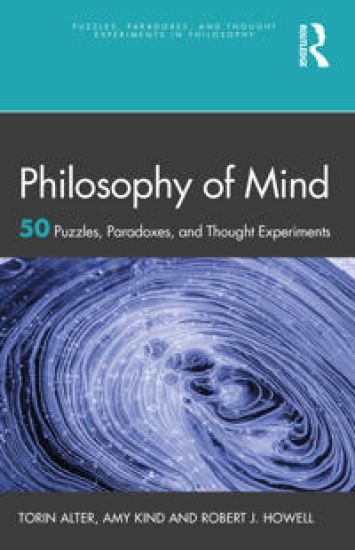
Philosophy of Mind

Philosophy of Mind

Torin Alter; Amy Kind; Robert J. Howell

TAYLOR FRANCIS LTD
2024
nidottu
Imaginative cases, or what might be called puzzles and other thought experiments, play a central role in philosophy of mind. The real world also furnishes philosophers with an ample supply of such puzzles.This volume collects 50 of the most important historical and contemporary cases in philosophy of mind and describes their significance. The authors divide them into five sections: consciousness and dualism; physicalist theories and the metaphysics of mind; content, intentionality, and representation; perception, imagination, and attention; and persons, personal identity, and the self. Each chapter provides background, describes a central case or cases, discusses the relevant literature, and suggests further readings. Philosophy of Mind: 50 Puzzles, Paradoxes, and Thought Experiments promises to be a useful teaching tool as well as a handy resource for anyone interested in the area.Key Features:Offers stand-alone chapters, each presented in an identical format:BackgroundThe CaseDiscussionRecommended Reading Each chapter is self-contained, allowing students to quickly understand an issue and giving instructors flexibility in assigning readings to match the themes of the course.Additional pedagogical features include a general volume introduction as well as smaller introductions to each of the five sections and a glossary at the end of the book.
Philosophy of Mind

Philosophy of Mind

Torin Alter; Amy Kind; Robert J. Howell

TAYLOR FRANCIS LTD
2024
sidottu
Imaginative cases, or what might be called puzzles and other thought experiments, play a central role in philosophy of mind. The real world also furnishes philosophers with an ample supply of such puzzles.This volume collects 50 of the most important historical and contemporary cases in philosophy of mind and describes their significance. The authors divide them into five sections: consciousness and dualism; physicalist theories and the metaphysics of mind; content, intentionality, and representation; perception, imagination, and attention; and persons, personal identity, and the self. Each chapter provides background, describes a central case or cases, discusses the relevant literature, and suggests further readings. Philosophy of Mind: 50 Puzzles, Paradoxes, and Thought Experiments promises to be a useful teaching tool as well as a handy resource for anyone interested in the area.Key Features:Offers stand-alone chapters, each presented in an identical format:BackgroundThe CaseDiscussionRecommended Reading Each chapter is self-contained, allowing students to quickly understand an issue and giving instructors flexibility in assigning readings to match the themes of the course.Additional pedagogical features include a general volume introduction as well as smaller introductions to each of the five sections and a glossary at the end of the book.
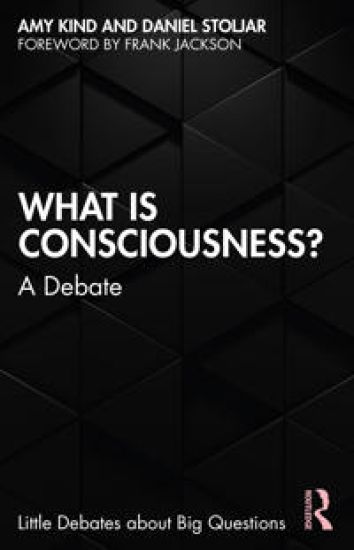
What is Consciousness?

What is Consciousness?

Amy Kind; Daniel Stoljar

TAYLOR FRANCIS LTD
2023
nidottu
What is consciousness and why is it so philosophically and scientifically puzzling? For many years philosophers approached this question assuming a standard physicalist framework on which consciousness can be explained by contemporary physics, biology, neuroscience, and cognitive science. This book is a debate between two philosophers who are united in their rejection of this kind of "standard" physicalism - but who differ sharply in what lesson to draw from this. Amy Kind defends dualism 2.0, a thoroughly modern version of dualism (the theory that there are two fundamentally different kinds of things in the world: those that are physical and those that are mental) decoupled from any religious or non-scientific connotations. Daniel Stoljar defends non-standard physicalism, a kind of physicalism different from both the standard version and dualism 2.0. The book presents a cutting-edge assessment of the philosophy of consciousness and provides a glimpse at what the future study of this area might bring.Key FeaturesOutlines the different things people mean by "consciousness" and provides an account of what consciousness isReviews the key arguments for thinking that consciousness is incompatible with physicalismExplores and provides a defense of contrasting responses to those arguments, with a special focus on responses that reject the standard physicalist frameworkProvides an account of the basic aims of the science of consciousnessWritten in a lively and accessibly styleIncludes a comprehensive glossary
What is Consciousness?

What is Consciousness?

Amy Kind; Daniel Stoljar

TAYLOR FRANCIS LTD
2023
sidottu
What is consciousness and why is it so philosophically and scientifically puzzling? For many years philosophers approached this question assuming a standard physicalist framework on which consciousness can be explained by contemporary physics, biology, neuroscience, and cognitive science. This book is a debate between two philosophers who are united in their rejection of this kind of "standard" physicalism - but who differ sharply in what lesson to draw from this. Amy Kind defends dualism 2.0, a thoroughly modern version of dualism (the theory that there are two fundamentally different kinds of things in the world: those that are physical and those that are mental) decoupled from any religious or non-scientific connotations. Daniel Stoljar defends non-standard physicalism, a kind of physicalism different from both the standard version and dualism 2.0. The book presents a cutting-edge assessment of the philosophy of consciousness and provides a glimpse at what the future study of this area might bring.Key FeaturesOutlines the different things people mean by "consciousness" and provides an account of what consciousness isReviews the key arguments for thinking that consciousness is incompatible with physicalismExplores and provides a defense of contrasting responses to those arguments, with a special focus on responses that reject the standard physicalist frameworkProvides an account of the basic aims of the science of consciousnessWritten in a lively and accessibly styleIncludes a comprehensive glossary
Imagination and Creative Thinking

Imagination and Creative Thinking

Amy Kind

Cambridge University Press
2022
pokkari
This Element explores the nature of both imagination and creative thinking in an effort to understand the relation between them and also to understand their role in the vast array of activities in which they are typically implicated, from art, music, and literature to technology, medicine, and science. Focusing on the contemporary philosophical literature, it will take up several interrelated questions: What is imagination, and how does it fit into the cognitive architecture of the mind? What is creativity? Is imagination required for creativity? Is creativity required for imagination? Is a person simply born either imaginative or not (and likewise, either creative or not), or are imagination and creativity skills that can be cultivated? And finally, are imagination and creativity uniquely human capacities, or can they be had by nonbiological entities such as AI systems?
Philosophy of Mind: The Basics
Philosophy of Mind: The Basics is a concise and engaging introduction to the fundamental philosophical questions and theories about the mind. The author Amy Kind, a leading expert in the field, examines central issues concerning the nature of consciousness, thought, and emotion. The book addresses key questions such as: What is the nature of the mind? What is the relationship between the mind and the brain? Can machines have minds?How will future technology impact the mind?With a glossary of key terms and suggestions for further reading, Philosophy of Mind: The Basics is an ideal starting point for anyone seeking a lively and accessible introduction to the rich and complex study of philosophy of mind.
Philosophy of Mind: The Basics
Philosophy of Mind: The Basics is a concise and engaging introduction to the fundamental philosophical questions and theories about the mind. The author Amy Kind, a leading expert in the field, examines central issues concerning the nature of consciousness, thought, and emotion. The book addresses key questions such as: What is the nature of the mind? What is the relationship between the mind and the brain? Can machines have minds?How will future technology impact the mind?With a glossary of key terms and suggestions for further reading, Philosophy of Mind: The Basics is an ideal starting point for anyone seeking a lively and accessible introduction to the rich and complex study of philosophy of mind.
Persons and Personal Identity

Persons and Personal Identity

Amy Kind

Polity Press
2015
sidottu
As persons, we are importantly different from all other creatures in the universe. But in what, exactly, does this difference consist? What kinds of entities are we, and what makes each of us the same person today that we were yesterday? Could we survive having all of our memories erased and replaced with false ones? What about if our bodies were destroyed and our brains were transplanted into android bodies, or if instead our minds were simply uploaded to computers? In this engaging and accessible introduction to these important philosophical questions, Amy Kind brings together three different areas of research: the nature of personhood, theories of personal identity over time, and the constitution of self-identity. Surveying the key contemporary theories in the philosophical literature, Kind analyzes and assesses their strengths and weaknesses. As she shows, our intuitions on these issues often pull us in different directions, making it difficult to develop an adequate general theory. Throughout her discussion, Kind seamlessly interweaves a vast array of up-to-date examples drawn from both real life and popular fiction, all of which greatly help to elucidate this central topic in metaphysics. A perfect text for readers coming to these issues for the first time, Persons and Personal Identity engages with some of the deepest and most important questions about human nature and our place in the world, making it a vital resource for students and researchers alike.
Persons and Personal Identity

Persons and Personal Identity

Amy Kind

Polity Press
2015
nidottu
As persons, we are importantly different from all other creatures in the universe. But in what, exactly, does this difference consist? What kinds of entities are we, and what makes each of us the same person today that we were yesterday? Could we survive having all of our memories erased and replaced with false ones? What about if our bodies were destroyed and our brains were transplanted into android bodies, or if instead our minds were simply uploaded to computers? In this engaging and accessible introduction to these important philosophical questions, Amy Kind brings together three different areas of research: the nature of personhood, theories of personal identity over time, and the constitution of self-identity. Surveying the key contemporary theories in the philosophical literature, Kind analyzes and assesses their strengths and weaknesses. As she shows, our intuitions on these issues often pull us in different directions, making it difficult to develop an adequate general theory. Throughout her discussion, Kind seamlessly interweaves a vast array of up-to-date examples drawn from both real life and popular fiction, all of which greatly help to elucidate this central topic in metaphysics. A perfect text for readers coming to these issues for the first time, Persons and Personal Identity engages with some of the deepest and most important questions about human nature and our place in the world, making it a vital resource for students and researchers alike.