Kirjojen hintavertailu. Mukana 12 390 323 kirjaa ja 12 kauppaa.

Kirjailija

Amy M. King

Kirjat ja teokset yhdessä paikassa: 4 kirjaa, julkaisuja vuosilta 2003-2021, suosituimpien joukossa The Divine in the Commonplace. Vertaile teosten hintoja ja tarkista saatavuus suomalaisista kirjakaupoista.

4 kirjaa

Kirjojen julkaisuhaarukka 2003-2021.

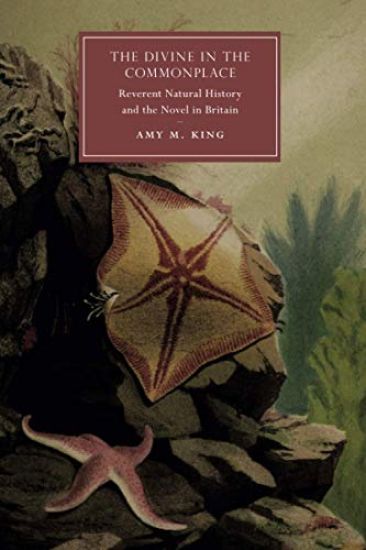
The Divine in the Commonplace

The Divine in the Commonplace

Amy M. King

Cambridge University Press
2021
pokkari
Realism has long been associated with the secular, but in early nineteenth-century England a realist genre existed that was highly theological: popular natural histories informed by natural theology. The Divine in the Commonplace explores the 'reverent empiricism' of English natural history and how it conceives observation and description as a kind of devotion or act of reverence. Focusing on the texts of popular natural historians, especially seashore naturalists, Amy M. King puts these in conversation with English provincial realist novelists including Austen, Gaskell, Eliot, and Trollope. She argues that the English provincial novel has a 'reverent form' as a result of its connection to the practices and representational strategies of natural history writing in this period, which was literary, empirical, and reverent. This book will appeal to students and scholars of nineteenth-century literature, science historians, and those interested in interdisciplinary connections between pre-Darwinian natural history, religion, and literature.
The Divine in the Commonplace

The Divine in the Commonplace

Amy M. King

Cambridge University Press
2019
sidottu
Realism has long been associated with the secular, but in early nineteenth-century England a realist genre existed that was highly theological: popular natural histories informed by natural theology. The Divine in the Commonplace explores the 'reverent empiricism' of English natural history and how it conceives observation and description as a kind of devotion or act of reverence. Focusing on the texts of popular natural historians, especially seashore naturalists, Amy M. King puts these in conversation with English provincial realist novelists including Austen, Gaskell, Eliot, and Trollope. She argues that the English provincial novel has a 'reverent form' as a result of its connection to the practices and representational strategies of natural history writing in this period, which was literary, empirical, and reverent. This book will appeal to students and scholars of nineteenth-century literature, science historians, and those interested in interdisciplinary connections between pre-Darwinian natural history, religion, and literature.
Bloom

Bloom

Amy M. King

Oxford University Press Inc
2007
nidottu
Starting from the botanical craze inspired by Linnaeus in the eighteenth century, and exploring the variations it spawned - natural history, landscape architecture, polemical battles over botany's prurience - this study offers a fresh, detailed reading of the courtship novel from Jane Austen to George Eliot and Henry James. By reanimating a cultural understanding of botany and sexuality that we have lost, it provides an entirely new and powerful account of the novel's role in scripting sexualised courtship, and illuminates how the novel and popular science together created a cultural figure, the blooming girl, that stood at the centre of both fictional and scientific worlds.
Bloom

Bloom

Amy M. King

Oxford University Press Inc
2003
sidottu
Starting from the botanical crazes inspired by Linnaeus in the eighteenth century, and exploring the variations it spawned - natural history, landscape architecture, polemical battles over botany's prurience - this study offers a fresh, detailed reading of the courtship novel from Jane Austen to George Eliot and Henry James. By reanimating a cultural understanding of botany and sexuality that we have lost, it provides an entirely new and powerful account of the novel's role in scripting sexualized courtship, and illuminates how the novel and popular science together created a cultural figure, the blooming girl, that stood at the center of both fictional and scientific worlds.