Kirjojen hintavertailu. Mukana 12 390 323 kirjaa ja 12 kauppaa.

Kirjailija

Anaïs Nin

Kirjat ja teokset yhdessä paikassa: 58 kirjaa, julkaisuja vuosilta 1959-2023, suosituimpien joukossa A Literate Passion: Letters of Anaïs Nin & Henry Miller, 1932-1953. Vertaile teosten hintoja ja tarkista saatavuus suomalaisista kirjakaupoista.

Mukana myös kirjoitusasut: Anais Nin

58 kirjaa

Kirjojen julkaisuhaarukka 1959-2023.

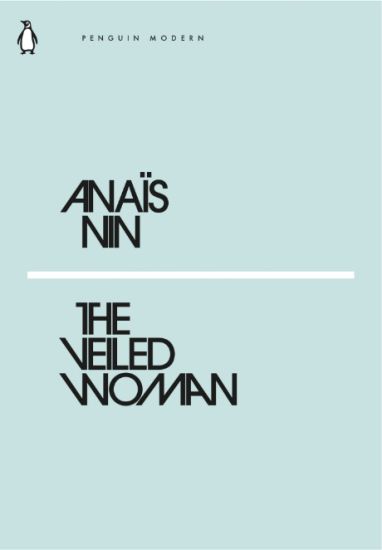
The Veiled Woman

The Veiled Woman

Anaïs Nin

Penguin Classics
2018
nidottu
'What did she expect of him? What was her quest? Did she have an unfulfilled desire?'Transgressive desires and sexual encounters are recounted in these four pieces from one of the greatest writers of erotic fiction.Penguin Modern: fifty new books celebrating the pioneering spirit of the iconic Penguin Modern Classics series, with each one offering a concentrated hit of its contemporary, international flavour. Here are authors ranging from Kathy Acker to James Baldwin, Truman Capote to Stanislaw Lem and George Orwell to Shirley Jackson; essays radical and inspiring; poems moving and disturbing; stories surreal and fabulous; taking us from the deep South to modern Japan, New York's underground scene to the farthest reaches of outer space.
Waste of Timelessness and Other Early Stories
Written when Anaïs Nin was in her twenties and living in France, the stories collected in Waste of Timelessness contain many elements familiar to those who know her later work as well as revelatory, early clues to themes developed in those more mature stories and novels. Seeded with details remembered from childhood and from life in Paris, the wistful tales portray artists, writers, strangers who meet in the night, and above all, women and their desires. These experimental and deeply introspective missives lay out a central theme of Nin's writing: the contrast between the public and private self. The stories are taut with unrealized sexual tension and articulate the ways that language and art can shape reality. Nin's deft humor, ironic wit, and ecstatic prose display not only superb craftsmanship but also the author's own constant balancing act between feeling and rationality, vulnerability and strength. Perhaps more than any other writer of the twentieth century, she mastered that act and wrote about it on her own terms, defying the literary and social norms of the time.
Trapeze

Trapeze

Anaïs Nin

Swallow Press
2017
sidottu
Anaïs Nin made her reputation through publication of her edited diaries and the carefully constructed persona they presented. It was not until decades later, when the diaries were published in their unexpurgated form, that the world began to learn the full details of Nin’s fascinating life and the emotional and literary high-wire acts she committed both in documenting it and in defying the mores of 1950s America. Trapeze begins where the previous volume, Mirages, left off: when Nin met Rupert Pole, the young man who became not only her lover but later her husband in a bigamous marriage. It marks the start of what Nin came to call her “trapeze life,” swinging between her longtime husband, Hugh Guiler, in New York and her lover, Pole, in California, a perilous lifestyle she continued until her death in 1977. Today what Nin did seems impossible, and what she sought perhaps was impossible: to find harmony and completeness within a split existence. It is a story of daring and genius, love and pain, largely unknown until now.
Winter of Artifice

Winter of Artifice

Anaïs Nin

Swallow Press
2016
pokkari
Swallow Press first published Winter of Artifice in 1945, following two vastly different versions from other presses. The book opens with a film star, Stella, studying her own, but alien, image on the screen. It ends in the Manhattan office of a psychoanalyst—the Voice—who, as he counsels patients suffering from the maladies of modern life, reveals himself as equally susceptible to them. The middle, title story explores one of Nin's most controversial themes, that of a woman's sexual relationship with her father. Elliptical, fragmented prose; unconventional structure; surrealistic psychic landscapes—Nin forged these elements into a style that engaged with the artistic concerns of her time but still registers as strikingly contemporary. This reissue, accompanied by a new introduction by Laura Frost and the original engravings by Nin's husband Ian Hugo, presents an important opportunity to consider anew the work of an author who laid the groundwork for later writers. Swallow Press's Winter of Artifice represents a literary artist coming into her own, with the formal experimentation, thematic daring, and psychological intrigue that became her hallmarks.
Mirages

Mirages

Anaïs Nin

Swallow Press
2015
pokkari
Mirages opens at the dawn of World War II, when Anaïs Nin fled Paris, where she lived for fifteen years with her husband, banker Hugh Guiler, and ends in 1947 when she meets the man who would be “the One,” the lover who would satisfy her insatiable hunger for connection. In the middle looms a period Nin describes as “hell,” during which she experiences a kind of erotic madness, a delirium that fuels her search for love. As a child suffering abandonment by her father, Anaïs wrote, “Close your eyes to the ugly things,” and, against a horrifying backdrop of war and death, Nin combats the world’s darkness with her own search for light. Mirages collects, for the first time, the story that was cut from all of Nin’s other published diaries, particularly volumes 3 and 4 of The Diary of Anaïs Nin, which cover the same time period. It is the long-awaited successor to the previous unexpurgated diaries Henry and June, Incest, Fire, and Nearer the Moon. Mirages answers the questions Nin readers have been asking for decades: What led to the demise of Nin’s love affair with Henry Miller? Just how troubled was her marriage to Hugh Guiler? What is the story behind Nin’s “children,” the effeminate young men she seemed to collect at will? Mirages is a deeply personal story of heartbreak, despair, desperation, carnage, and deep mourning, but it is also one of courage, persistence, evolution, and redemption that reaches beyond the personal to the universal.
Ladders to Fire

Ladders to Fire

Anaïs Nin

Swallow Press
2014
pokkari
Anaïs Nin’s Ladders to Fire interweaves the stories of several women, each emotionally inhibited in her own way: through self-doubt, fear, guilt, moral drift, and distrust. The novel follows their inner struggles to overcome these barriers to happiness and wholeness. The author’s own experiences, as recorded in her famous diaries, supplied the raw material for her fiction. It was her intuitive, experimental, and always original style that transformed one into the other. Nin herself memorably claimed that “it was the fiction writer who edited the diary.” Ladders to Fire is the first book of Nin’s continuous novel, Cities of the Interior, which also includes Children of the Albatross, The Four-Chambered Heart, A Spy in the House of Love, and Seduction of the Minotaur. These loosely interlinked stories develop the characters and themes established in the first volume, leading slowly toward a resolution of inner turmoil and conflict. This Swallow Press reissue of Ladders to Fire includes a new introduction by Nin scholar Benjamin Franklin V, as well as Gunther Stuhlmann’s classic foreword to the 1995 edition.
Seduction of the Minotaur

Seduction of the Minotaur

Anaïs Nin

Swallow Press
2014
pokkari
"Some voyages have their inception in the blueprint of a dream, some in the urgency of contradicting a dream. Lillian's recurrent dream of a ship that could not reach the water, that sailed laboriously, pushed by her with great effort, through city streets, had determined her course toward the sea, as if she would give this ship, once and for all, its proper sea bed…. With her first swallow of air she inhaled a drug of forgetfulness well known to adventurers." Seduction of the Minotaur is the fifth and final volume of Anaïs Nin's continuous novel known as Cities of the Interior. First published by Swallow Press in 1961, the story follows the travels of the protagonist Lillian through the tropics to a Mexican city loosely based on Acapulco, which Nin herself visited in 1947 and described in the fifth volume of her Diary. As Lillian seeks the warmth and sensuality of this lush and intriguing city, she travels inward as well, learning that to free herself she must free the "monster" that has been confined in a labyrinth of her subconscious. This new Swallow Press edition includes an introduction by Anita Jarczok, author of Inventing Anaïs Nin: Celebrity Authorship and the Creation of an Icon. Swallow Press publishes all five volumes that make up Cities of the Interior: Ladders to Fire, Children of the Albatross, The Four-Chambered Heart, A Spy in the House of Love, and Seduction of the Minotaur.
The Novel of the Future

The Novel of the Future

Anaïs Nin

Swallow Press
2014
pokkari
In The Novel of the Future, Anaïs Nin explores the act of creation—in film, art, and dance as well as literature—to chart a new direction for the young artist struggling against what she perceived as the sterility, formlessness, and spiritual bankruptcy afflicting much of mid-twentieth-century fiction. Nin offers, instead, an argument for and synthesis of the poetic novel and discusses her own efforts in this genre as well as its influence on the development of such writers as D. H. Lawrence, Henry Miller, Lawrence Durrell, Marguerite Young, and Djuna Barnes. In chapters devoted to the pursuit of the hidden self, the genesis of fiction, and the relationship between the diary and fiction, she addresses the materials, techniques, and nourishment of the arts, and the functions of art itself. Originally published in 1968, The Novel of the Future remains a classic among both creative writers and literary scholars. This new Swallow Press edition includes an introduction by Nin biographer Deirdre Bair.
A Spy in the House of Love

A Spy in the House of Love

Anaïs Nin

Swallow Press
2013
pokkari
Although Anaïs Nin found in her diaries a profound mode of self-creation and confession, she could not reveal this intimate record of her own experiences during her lifetime. Instead, she turned to fiction, where her stories and novels became artistic “distillations” of her secret diaries. A Spy in the House of Love, whose heroine Sabina is deeply divided between her drive for artistic and sexual expression and social restrictions and self-created inhibitions, echoes Nin’s personal struggle with sex, love, and emotional fragmentation. Written when Nin’s own life was taut with conflicting loyalties, her protagonist Sabina repeatedly asks herself, can one idulge one’s sensual restlessness, the fantasies, the relentless need for adventure without devastating consequences?
Under a Glass Bell

Under a Glass Bell

Anaïs Nin

Swallow Press
2013
pokkari
Although Under a Glass Bell is now considered one of Anaïs Nin's finest collections of stories, it was initially deemed unpublishable. Refusing to give up on her vision, in 1944 Nin founded her own press and brought out the first edition, illustrated with striking black-and-white engravings by her husband, Hugh Guiler. Shortly thereafter, it caught the attention of literary critic Edmund Wilson, who reviewed the collection in the New Yorker. The first printing sold out in three weeks. This new Swallow Press edition includes an introduction by noted modernist scholar Elizabeth Podnieks, as well as editor Gunther Stuhlmann's erudite but controversial foreword to the 1995 edition. Together, they place the collection in its historical context and sort out the individuals and events recorded in the diary that served as its inspiration. The new Swallow Press edition also restores the thirteen stories to the order Nin specified for the first commercial edition in 1948.
Nächte unterm Venusmond

Nächte unterm Venusmond

Anaïs Nin

S. Fischer Verlag
2005
pokkari
Endlich veröffentlicht: das vierte Tagebuch der Ana?s Nin. Ihre Tagebücher waren ihre engsten Vertrauten. Ihnen offenbarte sie ihre Sehnsüchte und intimsten Geheimnisse. Das vierte Tagebuch umfasst die Jahre 1937 bis 1939 und dokumentiert das unruhige, dabei kompromisslose Leben der Nin während dieser Zeit - mit drei Männern an ihrer Seite.
Trunken vor Liebe

Trunken vor Liebe

Anaïs Nin

S. Fischer Verlag
2005
pokkari
Trotz ihrer Ehe und der leidenschaftlichen Beziehung zu Henry Miller war Ana?s Nin unablässig auf der Suche nach der perfekten Liebe, die sie ihr Leben lang treiben sollte. In ihren "Intimen Geständnissen" enthüllt sich uns eine Frau, die ihre sexuellen Wünsche und Träume mit derselben "schamlosen, amoralischen" Hingabe auslebte, die Männer schon immer für sich beansprucht haben. 359616405-2 LangtextEin Maler, der seine Frau nur in seinen Werken begehren kann, zwei Fremde am Strand, die im Meer zueinander finden - sensibel und unverhüllt beschreiben die Geschichten der Ana?s Nin die ganze Welt der Erotik und der Liebe. Bei aller Direktheit und Offenheit hat sie dabei vor allem ein Ziel: zu zeigen, dass Sex erst durch Gefühle zu wirklicher Erotik wird.
Das Delta der Venus

Das Delta der Venus

Anais Nin

FISCHER Taschenbuch
2005
pokkari
Ana?s Nin, die Schöpferin der weiblichen Sprache der Sexualität, gab "Das Delta der Venus" erst kurz vor ihrem Tod frei - 35 Jahre, nachdem sie diese ungemein direkten Schilderungen geschrieben hatte. Die fünfzehn erotischen Episoden stellen in der Tat das meiste in den Schatten, was wir an erotischer Literatur aus der Feder einer Frau kennen.
Little Birds

Little Birds

Anaïs Nin

Mariner Books Classics
2004
nidottu
Evocative and superbly erotic, Little Birds is a powerful journey into the mysterious world of sex and sensuality. From the beach towns of Normandy to the streets of New Orleans, these thirteen vignettes introduce us to a covetous French painter, a sleepless wanderer of the night, a guitar-playing gypsy, and a host of others who yearn for and dive into the turbulent depths of romantic experience.
Delta of Venus

Delta of Venus

Anaïs Nin

Mariner Books Classics
2004
nidottu
From influential feminist artist and essayist Anais Nin, Delta of Venus is one of the most important works of modern female erotica and "a joyous display of the erotic imagination" (The New York Times Book Review).In this story collection, Anais Nin pens a lush, magical world where the characters of her imagination possess the most universal of desires and exceptional of talents. Among these provocative stories, a Hungarian adventurer seduces wealthy women then vanishes with their money; a veiled woman selects strangers from a chic restaurant for private trysts; and a Parisian hatmaker named Mathilde leaves her husband for the opium dens of Peru. This is an extraordinarily rich and exotic collection from a master of erotic writing."Inventive, sophisticated . . . highly elegant naughtiness."--Cosmopolitan
Little Birds

Little Birds

Anaïs Nin

Penguin Classics
2002
pokkari
Anaïs Nin's Little Birds is published in Penguin Modern Classics.Anaïs Nin's second volume of erotic short stories after Delta of Venus, Little Birds is broader in scope, encompassing the entire breadth of human sensuality. Each of the 13 stories captures a moment of pure desire, in all its complexity and paradoxical simplicity.Anaïs Nin (1903-77), born in Paris, was the daughter of a Franco-Danish singer and a Cuban pianist. Her first book - a defence of D. H. Lawrence - was published in the 1930s. Her prose poem, House of Incest (1936) was followed by the collection of three novellas, collected as Winter of Artifice (1939). In the 1940s she began to write erotica for an anonymous client, and these pieces are collected in Delta of Venus and Little Birds (both published posthumously). During her later years Anaïs Nin lectured frequently at universities throughout the USA, in 1974 and was elected to the United States National Institute of Arts and Letters.If you enjoyed Little Birds, you might like Nin's Delta of Venus, also available in Penguin Modern Classics.'One of the most extraordinary and unconventional writers of this century'The New York Times Book Review
Henry and June

Henry and June

Anaïs Nin

Penguin Classics
2001
pokkari
The brilliant tale of Anais Nin's true love affair with Henry Miller, and her ambiguous, charged relationship with his wife, June. Drawn from the journals of a single momentous year in Paris, Henry and June provides a wildly lyrical account of a woman's sexual awakening and the disillusion of idealized marriage.