Kirjojen hintavertailu. Mukana 12 595 353 kirjaa ja 12 kauppaa.

Kirjailija

Anand Pandian

Kirjat ja teokset yhdessä paikassa: 9 kirjaa, julkaisuja vuosilta 2009-2025, suosituimpien joukossa A Possible Anthropology. Vertaile teosten hintoja ja tarkista saatavuus suomalaisista kirjakaupoista.

9 kirjaa

Kirjojen julkaisuhaarukka 2009-2025.

Something Between Us

Something Between Us

Anand Pandian

STANFORD UNIVERSITY PRESS
2025
sidottu
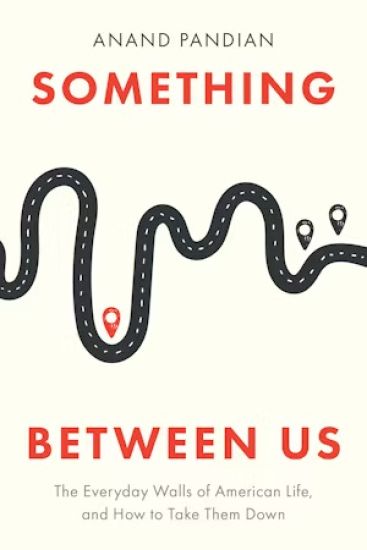
An anthropologist's quest to understand the deep social and political divides in American society, and the everyday strategies that can overcome them. In 2016, Anand Pandian was alarmed by Donald Trump's harsh attacks on immigrants to the United States, the appeal of that politics of anger and fear. In the years that followed, he crisscrossed the country—from Fargo, North Dakota to Denton, Texas, from southern California to upstate New York—seeking out fellow Americans with markedly different social and political commitments, trying to understand the forces that have hardened our suspicions of others. The result is Something Between Us: The Everyday Walls of American Life, and How to Take Them Down, a groundbreaking and ultimately hopeful exploration of the ruptures in our social fabric, and courageous efforts to rebuild a collective life beyond them. The stakes of disconnection have never been higher. From the plight of migrants and refugees to the climate crisis and the recent pandemic, so much turns on the care and concern we can muster for lives and circumstances beyond our own. But as Pandian discovers, such empathy is often thwarted by the infrastructure of everyday American life: fortified homes and neighborhoods, bulked-up cars and trucks, visions of the body as an armored fortress, and media that shut out contrary views. Home and road, body and mind: these interlocking walls sharpen the divide between insiders and outsiders, making it difficult to take unfamiliar people and perspectives seriously, to acknowledge the needs of others and relate to their struggles. Through vivid encounters with Americans of many kinds—including salesmen, truck drivers, police officers, urban planners, and activists for women's rights and environmental justice—Pandian shares tools to think beyond the twists and turns of our bracing present. While our impasses draw from deep American histories of isolation and segregation, he reveals how strategies of mutual aid and communal caretaking can help to surface more radical visions for a life in common with others, ways of meeting strangers in this land as potential kin.
A Possible Anthropology

A Possible Anthropology

Anand Pandian

Duke University Press
2019
sidottu
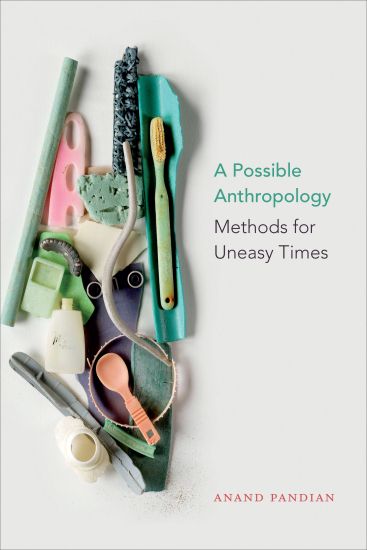
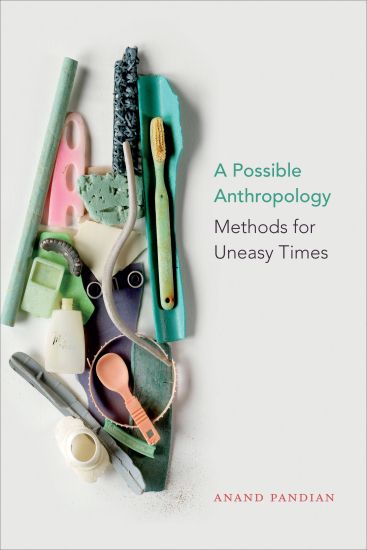
In a time of intense uncertainty, social strife, and ecological upheaval, what does it take to envision the world as it yet may be? The field of anthropology, Anand Pandian argues, has resources essential for this critical and imaginative task. Anthropology is no stranger to injustice and exploitation. Still, its methods can reveal unseen dimensions of the world at hand and radical experience as the seed of a humanity yet to come. A Possible Anthropology is an ethnography of anthropologists at work: canonical figures like Bronislaw Malinowski and Claude Lévi-Strauss, ethnographic storytellers like Zora Neale Hurston and Ursula K. Le Guin, contemporary scholars like Jane Guyer and Michael Jackson, and artists and indigenous activists inspired by the field. In their company, Pandian explores the moral and political horizons of anthropological inquiry, the creative and transformative potential of an experimental practice.
A Possible Anthropology

A Possible Anthropology

Anand Pandian

Duke University Press
2019
pokkari
In a time of intense uncertainty, social strife, and ecological upheaval, what does it take to envision the world as it yet may be? The field of anthropology, Anand Pandian argues, has resources essential for this critical and imaginative task. Anthropology is no stranger to injustice and exploitation. Still, its methods can reveal unseen dimensions of the world at hand and radical experience as the seed of a humanity yet to come. A Possible Anthropology is an ethnography of anthropologists at work: canonical figures like Bronislaw Malinowski and Claude Lévi-Strauss, ethnographic storytellers like Zora Neale Hurston and Ursula K. Le Guin, contemporary scholars like Jane Guyer and Michael Jackson, and artists and indigenous activists inspired by the field. In their company, Pandian explores the moral and political horizons of anthropological inquiry, the creative and transformative potential of an experimental practice.
Reel World

Reel World

Anand Pandian; Walter Murch

Duke University Press
2015
pokkari
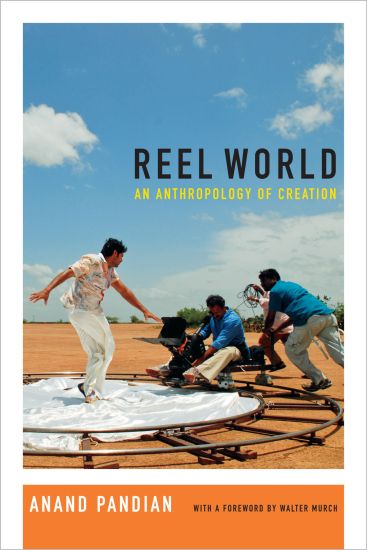
Reel World explores what happens to life when everything begins to look and feel like cinema. Drawing on years of fieldwork with Tamil filmmakers, artists, musicians, and craftsmen in the south Indian movie studios of "Kollywood," Anand Pandian examines how ordinary moments become elements of a cinematic world. With inventive, experimental, and sometimes comical zeal, Pandian pursues the sensory richness of cinematic experience and the adventure of a writing true to these sensations. Thinking with the visceral power of sound and image, his stories also broach deeply philosophical themes such as desire, time, wonder, and imagination. In a spirit devoted to the turbulence and uncertainty of genesis, Reel World brings into focus an ecology of creative process: the many forces, feelings, beings, and things that infuse human endeavors with transformative potential.
Reel World

Reel World

Anand Pandian; Walter Murch

Duke University Press
2015
sidottu
Reel World explores what happens to life when everything begins to look and feel like cinema. Drawing on years of fieldwork with Tamil filmmakers, artists, musicians, and craftsmen in the south Indian movie studios of "Kollywood," Anand Pandian examines how ordinary moments become elements of a cinematic world. With inventive, experimental, and sometimes comical zeal, Pandian pursues the sensory richness of cinematic experience and the adventure of a writing true to these sensations. Thinking with the visceral power of sound and image, his stories also broach deeply philosophical themes such as desire, time, wonder, and imagination. In a spirit devoted to the turbulence and uncertainty of genesis, Reel World brings into focus an ecology of creative process: the many forces, feelings, beings, and things that infuse human endeavors with transformative potential.
Ayya's Accounts

Ayya's Accounts

Anand Pandian; M. P. Mariappan; Veena Das

Indiana University Press
2014
pokkari
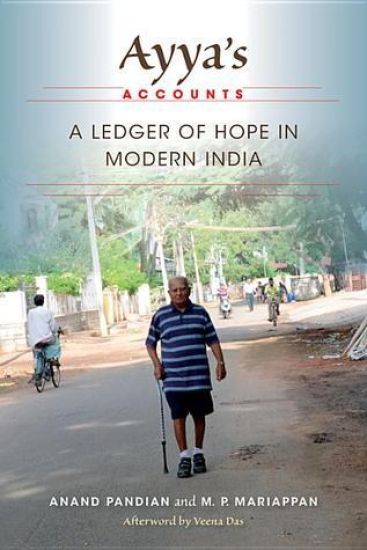
Ayya's Accounts explores the life of an ordinary man—orphan, refugee, shopkeeper, and grandfather—during a century of tremendous hope and upheaval. Born in colonial India into a despised caste of former tree climbers, Ayya lost his mother as a child and came of age in a small town in lowland Burma. Forced to flee at the outbreak of World War II, he made a treacherous 1,700-mile journey by foot, boat, bullock cart, and rail back to southern India. Becoming a successful fruit merchant, Ayya educated and eventually settled many of his descendants in the United States. Luck, nerve, subterfuge, and sorrow all have their place along the precarious route of his advancement. Emerging out of tales told to his American grandson, Ayya's Accounts embodies a simple faith—that the story of a place as large and complex as modern India can be told through the life of a single individual.
Ayya's Accounts

Ayya's Accounts

Anand Pandian; M. P. Mariappan; Veena Das

Indiana University Press
2014
sidottu
Ayya's Accounts explores the life of an ordinary man—orphan, refugee, shopkeeper, and grandfather—during a century of tremendous hope and upheaval. Born in colonial India into a despised caste of former tree climbers, Ayya lost his mother as a child and came of age in a small town in lowland Burma. Forced to flee at the outbreak of World War II, he made a treacherous 1,700-mile journey by foot, boat, bullock cart, and rail back to southern India. Becoming a successful fruit merchant, Ayya educated and eventually settled many of his descendants in the United States. Luck, nerve, subterfuge, and sorrow all have their place along the precarious route of his advancement. Emerging out of tales told to his American grandson, Ayya's Accounts embodies a simple faith—that the story of a place as large and complex as modern India can be told through the life of a single individual.
Crooked Stalks

Crooked Stalks

Anand Pandian

Duke University Press
2009
sidottu
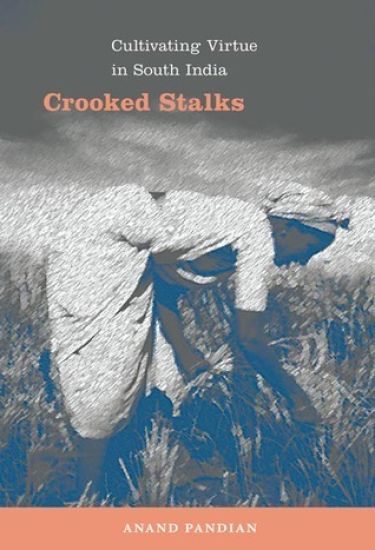
How do people come to live as they ought to live? Crooked Stalks seeks an answer to this enduring question in diverse practices of cultivation: in the moral horizons of development intervention, in the forms of virtue through which people may work upon their own desires, deeds, and habits, and in the material labors that turn inhabited worlds into environments for both moral and natural growth. Focusing on the colonial subjection and contemporary condition of the Piramalai Kallar caste-classified, condemned, and policed for decades as a “criminal tribe”-Anand Pandian argues that the work of cultivation in all of these senses has been essential to the pursuit of modernity in south India. Colonial engagements with the Kallars in the early twentieth century relied heavily upon agrarian strategies of moral reform, an approach that echoed longstanding imaginations of the rural cultivator as a morally cultivated being in Tamil literary, moral, and religious tradition. These intertwined histories profoundly shape how people of the community struggle with themselves as ethical subjects today.In vivid, inventive, and engaging prose, Pandian weaves together ethnographic encounters, archival investigations, and elements drawn from Tamil poetry, prose, and popular cinema. Tacking deftly between ploughed soils and plundered orchards, schoolroom lessons and stationhouse registers, household hearths and riverine dams, he reveals moral life in the postcolonial present as a palimpsest of traces inherited from multiple pasts. Pursuing these legacies through the fragmentary play of desire, dream, slander, and counsel, Pandian calls attention not only to the moral potential of ordinary existence, but also to the inescapable force of accident, chance, and failure in the making of ethical lives. Rarely are the moral coordinates of modern power sketched with such intimacy and delicacy.
Crooked Stalks

Crooked Stalks

Anand Pandian

Duke University Press
2009
pokkari
How do people come to live as they ought to live? Crooked Stalks seeks an answer to this enduring question in diverse practices of cultivation: in the moral horizons of development intervention, in the forms of virtue through which people may work upon their own desires, deeds, and habits, and in the material labors that turn inhabited worlds into environments for both moral and natural growth. Focusing on the colonial subjection and contemporary condition of the Piramalai Kallar caste-classified, condemned, and policed for decades as a “criminal tribe”-Anand Pandian argues that the work of cultivation in all of these senses has been essential to the pursuit of modernity in south India. Colonial engagements with the Kallars in the early twentieth century relied heavily upon agrarian strategies of moral reform, an approach that echoed longstanding imaginations of the rural cultivator as a morally cultivated being in Tamil literary, moral, and religious tradition. These intertwined histories profoundly shape how people of the community struggle with themselves as ethical subjects today.In vivid, inventive, and engaging prose, Pandian weaves together ethnographic encounters, archival investigations, and elements drawn from Tamil poetry, prose, and popular cinema. Tacking deftly between ploughed soils and plundered orchards, schoolroom lessons and stationhouse registers, household hearths and riverine dams, he reveals moral life in the postcolonial present as a palimpsest of traces inherited from multiple pasts. Pursuing these legacies through the fragmentary play of desire, dream, slander, and counsel, Pandian calls attention not only to the moral potential of ordinary existence, but also to the inescapable force of accident, chance, and failure in the making of ethical lives. Rarely are the moral coordinates of modern power sketched with such intimacy and delicacy.