Kirjojen hintavertailu. Mukana 12 595 353 kirjaa ja 12 kauppaa.

Kirjailija

Anca Parvulescu

Kirjat ja teokset yhdessä paikassa: 7 kirjaa, julkaisuja vuosilta 2010-2025, suosituimpien joukossa Die Kreolisierung der Moderne. Vertaile teosten hintoja ja tarkista saatavuus suomalaisista kirjakaupoista.

7 kirjaa

Kirjojen julkaisuhaarukka 2010-2025.

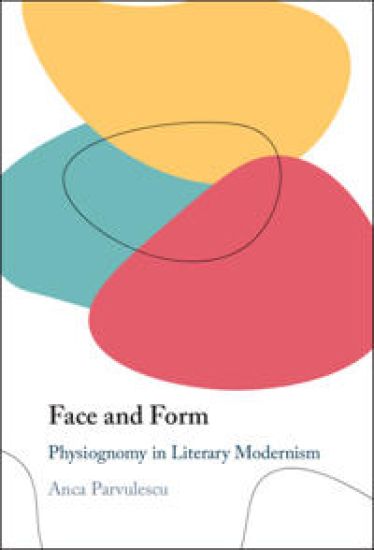
Face and Form

Face and Form

Anca Parvulescu

Cambridge University Press
2025
sidottu
Modernism was obsessed with the ubiquitousness of the human face. Its conflicting dynamics of legibility and opacity fascinated Thomas Mann, Marcel Proust, Virginia Woolf, Gertrude Stein and, later, Kobo Abe, who framed their literary projects around the question of the face as a proxy for form, memory, intermediality, difference and combinations thereof. Modernism – it could be argued – rewrote the face. In the present day, recent developments such as mask wearing during the pandemic and the use of facial recognition technology during the Black Lives Matter protests have forced us to reflect on the social impact of obscuring faces, while also raising concerns about about the visibility of certain faces and how this might be abused. This book builds an arc between these recent conversations about the politics of the face and those physiognomic discourses that reflect modernism's long, complex and fascinating cultural history. This title is also available as open access on Cambridge Core.
Creolizing the Modern

Creolizing the Modern

Anca Parvulescu; Manuela Boatca

CORNELL UNIVERSITY PRESS
2022
sidottu
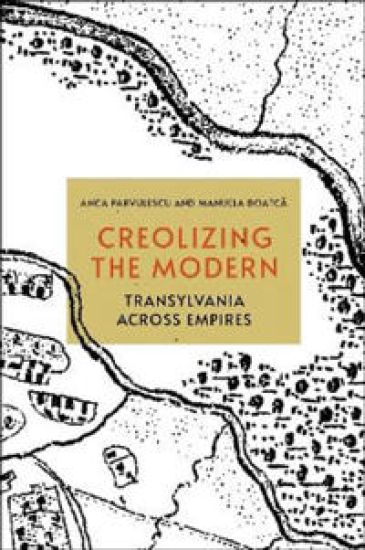
How are modernity, coloniality, and interimperiality entangled? Bridging the humanities and social sciences, Anca Parvulescu and Manuela Boatca provide innovative decolonial perspectives that aim to creolize modernity and the modern world-system. Historical Transylvania, at the intersection of the Habsburg Empire, the Ottoman Empire, Austria-Hungary, and Russia, offers the platform for their multi-level reading of the main themes in Liviu Rebreanu's 1920 novel Ion. Topics range from the question of the region's capitalist integration to antisemitism and the enslavement of Roma to multilingualism, gender relations, and religion. Creolizing the Modern develops a comparative method for engaging with areas of the world that have inherited multiple, conflicting imperial and anti-imperial histories.
Creolizing the Modern

Creolizing the Modern

Anca Parvulescu; Manuela Boatca

CORNELL UNIVERSITY PRESS
2022
pokkari
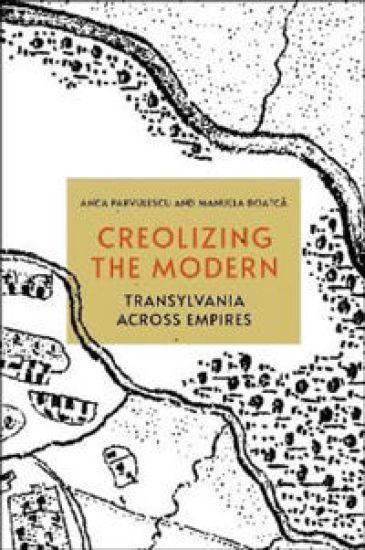
How are modernity, coloniality, and interimperiality entangled? Bridging the humanities and social sciences, Anca Parvulescu and Manuela Boatca provide innovative decolonial perspectives that aim to creolize modernity and the modern world-system. Historical Transylvania, at the intersection of the Habsburg Empire, the Ottoman Empire, Austria-Hungary, and Russia, offers the platform for their multi-level reading of the main themes in Liviu Rebreanu's 1920 novel Ion. Topics range from the question of the region's capitalist integration to antisemitism and the enslavement of Roma to multilingualism, gender relations, and religion. Creolizing the Modern develops a comparative method for engaging with areas of the world that have inherited multiple, conflicting imperial and anti-imperial histories.
The Traffic in Women's Work

The Traffic in Women's Work

Anca Parvulescu

University of Chicago Press
2014
sidottu
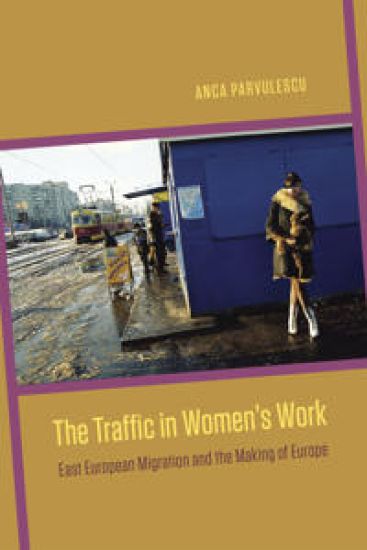
"Welcome to the European family!" When East European countries joined the European Union under this banner after 1989, they agreed to the free movement of goods, services, capital, and persons. In this book, Anca Parvulescu analyzes an important niche in this imagined European kinship: the traffic in women, or the circulation of East European women in West Europe in marriage and as domestic servants, nannies, personal attendants, and entertainers. Analyzing film, national policies, and an impressive range of work by theorists from Giorgio Agamben to Judith Butler, she develops a critical lens through which to think about the transnational continuum of "women's work." Parvulescu revisits Claude Levi-Strauss' concept of kinship and its rearticulation by second-wave feminists, particularly Gayle Rubin, to show that kinship has traditionally been anchored in the traffic in women. Reading recent cinematic texts that help frame this, she reveals that in contemporary Europe, East European migrant women are exchanged to engage in labor customarily performed by wives within the institution of marriage. Tracing a pattern of what she calls Americanization, Parvulescu argues that these women thereby become responsible for the labor of reproduction. A fascinating cultural study as much about the consequences of the enlargement of the European Union as women's mobility, The Traffic in Women's Work questions the foundations of the notion of Europe today.
The Traffic in Women's Work

The Traffic in Women's Work

Anca Parvulescu

University of Chicago Press
2014
nidottu
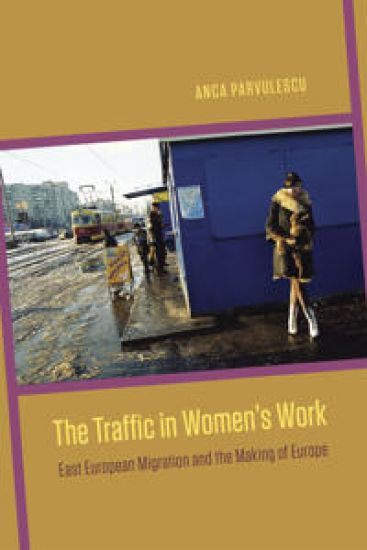
"Welcome to the European family!" When East European countries joined the European Union under this banner after 1989, they agreed to the free movement of goods, services, capital, and persons. In this book, Anca Parvulescu analyzes an important niche in this imagined European kinship: the traffic in women, or the circulation of East European women in West Europe in marriage and as domestic servants, nannies, personal attendants, and entertainers. Analyzing film, national policies, and an impressive range of work by theorists from Giorgio Agamben to Judith Butler, she develops a critical lens through which to think about the transnational continuum of "women's work." Parvulescu revisits Claude Levi-Strauss' concept of kinship and its rearticulation by second-wave feminists, particularly Gayle Rubin, to show that kinship has traditionally been anchored in the traffic in women. Reading recent cinematic texts that help frame this, she reveals that in contemporary Europe, East European migrant women are exchanged to engage in labor customarily performed by wives within the institution of marriage. Tracing a pattern of what she calls Americanization, Parvulescu argues that these women thereby become responsible for the labor of reproduction. A fascinating cultural study as much about the consequences of the enlargement of the European Union as women's mobility, The Traffic in Women's Work questions the foundations of the notion of Europe today.
Laughter

Laughter

Anca Parvulescu

MIT Press
2010
pokkari
Uncovering an archive of laughter, from the forbidden giggle to the explosive guffaw.Most of our theories of laughter are not concerned with laughter. Rather, their focus is the laughable object, whether conceived of as the comic, the humorous, jokes, the grotesque, the ridiculous, or the ludicrous. In Laughter, Anca Parvulescu proposes a return to the materiality of the burst of laughter itself. She sets out to uncover an archive of laughter, inviting us to follow its rhythms and listen to its tones. Historically, laughter-especially the passionate burst of laughter-has often been a faux pas. Manuals for conduct, abetted by philosophical treatises and literary and visual texts, warned against it, offering special injunctions to ladies to avoid jollity that was too boisterous. Returning laughter to the history of the passions, Parvulescu anchors it at the point where the history of the grimacing face meets the history of noise. In the civilizing process that leads to laughter's "falling into disrepute," as Nietzsche famously put it, we can see the formless, contorted face in laughter being slowly corrected into a calm, social smile. How did the twentieth century laugh? Parvulescu points to a gallery of twentieth-century laughers and friends of laughter, arguing that it is through Georges Bataille that the century laughed its most distinct laugh. In Bataille's wake, laughter becomes the passion at the heart of poststructuralism. Looking back at the century from this vantage point, Parvulescu revisits four of its most challenging projects: modernism, the philosophical avant-gardes, feminism, and cinema. The result is an overview of the twentieth century as seen through the laughs that burst at some of its most convoluted junctures.