Kirjojen hintavertailu. Mukana 12 595 353 kirjaa ja 12 kauppaa.
Kirjailija
Anders Wijkman
Kirjat ja teokset yhdessä paikassa: 10 kirjaa, julkaisuja vuosilta 2005-2024, suosituimpien joukossa Wir sind dran. Club of Rome: Der große Bericht. Vertaile teosten hintoja ja tarkista saatavuus suomalaisista kirjakaupoista.
Originally published in 1984 Natural Disasters shows how misleading the term “natural disaster” can be. Forces of nature such as earthquakes, cyclones and extreme variations in weather can trigger disasters, but in many Third World countries it is environmental degradation, poverty and rapid population growth which turn a natural hazard into major disaster. This book questions whether the rich nations’ usual response to disaster – fast, short-lived emergency assistance – is any longer adequate. Today, most major disasters are “development” gone wrong, development which puts millions of poor people on the margins of existence. Disaster relief alone is like bandaging a rapidly growing wound. The appropriate response must include an element of true development – development which reduces rather than increases vulnerability to disasters.
Originally published in 1984 Natural Disasters shows how misleading the term “natural disaster” can be. Forces of nature such as earthquakes, cyclones and extreme variations in weather can trigger disasters, but in many Third World countries it is environmental degradation, poverty and rapid population growth which turn a natural hazard into major disaster. This book questions whether the rich nations’ usual response to disaster – fast, short-lived emergency assistance – is any longer adequate. Today, most major disasters are “development” gone wrong, development which puts millions of poor people on the margins of existence. Disaster relief alone is like bandaging a rapidly growing wound. The appropriate response must include an element of true development – development which reduces rather than increases vulnerability to disasters.
The blueprint for an inspiring regenerative economy that avoids collapse and works for people and the planet. Humanity is in a race with catastrophe. Is the future one of global warming, 65 million migrants fleeing failed states, soaring inequality, and grid-locked politics? Or one of empowered entrepreneurs and innovators working towards social change, leveling the playing field, and building a world that works for everyone? While the specter of collapse looms large, A Finer Future demonstrates that humanity has a chance - just - to thread the needle of sustainability and build a regenerative economy through a powerful combination of enlightened entrepreneurialism, regenerative economy, technology, and innovative policy. The authors - world leaders in business, economics, and sustainability - gather the environmental economics evidence, outline the principles of a regenerative economy, and detail a policy roadmap to achieving it, including: Transforming finance and corporationsReimagining energy, agriculture, ecosystems, and the nature of how we workEnhancing human well-beingDelivering a world that respects ecosystems and human community. Charting the course to a regenerative economy is the most important work facing humanity and A Finer Future provides the essential blueprint for business leaders, entrepreneurs, environmentalists, politicians, policymakers, and others working to create a world that works for people and the planet. AWARDS SILVER | 2020 Eric Zencey PrizeSILVER | 2018 Nautilus Book Awards: Ecology & EnvironmentBRONZE | 2018 Foreword INDIES: Business & Economics
Current worldwide trends are not sustainable. The Club of Rome’s warnings published in the book Limits to Growth are still valid. Remedies that are acceptable for the great majority tend to make things worse. We seem to be in a philosophical crisis. Pope Francis says it clearly: our common home is in deadly danger. Analyzing the philosophical crisis, the book comes to the conclusion that the world may need a “new enlightenment”; one that is not based solely on doctrine, but instead addresses a balance between humans and nature, as well as a balance between markets and the state, and the short versus long term. To do this we need to leave behind working in ”silos” in favor of a more systemic approach that will require us to rethink the organization of science and education.However, we have to act now; the world cannot wait until 7.6 billion people have struggled to reach a new enlightenment. This book is full of optimistic case studies and policy proposals that will lead us back to a trajectory of sustainability. But it is also necessary to address the taboo topic of population increase. Countries with a stable population fare immensely better than those with continued increase. Finally, we are presenting an optimistic book from the Club of Rome.
Current worldwide trends are not sustainable. The Club of Rome’s warnings published in the book Limits to Growth are still valid. Remedies that are acceptable for the great majority tend to make things worse. We seem to be in a philosophical crisis. Pope Francis says it clearly: our common home is in deadly danger. Analyzing the philosophical crisis, the book comes to the conclusion that the world may need a “new enlightenment”; one that is not based solely on doctrine, but instead addresses a balance between humans and nature, as well as a balance between markets and the state, and the short versus long term. To do this we need to leave behind working in ”silos” in favor of a more systemic approach that will require us to rethink the organization of science and education.However, we have to act now; the world cannot wait until 7.6 billion people have struggled to reach a new enlightenment. This book is full of optimistic case studies and policy proposals that will lead us back to a trajectory of sustainability. But it is also necessary to address the taboo topic of population increase. Countries with a stable population fare immensely better than those with continued increase. Finally, we are presenting an optimistic book from the Club of Rome.
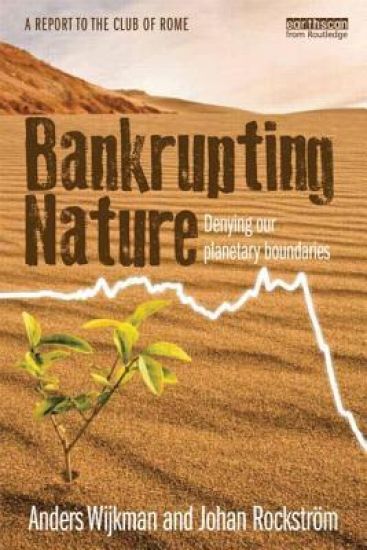
This powerful book shows us that we are in deep denial about the magnitude of the global environmental challenges and resource constraints facing the world. Despite growing scientific consensus on major environmental threats as well as resource depletion, societies are largely continuing with business as usual, at best attempting to tinker at the margins of the problems. The authors argue that regardless of whether governments respond to the economic crisis through additional stimulus packages or reduced government spending, environmental and resource constraints will remain. The crisis will be exacerbated by the combination of climate change, ecosystem decline and resource scarcity, in particular crude oil. The concept of Planetary Boundaries is introduced as a powerful explanation of the limits of the biosphere to sustain continued conventional growth. The book breaks the long silence on population, criticizing donor countries for not doing enough to support the education of girls and reproductive health services. It is shown that an economy built on the continuous expansion of material consumption is not sustainable. De-growth, however, is no solution either. The growth dilemma can only be addressed through a transformation of the economic system. A strong plea is made for abandoning GDP growth as the key objective for development. The focus should instead be on a limited number of welfare indicators. The trickle-down concept is seriously questioned, to be replaced by one of sufficiency. Rich countries are called upon to hold back their material growth to leave room for a rising living standard among the poor. Alternative business models are presented, such as moving from products to services or towards a circular economy based on re-use, reconditioning and recylcing – all with the aim of facilitating sustainable development.A Report to the Club of Rome
Varför är det så svårt för samhället att hantera miljö- och klimatkrisen? Varför händer så lite? Vi fortsätter att leva med myten om den eviga materiella tillväxten - som om jordens tillgångar vore oändliga. Vi lånar av framtiden, av våra barn och barnbarn. När naturresurserna förslösas redovisas det som ökat välstånd i ett lands räkenskaper. Men allt kan inte mätas i pengar. Vi behöver en ny metod att mäta välfärd, en ny ekonomisk modell och ett annat sätt att tänka och agera. Anders Wijkman och Johan Rockström tillhör Sveriges internationellt mest kända namn inom klimat- och miljöfrågor. De kombinerar politisk kunskap, erfarenheter av internationella förhandlingar, vetskap om forskning och om maktförhållanden - till en berättelse om allt som måste ske om vi inte ska förstöra miljön och dämed även ekonomin.
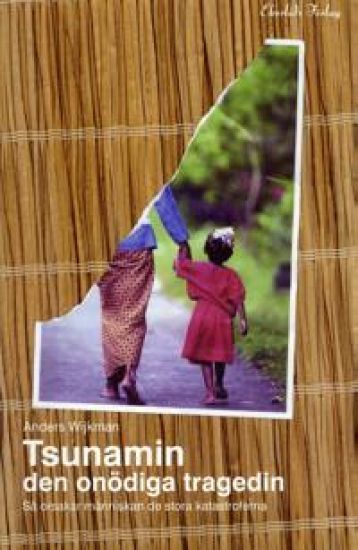
Naturens krafter kan vi inte göra någonting åt, men vi kan göra mycket för att begränsa skadorna på både liv och egendom. En svår storm, en jordbävning eller en tsunami behöver inte leda till en katastrof, anser Anders Wijkman, tidigare vd för Röda Korset och nu europaparlamentariker.