Kirjojen hintavertailu. Mukana 12 418 176 kirjaa ja 12 kauppaa.

Kirjailija

Andi Diehn

Kirjat ja teokset yhdessä paikassa: 36 kirjaa, julkaisuja vuosilta 2015-2025, suosituimpien joukossa Human Computer: Mary Jackson, Engineer. Vertaile teosten hintoja ja tarkista saatavuus suomalaisista kirjakaupoista.

36 kirjaa

Kirjojen julkaisuhaarukka 2015-2025.

Pulleys Pull Their Weight: Simple Machines for Kids
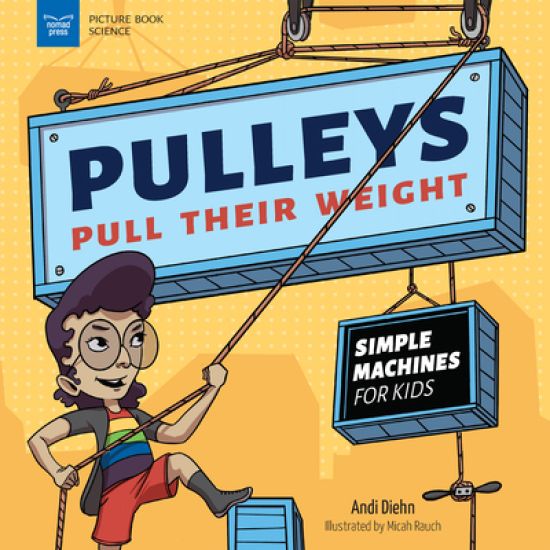
*Selected as a "recommended title" by the Kansas National Education Association's Reading Circle Commission Learn how simple machines make work easier in these colorful nonfiction picture books all about science and engineering What if an elephant sat on your book and refused to move. How could you lift it? Very carefully You might want to use a pulley. A pulley is one of six simple machines that are designed to make different kinds of work such as lifting, pulling, pushing easier. In Pulleys Pull Their Weight: Simple Machines for Kids, readers solve the problem of a heavy elephant by learning about forces and how we can increase the amount we can lift simply by using a pulley. Concepts including mechanical advantage, moveable pulleys, and compound pulleys make sense with engaging illustrations and lots of real-life examples that kids can spot in their home, schools, and neighborhoods. An introductory poem offers language arts connections while a hands-on activity at the end reinforces concepts in the book. A glossary and photographs offer even more supplemental learning opportunities. Pulleys Pull Their Weight is part of a six-book set of Picture Book Science books designed to introduce young engineers to physical science concepts. Other titles are Wedges Make a Point, Screws Keep Things Secure, Levers Lessen the Load, Wheels Make the World Go Round, and Inclined Planes Ramp It Up. All books are leveled for Guided Reading level and Lexile and align with Common Core state standards and Next Generation Science Standards. All titles are available in paperback, hardcover, and ebook formats.

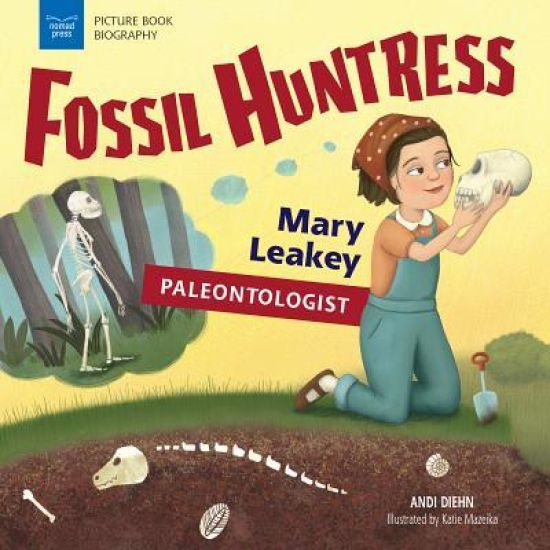
Fossil Huntress: Mary Leakey, Paleontologist
A fascinating picture book biography about Mary Leakey, a paleontologist who worked long hours in the fields of Tanzania--includes STEM activities for real-world learning What was the world like millions of years ago? Did early humans walk on all fours? Did giant sloths lie in trees? Did dinosaurs have feathers? Even as a young girl, Mary Leakey was fascinated by questions like these In Fossil Huntress: Mary Leakey, Paleontologist, readers ages 5 to 8 meet Mary as a girl growing up in France and visiting the site of archeological wonders, such as Pech Merle, Fond de Gaume, and La Mouthe. As an adult, Mary spends much of her life working in the field in Tanzania, making discoveries that change the face of paleontology forever. True grit, passion, and high standards for scientific rigor made Mary a pioneer in the field of paleontology - In the Picture Book Biography series, children encounter real-life characters who are thrilled to learn and experiment, eager to make a difference, and excited about collaborating with crew members. - Age-appropriate vocabulary, detailed illustrations, a timeline, simple STEM projects, such as exploring trace fossils and drawing specimens, and a glossary all support foundational learning for kids ages 5 to 8. - Perfect for beginner readers or as a read aloud nonfiction picture book All books are leveled for Guided Reading level and Lexile and align with Common Core State Standards and National Curriculum Standards for Social Studies. All titles are available in paperback, hardcover, and ebook formats.
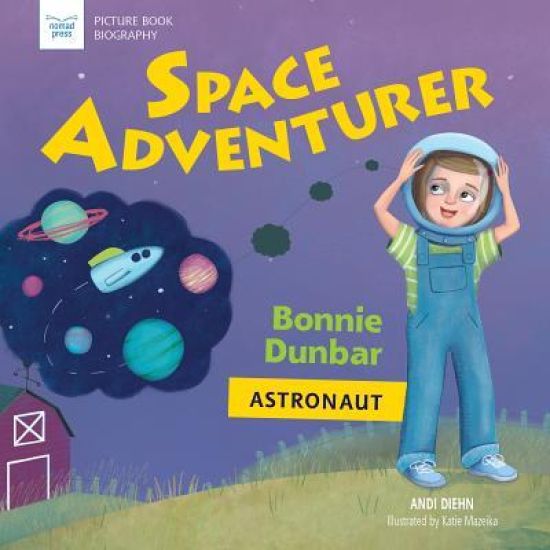
Space Adventurer: Bonnie Dunbar, Astronaut
A full-color picture book biography about Bonnie Dunbar, a young girl who made her dream of going to space a reality through hard work and determination--includes several hands-on science experiments for real-world learning connections. When Bonnie Dunbar spotted Sputnik traveling across the sky from where she stood on her family's farm, she knew that's what she wanted to do when she got older. In Space Adventurer: Bonnie Dunbar, Astronaut, readers ages 5 to 8 learn about the hard work Bonnie tackled throughout her life to make it aboard NASA's space shuttle Challenger. From planting crops and driving the tractor on her family's homestead to devouring all the books she possibly could to applying to NASA three times, Bonnie refused to give up All her hard work and passion for science led her to a job that launched her into the stars as an astronaut. - In the Picture Book Biography series, children encounter real-life characters who are thrilled to learn and experiment, eager to make a difference, and excited about collaborating with team members. - Age-appropriate vocabulary, detailed illustrations, a timeline, simple STEM projects, such as drawing a scene from another planet, and a glossary all support foundational learning for kids ages 5 to 8. - Perfect for beginner readers or as a read aloud nonfiction picture book About Picture Book Biography books and Nomad Press Space Adventurer is part of a set of four books in the Picture Book Biography series that introduces pioneers of science to young children and makes career connections in different STEM fields. The other titles in this series include Fossil Huntress: Mary Leakey, Paleontologist; Human Computer: Mary Jackson, Engineer; and Computer Decoder: Dorothy Vaughan, Computer Scientist. Nomad Press books in the Picture Book Biography series bring real-world figures to life through fun, engaging narratives paired with dynamic, brightly colored illustrations and quick activities that reinforce foundational learning. Elementary-aged children are encouraged to expand their perceptions of the roles of scientist, artist, explorer, and innovator by meeting women, people of color, and other minorities in the profession. Nomad's unique approach simultaneously grounds kids in factual knowledge while allowing them the space to be curious, creative, and critical thinkers. All books are leveled for Guided Reading level and Lexile and align with Common Core State Standards and National Curriculum Standards for Social Studies. All titles are available in paperback, hardcover, and ebook formats.

Fossil Huntress: Mary Leakey, Paleontologist
A fascinating picture book biography about Mary Leakey, a paleontologist who worked long hours in the fields of Tanzania--includes STEM activities for real-world learning What was the world like millions of years ago? Did early humans walk on all fours? Did giant sloths lie in trees? Did dinosaurs have feathers? Even as a young girl, Mary Leakey was fascinated by questions like these In Fossil Huntress: Mary Leakey, Paleontologist, readers ages 5 to 8 meet Mary as a girl growing up in France and visiting the site of archeological wonders, such as Pech Merle, Fond de Gaume, and La Mouthe. As an adult, Mary spends much of her life working in the field in Tanzania, making discoveries that change the face of paleontology forever. True grit, passion, and high standards for scientific rigor made Mary a pioneer in the field of paleontology - In the Picture Book Biography series, children encounter real-life characters who are thrilled to learn and experiment, eager to make a difference, and excited about collaborating with crew members. - Age-appropriate vocabulary, detailed illustrations, a timeline, simple STEM projects, such as exploring trace fossils and drawing specimens, and a glossary all support foundational learning for kids ages 5 to 8. - Perfect for beginner readers or as a read aloud nonfiction picture book All books are leveled for Guided Reading level and Lexile and align with Common Core State Standards and National Curriculum Standards for Social Studies. All titles are available in paperback, hardcover, and ebook formats.
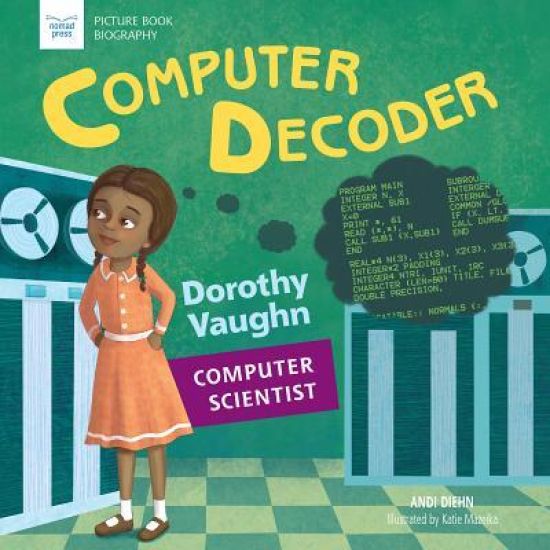
Computer Decoder: Dorothy Vaughan, Computer Scientist
A full-color picture book biography about Dorothy Vaughan, one of NASA's first African American managers and one of the groundbreakers on the front line of electronic computing--includes hands-on STEM activities for an introduction to coding. Dorothy Vaughan loved things that made sense--especially numbers In Computer Decoder: Dorothy Vaughan, Computer Scientist, elementary-aged children follow Dorothy's journey from math teacher to human computer and beyond, a journey made difficult because she was an African American woman working during a time of segregation. Dorothy worked incredibly hard to meet the challenges that greeted her at every turn and rose to the level of supervisor, the first black supervisor in the history of her company But another challenge awaited when a mechanical computer threatened to replace the teams of human computers. How will Dorothy figure out this problem? - In the Picture Book Biography series, children encounter real-life characters who are thrilled to learn and experiment, eager to make a difference, and excited about collaborating with team members. - Age-appropriate vocabulary, detailed illustrations, a timeline, simple STEM projects, such as coding a name on a bracelet, and a glossary all support foundational learning for kids ages 5 to 8. - Perfect for beginner readers or as a read aloud nonfiction picture book About Picture Book Biography books and Nomad Press Computer Decoder is part of a set of four books in the Picture Book Biography series that introduces pioneers of science to young children and makes career connections in different STEM fields. The other titles in this series include Fossil Huntress: Mary Leakey, Paleontologist; Human Computer: Mary Jackson, Engineer; and Space Adventurer: Bonnie Dunbar, Astronaut. Nomad Press books in the Picture Book Biography series bring real-world figures to life through fun, engaging narratives paired with dynamic, brightly colored illustrations and quick activities that reinforce foundational learning. Elementary-aged children are encouraged to expand their perceptions of the roles of scientist, artist, explorer, and innovator by meeting women, people of color, and other minorities in the profession. Nomad's unique approach simultaneously grounds kids in factual knowledge while allowing them the space to be curious, creative, and critical thinkers. All books are leveled for Guided Reading level and Lexile and align with Common Core State Standards and National Curriculum Standards for Social Studies. All titles are available in paperback, hardcover, and ebook formats.
Energy

Energy

Andi Diehn

Nomad Press
2018
sidottu
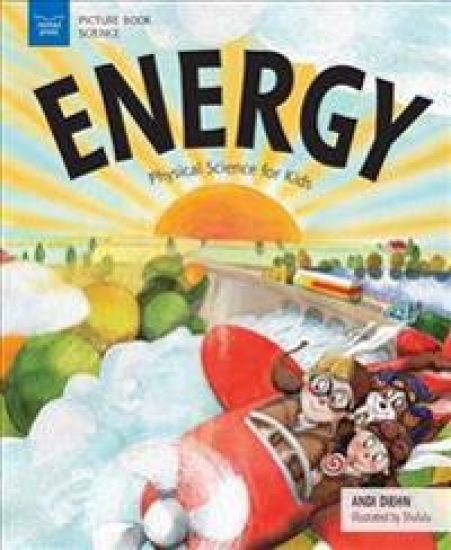
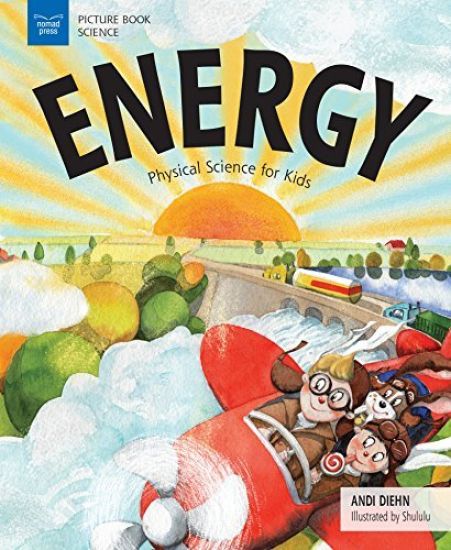
Energy: Physical Science for Kids from the Picture Book Science series gets kids excited about science!Do you have a lot of energy? What else has energy? Just about everything that moves!When you feel like running, leaping, and singing, people might say you have a lot of energy. And you're not the only one! Energy is the stuff that makes everything live and move. People, animals, plants-we all need energy to live!In Energy: Physical Science for Kids, young readers discover different forms of energy, including heat, light, and chemical energy, that keep the world working and moving. In this nonfiction picture book, children are introduced to physical science through detailed illustrations paired with a compelling narrative that uses fun language to convey familiar examples of real-world science connections. By recognizing this basic physics concept and identifying the different ways it is demonstrated in real life, kids develop a fundamental understanding of physical science and are impressed with the idea that science is a constant part of our lives and not limited to classrooms and laboratories. Simple vocabulary, detailed illustrations, easy science experiments, and a glossary all support exciting learning for kids ages 5 to 8. Perfect for beginner readers or as a read aloud nonfiction picture book!Part of a set of four books in a series called Picture Book Science that tackles different kinds of physical science (waves, forces, energy, and matter), Energy: Physical Science for Kids pairs beautiful illustrations with simple observations and explanations. Quick STEM activities such as transferring energy from your hands to a ball help readers cross the bridge from conceptual to experiential learning and provide a foundation of knowledge that will prove invaluable as kids progress in their science education.Perfect for children who love to ask, "Why?" about the world around them, Energy satisfies curiosity while encouraging continual student-led learning.Picture Book Science presents real-world examples of physical science and engineering topics kids find fascinating! These nonfiction picture books consist of engaging narratives paired with brightly colored, whimsical illustrations drawn by an accomplished scientist. With these books, readers ages 5 to 8 are encouraged to expand their definitions of the words "force," "matter," "energy," and "wave." Elementary-aged children are equipped to recognize basic science concepts and identify the different ways they are demonstrated in real life, while being impressed with the idea that science is a constant part of our lives and not limited to classrooms and laboratories. Titles in the series include: Waves; Forces; Matter; and Energy.
Waves

Waves

Andi Diehn

Nomad Press
2018
sidottu
Waves: Physical Science for Kids from the Picture Book Science series gets kids excited about science!Have you ever floated on waves in the ocean? Have you ever stood in a human wave at a baseball game?Waves are all around us! You can find waves in a field of wheat, in a dangling string, in a slinky, and in flags that are blowing in the breeze. There are even invisible waves! Sunlight and sound move in waves, and cell phones and microwaves use waves to transmit voices and to cook food. You can hear your mom say, "Hello," on the cell phone because of waves.Waves: Physical Science for Kids is a fun, illustrated introduction to the concept of waves and energy and their presence in our world. In this nonfiction picture book, elementary school children learn to spot all the different kinds of waves they encounter in daily life by finding real-world science connections. Simple vocabulary, detailed illustrations, easy science experiments, and a glossary all support exciting learning for kids ages 5 to 8. Perfect for beginner readers or as a read aloud nonfiction picture book!Part of a set of four books in a series called Picture Book Science that tackles different kinds of physical science (waves, forces, energy, and matter), Waves: Physical Science for Kids pairs beautiful illustrations with simple observations and explanations. Quick STEM activities such as floating a ball in a tub of water help readers cross the bridge from conceptual to experiential learning and provide a foundation of knowledge that will prove invaluable as kids progress in their science education.Perfect for children who love to ask, "Why?" about the world around them, Waves satisfies curiosity while encouraging student-led learning. Picture Book Science presents real-world examples of physical science and engineering topics kids find fascinating! These nonfiction picture books consist of engaging narratives paired with brightly colored, whimsical illustrations drawn by an accomplished scientist. With these books, readers ages 5 to 8 are encouraged to expand their definitions of the words "force," "matter," "energy," and "wave." Elementary-aged children are equipped to recognize basic science concepts and identify the different ways they are demonstrated in real life, while being impressed with the idea that science is a constant part of our lives and not limited to classrooms and laboratories.Titles in the series include: Waves; Forces; Matter; and Energy.
Waves

Waves

Andi Diehn

Nomad Press
2018
pokkari
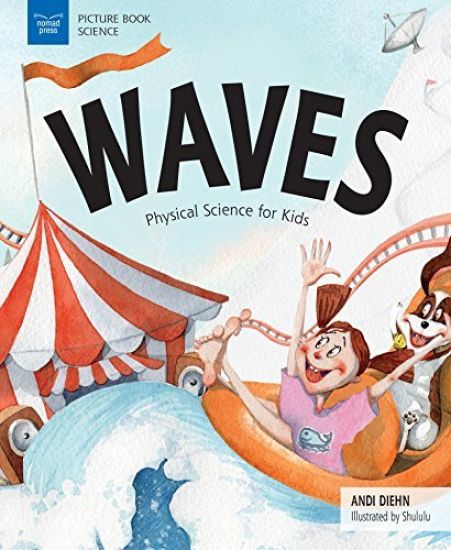
Waves: Physical Science for Kids from the Picture Book Science series gets kids excited about science!Have you ever floated on waves in the ocean? Have you ever stood in a human wave at a baseball game?Waves are all around us! You can find waves in a field of wheat, in a dangling string, in a slinky, and in flags that are blowing in the breeze. There are even invisible waves! Sunlight and sound move in waves, and cell phones and microwaves use waves to transmit voices and to cook food. You can hear your mom say, "Hello," on the cell phone because of waves.Waves: Physical Science for Kids is a fun, illustrated introduction to the concept of waves and energy and their presence in our world. In this nonfiction picture book, elementary school children learn to spot all the different kinds of waves they encounter in daily life by finding real-world science connections. Simple vocabulary, detailed illustrations, easy science experiments, and a glossary all support exciting learning for kids ages 5 to 8. Perfect for beginner readers or as a read aloud nonfiction picture book!Part of a set of four books in a series called Picture Book Science that tackles different kinds of physical science (waves, forces, energy, and matter), Waves: Physical Science for Kids pairs beautiful illustrations with simple observations and explanations. Quick STEM activities such as floating a ball in a tub of water help readers cross the bridge from conceptual to experiential learning and provide a foundation of knowledge that will prove invaluable as kids progress in their science education.Perfect for children who love to ask, "Why?" about the world around them, Waves satisfies curiosity while encouraging student-led learning.Picture Book Science presents real-world examples of physical science and engineering topics kids find fascinating! These nonfiction picture books consist of engaging narratives paired with brightly colored, whimsical illustrations drawn by an accomplished scientist. With these books, readers ages 5 to 8 are encouraged to expand their definitions of the words "force," "matter," "energy," and "wave." Elementary-aged children are equipped to recognize basic science concepts and identify the different ways they are demonstrated in real life, while being impressed with the idea that science is a constant part of our lives and not limited to classrooms and laboratories.Titles in the series include: Waves; Forces; Matter; and Energy.
Forces

Forces

Andi Diehn

Nomad Press
2018
pokkari
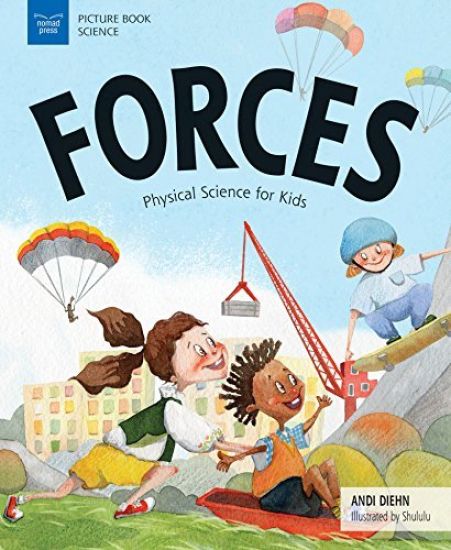
Forces: Physical Science for Kids from the Picture Book Science series gets kids excited about science!"Forces, despite its down-to-earth scientific grounding, manages to do the nearly impossible. Diehn brings gravity, magnetism, push-pull forces, and friction to life in everyday contexts, without a hint of schoolroom jargon." - Booklist (Starred Review) What keeps us stuck on the ground? What makes magnets come together? What makes one team win during a game of tug of war? Forces!Our world operates the way it does because of forces. Gravity, magnetism, pulling and pushing forces, and friction are some of the many forces that affect the way we move on Earth.In Forces: Physical Science for Kids, kids ages 5 to 8 are encouraged to observe and consider the different forces they encounter on a daily basis. By recognizing this basic physics concept and identifying the different ways it is demonstrated in real life, kids develop a fundamental understanding of physical science and are impressed with the idea that science is a constant part of our lives and not limited to classrooms and laboratories. Simple vocabulary, detailed illustrations, easy science experiments, and a glossary all support exciting learning for kids ages 5 to 8. Perfect for beginner readers or as a read aloud nonfiction picture book!Part of a set of four books in a series called Picture Book Science that tackles different kinds of physical science (waves, forces, energy, and matter), Forces: Physical Science for Kids pairs beautiful illustrations with simple observations and explanations. Quick STEM activities such as rubbing surfaces together to produce heat and testing the properties of magnets help readers cross the bridge from conceptual to experiential learning and provide a foundation of knowledge that will prove invaluable as kids progress in their science education Perfect for children who love to ask, "Why?" about the world around them, Forces satisfies curiosity while encouraging student-led learning.Picture Book Science presents real-world examples of physical science and engineering topics kids find fascinating! These nonfiction picture books consist of engaging narratives paired with brightly colored, whimsical illustrations drawn by an accomplished scientist. With these books, readers ages 5 to 8 are encouraged to expand their definitions of the words "force," "matter," "energy," and "wave." Elementary-aged children are equipped to recognize basic science concepts and identify the different ways they are demonstrated in real life, while being impressed with the idea that science is a constant part of our lives and not limited to classrooms and laboratories. Titles in the series include: Waves; Forces; Matter; and Energy.
Energy

Energy

Andi Diehn

Nomad Press
2018
pokkari
Energy: Physical Science for Kids from the Picture Book Science series gets kids excited about science!Do you have a lot of energy? What else has energy? Just about everything that moves!When you feel like running, leaping, and singing, people might say you have a lot of energy. And you're not the only one! Energy is the stuff that makes everything live and move. People, animals, plants-we all need energy to live!In Energy: Physical Science for Kids, young readers discover different forms of energy, including heat, light, and chemical energy, that keep the world working and moving. In this nonfiction picture book, children are introduced to physical science through detailed illustrations paired with a compelling narrative that uses fun language to convey familiar examples of real-world science connections. By recognizing this basic physics concept and identifying the different ways it is demonstrated in real life, kids develop a fundamental understanding of physical science and are impressed with the idea that science is a constant part of our lives and not limited to classrooms and laboratories. Simple vocabulary, detailed illustrations, easy science experiments, and a glossary all support exciting learning for kids ages 5 to 8. Perfect for beginner readers or as a read aloud nonfiction picture book!Part of a set of four books in a series called Picture Book Science that tackles different kinds of physical science (waves, forces, energy, and matter), Energy: Physical Science for Kids pairs beautiful illustrations with simple observations and explanations. Quick STEM activities such as transferring energy from your hands to a ball help readers cross the bridge from conceptual to experiential learning and provide a foundation of knowledge that will prove invaluable as kids progress in their science education.Perfect for children who love to ask, "Why?" about the world around them, Energy satisfies curiosity while encouraging continual student-led learning.Picture Book Science presents real-world examples of physical science and engineering topics kids find fascinating! These nonfiction picture books consist of engaging narratives paired with brightly colored, whimsical illustrations drawn by an accomplished scientist. With these books, readers ages 5 to 8 are encouraged to expand their definitions of the words "force," "matter," "energy," and "wave." Elementary-aged children are equipped to recognize basic science concepts and identify the different ways they are demonstrated in real life, while being impressed with the idea that science is a constant part of our lives and not limited to classrooms and laboratories. Titles in the series include: Waves; Forces; Matter; and Energy.
Matter

Matter

Andi Diehn

Nomad Press
2018
pokkari
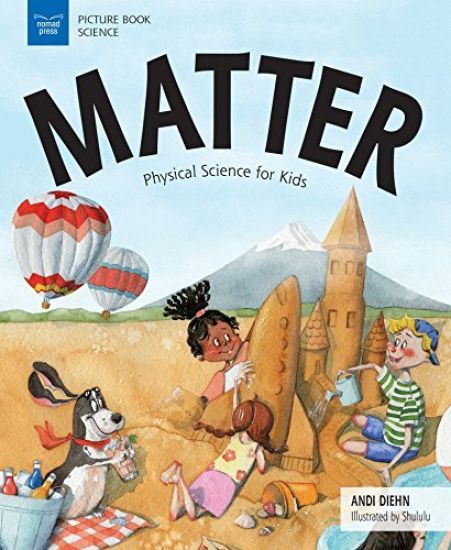
Matter: Physical Science for Kids from the Picture Book Science series gets kids excited about science!What's the matter? Everything is matter!Everything you can touch and hold is made up of matter-including you, your dog, and this book! Matter is stuff that you can weigh and that takes up space, which means pretty much everything in the world is made of matter.In Matter: Physical Science for Kids, kids ages 5 to 8 explore the definition of matter and the different states of matter, plus the stuff in our world that isn't matter, such as sound and light! In this nonfiction picture book, children are introduced to physical science through detailed illustrations paired with a compelling narrative that uses fun language to convey familiar examples of real-world science connections. By recognizing the basic physics concept of matter and identifying the different ways matter appears in real life, kids develop a fundamental understanding of physical science and are impressed with the idea that science is a constant part of our lives and not limited to classrooms and laboratories.Simple vocabulary, detailed illustrations, easy science experiments, and a glossary all support exciting learning for kids ages 5 to 8. Perfect for beginner readers or as a read aloud nonfiction picture book!Part of a set of four books in a series called Picture Book Science that tackles different kinds of physical science (waves, forces, energy, and matter), Matter offers beautiful pictures and simple observations and explanations. Quick STEM activities such as weighing two balloons to test if air is matter help readers cross the bridge from conceptual to experiential learning and provide a foundation of knowledge that will prove invaluable as kids progress in their science education.Perfect for children who love to ask, "Why?" about the world around them, Matter satisfies curiosity while encouraging continual student-led learning.Picture Book Science presents real-world examples of physical science and engineering topics kids find fascinating! These nonfiction picture books consist of engaging narratives paired with brightly colored, whimsical illustrations drawn by an accomplished scientist. With these books, readers ages 5 to 8 are encouraged to expand their definitions of the words "force," "matter," "energy," and "wave." Elementary-aged children are equipped to recognize basic science concepts and identify the different ways they are demonstrated in real life, while being impressed with the idea that science is a constant part of our lives and not limited to classrooms and laboratories. Titles in the series include: Waves; Forces; Matter; and Energy.
Forces

Forces

Andi Diehn

Nomad Press
2018
sidottu
Forces: Physical Science for Kids from the Picture Book Science series gets kids excited about science!"Forces, despite its down-to-earth scientific grounding, manages to do the nearly impossible. Diehn brings gravity, magnetism, push-pull forces, and friction to life in everyday contexts, without a hint of schoolroom jargon." - Booklist (Starred Review) What keeps us stuck on the ground? What makes magnets come together? What makes one team win during a game of tug of war? Forces!Our world operates the way it does because of forces. Gravity, magnetism, pulling and pushing forces, and friction are some of the many forces that affect the way we move on Earth.In Forces: Physical Science for Kids, kids ages 5 to 8 are encouraged to observe and consider the different forces they encounter on a daily basis. By recognizing this basic physics concept and identifying the different ways it is demonstrated in real life, kids develop a fundamental understanding of physical science and are impressed with the idea that science is a constant part of our lives and not limited to classrooms and laboratories. Simple vocabulary, detailed illustrations, easy science experiments, and a glossary all support exciting learning for kids ages 5 to 8. Perfect for beginner readers or as a read aloud nonfiction picture book!Part of a set of four books in a series called Picture Book Science that tackles different kinds of physical science (waves, forces, energy, and matter), Forces: Physical Science for Kids pairs beautiful illustrations with simple observations and explanations. Quick STEM activities such as rubbing surfaces together to produce heat and testing the properties of magnets help readers cross the bridge from conceptual to experiential learning and provide a foundation of knowledge that will prove invaluable as kids progress in their science education.Perfect for children who love to ask, "Why?" about the world around them, Forces satisfies curiosity while encouraging student-led learning.Picture Book Science presents real-world examples of physical science and engineering topics kids find fascinating! These nonfiction picture books consist of engaging narratives paired with brightly colored, whimsical illustrations drawn by an accomplished scientist. With these books, readers ages 5 to 8 are encouraged to expand their definitions of the words "force," "matter," "energy," and "wave." Elementary-aged children are equipped to recognize basic science concepts and identify the different ways they are demonstrated in real life, while being impressed with the idea that science is a constant part of our lives and not limited to classrooms and laboratories. Titles in the series include: Waves; Forces; Matter; and Energy.
Shakespeare

Shakespeare

Andi Diehn

Nomad Press
2016
sidottu
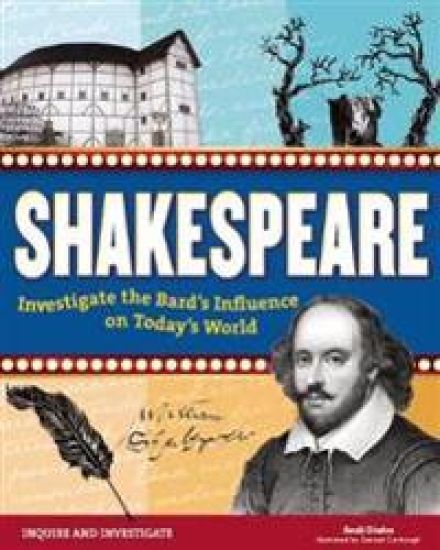
"Romeo, Romeo, wherefore art thou Romeo?" Teenagers have been sighing an approximation of these words for centuries, ever since William Shakespeare had Juliet utter them from her balcony in one of the most popular plays of all time, Romeo and Juliet. Tales of love, loss, rebellion, rivalry--before there was Twilight, Warm Bodies, and The Lion King, there was Shakespeare. The characters, language, imagery, and plot elements of many books and movies that appear on bookshelves and in cinemas today are directly influenced by the plays of the Bard. In Shakespeare: Investigate the Bard's Influence on Today's World, readers discover links between the books, movies, and music they listen to today and the words that were written and acted out more than 400 years ago. Readers deconstruct Shakespearean themes, imagery, language, and meaning by finding familiar ground on which to gain literary insight.Through hands-on projects such as coding a video game based on one of Shakespeare's plays to rewriting a scene in the text language of emoji, readers find compelling avenues into the dramatic, sometimes intimidating language, leaving them well-equipped to tackle any major text in the academic years to come.
Explore Poetry!

Explore Poetry!

Andi Diehn

Nomad Press
2015
pokkari
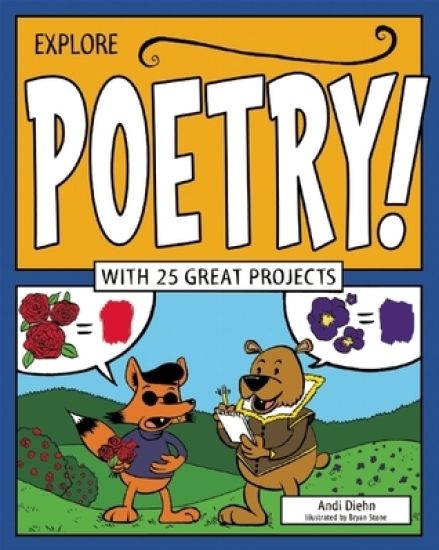
Poems can be silly, serious, or fun, just like kids! Whether it's the sing-song rhythm of a limerick, the serendipitous magic of a found poem, the deceptive simplicity of a haiku, or the easy familiarity of an acrostic poem, children are charmed by poetry. And what's more fun than reading poetry? Writing it! In Explore Poetry! With 25 Great Projects children have fun learning about different forms of poetry while delving into different literary techniques such as personification, metaphor, and alliteration, all of which are discussed in a simple and accessible way. Activities include creative writing exercises designed to reinforce language arts skills, plus art projects that encourage children to visualize concepts and definitions. Short biographies of important poets reinforce the concept of poetry as an important part of society. Explore Poetry! meets Common Core State Standards for language arts; Guided Reading Levels and Lexile measurements indicate grade level and text complexity. Informational and inspiring, Explore Poetry! fits seamlessly into the poetry curriculum of grades 2 to 4 and serves as an enrichment resource all during the school year, especially April, Poetry Month.