Kirjojen hintavertailu. Mukana 12 390 323 kirjaa ja 12 kauppaa.

Kirjailija

André Bazin

Kirjat ja teokset yhdessä paikassa: 9 kirjaa, julkaisuja vuosilta 1992-2026, suosituimpien joukossa Was ist Film?. Vertaile teosten hintoja ja tarkista saatavuus suomalaisista kirjakaupoista.

Mukana myös kirjoitusasut: André: Bazin

9 kirjaa

Kirjojen julkaisuhaarukka 1992-2026.

André Bazin on Documentary

André Bazin on Documentary

André Bazin

University of California Press
2026
pokkari
Documentary is at the core of André Bazin’s immensely influential views of cinema. This collection, curated by renowned film scholar Dudley Andrew, brings to English-language readers sixty-two articles in which Bazin interrogated films about geography, history, animals, painting, and, especially, distant lands and peoples. Both an advocate and critic of popular science and exotic travelogues, Bazin applauded the creativity of impure forms like docu-fiction and the genre he baptized as the “essay film.” Engaging minor short subjects, as well as classic works by Robert Flaherty, Jean Rouch, Alain Resnais, and Chris Marker, Bazin’s incisive prose is at once intricately beautiful and playfully entertaining—and his brilliant reflections on both the morality and the aesthetics of documentary remain compelling and urgent today, when spectacles sold as reality flood our screens.
André Bazin on Documentary

André Bazin on Documentary

André Bazin

University of California Press
2026
sidottu
Documentary is at the core of André Bazin’s immensely influential views of cinema. This collection, curated by renowned film scholar Dudley Andrew, brings to English-language readers sixty-two articles in which Bazin interrogated films about geography, history, animals, painting, and, especially, distant lands and peoples. Both an advocate and critic of popular science and exotic travelogues, Bazin applauded the creativity of impure forms like docu-fiction and the genre he baptized as the “essay film.” Engaging minor short subjects, as well as classic works by Robert Flaherty, Jean Rouch, Alain Resnais, and Chris Marker, Bazin’s incisive prose is at once intricately beautiful and playfully entertaining—and his brilliant reflections on both the morality and the aesthetics of documentary remain compelling and urgent today, when spectacles sold as reality flood our screens.
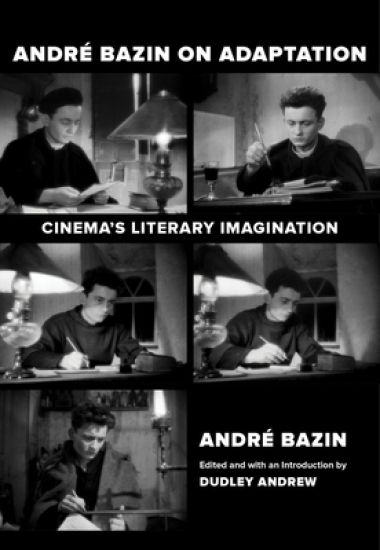
Andre Bazin on Adaptation

Andre Bazin on Adaptation

André Bazin

University of California Press
2022
sidottu
Adaptation was central to André Bazin’s lifelong query: What is cinema? Placing films alongside literature allowed him to identify the aesthetic and sociological distinctiveness of each medium. More importantly, it helped him wage his campaign for a modern conception of cinema, one that owed a great deal to developments in the novel. The critical genius of one of the greatest film and cultural critics of the twentieth century is on full display in this collection, in which readers are introduced to Bazin's foundational concepts of the relationship between film and literary adaptation. Expertly curated and with an introduction by celebrated film scholar Dudley Andrew, the book begins with a selection of essays that show Bazin’s film theory in action, followed by reviews of films adapted from renowned novels of the day (Conrad, Hemingway, Steinbeck, Colette, Sagan, Duras, and others) as well as classic novels of the nineteenth century (Bronte, Melville, Tolstoy, Balzac, Hugo, Zola, Stendhal, and more). As a bonus, two hundred and fifty years of French fiction are put into play as Bazin assesses adaptation after adaptation to determine what is at stake for culture, for literature, and especially for cinema. This volume will be an indispensable resource for anyone interested in literary adaptation, authorship, classical film theory, French film history, and André Bazin’s criticism.
Andre Bazin on Adaptation

Andre Bazin on Adaptation

André Bazin

University of California Press
2022
pokkari
Adaptation was central to André Bazin’s lifelong query: What is cinema? Placing films alongside literature allowed him to identify the aesthetic and sociological distinctiveness of each medium. More importantly, it helped him wage his campaign for a modern conception of cinema, one that owed a great deal to developments in the novel. The critical genius of one of the greatest film and cultural critics of the twentieth century is on full display in this collection, in which readers are introduced to Bazin's foundational concepts of the relationship between film and literary adaptation. Expertly curated and with an introduction by celebrated film scholar Dudley Andrew, the book begins with a selection of essays that show Bazin’s film theory in action, followed by reviews of films adapted from renowned novels of the day (Conrad, Hemingway, Steinbeck, Colette, Sagan, Duras, and others) as well as classic novels of the nineteenth century (Bronte, Melville, Tolstoy, Balzac, Hugo, Zola, Stendhal, and more). As a bonus, two hundred and fifty years of French fiction are put into play as Bazin assesses adaptation after adaptation to determine what is at stake for culture, for literature, and especially for cinema. This volume will be an indispensable resource for anyone interested in literary adaptation, authorship, classical film theory, French film history, and André Bazin’s criticism.
Was ist Film?

Was ist Film?

André: Bazin

Alexander Verlag Berlin
2015
sidottu
Erstmalig liegt auf deutsch die vollständige und neu übersetzte Fassung des französischen Klassikers vor - der französischen ?dition definitive, die die vierbändige Ausgabe mit Schriften aus den Jahren 1958-1962 ersetzte. Die Auswahl für diesen Band stammt von Bazins Witwe und Fran?ois Truffaut, das Vorwort von Andr? Bazin selbst. Andr? Bazin, hochgeschätzt von Bresson, Bu?uel, Carn?, Cocteau, Fellini, Langlois, Visconti und Renoir, entwickelte ein neues Filmbewußtsein und wirkte mit seinen Reflexionen auf die Filmgeschichte ein. Ihm ging es um das, was Film aus eigener Kraft und eigenen Mitteln zu leisten imstande ist. ?Das Bild (...) verfügt, gestützt auf einen größeren Realismus, über (enorme) Möglichkeiten der Beeinflussung und Verwandlung der Realität in ihrem Kern.?
Andre Bazin's New Media

Andre Bazin's New Media

André Bazin

University of California Press
2014
pokkari
Andre Bazin's writings on cinema are among the most influential reflections on the medium ever written. Even so, his critical interests ranged widely and encompassed the new media" of the 1950s, including television, 3D film, Cinerama, and CinemaScope. Fifty-seven of his reviews and essays addressing these new technologies their artistic potential, social influence, and relationship to existing art forms have been translated here for the first time in English with notes and an introduction by leading Bazin authority Dudley Andrew. These essays show Bazin's astute approach to a range of visual media and the relevance of his critical thought to our own era of new media. An exciting companion to the essential What Is Cinema? volumes, Andre Bazin's New Media is excellent for classroom use and vital for anyone interested in the history of media.
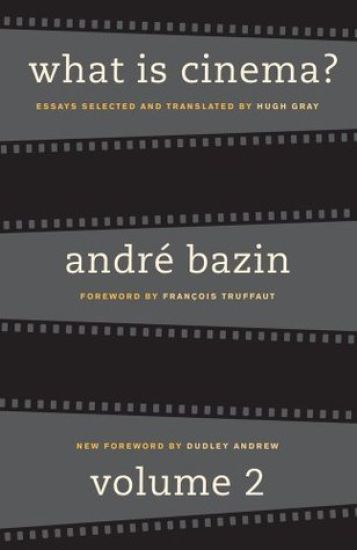
What Is Cinema? Volume II

What Is Cinema? Volume II

André Bazin; Dudley Andrew; Francois Truffaut

University of California Press
2004
pokkari
Andre Bazin's What Is Cinema? (volumes I and II) have been classics of film studies for as long as they've been available and are considered the gold standard in the field of film criticism. Although Bazin made no films, his name has been one of the most important in French cinema since World War II. He was co-founder of the influential Cahiers du Cinema, which under his leadership became one of the world's most distinguished publications. Championing the films of Jean Renoir (who contributed a short foreword to Volume I), Orson Welles, and Roberto Rossellini, he became the protege of Francois Truffaut, who honors him touchingly in his forword to Volume II. This new edition includes graceful forewords to each volume by Bazin scholar and biographer Dudley Andrew, who reconsiders Bazin and his place in contemporary film study. The essays themselves are erudite but always accessible, intellectual, and stimulating. As Renoir puts it, the essays of Bazin "will survive even if the cinema does not."
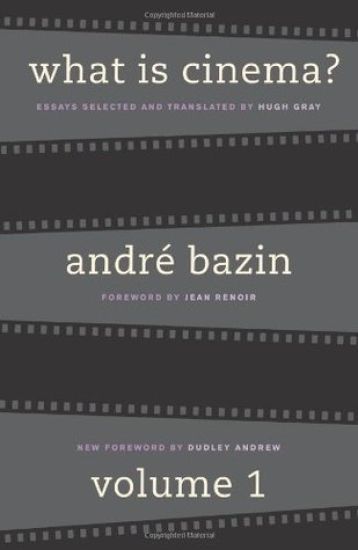
What Is Cinema? Volume I

What Is Cinema? Volume I

André Bazin; Jean Renoir; Dudley Andrew

University of California Press
2004
pokkari
Andre Bazin's What Is Cinema? (volumes I and II) have been classics of film studies for as long as they've been available and are considered the gold standard in the field of film criticism. Although Bazin made no films, his name has been one of the most important in French cinema since World War II. He was co-founder of the influential Cahiers du Cinema, which under his leadership became one of the world's most distinguished publications. Championing the films of Jean Renoir (who contributed a short foreword to Volume I), Orson Welles, and Roberto Rossellini, he became the protege of Francois Truffaut, who honors him touchingly in his forword to Volume II. This new edition includes graceful forewords to each volume by Bazin scholar and biographer Dudley Andrew, who reconsiders Bazin and his place in contemporary film study. The essays themselves are erudite but always accessible, intellectual, and stimulating. As Renoir puts it, the essays of Bazin "will survive even if the cinema does not."
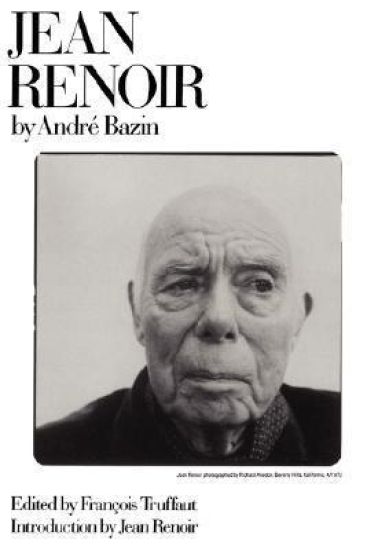
Jean Renoir

Jean Renoir

André Bazin

Da Capo Press Inc
1992
pokkari
This classic in the literature of cinema represents the convergence of the three leading figures of French film: Jean Renoir, universally considered the greatest French director André Bazin, the outstanding French film critic and theorist and François Truffaut, the pioneer of la nouvelle vague. Bazin left this examination of Renoir's films unfinished when he died in 1958 Truffaut collected and edited the essays, and added a comprehensive filmography in which Bazin, Truffaut, Jacques Rivette, Jean-Luc Godard, Eric Rohmer, and other Cahiers du Cinéma regulars comment on the films. Here are brilliant insights into the whole of Renoir's oeuvre, from the avant-garde fantasy of La Petite Marchande d'Allumettes, through the epic humanism of Grand Illusion and The Rules of the Game, to the quiet grace of The River and the profound theatricality of The Golden Coach. Bazin shows why Renoir is the critical figure in the development of cinema since the silent era, and how he went beyond montage to give the art new expressive potential. Renoir's work constitutes one of the most fully and beautifully elabourated visions in contemporary art, and nowhere is this humanistic vision better illuminated than in this book.