
Kirjailija
André Breton
Kirjat ja teokset yhdessä paikassa: 39 kirjaa, julkaisuja vuosilta 1969-2026, suosituimpien joukossa Nadja. Vertaile teosten hintoja ja tarkista saatavuus suomalaisista kirjakaupoista.
Mukana myös kirjoitusasut: Andre Breton
39 kirjaa
Kirjojen julkaisuhaarukka 1969-2026.

D cryptez Nadja avec l'analyse de Paideia ducation Que faut-il retenir de ce r cit autobiographique d'Andr Breton ? Retrouvez tout ce que vous devez savoir de ce chef-d'oeuvre de la litt rature fran aise dans une analyse de r f rence pour comprendre rapidement le sens de l'oeuvre. R dig e de mani re claire et accessible par un enseignant, cette fiche de lecture propose notamment un r sum , une tude des th mes principaux, des cl s de lecture et des pistes de r flexion. Une analyse litt raire compl te et d taill e pour mieux lire et comprendre le livre Paideia ducation en deux mots: Pl biscit aussi bien par les passionn s de litt rature que par les lyc ens, Paideia ducation est consid r comme une r f rence en mati re d'analyses d'oeuvres litt raires. Celles-ci ont t con ues pour guider les lecteurs travers la litt rature. Nos auteurs appartiennent aux milieux universitaire et de l' ducation, gage de s rieux pour vous faire d couvrir les plus grandes oeuvres de la litt rature mondiale.
Fiche de lecture Nadja de Breton (Analyse littéraire de référence et résumé complet)
André Breton
Les Editions Du Cenacle
2022
pokkari
La collection Conna tre une oeuvre vous offre la possibilit de tout savoir de Nadja d'Andr Breton gr ce une fiche de lecture aussi compl te que d taill e. La r daction, claire et accessible, a t confi e un sp cialiste universitaire. Cette fiche de lecture r pond une charte qualit mise en place par une quipe d'enseignants. Ce livre contient la biographie d'Andr Breton, la pr sentation de l'oeuvre, le r sum d taill , les raisons du succ s, les th mes principaux et l' tude du mouvement litt raire de l'auteur.
An indispensible classic of French poetry, this is a new translation Breton and Soupault's experiment with automatic writing, also the first known work of literary Surrealism. This edition includes the original French text. In the spring of 1919, two young men, Andre Breton and Philippe Soupault, one a student of law and the other of medicine, both in a state of moral shock after the carnage of the First World War, both driven to revolutionize literature and the world, embarked on an experiment in writing. Sick of the literary cultivation of an individual voice, sick of the "well-written", they wanted to unleash the power of the word as such, the better to create "a new morality" that would stand in place of "the prevailing morality, the source of all our trials and tribulations." They gave themselves some rules. They would write over the course of a week; they would write for only so much time on each day of the week; they would write fast and then faster. When the week was over, the writing would be over, and they would not go back to it or clean it up in any way. Finally, the project must proceed in perfect secrecy. They must not tell anyone what they were up to. This was how The Magnetic Fields, the first sustained exercise in automatic writing as a form of literary composition, came to be. By the end of Breton and Soupault's weeklong labor, Breton feared he was going mad, and the chapters of the book, the product of their daily sessions, astonished and confounded both writers. What they had wrought was full of weird comedy and fraught with uncertainty and even terror. It was in touch with primal things. "The end of everything" was the title of the book's gnomic final section, and yet Breton had arrived at a new beginning. The Magnetic Fields, their fellow surrealist Louis Aragon would later say, "was the moment at the dawn of the twentieth] centry on which the entire history of writing pivots." Charlotte Mandell's brilliant new translation of The Magnetic Fields, here accompanied by the original French, is the first in over 30 years.
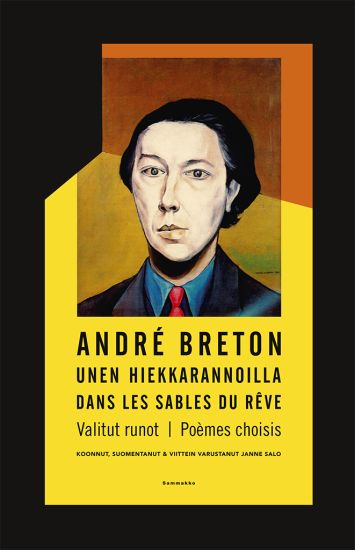
Unen hiekkarannoilla - Valitut runot esittelee ensimmäistä kertaa suomeksi surrealismin johtohahmon ranskalaisen Andre Bretonin (1896-1966) merkittävimmän runotuotannon. Kokoelmaan on valittu tekstejä varhaisista dadakokeiluista 20-luvun surrealistiseen automaattikirjoitukseen ja unikuvauksiin sekä 30-luvun intiimistä rakkauslyriikasta seuraavan vuosikymmenen jylhiin, tietoisuuden rajoilla häilyviin runoelmiin.Teoksen viiteosio valottaa tekstien taustoja ja avaa Surrealismin manifestin ja omaelämäkerrallisten kertomusten Nadja ja Hullu rakkaus kirjoittajan ajattelua ja poetiikkaa - tämän kapinallisen uneksijan, joka ikänsä kaiken vannoi runouden, rakkauden ja vapauden nimeen ja jonka usko mielikuvituksen ja ihmeellisen voimaan ei koskaan hiipunut.”Sanokaamme asia kerrasta poikki: ihmeellinen on aina kaunista, mikä tahansa ihmeellinen on kaunista, eikä mikään muu kuin ihmeellinen ole kaunista.”

A surrealist exploration of the marvelous in ancient, classic, and modern works from around the world • Reveals the “marvelous” in works from William Blake, Edgar Allen Poe, William Shakespeare, Chrétien de Troyes, and Arthur Rimbaud; legends and folktales from around the world; classics from Ovid, Plato, and Apuleius; Masonic ritual texts, Mesopotamia’s Epic of Gilgamesh, the Popol-Vuh, Lewis Caroll’s Alice through the Looking Glass, Solomon’s Song of Songs, and Goethe’s Faust First published in French as Miroir du merveilleux in 1940, Mirror of the Marvelous has long been considered one of the most significant and original books to have come out of the surrealist movement and Anaïs Nin suggested it as a source of inspiration, far ahead of its time. Pierre Mabille defines “the marvelous” as the point at which inner and outer realities are joined and the individual is simultaneously one with himself and with the world, thus recovering the true sense of the sacred. He shows how “the marvelous” goes beyond simply being a synonym for “the fantastic” to engage the entire emotional realm. Mabille cites a far-reaching range of texts, from the classic to the obscure, from Egyptian myth to Voodoo initiation ceremonies, from the ancient epic to the modern poem, from the creation myth to more contemporary visions of apocalypse. He includes surrealist analyses of works from William Blake, Edgar Allen Poe, William Shakespeare, Chrétien de Troyes, and Arthur Rimbaud; legends and folktales from Egypt, Iceland, Mexico, Africa, India, and other cultures; classics from Ovid, Plato, and Apuleius; Masonic ritual texts, Mesopotamia’s Epic of Gilgamesh, the Popol-Vuh, Lewis Caroll’s Alice through the Looking Glass, Solomon’s Song of Songs, and selections from Goethe’s Faust.



The Lost Steps (Les Pas perdus) is André Breton's first collection of critical and polemical essays. Composed between 1917 and 1923, these pieces trace his evolution during the years when he was emerging as a central figure in French (and European) intellectual life. They chronicle his tumultuous passage through the Dada movement, proclaim his explosive views on Modernism and its heroes, and herald the emergence of Surrealism itself. Along the way, we are given Breton's serious commentaries on his Modernist predecessors, Guillaume Apollinaire and Alfred Jarry, followed by his not-so-serious Dada manifestoes. Also included are portraits of Marcel Duchamp, Francis Picabia, and Breton's mysterious friend Jacques Vaché, as well as a crisis-by-crisis account of his dealing with Dada's leader, Tristan Tzara. Finally, Breton offers a first glimpse of Surrealism, the movement that was forever after identified with his name and that stands as a defining force in twentieth-century aesthetics.
Originally published in France in 1934, Break of Day is André Breton's second collection of critical and polemical essays, following The Lost Steps (Nebraska 1996). In fewer than two hundred pages, it captures the first full decade of the surrealist movement. The collection opens with an essay composed in 1924 that examines key elements of surrealism and concludes with Breton's harsh revaluation in 1933 of automatic writing. Among the other essays in the volume are "Burial Denied" and "In Self-Defense," two pieces that, in translator Mark Polizzotti's words, "mark surrealism's conscious break from the mainstream and the beginning of its attempts to work alongside the French Communist Party." Also included are "Psychiatry Standing before Surrealism," which addresses Breton's complex, ambivalent views on mental illness and the emerging psychiatric establishment; "Introduction to Achim von Arnim's Strange Tales," which reveals surrealism's debt to such precursors as the German romantics and delineates a surrealistic aesthetic of the macabre; and "Picasso in His Element," in which Breton demonstrates his formidable talents as a critic of the visual arts.

Der Sammelband vereint Vorträge zur Verkehrsplanung der Technischen Universität Hamburg-Harburg. Die Beiträge umfassen die infrastrukturellen Voraussetzungen, die systemische Gesamtsicht und die Modalitäten für das Erbringen von Verkehrsdienstleistungen. Das Buch zeigt auf, welche neuen Strategien nötig werden, um mit den wachsenden Verkehrsströmen in Zukunft umgehen zu können.

What Freud did for dreams, André Breton (1896–1966) does for despair: in its distortions he finds the marvelous, and through the marvelous the redemptive force of imagination. Originally published in 1932 in France, Les Vases communicants is an effort to show how the discoveries and techniques of surrealism could lead to recovery from despondency. This English translation makes available "the theories upon which the whole edifice of surrealism, as Breton conceived it, is based." In Communicating Vessels Breton lays out the problems of everyday experience and of intellect. His involvement with political thought and action led him to write about the relations between nations and individuals in a mode that moves from the quotidian to the lyrical. His dreams triggered a curious correspondence with Freud, available only in this book. As Caws writes, "The whole history of surrealism is here, in these pages."
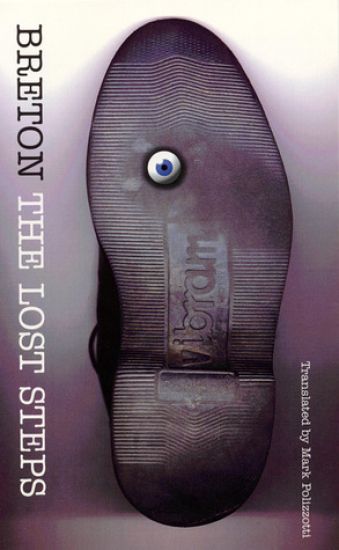
The Lost Steps (Les Pas perdus) is Andr Breton's first collection of critical and polemical essays. Composed between 1917 and 1923, these pieces trace his evolution during the years when he was emerging as a central figure in French (and European) intellectual life. They chronicle his tumultuous passage through the Dada movement, proclaim his explosive views on Modernism and its heroes, and herald the emergence of Surrealism itself. Along the way, we are given Breton's serious commentaries on his Modernist predecessors, Guillaume Apollinaire and Alfred Jarry, followed by his not-so-serious Dada manifestoes. Also included are portraits of Marcel Duchamp, Francis Picabia, and Breton's mysterious friend Jacques Vach , as well as a crisis-by-crisis account of his dealing with Dada's leader, Tristan Tzara. Finally, Breton offers a first glimpse of Surrealism, the movement that was forever after identified with his name and that stands as a defining force in twentieth-century aesthetics.
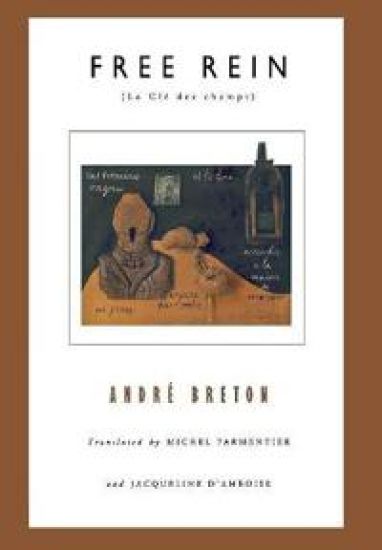
Free Rein is a gathering of seminal essays by André Breton, the foremost figure among the French surrealists. Written between 1936 and 1952, they include addresses, manifestoes, prefaces, exhibition pamphlets, and theoretical, polemical, and lyrical essays. Together they display the full span of Breton's preoccupations, his abiding faith in the early principles of surrealism, and the changing orientations, in light of crucial events of those years, of the surrealist movement within which he remained the leading force. Having broken decisively with Marxism in the mid-1930s, Breton repeatedly addresses the horrors of the Stalinist regime (which denounced him during the Moscow trials of 1936). He argues for the autonomy of art and poetry and condemns the subservience to "revolutionary" aims exemplified by socialist realism. Other articles reflect on aesthetic issues, cinema, music, and education and provide detailed meditations on the literary, artistic, and philosophical topics for which he is best known. Free Rein will prove indispensable for students of Breton, surrealism, and modern French and European culture.

Mad Love has been acknowledged an undisputed classic of the surrealist movement since its first publication in France in 1937. Its adulation of love as both mystery and revelation places it in the most abiding of literary traditions, but its stormy history and technical difficulty have prevented it from being translated into English until now. ""There has never been any forbidden fruit. Only temptation is divine,"" writes André Breton, leader of the surrealists in Paris in the 1920s and '30s. Mad Love is dedicated to defying ""the widespread opinion that love wears out, like the diamond, in its own dust."" Celebrating breton's own love and lover, the book unveils the marvelous in everyday encounters and the hidden depths of ordinary things.
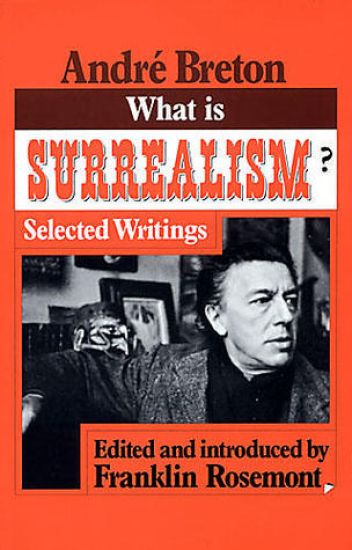
Presents the essential ideas of the founder of French surrealism