Kirjojen hintavertailu. Mukana 12 595 353 kirjaa ja 12 kauppaa.

Kirjailija

André J. Veldmeijer

Kirjat ja teokset yhdessä paikassa: 14 kirjaa, julkaisuja vuosilta 2012-2017, suosituimpien joukossa Catalogue of the footwear in the Coptic Museum (Cairo). Vertaile teosten hintoja ja tarkista saatavuus suomalaisista kirjakaupoista.

Mukana myös kirjoitusasut: Andre J. Veldmeijer

14 kirjaa

Kirjojen julkaisuhaarukka 2012-2017.

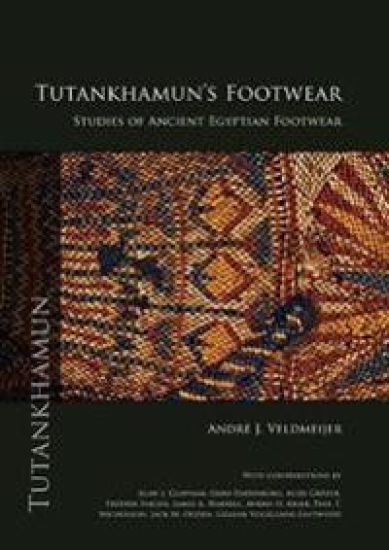
Tutankhamun’s Footwear

Tutankhamun’s Footwear

André J. Veldmeijer

Sidestone Press
2017
sidottu
The discovery of Tutankhamun’s tomb by Howard Carter in 1922 is one of the most significant archaeological discoveries of all time. It took Carter and his team 10 years to clear the contents of the tomb and among the objects found was a large collection of shoes and sandals. The footwear is analysed here in detail for the first time since the discovery using Carter’s records and Harry Burton’s excellent photographs along with the author’s analyses of the objects, all of which are housed in the Egyptian Museum, Cairo and the Luxor Museum.Several specialists contributed to the volume discussing the different materials (gold, vegetable fibre, birch bark, glass and faience, leather, gemstones) that were used in the footwear. Tutankhamun’s footwear is compared with other finds in order to be able to put it in a broader context. The footwear from the tomb of Yuya and Tjuiu, the King’s great-grandparents, are, therefore, analysed as well. In addition to the analysis, footwear in texts and two- and three-dimensional art is considered.With contributions byAlan J. Clapham, Erno Endenburg, Aude Gräzer, Fredrik Hagen, James A. Harrell, Mikko H. Kriek, Paul T. Nicholson, Jack M. Ogden, Gillian Vogelsang-Eastwood
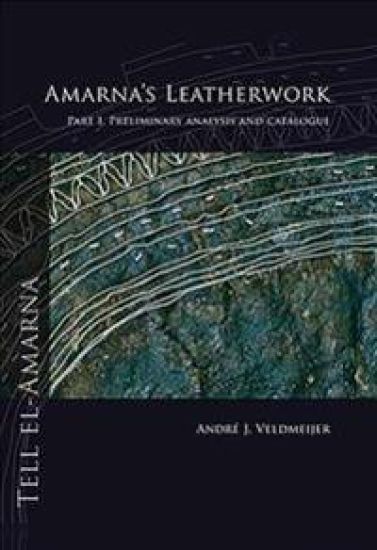
Amarna’s Leatherwork

Amarna’s Leatherwork

André J. Veldmeijer

Sidestone Press
2017
sidottu
The ancient Egyptian city of Tell el-Amarna (or Amarna, ancient Akhetaten) was the short-lived capital built by the controversial Pharaoh Akhenaten, probably the father of the famous Tutankhamun, and abandoned shortly after his death (c. 1336 BCE). It is one of the few Pharaonic cities to have been thoroughly excavated and is a rich source of information about the daily life of the ancient Egyptians.This volume, the first of two, presents the leatherwork excavated at the site by these various expeditions. The book consists of two parts: the catalogue and the preliminary analysis. The former presents the detailed description of the objects (among which chariot leather and footwear), accompanied by colour photographs and, where necessary, line- and construction drawings. The latter includes an explanation of the Amarna Leatherwork Project as well as preliminary interpretations of the finds.
Sailors, Musicians and Monks

Sailors, Musicians and Monks

André J. Veldmeijer

Sidestone Press
2017
sidottu
This volume describes, illustrates, and analysis the finds from the excavations at Dra Abu el-Naga, an important necropolis on the east bank of the Nile in Luxor (Egypt), which was in use from Middle Kingdom times until the early Christian era. Excavations of the site have been conducted by the German Archaeological Institute (DAI). A wide variety of leather objects or objects with leather parts have been discovered, including footwear, musical objects, loincloths as well as parts of furniture. The dating of these objects, mirroring the variety, ranges from Pharaonic to Ottoman. The present work describes these finds in detail, accompanied by colour photographs and drawings. The analysis includes the discussion of the provenance of the finds, the interpretation of the objects from a technological as well as typological point of view and dating.Dr. André J. Veldmeijer, Visiting Research Scholar of the American University in Cairo, has worked as an archaeologist in Egypt since 1995, specialising in, among other things, leatherwork and footwear. He (co-)directs several projects, including the Ancient Egyptian Leatherwork Project, which encompasses the Egyptian Museum Chariot Project and the Tutankhamun’s Sticks& Staves Project. He has published extensively, both for scientific and popular audiences.
Sailors, Musicians and Monks

Sailors, Musicians and Monks

André J. Veldmeijer

Sidestone Press
2017
nidottu
This volume describes, illustrates, and analysis the finds from the excavations at Dra Abu el-Naga, an important necropolis on the east bank of the Nile in Luxor (Egypt), which was in use from Middle Kingdom times until the early Christian era. Excavations of the site have been conducted by the German Archaeological Institute (DAI). A wide variety of leather objects or objects with leather parts have been discovered, including footwear, musical objects, loincloths as well as parts of furniture. The dating of these objects, mirroring the variety, ranges from Pharaonic to Ottoman. The present work describes these finds in detail, accompanied by colour photographs and drawings. The analysis includes the discussion of the provenance of the finds, the interpretation of the objects from a technological as well as typological point of view and dating.Dr. André J. Veldmeijer, Visiting Research Scholar of the American University in Cairo, has worked as an archaeologist in Egypt since 1995, specialising in, among other things, leatherwork and footwear. He (co-)directs several projects, including the Ancient Egyptian Leatherwork Project, which encompasses the Egyptian Museum Chariot Project and the Tutankhamun’s Sticks& Staves Project. He has published extensively, both for scientific and popular audiences.
Leatherwork from Elephantine (Aswan, Egypt)

Leatherwork from Elephantine (Aswan, Egypt)

André J. Veldmeijer

Sidestone Press
2017
nidottu
‘Leatherwork from Elephantine’ describes, illustrates and analyses the finds from the excavations at Elephantine island (Aswan, Egypt) that are conducted by the German Archaeological Institute (DAI), in collaboration with the Swiss Institute for Architectural and Archaeological Research on Ancient Egypt (SI). The majority of the finds are dated to periods well after the pharaonic era (4th century AD onwards), save for a few finds from the New Kingdom and the Middle Kingdom. The majority of finds are sandals and shoes. Most important for leatherwork/footwear studies, however, is the footwear from the Persian layers (6th-5th c. BC), which is distinctly different from ancient Egyptian leatherwork. Ample attention will be given to this important group.
Excavations of Gebel Adda (Lower Nubia)

Excavations of Gebel Adda (Lower Nubia)

André J. Veldmeijer

Sidestone Press
2016
sidottu
The excavations of Gebel Adda (Lower Nubia) by the American Research Center in Egypt’s Nubian Expedition (1962-1966, directed by Nicholas B. Millet) yielded large quantities of objects, including an impressive collection of leatherwork. The finds, which show a remarkable degree of preservation, date from the Meroitic Period (about AD 100-400) through the Christian (AD 641-1400) and Islamic Periods (AD 1400), and were mainly recovered from tombs.The large variety of leather objects, currently housed in the Royal Ontario Museum in Toronto, clearly indicates the high degree of the leatherwork technology of the Nubian people. Among the objects are the famous (post-)Merotic quivers, scabbards, and wrist guards. The present work – the first of two volumes on the leatherwork – however, presents only the footwear (sandals and shoes). It includes detailed descriptions, accompanied by colour photographs and, where necessary, drawings. The preliminary analysis, in which the Gebel Adda material is comprehensively compared with the finds from other sites, discusses topics such as typological development, diachronic change, and geographical variations.
Excavations of Gebel Adda (Lower Nubia)

Excavations of Gebel Adda (Lower Nubia)

André J. Veldmeijer

Sidestone Press
2016
nidottu
The excavations of Gebel Adda (Lower Nubia) by the American Research Center in Egypt’s Nubian Expedition (1962-1966, directed by Nicholas B. Millet) yielded large quantities of objects, including an impressive collection of leatherwork. The finds, which show a remarkable degree of preservation, date from the Meroitic Period (about AD 100-400) through the Christian (AD 641-1400) and Islamic Periods (AD 1400), and were mainly recovered from tombs.The large variety of leather objects, currently housed in the Royal Ontario Museum in Toronto, clearly indicates the high degree of the leatherwork technology of the Nubian people. Among the objects are the famous (post-)Merotic quivers, scabbards, and wrist guards. The present work – the first of two volumes on the leatherwork – however, presents only the footwear (sandals and shoes). It includes detailed descriptions, accompanied by colour photographs and, where necessary, drawings. The preliminary analysis, in which the Gebel Adda material is comprehensively compared with the finds from other sites, discusses topics such as typological development, diachronic change, and geographical variations.
Leatherwork from Elephantine (Aswan, Egypt)

Leatherwork from Elephantine (Aswan, Egypt)

André J. Veldmeijer

Sidestone Press
2016
sidottu
‘Leatherwork from Elephantine’ describes, illustrates and analyses the finds from the excavations at Elephantine island (Aswan, Egypt) that are conducted by the German Archaeological Institute (DAI), in collaboration with the Swiss Institute for Architectural and Archaeological Research on Ancient Egypt (SI). The majority of the finds are dated to periods well after the pharaonic era (4th century AD onwards), save for a few finds from the New Kingdom and the Middle Kingdom. The majority of finds are sandals and shoes. Most important for leatherwork/footwear studies, however, is the footwear from the Persian layers (6th-5th c. BC), which is distinctly different from ancient Egyptian leatherwork. Ample attention will be given to this important group.
Catalogue of the footwear in the Coptic Museum (Cairo)

Catalogue of the footwear in the Coptic Museum (Cairo)

Andre J. Veldmeijer; Salima Ikram

Sidestone Press
2014
nidottu
This catalogue presents the ancient Egyptian footwear in the collection of the Coptic Museum in Cairo. The catalogue contains detailed descriptions and measurements, photographs and drawings. Each description of a footwear category is followed by short discussions, addressing topics such as typology and dating. In addition a fairly large corpus of comparative material is presented as well, none of which has been published before. The present work will form an important resource for future study.This catalogue is one of the results of the Nuffic Tailor Made Training for the curators of the Coptic Museum in Cairo, jointly organized by the Netherlands-Flemish Institute in Cairo and the American University in Cairo in close collaboration with the Bibliotheca Alexandrina, the Coptic Museum Authorities and the Ministry of State for Antiquities Affairs. Dr. André J. Veldmeijer is Assistant Director for Egyptology of the Netherlands-Flemish Institute in Cairo and has worked as archaeologist in Egypt since 1995 as specialist in, among others, leatherwork and footwear. He (co-)directs several projects, such as the Ancient Egyptian Leatherwork Project, which includes the Egyptian Museum Chariot Project, and the Tutankhamun Sticks & Staves Project. He has published extensively, both scientifically as popular.Dr. Salima Ikram is Professor of Egyptology at the American University in Cairo, and has worked as an archaeologist in Egypt since 1986, directing the Animal Mummy Project, and co-directing the Predynastic Gallery project, the Egyptian Museum Chariot Project, and the North Kharga Oasis Survey. Dr. Ikram has lectured and published extensively, both for children and adults.
Leatherwork from Qasr Ibrim (Egypt). Part I

Leatherwork from Qasr Ibrim (Egypt). Part I

Andre J. Veldmeijer

Sidestone Press
2013
nidottu
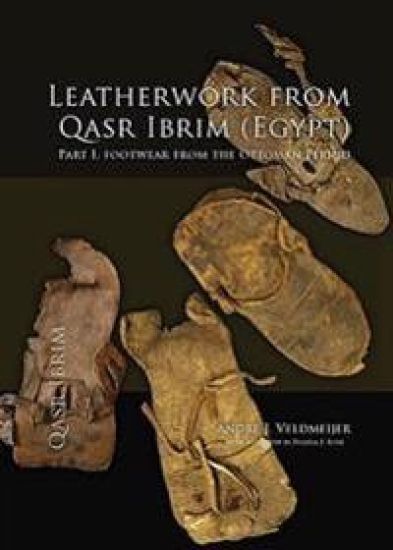
Throughout its long history, stretching from the 25th Dynasty (c. 752-656 BC) to the Ottoman Period (c. 1500-1811 AD), Qasr Ibrim was one of the most important settlements in Egyptian Nubia. The site has produced an unprecedented wealth of material and due to the – even for Egypt – extraordinary preservation circumstances, includes objects that are made of perishable organic materials, such as wood, leather, and flax.The present volume focuses on one of these groups: footwear that is made from leather and dated to the Ottoman Period. The footwear, recovered during the years that the Egypt Exploration Society worked at the site, is described in detail, including a pictorial record consisting of photographs and drawings (both technical and artist’s impressions). This is the first time that Ottoman footwear from Egypt (and outside of Egypt) has been analyzed in detail. The preliminary analysis focuses on footwear technology, within the framework of the Ancient Egyptian Footwear Project (AEFP; see www.leatherandshoes.nl). A broader interpretation will be combined with the results of the analyses of the finds from the other epochs of Qasr Ibrim’s history, such as the age of Christianity and the Meroitic Period.
Pterosaurs

Pterosaurs

Andre J. Veldmeijer; Mark Witton; Ilja Nieuwland

Sidestone Press
2012
nidottu
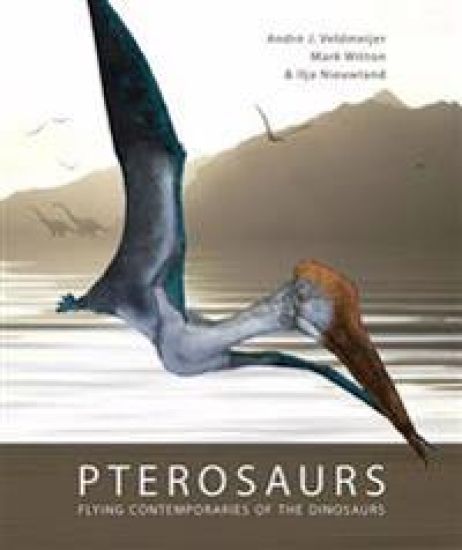
Pterosaurs or flying reptiles were the first vertebrates to evolve flight. These distant relatives of modern reptiles and dinosaurs lived from the Late Triassic (over 200 million years ago) to the end of the Cretaceous (about 65 million years ago) a span of some 135 million years. When they became extinct, no relatives survived them and as a result these prehistoric animals cannot readily be compared with our modern-day fauna. So what do we know of these highly succsessful animals? The present summary answers this and many more questions based on the most recent results of modern scientific research. After a short introduction to palaeontology as a science and its history related to pterosaurs, it explains what pterosaurs were, when and where they lived, and what they looked like. Topics such as disease, injury and reproduction are also discussed. Separated from this text are 'Mark explains' boxes. Each of these explanations puts one specific species in the spotlight and focuses on its lifestyle. They show how diverse pterosaurs were, from small insectivorous animals with a wingspan of nearly 40 centimetres to the biggest flying animals ever to take to the air, with wingspans of over 10 metres and with a way of life comparable to modern-day storks. The text is illustrated with many full colour photographs and beautiful palaeo-art prepared by experts in the field.
Sandals, shoes and other leatherwork from the Coptic Monastery Deir el-Bachit
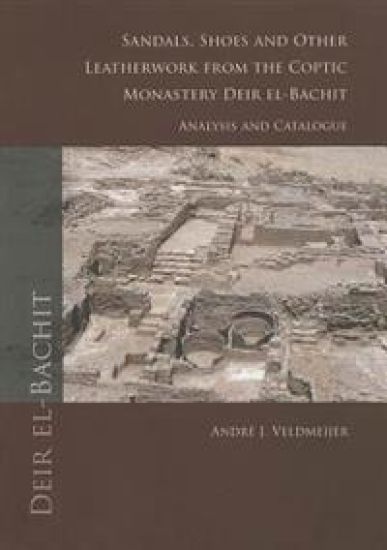
The Coptic monastery and cemetery Deir el-Bachit stands on the hilltop of Dra' Abu el-Naga, the well-known necropolis in Qurna (West Bank, Luxor). It is the largest Coptic monastery complex preserved in Western Thebes and the first monastery that has been systematically investigated. The excavation of the monastery was started as a DFG-Project des Ägyptologischen Instituts der Ludwig-Maximilians-Universität Muenchen in close collaboration with the Deutsches Archäologisches Institut Abteilung Kairo. Until the start of the investigations in 2001 with a survey, little research was done. After three seasons of preliminary research, full archaeological research was started in 2004. The leatherwork was studied in 2007, the present volume of which presents the results. The book consists of two parts: the analysis and a detailed catalogue, including colour images of all finds and, where necessary, line drawings. The finds are analysed within the framework of the excavation as well as within the frameworks of the Ancient Egyptian Leatherwork Project and the Ancient Egyptian Footwear Project (www.leatherandshoes.nl).
Tutankhamun's Footwear

Tutankhamun's Footwear

André J. Veldmeijer

Sidestone Press
2012
nidottu
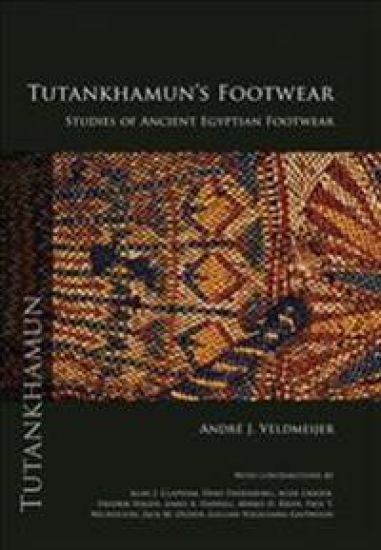
The discovery of Tutankhamun's tomb by Howard Carter in 1922 is one of the most significant archaeological discoveries of all time. It took Carter and his team 10 years to clear the contents of the tomb and among the objects found was a large collection of shoes and sandals. The footwear is analysed here in detail for the first time since the discovery using Carter's records and Harry Burton's excellent photographs along with the author's analyses of the objects, all of which are housed in the Egyptian Museum, Cairo and the Luxor Museum. Several specialists contributed to the volume discussing the different materials (gold, vegetable fibre, birch bark, glass and faience, leather, gemstones) that were used in the footwear. Tutankhamun's footwear is compared with other finds in order to be able to put it in a broader context. The footwear from the tomb of Yuya and Tjuiu, the King's great-grandparents, are, therefore, analysed as well. In addition to the analysis, footwear in texts and two- and three-dimensional art is considered.
Amarna's Leatherwork. Part I

Amarna's Leatherwork. Part I

Andre J. Veldmeijer

Sidestone Press
2012
nidottu
The ancient Egyptian city of Tell el-Amarna (or Amarna, ancient Akhetaten) was the short-lived capital built by the controversial Pharaoh Akhenaten, probably the father of the famous Tutankhamun, and abandoned shortly after his death (c. 1336 BCE). It is one of the few Pharaonic cities to have been thoroughly excavated and is a rich source of information about the daily life of the ancient Egyptians. This volume, the first of two, presents the leatherwork excavated at the site by these various expeditions. The book consists of two parts: the catalogue and the preliminary analysis. The former presents the detailed description of the objects (among which chariot leather and footwear), accompanied by colour photographs and, where necessary, line- and construction drawings. The latter includes an explanation of the Amarna Leatherwork Project as well as preliminary interpretations of the finds.