Kirjojen hintavertailu. Mukana 12 104 399 kirjaa ja 12 kauppaa.

Kirjailija

André Lacocque

Kirjat ja teokset yhdessä paikassa: 17 kirjaa, julkaisuja vuosilta 2003-2019, suosituimpien joukossa Ruth. Vertaile teosten hintoja ja tarkista saatavuus suomalaisista kirjakaupoista.

Mukana myös kirjoitusasut: Andre LaCocque

17 kirjaa

Kirjojen julkaisuhaarukka 2003-2019.

Ruth

Ruth

K. C. Hanson; Andre LaCocque

Augsburg Fortress
2004
sidottu
This volume provides a readable introduction to the narrative book of Ruth appropriate for the student, pastor, and scholar. LaCocque combines historical, literary, feminist, and liberationist approaches in an engaging synthesis. He argues that the book was written in the post-exilic period and that the author was a woman. Countering the fears and xenophobia of many in Jerusalem, the biblical author employed the notion of h.esed (kindness, loyalty, steadfast love), which transcends any national boundaries. LaCocque focuses on redemption and levirate marriage as the two legal issues that recur throughout the text of Ruth. Ruth comes from the despised people of Moab but becomes a model for Israel. Boaz, converted to the model of steadfast love, becomes both redeemer and levir for Ruth and thus fulfills the Torah. In the conclusion to his study, the author sketches some parallels with Jesus' hermeneutics of the Law as well as postmodern problems and solutions.
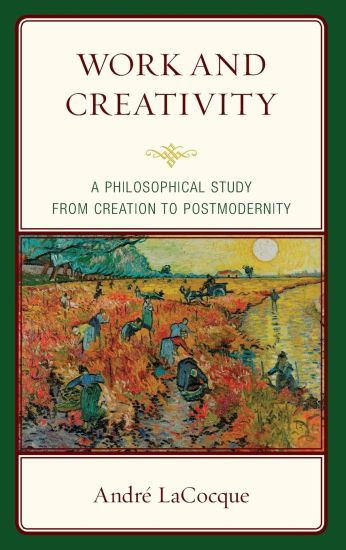
Work and Creativity

Work and Creativity

André LaCocque

Lexington Books/Fortress Academic
2019
sidottu
The Bible highly praises human creativity. In fact, work belongs to Adam’s very creation, homo faber in the image of deus faber (Gen. 2:15). Human production is nevertheless seen in the Bible as imbued with an ambiguous value. In Work and Creativity, André LaCocque reflects on the biblical understanding of labor, juxtaposing texts from the book of Genesis with the conceptions of work of psychoanalysts and philosophers such as Sigmund Freud and Karl Marx, and proposing a dialectical approach to human work and creativity.
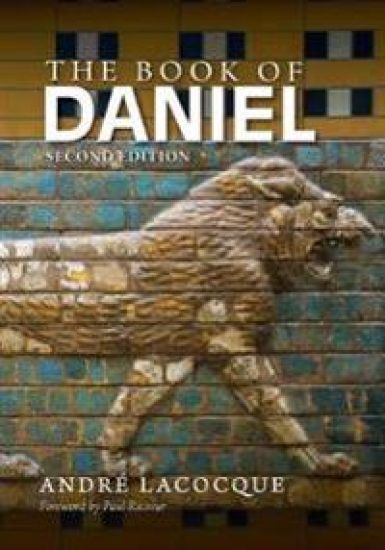
The Book of Daniel

The Book of Daniel

André Lacocque; Paul Ricoeur

Cascade Books
2018
pokkari
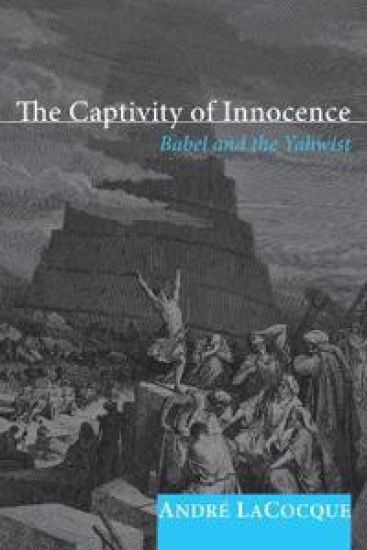
This is the second edition of a 1979 commentary on the book of Daniel. The commentary is completely revised, and the introduction in particular is here much extended and addresses fundamental questions regarding the book of Daniel and the apocalyptic movement it inaugurates (with 1 Enoch). Daniel is an indispensable trove and reference about issues like the apocalyptic vision of world's periodized history, the notion of Son of Man, messianism without a messiah, the belief in resurrection, the kingdom of God, the centrifugal spread of divine revelation, and the positive role of the Jewish diaspora. This edition is meant for scholars, college and university researchers, and students of the Bible (of the Old Testament and New Testament) in general. ""LaCocque brings to this book his vast knowledge of biblical and related texts and, in this second edition, integrates added insights gleaned from a lifetime of study and experience, along with his wisdom and good judgement. Scholars, pastors, and theological students are sure to devour this book with enthusiasm and joy."" --Doreen McFarlane, St. Paul Evangelical Lutheran Church, Niagara Falls, Ontario, Canada ""In this expanded edition, Andre LaCocque offers the serious scholar or student a richly drawn guide to the book of Daniel, especially its apocalyptic dimensions. He presents the necessary historical-critical arguments and explores the theological implications, firmly grounding the work in its historical context while preserving the multivalence of apocalyptic symbolism."" --Rachel S. Mikva, Chicago Theological Seminary ""This second edition of Lacocque's classic commentary on the book of Daniel revives interest in one of the 'strange books of the Bible.' New updated introductions and fresh critical discussions of the biblical text enhance this masterful commentary that is enriched by illuminating insights from rabbinic literature. Also, profound and existential reflections on life and the meaning of history give this ancient book pertinence and relevancy."" --Jacques Doukhan, Seventh-day Adventist Theological Seminary, Andrews University Andre LaCocque is emeritus professor of Hebrew Scripture and Director of the Center of Jewish-Christian Studies at the Chicago Theological Seminary. He is the author or coauthor of numerous books, including the Cascade Books trilogy on the Yahwist: The Trial of Innocence (2006), Onslaught against Innocence (2008) and The Captivity of Innocence (2009). Other volumes include Thinking Biblically (1998, with Paul Ricoeur) and Jesus the Central Jew (2015).
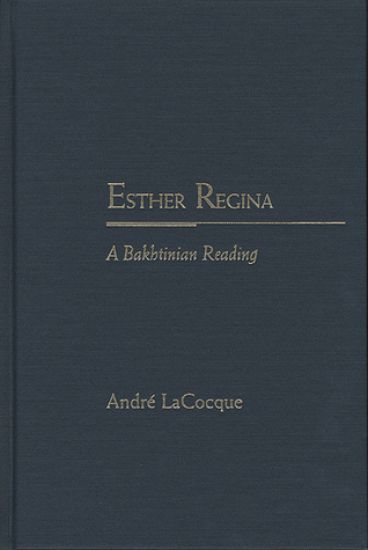
Esther Regina

Esther Regina

Andre LaCocque

Northwestern University Press
2007
nidottu
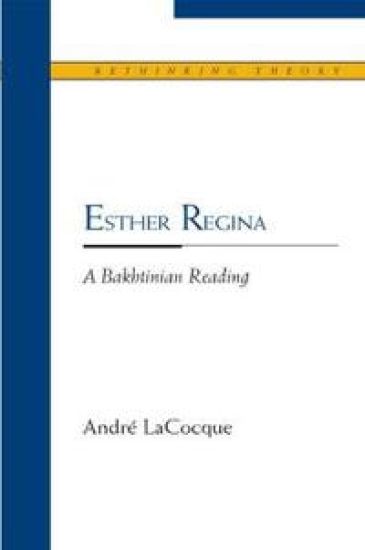
Readers and scholars often question the inclusion of the ""Book of Esther"" in the canon. Where, they wonder, do the book's flagrant displays of hatred, deceit, violence, and the antidotal grotesqueries of Purim figure in the biblical tradition? Such confusion, this book tells us, arises from a wrong appraisal of Esther's literary genre. Distinguished scriptural scholar Andre LaCocque draws on the lessons of Russian critic Mikhail Bakhtin to reveal the true comedic nature of the story of Esther and Mordecai. In particular, LaCocque finds in the book's grotesque elements - from royal banquets that last a half-year to an improbable succession of coincidences and reversals of fortunes neutralizing a planned genocide - a natural fit with Bakhtin's description of the ""carnivalesque."" Bakhtin's rediscovery of the carnivalesque employs such key notions and categories as the dialogic, the novelistic, the chronotopic, the polyphonic, and authoring-as-creating. Using these and other Bakhtinian tools, LaCocque rereads Esther to show how the book's comedic mood is paradoxically proportional to the catastrophic predicament of the Jews. Here, as biblical theocentrism shifts to Judeocentrism, we see how the carnivalesque becomes subversive of the Establishment and liberating. In ""Esther"", the underlying conviction is that Jewish survival is providential - and that anti-Semitism is anti-God. This is, as LaCocque tells us with a nod to Aristotle, a worthy lesson disguised as a ""low genre.
Esther Regina

Esther Regina

Andre LaCocque

Northwestern University Press
2007
sidottu
Readers and scholars often question the inclusion of the ""Book of Esther"" in the canon. Where, they wonder, do the book's flagrant displays of hatred, deceit, violence, and the antidotal grotesqueries of Purim figure in the biblical tradition? Such confusion, this book tells us, arises from a wrong appraisal of ""Esther's"" literary genre. Distinguished scriptural scholar Andre LaCocque draws on the lessons of Russian critic Mikhail Bakhtin to reveal the true comedic nature of the story of Esther and Mordecai. In particular, LaCocque finds in the book's grotesque elements - from royal banquets that last a half-year to an improbable succession of coincidences and reversals of fortunes neutralizing a planned genocide - a natural fit with Bakhtin's description of the ""carnivalesque."" Bakhtin's rediscovery of the carnivalesque employs such key notions and categories as the dialogic, the novelistic, the chronotopic, the polyphonic, and authoring-as-creating. Using these and other Bakhtinian tools, LaCocque rereads Esther to show how the book's comedic mood is paradoxically proportional to the catastrophic predicament of the Jews. Here, as biblical theocentrism shifts to Judeocentrism, we see how the carnivalesque becomes subversive of the Establishment and liberating. In ""Esther"", the underlying conviction is that Jewish survival is providential - and that anti-Semitism is anti-God. This is, as LaCocque tells us with a nod to Aristotle, a worthy lesson disguised as a ""low genre.
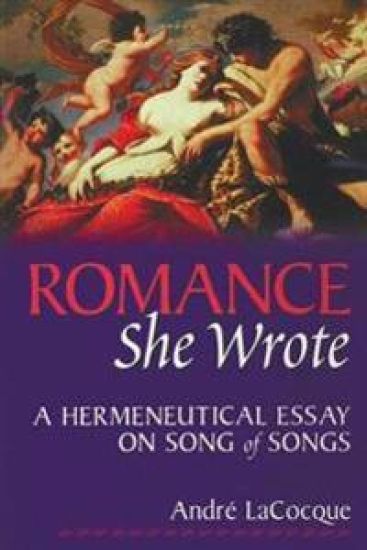
Romance, She Wrote

Romance, She Wrote

André Lacocque

Wipf Stock Publishers
2006
pokkari
Due in large measure to its unique literary genre, the Song of Songs has been interpreted in diverse ways. According to Andre LaCocque, this supports the notion that the issue with which any reader of the Song must come to grips is, first and foremost, a hermeneutical one. ""Once in a generation a biblical scholar unlocks the hidden secrets of an entire biblical book. Building upon a thorough knowledge of the full range of ancient and modern exegesis of the Song of Songs, Andre LaCocque--the rare combination of first-rate philologist, theologian, teacher, and preacher--proves that the Song of Songs is the work of a single ancient Hebrew poetess. This poetess, LaCocque demonstrates, writes neither about sex nor about marriage but about that extremely rare occurrence of the meeting and pairing of two human souls, which the Greeks call eros 'love, ' an event not so different from the equally rare meeting of a human person and God, which is often called 'religious experience.'"" --Mayer I. Gruber, Ben-Gurion University of the Negev, Beersheva, Israel ""Andre LaCocque has written a remarkable, postmodern study of the Song of Songs. On the one hand, it exemplifies the intertextual reading of the Bible as fully as any midrash, but on the other hand, he resists all attempts to harmonize the text with the pieties of tradition. Most of all it continues the 'critique from the margins' begun in his earlier book, The Feminine Unconventional, and shows that a senior, white, European male can have exceptional empathy with female sensitivity."" --John J. Collins, Holmes Professor of Old Testament Criticism and Interpretation, Yale Divinity School Andre LaCocque is Professor of Old Testament Emeritus at Chicago Theological Seminary. He is the author of The Trial of Innocence and The Feminine Unconventional and coauthor of Thinking Biblically: Exegetical and Hermeneutical Studies.
Thinking Biblically – Exegetical and Hermeneutical Studies

Thinking Biblically – Exegetical and Hermeneutical Studies

André Lacocque; Paul Ricoeur; David Pellauer

University of Chicago Press
2003
nidottu
This study discusses six crucial passages from the Old Testament, offering a commentary and new insights into their meaning. Employing a historical-critical method, the text takes account of archaeological, philological and historical research. This method is expanded to include the dynamic tradition of reading Scripture, including developments subsequent to the production of the original literary text. Also taken into account is the relation between the texts and the historical communities who read and interpreted them, together with philosophical speculation. The commentaries highlight the metaphorical structure of the passages and how they have served as catalysts for philosophical thinking from the Greeks to the modern age. Reading the Bible through different but complementary perspectives, the book seeks to reveal the familiar texts as vibrant, philosophically consequential and endlessly absorbing. The passages discussed are: the story of Adam and Eve; the commandment "thou shalt not kill"; "the valley of dry bones" passage from Ezekiel; Psalm 22; the "Song of Songs"; and the naming of God in Exodus 3;14.