Kirjailija
André Spicer
Kirjat ja teokset yhdessä paikassa: 14 kirjaa, julkaisuja vuosilta 2007-2025, suosituimpien joukossa A Companion to Film Noir. Vertaile teosten hintoja ja tarkista saatavuus suomalaisista kirjakaupoista.
Mukana myös kirjoitusasut: Andre Spicer
14 kirjaa
Kirjojen julkaisuhaarukka 2007-2025.
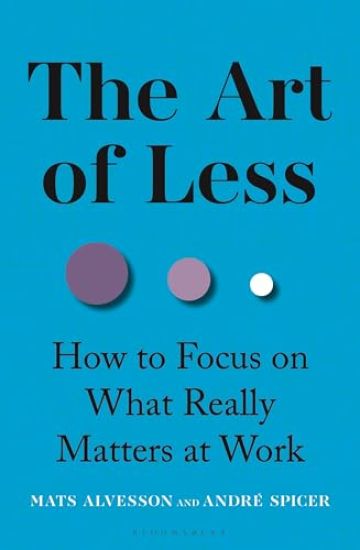
Achieve more by doing less…At work we often feel weighed down by an excess of initiatives, meetings, training and targets. Over-enthusiastic executives, interfering consultants and demanding stakeholders often get in the way of doing the ‘real work’. This leaves us feeling overwhelmed but underproductive.The Art of Less offers ideas for how to create a more effective and efficient organization by removing obstacles to meaningful work. Mats Alvesson and André Spicer explain how ‘organizational sludge’ gets in the way of performance, and what can be done about it. They show how unblocking systems and processes can improve work flow so people can focus more on the things that actually matter.The Art of Less is the essential guide to how overburdened managers and employees can break down barriers to more effective working and achieve more by doing less.
Dumhetsparadoxen : den funktionella dumhetens fördelar och fallgropar
Mats Alvesson; André Spicer
Fri Tanke Förlag
2019
pokkari
Det finns oräkneliga vardagsexempel på organisationer som accepterar det tveksamma, det absurda och det helt idiotiska allt från ohållbara management-trender till övertro på varumärke och image. Men en viss dos dumhet kan vara konstruktiv och ge goda kortsiktiga resultat: den kan uppmuntra folk att jobba på och ge drivkraft åt framgångar. Detta är dumhetsparadoxen.Dumhetsparadoxen utforskar den funktionella dumhetens för- och nackdelar. Upptäck vad som gör att ingen på en arbetsplats tänker självständigt eller hur du kan göra din arbetsplats mindre dum genom att utmana det tanklösa likformighet som ofta råder. Den är en väckarklocka för smarta organisationer och kloka människor som uppmanar oss att använda vår intelligens för att uppnå organisatorisk framgång och socialt välstånd.
"A comically committed exploration of current life-hacking wisdom in areas ranging from athletic and intellectual prowess to spirituality, creativity, wealth, and pleasure." —The New Yorker In these pages, the authors of the widely-acclaimed Wellness Syndrome throw themselves headlong into the techniques of self-optimization, a burgeoning movement that seeks to transcend the limits placed on us as mere humans, whether the feebleness of our bodies or our mental incapacities. Cederstrom and Spicer, devoted each month of a roller coaster year to a different way of improving themselves: January was Productivity, February their bodies, March their brains. June was for sex and September for money. Perhaps the trickiest was April, a month devoted to relationships, when their feelings for each other came under the microscope, with results that were both hilarious and painful. Carl thought Andre was only “dialing it in,” Andre felt Carl was too controlling. In fact, both proved themselves willing guinea pigs in an extraordinary (and sometimes downright dangerous) range of techniques and technologies, had hitherto undertaken little by way of self-improvement. They had rarely seen the inside of a gym, let alone utilized apps that deliver electric shocks in pursuit of improved concentration. They wore head-bands designed to optimize sleep, and attempted to boost their memory through learning associative techniques (failing to be admitted to MENSA bit learning pi to 1,000 digits), trained for weightlifting competitions, wrote what they (still) hope might become a bestselling Scandinavian detective story, attended motivational seminars and tantra workshops, went on new-age retreats and man-camps, and experimented with sex toys and productivity drugs. Andre even addressed a London subway car whilst (nearly) naked in an attempt to overcome a negative body image. Somewhat surprisingly, the two young professors survived this year of rigorous research. Further, they produced a hilarious and eye-opening book based upon it. Written in the form of two parallel diaries, Desperately Seeking Self-Improvement provides a biting analysis of the narcissism and individual competitiveness that increasingly pervades a culture in which social solutions are receding and individual self-improvement is the only option left.
Our organizations are flooded with empty talk. We are constantly "going forward" to lands of "deliverables", stopping off on the "journey" to "drill down" into "best practice". Being an expert at using management speak has become more important in corporate life than delivering long lasting results. The upshot is that meaningless corporate jargon is killing our organizations. In this book, management scholar the author argues we need to call this empty talk what it is: bullshit. The book looks at how organizations have become vast machines for manufacturing, distributing and consuming bullshit. It follows how the meaningless language of management has spread through schools, NGOs, politics and the media. Business Bullshit shows you how to spot business bullshit, considers why it is so popular, and outlines the impact it has on organizations and the people who work there. It also outlines what we can do to minimise bullshit at work. The author makes a case for why organizations need to avoid empty talk and reconnect with core activities.
Functional stupidity can be catastrophic. It can cause organisational collapse, financial meltdown and technical disaster. And there are countless, more everyday examples of organisations accepting the dubious, the absurd and the downright idiotic, from unsustainable management fads to the cult of leadership or an over-reliance on brand and image. And yet a dose of stupidity can be useful and produce good, short-term results: it can nurture harmony, encourage people to get on with the job and drive success. This is the stupidity paradox. The Stupidity Paradox tackles head-on the pros and cons of functional stupidity. You'll discover what makes a workplace mindless, why being stupid might be a good thing in the short term but a disaster in the longer term, and how to make your workplace a little less stupid by challenging thoughtless conformity. It shows how harmony and action in the workplace can be balanced with a culture of questioning and challenge. The book is a wake-up call for smart organisations and smarter people. It encourages us to use our intelligence fully for the sake of personal satisfaction, organisational success and the flourishing of society as a whole.
Känner du att du borde träna mer? Har du börjat räkna ditt kaloriintag i sömnen? Skäms du för att du inte är lyckligare? Kanske har du då drabbats av wellnessyndromet. I sin uppmärksammade nya bok hävdar Carl Cederström och André Spicer att det sociala kravet att maximera vårt välbefinnande har börjat vändas emot oss. Istället för att må bättre, har vi börjat känna oss skuldtyngda och ångestfyllda. I Wellnessyndromet får vi följa hälsofreaks som gör allt för att hitta den perfekta dieten, företagsatleter som startar dagen med ett hälsoparty och livsloggare som mäter allt, inklusive sina egna toalettvanor. I denna värld tycks personligt välbefinnande förväxlas med etiskt handlande. Visioner om social förändring krymps ned till drömmar om individuell transformering, politiska diskussioner ersätts av fördomsfullt moraliserande och vetenskapliga bevis blandas ihop med andliga villfarelser. Denna träffande och humoristiska diagnos av den pågående wellnesskulten bör läsas av alla som någon gång har känt sig misstänksamma mot dagens frenetiska sökande efter det perfekta livet. Istället för att maniskt ängslas för vår personliga hälsa och lycka, borde vi kanske oroa oss mer för den sjuklighet som ligger utanför vår kropp - i samhället och i världen
Not exercising as much as you should? Counting your calories in your sleep? Feeling ashamed for not being happier? You may be a victim of the wellness syndrome. In this ground-breaking new book, Carl Cederström and André Spicer argue that the ever-present pressure to maximize our wellness has started to work against us, making us feel worse and provoking us to withdraw into ourselves. The Wellness Syndrome follows health freaks who go to extremes to find the perfect diet, corporate athletes who start the day with a dance party, and the self-trackers who monitor everything, including their own toilet habits. This is a world where feeling good has become indistinguishable from being good. Visions of social change have been reduced to dreams of individual transformation, political debate has been replaced by insipid moralising, and scientific evidence has been traded for new-age delusions. A lively and humorous diagnosis of the cult of wellness, this book is an indispensable guide for everyone suspicious of our relentless quest to be happier and healthier.
A Companion to Film Noir
Andre Spicer; Helen Hanson
Wiley-Blackwell (an imprint of John Wiley Sons Ltd)
2013
sidottu
An authoritative companion that offers a wide-ranging thematic survey of this enduringly popular cultural form and includes scholarship from both established and emerging scholars as well as analysis of film noir's influence on other media including television and graphic novels. Covers a wealth of new approaches to film noir and neo-noir that explore issues ranging from conceptualization to cross-media influences Features chapters exploring the wider ‘noir mediascape’ of television, graphic novels and radio Reflects the historical and geographical reach of film noir, from the 1920s to the present and in a variety of national cinemas Includes contributions from both established and emerging scholars
In an age when large corporations dominate the economic and political landscape, it is tempting to think that their power goes largely unchecked. Originally published in 2007, Contesting the Corporation counters this view by showing that today's corporations are driven by political struggle, power plays and attempts to resist control. Building on a wide range of theoretical sources, Fleming and Spicer present an analysis of the different ways in which power operates within the modern workplace. They begin by building a theoretical perspective that synthesizes previous investigations of power and resistance, identifying struggle as a key concept. Each chapter illustrates a different dimension of workplace struggle through an array of original empirical studies relating to sexuality, cynicism, new social movements and new-wave trade unionism. The book concludes by demonstrating that social justice claims underlie even the most innocuous forms of resistance, helping to transform some of the largest modern corporations.
This book asks what lies behind the friendly face of the entrepreneur. It challenges the widespread idea that entrepreneurship is a necessary and good thing, subjecting 'the entrepreneur' to critical analysis. Unmasking the Entrepreneur demonstrates the socially embedded nature of entrepreneurship and considers the history, ethics and politics of entrepreneurship. Drawing on a range of ideas from critical social theory and philosophy, it investigates entrepreneurship in unusual places such as among illegal immigrants and revolutionary France. Ultimately, this book offers a unique and powerful critique of the very idea of the entrepreneur.
In an age when large corporations dominate the economic and political landscape, it is tempting to think that their power goes largely unchecked. Originally published in 2007, Contesting the Corporation counters this view by showing that today's corporations are driven by political struggle, power plays and attempts to resist control. Building on a wide range of theoretical sources, Fleming and Spicer present an analysis of the different ways in which power operates within the modern workplace. They begin by building a theoretical perspective that synthesizes previous investigations of power and resistance, identifying struggle as a key concept. Each chapter illustrates a different dimension of workplace struggle through an array of original empirical studies relating to sexuality, cynicism, new social movements and new-wave trade unionism. The book concludes by demonstrating that social justice claims underlie even the most innocuous forms of resistance, helping to transform some of the largest modern corporations.