Kirjojen hintavertailu. Mukana 12 390 323 kirjaa ja 12 kauppaa.

Kirjailija

Andreas C. Bryhn

Kirjat ja teokset yhdessä paikassa: 12 kirjaa, julkaisuja vuosilta 2008-2024, suosituimpien joukossa HERRING - Silber der Ozeane. Vertaile teosten hintoja ja tarkista saatavuus suomalaisista kirjakaupoista.

Mukana myös kirjoitusasut: Andreas C Bryhn

12 kirjaa

Kirjojen julkaisuhaarukka 2008-2024.

HERRING - Silber der Ozeane

HERRING - Silber der Ozeane

Morten Bryhn; Andreas C Bryhn

Verlag Unser Wissen
2024
pokkari
Das Silber der Ozeane, der K nig der Meere - der Hering hat viele Namen. In diesem Buch geht es um Omega3-Nahrungserg nzungskapseln, die aus Herings l hergestellt werden, einer Omega3-Quelle, die bisher noch nicht verwendet wurde. In Kapitel 1 werden der atlantische Hering, seine Bedeutung f r die Menschen und Kulturen sowie die Vorteile, die er mit sich bringt, vorgestellt. In Kapitel 2 werden zwei von Experten begutachtete Tierstudien beschrieben, in denen Herings lkapseln verwendet wurden; in der einen werden die Auswirkungen der Bioverf gbarkeit von Herings l mit Placebo und der Aufnahme von Anchoveta- l verglichen, in der anderen werden die biologischen Auswirkungen der Aufnahme von Herings l beschrieben. In Kapitel 3 wird eine von Experten begutachtete Humanstudie ber die Auswirkungen des Verzehrs von Herings lkapseln auf den menschlichen Blutgehalt beschrieben.
HERRING - L'argent des océans

HERRING - L'argent des océans

Morten Bryhn; Andreas C Bryhn

Editions Notre Savoir
2024
pokkari
L'argent des oc ans, le roi de la mer, le hareng porte de nombreux noms. Ce livre traite des capsules de compl ments alimentaires om ga-3 fabriqu s partir d'huile de hareng, une source d'om ga-3 qui n'a jamais t utilis e auparavant. Le chapitre 1 pr sente le hareng de l'Atlantique, son importance pour les peuples et les cultures, et les bienfaits qu'il apporte. Le chapitre 2 d crit deux tudes animales valu es par des pairs et utilisant des capsules d'huile de hareng, l'une comparant les effets de biodisponibilit de l'huile de hareng au placebo et la consommation d'huile d'Anchoveta, et l'autre d crivant les effets biologiques de la consommation d'huile de hareng. Le chapitre 3 rend compte d'une tude humaine valu e par des pairs sur l'effet de la consommation de capsules d'huile de hareng sur le contenu sanguin humain.
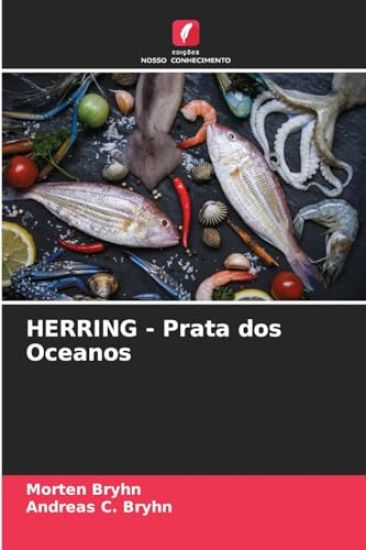
HERRING - Prata dos Oceanos

HERRING - Prata dos Oceanos

Morten Bryhn; Andreas C Bryhn

Edicoes Nosso Conhecimento
2024
pokkari
A prata dos oceanos, o rei do mar, o arenque tem muitos nomes. Este livro sobre c psulas de suplemento alimentar de mega 3 feitas de leo de arenque, uma fonte de mega 3 que nunca foi utilizada antes. O cap tulo 1 apresenta o arenque do Atl ntico, o seu significado para os povos e culturas e os benef cios que traz. O cap tulo 2 descreve dois estudos animais revistos por pares que utilizam c psulas de leo de arenque; um compara os efeitos de biodisponibilidade do leo de arenque com o placebo e a ingest o de leo de anchoveta, e outro descreve os efeitos biol gicos da ingest o de leo de arenque. O Cap tulo 3 descreve um estudo humano, revisto por pares, sobre o efeito no sangue humano do consumo de c psulas de leo de arenque.
HERRING - Argento degli oceani

HERRING - Argento degli oceani

Morten Bryhn; Andreas C Bryhn

Edizioni Sapienza
2024
pokkari
L'argento degli oceani, il re del mare; l'aringa ha molti nomi. Questo libro tratta delle capsule di integratori alimentari di omega3 a base di olio di aringa, una fonte di omega3 mai utilizzata prima. Il capitolo 1 presenta l'aringa dell'Atlantico, il suo significato per le persone e le culture e i benefici che apporta. Il capitolo 2 descrive due studi sugli animali, sottoposti a revisione paritaria, che utilizzano capsule di olio di aringa: uno che confronta gli effetti di biodisponibilit dell'olio di aringa con il placebo e l'assunzione di olio di Anchoveta, e un altro che descrive gli effetti biologici dell'assunzione di olio di aringa. Il capitolo 3 illustra uno studio sull'uomo, sottoposto a revisione paritaria, sugli effetti del consumo di capsule di olio di aringa sul contenuto del sangue umano.
The Fish Production Potential of the Baltic Sea

The Fish Production Potential of the Baltic Sea

Lars Håkanson; Henrik Ragnarsson Stabo; Andreas C. Bryhn

Springer-Verlag Berlin and Heidelberg GmbH Co. K
2012
nidottu
It presents a new approach to set fish quota based on holistic ecosystem modeling (the CoastWeb-model) and also a plan to optimize a sustainable management of the Baltic Sea including a cost-benefit analysis. This plan accounts for the production of prey and predatory fish under different environmental conditions, professional fishing, recreational fishing and fish cage farm production plus an analysis of associated economic values. Several scenarios and remedial strategies for Baltic Sea management are discussed and an "optimal" strategy motivated and presented, which challenges the HELCOM strategy that was accepted by the Baltic States in November 2007. The strategy advocated in this book would create more than 7000 new jobs, the total value of the fish production would be about 1600 million euro per year plus 1000 million euro per year related to the willingness-to-pay to combat the present conditions in the Baltic Sea. Our strategy would cost about 370 million euro whereas the HELCOM strategy would cost about 3100 million euro per year. The "optimal" strategy is based on a defined goal - that the water clarity in the Gulf of Finland should return to what it was 100 years ago.
Eutrophication in the Baltic Sea

Eutrophication in the Baltic Sea

Lars Håkanson; Andreas C. Bryhn

Springer-Verlag Berlin and Heidelberg GmbH Co. K
2010
nidottu
For many years the reduction of eutrophication in the Baltic Sea has been a hot issue for mass-media, science, political parties and environmental action groups with manifold implications related to fisheries (will the Baltic cod survive?), sustainable coastal development (have billions of Euros been wasted on nitrogen reductions?), ecotoxicology (can we safely eat Baltic fish?). This book takes a holistic process-based ecosystem perspective on the eutrophication in the Baltic Sea, with a focus on the factors regulating how the system would respond to changes in nutrient loading. This includes a very special process for the Baltic Sea: land uplift. After being depressed by the glacial ice, the land is now slowly rising adding vast amounts of previously deposited nutrients and clay particles to the system. 110,000 to 140,000 tons of phosphorus per year are added to the system from land uplift, in comparison to the 30,000 tons of phosphorus per year from rivers.
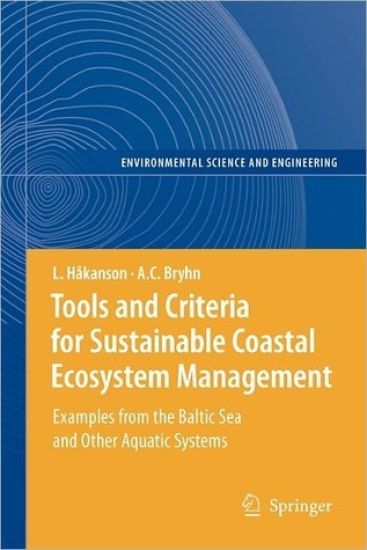
Tools and Criteria for Sustainable Coastal Ecosystem Management

Tools and Criteria for Sustainable Coastal Ecosystem Management

Lars Håkanson; Andreas C. Bryhn

Springer-Verlag Berlin and Heidelberg GmbH Co. K
2010
nidottu
The aim of this book is to discuss practically useful (operational) bioindicators for sustainable coastal management, criteria for coastal area sensitivity to eutrophication and an approach set a "biological value" of coastal areas. These bioindicators should meet defined criteria for practical usefulness, e.g., they should be simple to understand and apply to managers and scientists with different educational backgrounds. Central aspects for this book concern effect-load-sensitivity analyses. One and the same nutrient loading may cause different effects in coastal areas of different sensitivity. Remedial measures should be carried out in a cost-effective manner and this book discusses methods and criteria for this. Remedial strategies should generally focus on phosphorus rather than nitrogen because the effects of nitrogen reductions can rarely be predicted well and nitrogen reductions may favour the bloom of harmful cyanobacteria. Three case-studies exemplify the practical use of the bioindicators and concepts discussed in the book. The first concerns how local emissions of nutrients affect the receiving waters when all important nutrient fluxes are accounted for. The second concerns how to find reference values for "good" ecological status to set targets for remedial actions. The third gives a reconstruction of eutrophication. If the development during the last 100 years can be understood, key prerequisites to turn the development would be at hand. This book should attract considerable interest from researchers in marine ecology, consultants and administrators interested in management and studies of coastal systems.
The Fish Production Potential of the Baltic Sea

The Fish Production Potential of the Baltic Sea

Lars Håkanson; Henrik Ragnarsson Stabo; Andreas C. Bryhn

Springer-Verlag Berlin and Heidelberg GmbH Co. K
2010
sidottu
It presents a new approach to set fish quota based on holistic ecosystem modeling (the CoastWeb-model) and also a plan to optimize a sustainable management of the Baltic Sea including a cost-benefit analysis. This plan accounts for the production of prey and predatory fish under different environmental conditions, professional fishing, recreational fishing and fish cage farm production plus an analysis of associated economic values. Several scenarios and remedial strategies for Baltic Sea management are discussed and an "optimal" strategy motivated and presented, which challenges the HELCOM strategy that was accepted by the Baltic States in November 2007. The strategy advocated in this book would create more than 7000 new jobs, the total value of the fish production would be about 1600 million euro per year plus 1000 million euro per year related to the willingness-to-pay to combat the present conditions in the Baltic Sea. Our strategy would cost about 370 million euro whereas the HELCOM strategy would cost about 3100 million euro per year. The "optimal" strategy is based on a defined goal - that the water clarity in the Gulf of Finland should return to what it was 100 years ago.
Eutrophication in the Baltic Sea

Eutrophication in the Baltic Sea

Lars Håkanson; Andreas C. Bryhn

Springer-Verlag Berlin and Heidelberg GmbH Co. K
2008
sidottu
For many years the reduction of eutrophication in the Baltic Sea has been a hot issue for mass-media, science, political parties and environmental action groups with manifold implications related to fisheries (will the Baltic cod survive?), sustainable coastal development (have billions of Euros been wasted on nitrogen reductions?), ecotoxicology (can we safely eat Baltic fish?). This book takes a holistic process-based ecosystem perspective on the eutrophication in the Baltic Sea, with a focus on the factors regulating how the system would respond to changes in nutrient loading. This includes a very special process for the Baltic Sea: land uplift. After being depressed by the glacial ice, the land is now slowly rising adding vast amounts of previously deposited nutrients and clay particles to the system. 110,000 to 140,000 tons of phosphorus per year are added to the system from land uplift, in comparison to the 30,000 tons of phosphorus per year from rivers.
Tools and Criteria for Sustainable Coastal Ecosystem Management

Tools and Criteria for Sustainable Coastal Ecosystem Management

Lars Håkanson; Andreas C. Bryhn

Springer-Verlag Berlin and Heidelberg GmbH Co. K
2008
sidottu
The aim of this book is to discuss practically useful (operational) bioindicators for sustainable coastal management, criteria for coastal area sensitivity to eutrophication and an approach set a "biological value" of coastal areas. These bioindicators should meet defined criteria for practical usefulness, e.g., they should be simple to understand and apply to managers and scientists with different educational backgrounds. Central aspects for this book concern effect-load-sensitivity analyses. One and the same nutrient loading may cause different effects in coastal areas of different sensitivity. Remedial measures should be carried out in a cost-effective manner and this book discusses methods and criteria for this. Remedial strategies should generally focus on phosphorus rather than nitrogen because the effects of nitrogen reductions can rarely be predicted well and nitrogen reductions may favour the bloom of harmful cyanobacteria. Three case-studies exemplify the practical use of the bioindicators and concepts discussed in the book. The first concerns how local emissions of nutrients affect the receiving waters when all important nutrient fluxes are accounted for. The second concerns how to find reference values for "good" ecological status to set targets for remedial actions. The third gives a reconstruction of eutrophication. If the development during the last 100 years can be understood, key prerequisites to turn the development would be at hand. This book should attract considerable interest from researchers in marine ecology, consultants and administrators interested in management and studies of coastal systems.