Kirjojen hintavertailu. Mukana 12 390 323 kirjaa ja 12 kauppaa.

Kirjailija

Andreas Höfele

Kirjat ja teokset yhdessä paikassa: 5 kirjaa, julkaisuja vuosilta 2011-2022, suosituimpien joukossa Carl Schmitt Und Die Literatur. Vertaile teosten hintoja ja tarkista saatavuus suomalaisista kirjakaupoista.

Mukana myös kirjoitusasut: Andreas Hofele

5 kirjaa

Kirjojen julkaisuhaarukka 2011-2022.

Carl Schmitt Und Die Literatur

Carl Schmitt Und Die Literatur

Andreas Hofele

Duncker Humblot
2022
sidottu
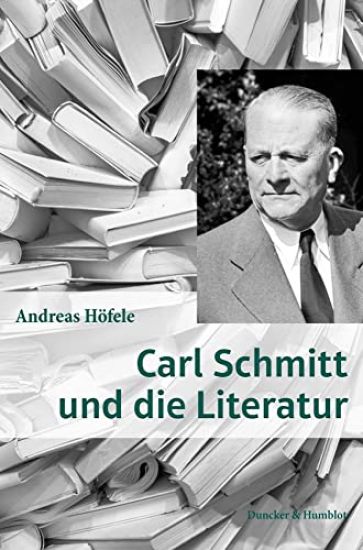
Andreas Hofeles Buch ist die erste Gesamtdarstellung von Carl Schmitts Umgang mit der Literatur. Es rekonstruiert die intellektuelle Biographie des umstrittenen Staatsrechtlers im Lichte der in den verschiedenen Phasen seines langen Lebens jeweils wichtigsten literarischen Autoren, Werke und Figuren. Schmitt war mit Dichtern befreundet, er hat uber Literatur geschrieben und auch selber literarische Texte verfasst. Vor allem aber war ihm die Literatur zeitlebens eine unentbehrliche Denkressource. Das Buch beschreibt die politischen und personlichen Konstellationen, von denen Schmitts Umgang mit Literatur gepragt war und in denen er Resonanz fand. Es zeigt, dass die Literatur kein Nebenschauplatz des Schmitt'schen Denkens ist. Sie ist Spiegel und immer wieder zentraler Referenzrahmen fur Schmitts Sicht auf die Zeitgeschichte und fur die mythische Uberhohung seiner eigenen Rolle in ihr.
No Hamlets

No Hamlets

Andreas Höfele

Oxford University Press
2021
nidottu
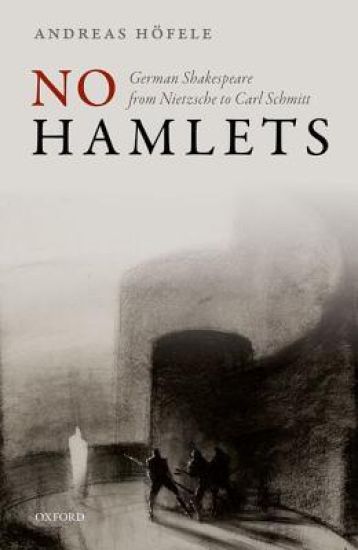
No Hamlets is the first critical account of the role of Shakespeare in the intellectual tradition of the political right in Germany from the founding of the Empire in 1871 to the 'Bonn Republic' of the Cold War era. In this sustained study, Andreas Höfele begins with Friedrich Nietzsche and follows the rightist engagement with Shakespeare to the poet Stefan George and his circle, including Ernst Kantorowicz, and the literary efforts of the young Joseph Goebbels during the Weimar Republic, continuing with the Shakespeare debate in the Third Reich and its aftermath in the controversy over 'inner emigration' and concluding with Carl Schmitt's Shakespeare writings of the 1950s. Central to this enquiry is the identification of Germany and, more specifically, German intellectuals with Hamlet. The special relationship of Germany with Shakespeare found highly personal and at the same time highIy political expression in this recurring identification, and in its denial. But Hamlet is not the only Shakespearean character with strong appeal: Carl Schmitt's largely still unpublished diaries of the 1920s reveal an obsessive engagement with Othello which has never before been examined. Interest in German philosophy and political thought has increased in recent Shakespeare studies. No Hamlets brings historical depth to this international discussion. Illuminating the constellations that shaped and were shaped by specific appropriations of Shakespeare, Höfele shows how individual engagements with Shakespeare and a whole strand of Shakespeare reception were embedded in German history from the 1870s to the 1950s and eventually 1989, the year of German reunification.
No Hamlets

No Hamlets

Andreas Höfele

Oxford University Press
2016
sidottu
No Hamlets is the first critical account of the role of Shakespeare in the intellectual tradition of the political right in Germany from the founding of the Empire in 1871 to the 'Bonn Republic' of the Cold War era. In this sustained study, Andreas Höfele begins with Friedrich Nietzsche and follows the rightist engagement with Shakespeare to the poet Stefan George and his circle, including Ernst Kantorowicz, and the literary efforts of the young Joseph Goebbels during the Weimar Republic, continuing with the Shakespeare debate in the Third Reich and its aftermath in the controversy over 'inner emigration' and concluding with Carl Schmitt's Shakespeare writings of the 1950s. Central to this enquiry is the identification of Germany and, more specifically, German intellectuals with Hamlet. The special relationship of Germany with Shakespeare found highly personal and at the same time highIy political expression in this recurring identification, and in its denial. But Hamlet is not the only Shakespearean character with strong appeal: Carl Schmitt's largely still unpublished diaries of the 1920s reveal an obsessive engagement with Othello which has never before been examined. Interest in German philosophy and political thought has increased in recent Shakespeare studies. No Hamlets brings historical depth to this international discussion. Illuminating the constellations that shaped and were shaped by specific appropriations of Shakespeare, Höfele shows how individual engagements with Shakespeare and a whole strand of Shakespeare reception were embedded in German history from the 1870s to the 1950s and eventually 1989, the year of German reunification.
Stage, Stake, and Scaffold

Stage, Stake, and Scaffold

Andreas Höfele

Oxford University Press
2014
nidottu
The powerful exchanges between stage, stake, and scaffold - the theatre, the bear garden and the spectacle of public execution - crucially informed Shakespeare's explorations into the construction and workings of 'the human'. The theatre's family resemblance to animal baiting and the spectacle of punishment, its sharing of the same basic type of performance space -- a theatre-in-the-round, a scaffold, stake or platform surrounded by spectators -- bred an ever-ready potential for a transfer of images and meanings. The staging of one of these kinds of performance is always framed by an awareness of the other two, whose presence is never quite erased and often, indeed, emphatically foregrounded. Situating Shakespearean drama within its material environment, Andreas Höfele explores how this spill-over affects the way Shakespeare models his human characters and his understanding of 'human character' in general. His dramatis personae are infused with a degree of animality that a later, more specifically Cartesian, anthropology would categorically efface. Readings based on such an anthropology tend to reduce Shakespeare's teeming multitude of animal references to a stable marker of moral, social, and ontological difference, 'beast' being everything 'man' is not or ought not to be. In contrast, Höfele argues that Shakespearean notions of humanity rely just as much on inclusion as on exclusion of the animal. Humans and animals face each other across the species divide, but the divide proves highly permeable.
Stage, Stake, and Scaffold

Stage, Stake, and Scaffold

Andreas Höfele

Oxford University Press
2011
sidottu
The powerful exchanges between stage, stake, and scaffold - the theatre, the bear garden and the spectacle of public execution - crucially informed Shakespeare's explorations into the construction and workings of 'the human'. The theatre's family resemblance to animal baiting and the spectacle of punishment, its sharing of the same basic type of performance space - a theatre-in-the-round, a scaffold, stake or platform surrounded by spectators - bred an ever-ready potential for a transfer of images and meanings. The staging of one of these kinds of performance is always framed by an awareness of the other two, whose presence is never quite erased and often, indeed, emphatically foregrounded. Situating Shakespearean drama within its material environment, Andreas Höfele explores how this spill-over affects the way Shakespeare models his human characters and his understanding of 'human character' in general. His dramatis personae are infused with a degree of animality that a later, more specifically Cartesian, anthropology would categorically efface. Readings based on such an anthropology tend to reduce Shakespeare's teeming multitude of animal references to a stable marker of moral, social, and ontological difference, 'beast' being everything 'man' is not or ought not to be. In contrast, Höfele argues that Shakespearean notions of humanity rely just as much on inclusion as on exclusion of the animal. Humans and animals face each other across the species divide, but the divide proves highly permeable.