Kirjojen hintavertailu. Mukana 12 595 353 kirjaa ja 12 kauppaa.

Kirjailija

Andreas Hüttemann

Kirjat ja teokset yhdessä paikassa: 8 kirjaa, julkaisuja vuosilta 1996-2023, suosituimpien joukossa Idealisierungen und das Ziel der Physik. Vertaile teosten hintoja ja tarkista saatavuus suomalaisista kirjakaupoista.

Mukana myös kirjoitusasut: Andreas Huttemann

8 kirjaa

Kirjojen julkaisuhaarukka 1996-2023.

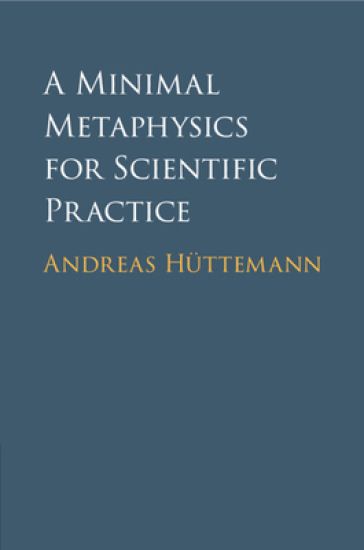
A Minimal Metaphysics for Scientific Practice

A Minimal Metaphysics for Scientific Practice

Andreas Hüttemann

Cambridge University Press
2023
pokkari
What are the metaphysical commitments which best 'make sense' of our scientific practice (rather than our scientific theories)? In this book, Andreas Hüttemann provides a minimal metaphysics for scientific practice, i.e. a metaphysics that refrains from postulating any structure that is explanatorily irrelevant. Hüttemann closely analyses paradigmatic aspects of scientific practice, such as prediction, explanation and manipulation, to consider the questions whether and (if so) what metaphysical presuppositions best account for these practices. He looks at the role which scientific generalisation (laws of nature) play in predicting, testing, and explaining the behaviour of systems. He also develops a theory of causation in terms of quasi-inertial processes and interfering factors, and he proposes an account of reductive practices that makes minimal metaphysical assumptions. His book will be valuable for scholars and advanced students working in both philosophy of science and metaphysics.
A Minimal Metaphysics for Scientific Practice

A Minimal Metaphysics for Scientific Practice

Andreas Hüttemann

Cambridge University Press
2021
sidottu
What are the metaphysical commitments which best 'make sense' of our scientific practice (rather than our scientific theories)? In this book, Andreas Hüttemann provides a minimal metaphysics for scientific practice, i.e. a metaphysics that refrains from postulating any structure that is explanatorily irrelevant. Hüttemann closely analyses paradigmatic aspects of scientific practice, such as prediction, explanation and manipulation, to consider the questions whether and (if so) what metaphysical presuppositions best account for these practices. He looks at the role which scientific generalisation (laws of nature) play in predicting, testing, and explaining the behaviour of systems. He also develops a theory of causation in terms of quasi-inertial processes and interfering factors, and he proposes an account of reductive practices that makes minimal metaphysical assumptions. His book will be valuable for scholars and advanced students working in both philosophy of science and metaphysics.
Ursachen

Ursachen

Andreas Hüttemann

De Gruyter
2018
isokokoinen pokkari
Ursachen spielen im Alltag und in der Wissenschaft eine zentrale Rolle. Wir stützen uns auf Ursachenwissen wenn wir Vorhersagen machen, wenn wir Phänomene erklären, wenn wir in die Natur eingreifen und wenn wir Verantwortung zuschreiben. Aber was heißt es, dass etwas die Ursache eines Ereignisses ist? Dieses Buch gibt einen kurzen Überblick über historische Positionen, die auch für heutige Debatten noch relevant sind. Im Hauptteil wird ein systematischer Überblick über die wesentlichen Theorien von Ursachen gegeben: die Regularitätstheorie, die kontrafaktische Theorie, die Prozesstheorie und neuere Formen des Interventionismus. Zwei Fragestellungen spielen bei der Bewertung der verschiedenen Ansätze eine zentrale Rolle: Wie wird erklärt, dass Ursachen ihre Wirkungen ,erzwingen‘? Wie wird verständlich gemacht, dass Ursachen Teil einer Welt sein können, die durch die Physik beschrieben wird? Schließlich entwickelt der Verfasser eine neue Variante einer Prozesstheorie, die darauf verzichtet Prozesse physikalisch auszuzeichnen. Die Neuauflage enthält eine deutliche Weiterentwicklung der Position des Verfassers. Zudem wurde der gesamte Text durchgesehen sowie neu erschienene Literatur berücksichtigt.
What's Wrong With Microphysicalism?

What's Wrong With Microphysicalism?

Andreas Huttemann

Routledge
2015
nidottu
'Microphysicalism', the view that whole objects behave the way they do in virtue of the behaviour of their constituent parts, is an influential contemporary view with a long philosophical and scientific heritage. In What's Wrong With Microphysicalism? Andreas Hüttemann offers a fresh challenge to this view.Hüttemann agrees with the microphysicalists that we can explain compound systems by explaining their parts, but claims that this does not entail a fundamentalism that gives hegemony to the micro-level. At most, it shows that there is a relationship of determination between parts and wholes, but there is no justification for taking this relationship to be asymmetrical rather than one of mutual dependence. Hüttemann argues that if this is the case, then microphysicalists have no right to claim that the micro-level is the ultimate agent: neither the parts nor the whole have 'ontological priority'. Hüttemann advocates a pragmatic pluralism, allowing for different ways to describe nature.What's Wrong With Microphysicalism? is a convincing and original contribution to central issues in contemporary philosophy of mind, philosophy of science and metaphysics.
Ursachen

Ursachen

Andreas Hüttemann

De Gruyter
2013
nidottu
Der Begriff der Ursache spielt eine zentrale Rolle, wenn es um Verantwortung, Erklärungen oder Kontrolle von Ereignissen geht. Dabei ist aber auch trotz der langen Tradition des Begriffs in der Philosophienicht klar, ob es überhaupt zwingende Kausalverhältnisse gibt. In diesem neuen Grundthemen-Band folgt der Autor dem bewährten Prinzip der Reihe: Nach einem historischen Abschnitt über den Ursachenbegriff entwickelt er mit Bezug auf gegenwärtige Debatten einen eigenen Ansatz. Dabei verbindet er aktuelle philosophische mit naturwissenschaftlichen Theorien.
What's Wrong With Microphysicalism?

What's Wrong With Microphysicalism?

Andreas Huttemann

Routledge
2003
sidottu
'Microphysicalism', the view that whole objects behave the way they do in virtue of the behaviour of their constituent parts, is an influential contemporary view with a long philosophical and scientific heritage. In What's Wrong With Microphysicalism? Andreas Hüttemann offers a fresh challenge to this view.Hüttemann agrees with the microphysicalists that we can explain compound systems by explaining their parts, but claims that this does not entail a fundamentalism that gives hegemony to the micro-level. At most, it shows that there is a relationship of determination between parts and wholes, but there is no justification for taking this relationship to be asymmetrical rather than one of mutual dependence. Hüttemann argues that if this is the case, then microphysicalists have no right to claim that the micro-level is the ultimate agent: neither the parts nor the whole have 'ontological priority'. Hüttemann advocates a pragmatic pluralism, allowing for different ways to describe nature.What's Wrong With Microphysicalism? is a convincing and original contribution to central issues in contemporary philosophy of mind, philosophy of science and metaphysics.