Kirjojen hintavertailu. Mukana 12 595 353 kirjaa ja 12 kauppaa.

Kirjailija

Andreas Huyssen

Kirjat ja teokset yhdessä paikassa: 11 kirjaa, julkaisuja vuosilta 1899-2022, suosituimpien joukossa Vivan Sundaram. Vertaile teosten hintoja ja tarkista saatavuus suomalaisista kirjakaupoista.

11 kirjaa

Kirjojen julkaisuhaarukka 1899-2022.

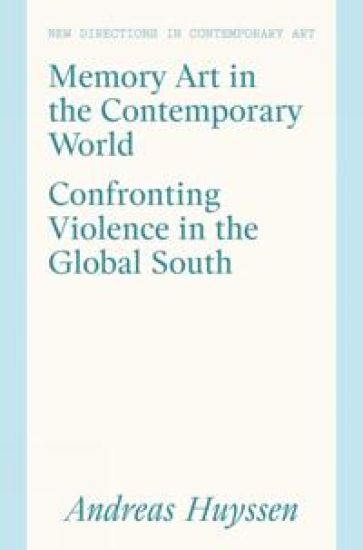
Memory Art in the Contemporary World

Memory Art in the Contemporary World

Andreas Huyssen

Lund Humphries Publishers Ltd
2022
sidottu
Memory Art in the Contemporary World deals with the ever-expanding field of transnational memory art, which has emerged from a political need to come to terms with traumatic historical pasts, from the Holocaust to apartheid, colonialism, state terror and civil war. The book focuses on the work of several contemporary artists from beyond the Northern Transatlantic, including William Kentridge, Vivan Sundaram, Doris Salcedo, Nalini Malani and Guillermo Kuitca, all of whom reflect on historical situations specific to their own countries but in work which has been shown to have a transnational reach. Andreas Huyssen considers their dual investment in memories of state violence and memories of modernism as central to the affective power of their work. This thought-provoking and highly relevant book reflects on the various forms and critical potential of memory art in a contemporary world which both obsesses about the past, in the building of monuments and museums and an emphasis on retro and nostalgia in popular culture, and simultaneously fosters historical amnesia in increasingly flattened notions of temporality encouraged by the internet and social media.
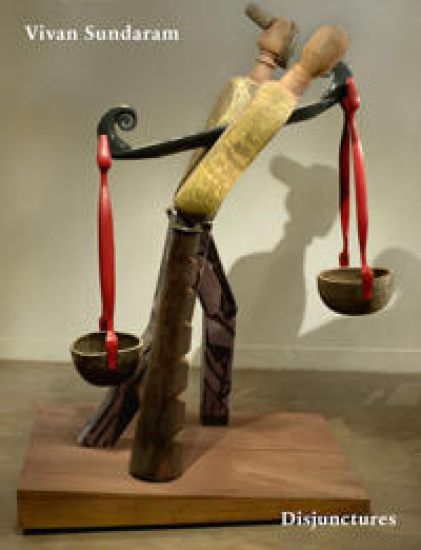
Vivan Sundaram

Vivan Sundaram

Okwui Enwezor; Deepak Ananth; Andreas Huyssen; Katya Garcia-Anton; Ashish Radhyadaksha

Prestel
2018
sidottu
Vivan Sundaram’s eclecticism is a distinctive feature of his work and is the focus of this monograph. A pioneer of installation art in India, Sundaram started off as a painter in the late 1960s but his desire to break free of the limits imposed by the pictorial frame only came to fruition in the early 1990s, when Sundaram began making works that no longer hinged on the specificity of a medium. This change in artistic direction coincided with his interest in exploring the materiality of a range of substances, whether artisanal or industrial. Sundaram’s choice of materials has had a thematic resonance in the different bodies of work that he has made over the last twenty-five years. His practice keenly registers the civic dimension and political import of art. History, memory, and archive are the overarching concerns of his work. These themes define and structure this important publication and offer an open-ended framework for exploring the oeuvre of a highly original artist.
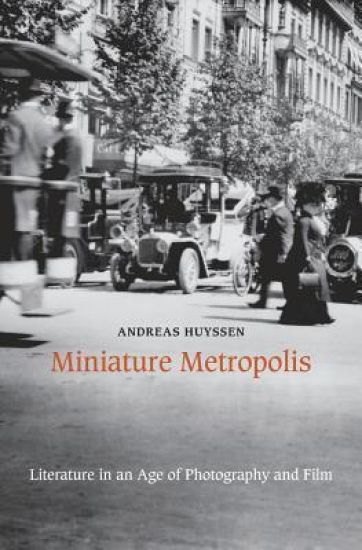
Miniature Metropolis

Miniature Metropolis

Andreas Huyssen

Harvard University Press
2015
sidottu
In the late nineteenth and early twentieth centuries, Europe’s modernizing metropolises offered a sensory experience unlike anything that had come before. Cities became laboratories bubbling with aesthetic experimentation in old and new media, and from this milieu emerged metropolitan miniatures—short prose pieces about the experiences of urban life written for European newspapers. Miniature Metropolis explores the history and theory of this significant but misrecognized achievement of literary modernism.Andreas Huyssen shows how writers from Baudelaire and Kafka to Benjamin, Musil, and Adorno created the miniature to record their reflections of Paris, Brussels, Prague, Vienna, Berlin, and Los Angeles. Contesting photography and film as competing media, the metropolitan miniature sought to capture the visceral feeling of acceleration and compression that defined urban existence. But the form did not merely imitate visual media—it absorbed them, condensing objective and subjective perceptions into the very structure of language and text and asserting the aesthetic specificity of literary language without resort to visual illustration. Huyssen argues that the miniature subverted the expectations of transparency, easy understanding, and entertainment that mass circulation newspapers depended upon. His fine-grained readings open broad vistas into German critical theory and the history of visual arts, revealing the metropolitan miniature to be one of the few genuinely innovative modes of spatialized writing created by modernism.
Dada and Photomontage across Borders

Dada and Photomontage across Borders

Anson Rabinbach; David Bathrick; Andreas Huyssen

Duke University Press
2009
nidottu
This special issue of "New German Critique" explores the art of Dada and photomontage in transnational contexts. Dadaism, an art movement cultivated during World War I, questioned traditional aesthetics and eventually led to the formation of surrealism. Focusing on Dada's achievements in building a network of artists in Europe and America, this issue examines photomontage as an integral part of the movement, as well as its relationship to mass media, photography, propaganda, constructivism, and left-wing politics in the Soviet Union and western Europe during the 1920s and 1930s. The central figure of the issue is John Heartfield, a Dadaist who influenced much of the art world in Europe after World War I. The collection investigates Heartfield's lesser-known early work with cinema in the service of the German High Command. Believing that photographic cinema was akin to war propaganda, Heartfield rejected live-action war footage in favor of American cinematic animation to promote an honest discussion about the horror and realities of war. One essay explores Heartfield's photomontages while turning to film theory as a way of interpreting the politics of his work, demonstrating how his photomontages retain the organic and traditional nature of photography even as they produce cognitive dissonance and satire. Another essay on Heartfield's role in Soviet discussions of the 1930s offers fascinating insights based on new archival research. The issue also looks at the relationship between Heartfield and the illustrated German magazine Arbeiter-Illustrierte-Zeitung and how that magazine influenced photomontage across Europe. Contributors include Karin L. Crawford, Cristina Cuevas-Wolf, Maria Gough, Sabine Kriebel, Bernhard Malkmus, Elizabeth Otto, and Andres Mario Zervigon. David Bathrick is Jacob Gould Schurman Emeritus Professor of Theatre, Film and Dance and of German Studies at Cornell University. Andreas Huyssen is Villard Professor of German and Comparative Literature at Columbia University. Anson Rabinbach is Professor of History at Princeton University. Bathrick, Huyssen, and Rabinbach are editors of "New German Critique".
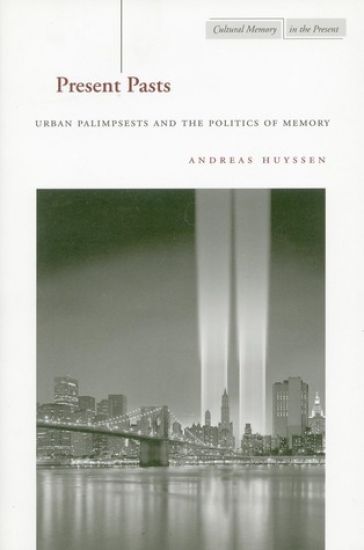
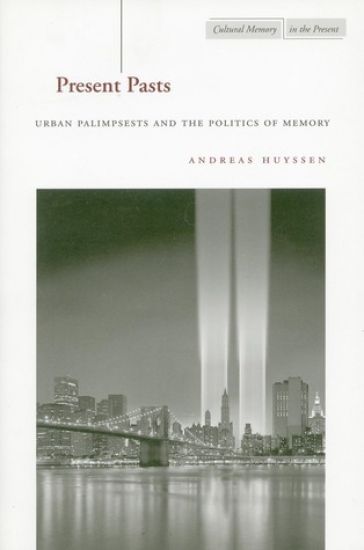
Present Pasts

Present Pasts

Andreas Huyssen

Stanford University Press
2003
pokkari
Memory of historical trauma has a unique power to generate works of art. This book analyzes the relation of public memory to history, forgetting, and selective memory in Berlin, Buenos Aires, and New York—three late-twentieth-century cities that have confronted major social or political traumas. Berlin experienced the fall of the Berlin Wall and the city's reemergence as the German capital; Buenos Aires lived through the dictatorships of the 1970s and 1980s and their legacy of state terror and disappearances; and New York City faces a set of public memory issues concerning the symbolic value of Times Square as threatened public space and the daunting task of commemorating and rebuilding after the attack on the World Trade Center. Focusing on the issue of monumentalization in divergent artistic and media practices, the book demonstrates that the transformation of spatial and temporal experience by memory politics is a major cultural effect of globalization.
Present Pasts

Present Pasts

Andreas Huyssen

Stanford University Press
2003
sidottu
Memory of historical trauma has a unique power to generate works of art. This book analyzes the relation of public memory to history, forgetting, and selective memory in Berlin, Buenos Aires, and New York—three late-twentieth-century cities that have confronted major social or political traumas. Berlin experienced the fall of the Berlin Wall and the city's reemergence as the German capital; Buenos Aires lived through the dictatorships of the 1970s and 1980s and their legacy of state terror and disappearances; and New York City faces a set of public memory issues concerning the symbolic value of Times Square as threatened public space and the daunting task of commemorating and rebuilding after the attack on the World Trade Center. Focusing on the issue of monumentalization in divergent artistic and media practices, the book demonstrates that the transformation of spatial and temporal experience by memory politics is a major cultural effect of globalization.
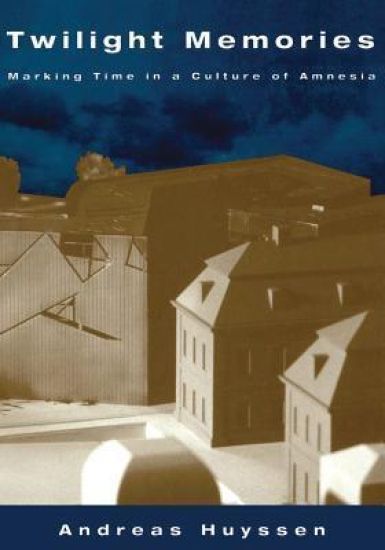
Twilight Memories

Twilight Memories

Andreas Huyssen

Routledge
1995
sidottu
In this new collection of essays on memory and amnesia in the postmodern world, cultural critic Andreas Huyssen considers how nationalism, literature, art, politics, and the media are obsessed with the past. The great paradox of our fin-de-siecle culture is that novelty is even more associated with memory than with future expectation. Drawing heavily on the dilemmas of contemporary Germany, Huyssen's discussion of cultural memory illustrates the nature of contemporary nationalism, the work of such artists and thinkers as Anselm Kiefer, Alexander Kluge, and Jean Baudrillard, and many others. The book includes illustrations from contemporary Germany.
Twilight Memories

Twilight Memories

Andreas Huyssen

Routledge
1994
nidottu
In this new collection of essays on memory and amnesia in the postmodern world, cultural critic Andreas Huyssen considers how nationalism, literature, art, politics, and the media are obsessed with the past. The great paradox of our fin-de-siecle culture is that novelty is even more associated with memory than with future expectation. Drawing heavily on the dilemmas of contemporary Germany, Huyssen's discussion of cultural memory illustrates the nature of contemporary nationalism, the work of such artists and thinkers as Anselm Kiefer, Alexander Kluge, and Jean Baudrillard, and many others. The book includes illustrations from contemporary Germany.
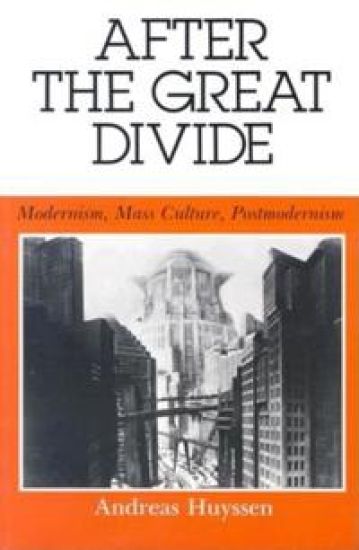
After the Great Divide

After the Great Divide

Andreas Huyssen

Indiana University Press
1987
pokkari
"One of the most comprehensive and intelligent postmodern critics of art and literature, Huyssen collects here a series of his essays on pomo..." -Village Voice Literary Supplement "...his work remains alert to the problematic relationship obtaining between marxisms and poststructuralisms." -American Literary History "...challenging and astute." -World Literature Today "Huyssen's level-headed account of this controversial constellation of critical voices brings welcome clarification to today's murky haze of cultural discussion and proves definitively that commentary from the tradition of the German Left has an indispensable role to play in contemporary criticism." -The German Quarterly "...we will certainly have, after reading this book, a deeper understanding of the forces that have led up to the present and of the possibilities still open to us." -Critical Texts "...a rich, multifaceted study." -The Year's Work in English Studies Huyssen argues that postmodernism cannot be regarded as a radical break with the past, as it is deeply indebted to that other trend within the culture of modernity-the historical avant-garde.