Kirjojen hintavertailu. Mukana 12 365 794 kirjaa ja 12 kauppaa.

Kirjailija

Andreas P. Kyriacou

Kirjat ja teokset yhdessä paikassa: 2 kirjaa, julkaisuja vuosilta 2019-2021, suosituimpien joukossa Inequality and Governance. Vertaile teosten hintoja ja tarkista saatavuus suomalaisista kirjakaupoista.

2 kirjaa

Kirjojen julkaisuhaarukka 2019-2021.

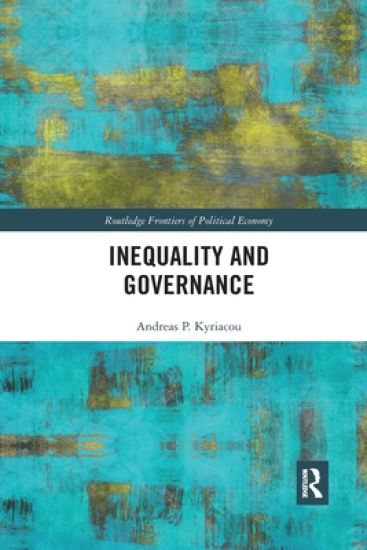
Inequality and Governance

Inequality and Governance

Andreas P. Kyriacou

Routledge
2021
nidottu
Governance matters for social welfare. Better governed countries are richer, happier and have fewer social and environmental problems. Good governance implies that public sector agents act impartially. It manifests itself in the form of equality before the law, an independent and professional public administration and the control of corruption.This book considers how economic inequality – both interpersonal and interethnic – can affect the quality of governance. To this end, it brings together insights from three different perspectives. First, a long-run historical one that exploits anthropological data on pre-industrial societies. Second, based on experimental work conducted by social psychologists and behavioural economists. Third, through cross-country empirical analysis drawn from a large sample of contemporary societies.The long-run perspective relates the inequality-governance relationship to societal responses in the face of uncertainty – responses that persist today in the guise of cultural traits that vary across countries. The experimental evidence deepens our understanding of human behaviour in unequal settings and in different governance contexts. Together, the long-run perspective and the experimental evidence help inform the cross-country analysis of the impact of economic inequality on governance. This analysis suggests the importance of both economic inequality and culture for the quality of governance and yields several policy implications.
Inequality and Governance

Inequality and Governance

Andreas P. Kyriacou

Routledge
2019
sidottu
Governance matters for social welfare. Better governed countries are richer, happier and have fewer social and environmental problems. Good governance implies that public sector agents act impartially. It manifests itself in the form of equality before the law, an independent and professional public administration and the control of corruption.This book considers how economic inequality – both interpersonal and interethnic – can affect the quality of governance. To this end, it brings together insights from three different perspectives. First, a long-run historical one that exploits anthropological data on pre-industrial societies. Second, based on experimental work conducted by social psychologists and behavioural economists. Third, through cross-country empirical analysis drawn from a large sample of contemporary societies.The long-run perspective relates the inequality-governance relationship to societal responses in the face of uncertainty – responses that persist today in the guise of cultural traits that vary across countries. The experimental evidence deepens our understanding of human behaviour in unequal settings and in different governance contexts. Together, the long-run perspective and the experimental evidence help inform the cross-country analysis of the impact of economic inequality on governance. This analysis suggests the importance of both economic inequality and culture for the quality of governance and yields several policy implications.