Kirjojen hintavertailu. Mukana 12 390 323 kirjaa ja 12 kauppaa.

Kirjailija

Andreas Schmidt-Rhaesa

Kirjat ja teokset yhdessä paikassa: 3 kirjaa, julkaisuja vuosilta 2007-2015, suosituimpien joukossa Structure and Evolution of Invertebrate Nervous Systems. Vertaile teosten hintoja ja tarkista saatavuus suomalaisista kirjakaupoista.

3 kirjaa

Kirjojen julkaisuhaarukka 2007-2015.

Structure and Evolution of Invertebrate Nervous Systems

Structure and Evolution of Invertebrate Nervous Systems

Andreas Schmidt-Rhaesa; Steffen Harzsch; Günter Purschke

Oxford University Press
2015
sidottu
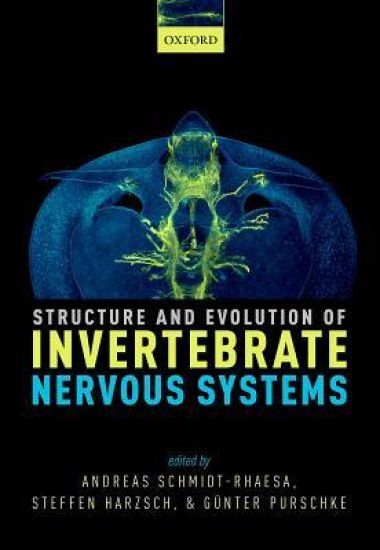
The nervous system is particularly fascinating for many biologists because it controls animal characteristics such as movement, behavior, and coordinated thinking. Invertebrate neurobiology has traditionally been studied in specific model organisms, whilst knowledge of the broad diversity of nervous system architecture and its evolution among metazoan animals has received less attention. This is the first major reference work in the field for 50 years, bringing together many leading evolutionary neurobiologists to review the most recent research on the structure of invertebrate nervous systems and provide a comprehensive and authoritative overview for a new generation of researchers. Presented in full colour throughout, Structure and Evolution of Invertebrate Nervous Systems synthesizes and illustrates the numerous new findings that have been made possible with light and electron microscopy. These include the recent introduction of new molecular and optical techniques such as immunohistochemical staining of neuron-specific antigens and fluorescence in-situ-hybridization, combined with visualization by confocal laser scanning microscopy. New approaches to analysing the structure of the nervous system are also included such as micro-computational tomography, cryo-soft X-ray tomography, and various 3-D visualization techniques. The book follows a systematic and phylogenetic structure, covering a broad range of taxa, interspersed with chapters focusing on selected topics in nervous system functioning which are presented as research highlights and perspectives. This comprehensive reference work will be an essential companion for graduate students and researchers alike in the fields of metazoan neurobiology, morphology, zoology, phylogeny and evolution.
The Evolution of Organ Systems

The Evolution of Organ Systems

Andreas Schmidt-Rhaesa

Oxford University Press
2007
nidottu
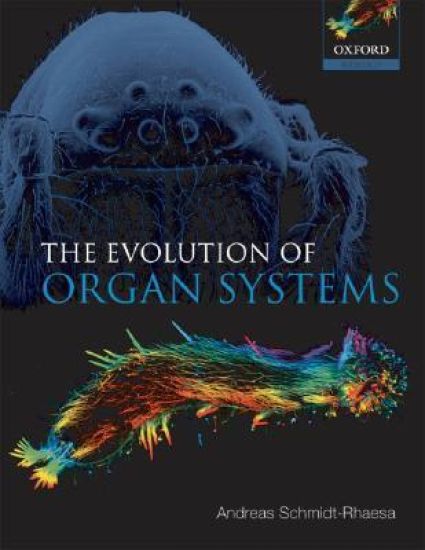
Systematics has developed rapidly during the past two decades. A multitude of new methods and contributions from a diversity of biological fields including molecular genetics and developmental biology have provided a wealth of phylogenetic hypotheses, some confirming traditional views others contradicting them. Despite such inconsistencies, it is now possible to recognize robust regions of a 'tree of life' and also to identify problematic areas which have yet to be resolved. This is the first book to apply the current state of phylogeny to an evolutionary interpretation of animal organ systems and body architecture, providing alternative theories in those cases of continuing controversy. Organs do not appear suddenly during evolution; instead they are composed of far simpler structures. In some cases it is even possible to trace particular molecules or physiological pathways as far back as pre-animal history. What emerges is a fascinating picture, showing how animals have combined ancestral and new elements in novel ways to form constantly changing responses to environmental requirements. The Evolution of Organ Systems starts with a general overview of current animal phylogeny, followed by review of general body organization including symmetry, anteroposterior axis, dorsoventral axis, germ layers, segmentation, and skeletons. Subsequent chapters then provide a detailed description of the individual organ systems themselves - integument, musculature, nervous system, sensory organs, body cavities, excretory system, circulatory system, respiratory system, intestinal system, gonads and gametes. Generously illustrated throughout, this accessible text is suitable for both upper level undergraduate and graduate students taking courses in animal evolution, organogenesis, animal anatomy, zoology and systematics. It will also be a valuable reference tool for those professional researchers in these fields requiring an authoritative, balanced and up-to-date overview of the topic.
The Evolution of Organ Systems

The Evolution of Organ Systems

Andreas Schmidt-Rhaesa

Oxford University Press
2007
sidottu
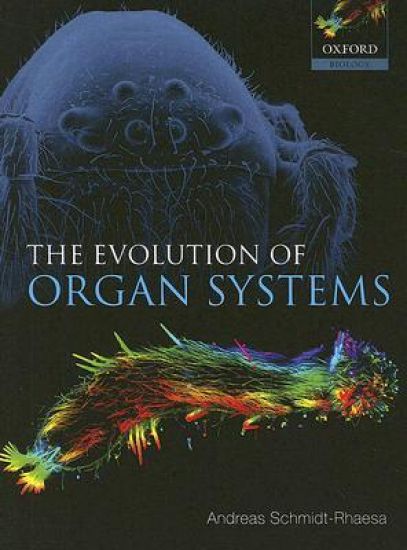
Systematics has developed rapidly during the past two decades. A multitude of new methods and contributions from a diversity of biological fields including molecular genetics and developmental biology have provided a wealth of phylogenetic hypotheses, some confirming traditional views others contradicting them. Despite such inconsistencies, it is now possible to recognize robust regions of a 'tree of life' and also to identify problematic areas which have yet to be resolved. This is the first book to apply the current state of phylogeny to an evolutionary interpretation of animal organ systems and body architecture, providing alternative theories in those cases of continuing controversy. Organs do not appear suddenly during evolution; instead they are composed of far simpler structures. In some cases it is even possible to trace particular molecules or physiological pathways as far back as pre-animal history. What emerges is a fascinating picture, showing how animals have combined ancestral and new elements in novel ways to form constantly changing responses to environmental requirements. The Evolution of Organ Systems starts with a general overview of current animal phylogeny, followed by review of general body organization including symmetry, anteroposterior axis, dorsoventral axis, germ layers, segmentation, and skeletons. Subsequent chapters then provide a detailed description of the individual organ systems themselves - integument, musculature, nervous system, sensory organs, body cavities, excretory system, circulatory system, respiratory system, intestinal system, gonads and gametes. Generously illustrated throughout, this accessible text is suitable for both upper level undergraduate and graduate students taking courses in animal evolution, organogenesis, animal anatomy, zoology and systematics. It will also be a valuable reference tool for those professional researchers in these fields requiring an authoritative, balanced and up-to-date overview of the topic.