Kirjojen hintavertailu. Mukana 12 568 661 kirjaa ja 12 kauppaa.

Kirjailija

Andreas Spanias

Kirjat ja teokset yhdessä paikassa: 13 kirjaa, julkaisuja vuosilta 2007-2021, suosituimpien joukossa MATLAB® Software for the Code Excited Linear Prediction Algorithm. Vertaile teosten hintoja ja tarkista saatavuus suomalaisista kirjakaupoista.

13 kirjaa

Kirjojen julkaisuhaarukka 2007-2021.

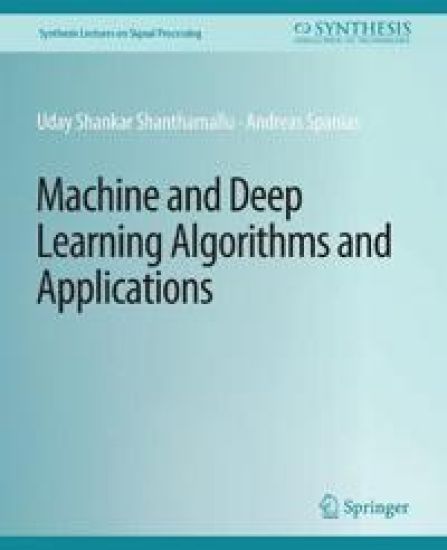
Machine and Deep Learning Algorithms and Applications

Machine and Deep Learning Algorithms and Applications

Uday Shankar Shanthamallu; Andreas Spanias

Springer International Publishing AG
2021
nidottu
This book introduces basic machine learning concepts and applications for a broad audience that includes students, faculty, and industry practitioners. We begin by describing how machine learning provides capabilities to computers and embedded systems to learn from data. A typical machine learning algorithm involves training, and generally the performance of a machine learning model improves with more training data. Deep learning is a sub-area of machine learning that involves extensive use of layers of artificial neural networks typically trained on massive amounts of data. Machine and deep learning methods are often used in contemporary data science tasks to address the growing data sets and detect, cluster, and classify data patterns. Although machine learning commercial interest has grown relatively recently, the roots of machine learning go back to decades ago. We note that nearly all organizations, including industry, government, defense, and health, are using machine learning toaddress a variety of needs and applications. The machine learning paradigms presented can be broadly divided into the following three categories: supervised learning, unsupervised learning, and semi-supervised learning. Supervised learning algorithms focus on learning a mapping function, and they are trained with supervision on labeled data. Supervised learning is further sub-divided into classification and regression algorithms. Unsupervised learning typically does not have access to ground truth, and often the goal is to learn or uncover the hidden pattern in the data. Through semi-supervised learning, one can effectively utilize a large volume of unlabeled data and a limited amount of labeled data to improve machine learning model performances. Deep learning and neural networks are also covered in this book. Deep neural networks have attracted a lot of interest during the last ten years due to the availability of graphics processing units (GPU) computational power, big data, and new software platforms. They have strong capabilities in terms of learning complex mapping functions for different types of data. We organize the book as follows. The book starts by introducing concepts in supervised, unsupervised, and semi-supervised learning. Several algorithms and their inner workings are presented within these three categories. We then continue with a brief introduction to artificial neural network algorithms and their properties. In addition, we cover an array of applications and provide extensive bibliography. The book ends with a summary of the key machine learning concepts.
Machine Learning for Solar Array Monitoring, Optimization, and Control

Machine Learning for Solar Array Monitoring, Optimization, and Control

Sunil Rao; Sameeksha Katoch; Vivek Narayanaswamy; Gowtham Muniraju; Cihan Tepedelenlioglu; Andreas Spanias

Springer International Publishing AG
2020
nidottu
The efficiency of solar energy farms requires detailed analytics and information on each panel regarding voltage, current, temperature, and irradiance. Monitoring utility-scale solar arrays was shown to minimize the cost of maintenance and help optimize the performance of the photo-voltaic arrays under various conditions. We describe a project that includes development of machine learning and signal processing algorithms along with a solar array testbed for the purpose of PV monitoring and control. The 18kW PV array testbed consists of 104 panels fitted with smart monitoring devices. Each of these devices embeds sensors, wireless transceivers, and relays that enable continuous monitoring, fault detection, and real-time connection topology changes. The facility enables networked data exchanges via the use of wireless data sharing with servers, fusion and control centers, and mobile devices. We develop machine learning and neural network algorithms for fault classification. In addition, we use weather camera data for cloud movement prediction using kernel regression techniques which serves as the input that guides topology reconfiguration. Camera and satellite sensing of skyline features as well as parameter sensing at each panel provides information for fault detection and power output optimization using topology reconfiguration achieved using programmable actuators (relays) in the SMDs. More specifically, a custom neural network algorithm guides the selection among four standardized topologies. Accuracy in fault detection is demonstrate at the level of 90+% and topology optimization provides increase in power by as much as 16% under shading.
Reconstruction-Free Compressive Vision for Surveillance Applications

Reconstruction-Free Compressive Vision for Surveillance Applications

Henry Braun; Pavan Turaga; Andreas Spanias; Sameeksha Katoch; Suren Jayasuriya; Cihan Tepedelenlioglu

Springer International Publishing AG
2019
nidottu
Compressed sensing (CS) allows signals and images to be reliably inferred from undersampled measurements. Exploiting CS allows the creation of new types of high-performance sensors including infrared cameras and magnetic resonance imaging systems. Advances in computer vision and deep learning have enabled new applications of automated systems. In this book, we introduce reconstruction-free compressive vision, where image processing and computer vision algorithms are embedded directly in the compressive domain, without the need for first reconstructing the measurements into images or video. Reconstruction of CS images is computationally expensive and adds to system complexity. Therefore, reconstruction-free compressive vision is an appealing alternative particularly for power-aware systems and bandwidth-limited applications that do not have on-board post-processing computational capabilities. Engineers must balance maintaining algorithm performance while minimizing both the number of measurements needed and the computational requirements of the algorithms. Our study explores the intersection of compressed sensing and computer vision, with the focus on applications in surveillance and autonomous navigation. Other applications are also discussed at the end and a comprehensive list of references including survey papers are given for further reading.
Distributed Network Structure Estimation Using Consensus Methods

Distributed Network Structure Estimation Using Consensus Methods

Sai Zhang; Cihan Tepedelenlioglu; Andreas Spanias; Mahesh Banavar

Springer International Publishing AG
2018
nidottu
The area of detection and estimation in a distributed wireless sensor network (WSN) has several applications, including military surveillance, sustainability, health monitoring, and Internet of Things (IoT). Compared with a wired centralized sensor network, a distributed WSN has many advantages including scalability and robustness to sensor node failures. In this book, we address the problem of estimating the structure of distributed WSNs. First, we provide a literature review in: (a) graph theory; (b) network area estimation; and (c) existing consensus algorithms, including average consensus and max consensus. Second, a distributed algorithm for counting the total number of nodes in a wireless sensor network with noisy communication channels is introduced. Then, a distributed network degree distribution estimation (DNDD) algorithm is described. The DNDD algorithm is based on average consensus and in-network empirical mass function estimation. Finally, a fully distributed algorithm forestimating the center and the coverage region of a wireless sensor network is described. The algorithms introduced are appropriate for most connected distributed networks. The performance of the algorithms is analyzed theoretically, and simulations are performed and presented to validate the theoretical results. In this book, we also describe how the introduced algorithms can be used to learn global data information and the global data region.
Node Localization in Wireless Sensor Networks

Node Localization in Wireless Sensor Networks

Xue Zhang; Cihan Tepedelenlioglu; Mahesh Banavar; Andreas Spanias

Springer International Publishing AG
2016
nidottu
In sensor network applications, measured data are often meaningful only when the location is accurately known. In this booklet, we study research problems associated with node localization in wireless sensor networks. We describe sensor network localization problems in terms of a detection and estimation framework and we emphasize specifically a cooperative process where sensors with known locations are used to localize nodes at unknown locations. In this class of problems, even if the location of a node is known, the wireless links and transmission modalities between two nodes may be unknown. In this case, sensor nodes are used to detect the location and estimate pertinent data transmission activities between nodes. In addition to the broader problem of sensor localization, this booklet studies also specific localization measurements such as time of arrival (TOA), received signal strength (RSS), and direction of arrival (DOA). The sequential localization algorithm, which uses a subsetof sensor nodes to estimate nearby sensor nodes' locations is discussed in detail. Extensive bibliography is given for those readers who want to delve further into specific topics.
Multipath Effects in GPS Receivers

Multipath Effects in GPS Receivers

Steven Miller; Xue Zhang; Andreas Spanias

Springer International Publishing AG
2015
nidottu
Autonomous vehicles use global navigation satellite systems (GNSS) to provide a position within a few centimeters of truth. Centimeter positioning requires accurate measurement of each satellite's direct path propagation time. Multipath corrupts the propagation time estimate by creating a time-varying bias. A GNSS receiver model is developed and the effects of multipath are investigated. MATLABtm code is provided to enable readers to run simple GNSS receiver simulations. More specifically, GNSS signal models are presented and multipath mitigation techniques are described for various multipath conditions. Appendices are included in the booklet to derive some of the basics on early minus late code synchronization methods. Details on the numerically controlled oscillator and its properties are also given in the appendix.
Image Understanding using Sparse Representations

Image Understanding using Sparse Representations

Jayaraman J. Thiagarajan; Karthikeyan Natesan Ramamurthy; Pavan Turaga; Andreas Spanias

Springer International Publishing AG
2014
nidottu
Image understanding has been playing an increasingly crucial role in several inverse problems and computer vision. Sparse models form an important component in image understanding, since they emulate the activity of neural receptors in the primary visual cortex of the human brain. Sparse methods have been utilized in several learning problems because of their ability to provide parsimonious, interpretable, and efficient models. Exploiting the sparsity of natural signals has led to advances in several application areas including image compression, denoising, inpainting, compressed sensing, blind source separation, super-resolution, and classification. The primary goal of this book is to present the theory and algorithmic considerations in using sparse models for image understanding and computer vision applications. To this end, algorithms for obtaining sparse representations and their performance guarantees are discussed in the initial chapters. Furthermore, approaches for designing overcomplete, data-adapted dictionaries to model natural images are described. The development of theory behind dictionary learning involves exploring its connection to unsupervised clustering and analyzing its generalization characteristics using principles from statistical learning theory. An exciting application area that has benefited extensively from the theory of sparse representations is compressed sensing of image and video data. Theory and algorithms pertinent to measurement design, recovery, and model-based compressed sensing are presented. The paradigm of sparse models, when suitably integrated with powerful machine learning frameworks, can lead to advances in computer vision applications such as object recognition, clustering, segmentation, and activity recognition. Frameworks that enhance the performance of sparse models in such applications by imposing constraints based on the prior discriminatory information and the underlying geometrical structure, and kernelizing the sparse coding and dictionary learning methods are presented. In addition to presenting theoretical fundamentals in sparse learning, this book provides a platform for interested readers to explore the vastly growing application domains of sparse representations.
An Introduction to Kalman Filtering with MATLAB Examples

An Introduction to Kalman Filtering with MATLAB Examples

Narayan Kovvali; Mahesh Banavar; Andreas Spanias

Springer International Publishing AG
2013
nidottu
The Kalman filter is the Bayesian optimum solution to the problem of sequentially estimating the states of a dynamical system in which the state evolution and measurement processes are both linear and Gaussian. Given the ubiquity of such systems, the Kalman filter finds use in a variety of applications, e.g., target tracking, guidance and navigation, and communications systems. The purpose of this book is to present a brief introduction to Kalman filtering. The theoretical framework of the Kalman filter is first presented, followed by examples showing its use in practical applications. Extensions of the method to nonlinear problems and distributed applications are discussed. A software implementation of the algorithm in the MATLAB programming language is provided, as well as MATLAB code for several example applications discussed in the manuscript.
Analysis of the MPEG-1 Layer III (MP3) Algorithm using MATLAB

Analysis of the MPEG-1 Layer III (MP3) Algorithm using MATLAB

Andreas Spanias; Jayaraman Thiagarajan

Springer International Publishing AG
2011
nidottu
The MPEG-1 Layer III (MP3) algorithm is one of the most successful audio formats for consumer audio storage and for transfer and playback of music on digital audio players. The MP3 compression standard along with the AAC (Advanced Audio Coding) algorithm are associated with the most successful music players of the last decade. This book describes the fundamentals and the MATLAB implementation details of the MP3 algorithm. Several of the tedious processes in MP3 are supported by demonstrations using MATLAB software. The book presents the theoretical concepts and algorithms used in the MP3 standard. The implementation details and simulations with MATLAB complement the theoretical principles. The extensive list of references enables the reader to perform a more detailed study on specific aspects of the algorithm and gain exposure to advancements in perceptual coding. Table of Contents: Introduction / Analysis Subband Filter Bank / Psychoacoustic Model II / MDCT / Bit Allocation, Quantization and Coding / Decoder
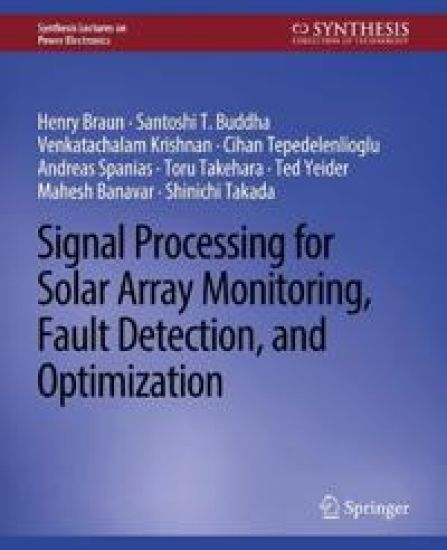
Signal Processing for Solar Array Monitoring, Fault Detection, and Optimization

Signal Processing for Solar Array Monitoring, Fault Detection, and Optimization

Henry Braun; Mahesh Banavar; Andreas Spanias; Venkatachalam Krishnan; CIHAN TEPEDELENLIOGLU; Tohru Takemasa; Shinichi Takeda

Springer International Publishing AG
2011
nidottu
Although the solar energy industry has experienced rapid growth recently, high-level management of photovoltaic (PV) arrays has remained an open problem. As sensing and monitoring technology continues to improve, there is an opportunity to deploy sensors in PV arrays in order to improve their management. In this book, we examine the potential role of sensing and monitoring technology in a PV context, focusing on the areas of fault detection, topology optimization, and performance evaluation/data visualization. First, several types of commonly occurring PV array faults are considered and detection algorithms are described. Next, the potential for dynamic optimization of an array's topology is discussed, with a focus on mitigation of fault conditions and optimization of power output under non-fault conditions. Finally, monitoring system design considerations such as type and accuracy of measurements, sampling rate, and communication protocols are considered. It is our hope that the benefits of monitoring presented here will be sufficient to offset the small additional cost of a sensing system, and that such systems will become common in the near future. Table of Contents: Introduction / Overview of Photovoltaics / Causes Performance Degradation and Outage / Fault Detection Methods / Array Topology Optimization / Monitoring of PV Systems / Summary
MATLAB® Software for the Code Excited Linear Prediction Algorithm

MATLAB® Software for the Code Excited Linear Prediction Algorithm

Karthikeyan Ramamurthy; Andreas Spanias

Springer International Publishing AG
2010
nidottu
This book describes several modules of the Code Excited Linear Prediction (CELP) algorithm. The authors use the Federal Standard-1016 CELP MATLAB® software to describe in detail several functions and parameter computations associated with analysis-by-synthesis linear prediction. The book begins with a description of the basics of linear prediction followed by an overview of the FS-1016 CELP algorithm. Subsequent chapters describe the various modules of the CELP algorithm in detail. In each chapter, an overall functional description of CELP modules is provided along with detailed illustrations of their MATLAB® implementation. Several code examples and plots are provided to highlight some of the key CELP concepts. Link to MATLAB® code found within the book Table of Contents: Introduction to Linear Predictive Coding / Autocorrelation Analysis and Linear Prediction / Line Spectral Frequency Computation / Spectral Distortion / The Codebook Search / The FS-1016 Decoder
Narrowband Direction of Arrival Estimation for Antenna Arrays

Narrowband Direction of Arrival Estimation for Antenna Arrays

Jeffrey Foutz; Andreas Spanias; Mahesh Banavar

Springer International Publishing AG
2008
nidottu
This book provides an introduction to narrowband array signal processing, classical and subspace-based direction of arrival (DOA) estimation with an extensive discussion on adaptive direction of arrival algorithms. The book begins with a presentation of the basic theory, equations, and data models of narrowband arrays. It then discusses basic beamforming methods and describes how they relate to DOA estimation. Several of the most common classical and subspace-based direction of arrival methods are discussed. The book concludes with an introduction to subspace tracking and shows how subspace tracking algorithms can be used to form an adaptive DOA estimator. Simulation software and additional bibliography are given at the end of the book. Table of Contents: Introduction / Background on Array Processing / Nonadaptive Direction of Arrival Estimation / Adaptive Direction of Arrival Estimation / Appendix
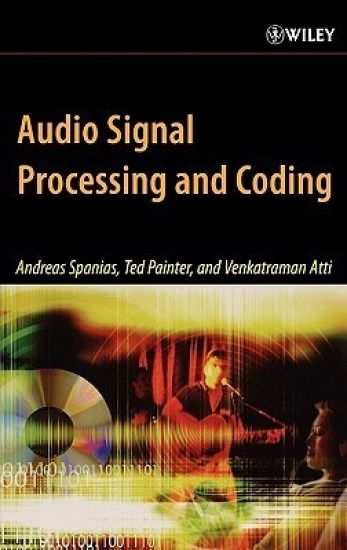
Audio Signal Processing and Coding

Audio Signal Processing and Coding

Andreas Spanias; Ted Painter; Venkatraman Atti

John Wiley Sons Inc
2007
sidottu
An in-depth treatment of algorithms and standards for perceptual coding of high-fidelity audio, this self-contained reference surveys and addresses all aspects of the field. Coverage includes signal processing and perceptual (psychoacoustic) fundamentals, details on relevant research and signal models, details on standardization and applications, and details on performance measures and perceptual measurement systems. It includes a comprehensive bibliography with over 600 references, computer exercises, and MATLAB-based projects for use in EE multimedia, computer science, and DSP courses. An ftp site containing supplementary material such as wave files, MATLAB programs and workspaces for the students to solve some of the numerical problems and computer exercises in the book can be found at ftp://ftp.wiley.com/public/sci_tech_med/audio_signal