Kirjailija
Andreas Wagner
Kirjat ja teokset yhdessä paikassa: 41 kirjaa, julkaisuja vuosilta 2001-2026, suosituimpien joukossa Tannbacher Totentanz. Vertaile teosten hintoja ja tarkista saatavuus suomalaisista kirjakaupoista.
41 kirjaa
Kirjojen julkaisuhaarukka 2001-2026.


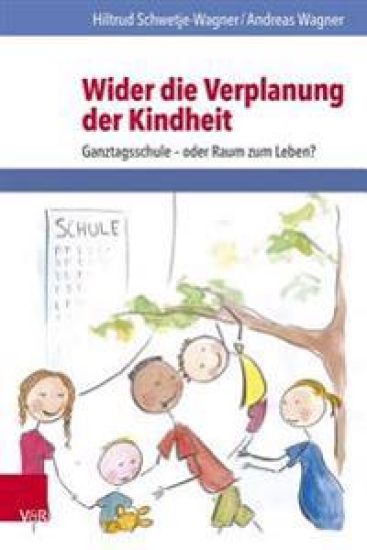
Wider Die Verplanung Der Kindheit: Ganztagsschule - Oder Raum Zum Leben?
Hiltrud Schwetje-Wagner; Andreas Wagner
Vandenhoeck Ruprecht
2016
nidottu
Schlechtes Abschneiden bei PISA, Fachkraftemangel in der Wirtschaft, fehlende Betreuungsmoglichkeiten zur Unterstutzung junger Mutter, stetig sinkende Geburtenraten - es gibt kaum ein gesellschaftliches Problem, fur das die Ganztagsschule nicht die vermeintliche Losung anbietet.Das erklart die rasante Zunahme dieser Schulform im letzten Jahrzehnt. Weitgehend unbeachtet blieb, welche tiefgreifenden Veranderungen des gesamten Bildungs- und Erziehungsprozesses damit verbunden sind und stillschweigend in Kauf genommen werden. Welche wichtigen Rahmenbedingungen fur erfolgreiches Lernen, nachhaltige Erziehung und gesundes Aufwachsen bleiben aus strukturellen und organisatorischen Grunden unberucksichtigt oder werden gar missachtet? Welche gesellschaftlichen Konsequenzen hat es, wenn Erziehung mehr oder weniger ganztagig professionalisiert ablauft? Welche individuellen Entfaltungsmoglichkeiten, die eben noch selbstverstandlich waren, entfallen kunftig aus Zeitgrunden? Und: Wollen wir das? Diese Fragen stellen die Autoren nicht nur aus beruflicher, padagogischer Perspektive, sondern ebenso aus gemeinsamer Elternsicht.Das Buch bietet den im offentlichen Diskurs bisher fehlenden Kristallisationspunkt, an dem sich die uberfallige gesellschaftspolitische Diskussion entzunden kann.
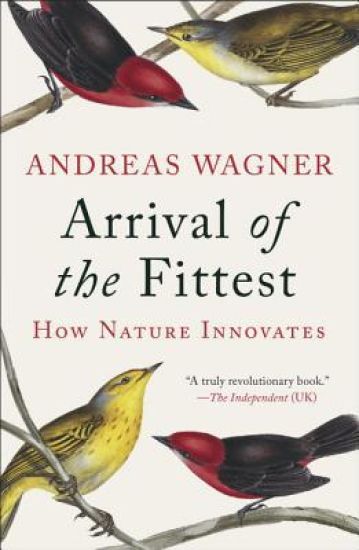
"Natural selection can preserve innovations, but it cannot create them. Nature's many innovations--some uncannily perfect--call for natural principles that accelerate life's ability to innovate." Darwin's theory of natural selection explains how useful adaptations are preserved over time. But the biggest mystery about evolution eluded him. As genetics pioneer Hugo de Vries put it, "natural selection may explain the survival of the fittest, but it cannot explain the arrival of the fittest." Can random mutations over a mere 3.8 billion years really be responsible for wings, eyeballs, knees, camouflage, lactose digestion, photosynthesis, and the rest of nature's creative marvels? And if the answer is no, what is the mechanism that explains evolution's speed and efficiency? In Arrival of the Fittest, renowned evolutionary biologist Andreas Wagner draws on over fifteen years of research to present the missing piece in Darwin's theory. Using experimental and computational technologies that were heretofore unimagined, he has found that adaptations are not just driven by chance, but by a set of laws that allow nature to discover new molecules and mechanisms in a fraction of the time that random variation would take. Consider the Arctic cod, a fish that lives and thrives within six degrees of the North Pole, in waters that regularly fall below 0 degrees. At that temperature, the internal fluids of most organisms turn into ice crystals. And yet, the arctic cod survives by producing proteins that lower the freezing temperature of its body fluids, much like antifreeze does for a car's engine coolant. The invention of those proteins is an archetypal example of nature's enormous powers of creativity. Meticulously researched, carefully argued, evocatively written, and full of fascinating examples from the animal kingdom, Arrival of the Fittest offers up the final puzzle piece in the mystery of life's rich diversity.

Andreas Wagner untersucht in dieser ethnografischen Studie anhand von Kooperationen eines internationalen Kinderhilfswerkes mit Gemeindegruppen in Sambia, Äthiopien, Kenia, Uganda und Mosambik, wie durch die Zusammenarbeit international agierender NGOs mit lokalen Communities Graswurzelorganisationen geschaffen werden, um der problematischen Lebenssituation vulnerabler Kinder zu begegnen. Diese Community-Based Organisations werden durch Interaktionen und komplexe Aushandlungsprozesse hergestellt und als anschlussfähige, lokale Partner für Geberorganisationen der Entwicklungszusammenarbeit organisiert, um dadurch eine nachhaltige Wirkung der Projekte zu erreichen. Zur Beschreibung dieses Prozesses der gemeinsamen Herstellung von Graswurzelprojekten wird das Konzept des doing grassroots eingeführt.
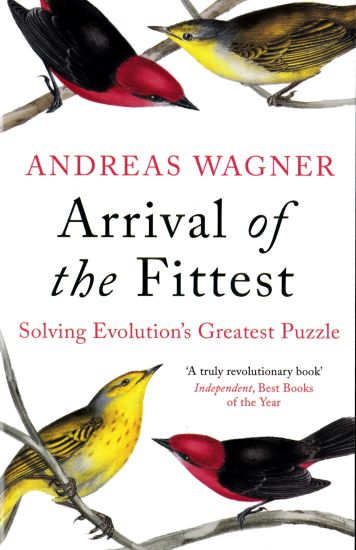
Darwin’s theory of natural selection was a monumental step in our understanding of evolution, explaining how useful adaptations are preserved over generations. However, Darwin’s great idea didn’t – and couldn’t – tell us how those adaptations arise in the first place. On its own, can random mutation really be responsible for all the creative marvels in nature? Renowned evolutionary biologist Andreas Wagner presents the missing piece of Darwin’s theory. Using cutting-edge experimental technologies, he has found that adaptations are driven by a set of laws which allow nature to discover new molecules and mechanisms in a fraction of the time that random variation would take. Meticulously researched, carefully argued, and full of fascinating examples from the animal kingdom, Arrival of the Fittest signals an end to the mystery of life’s rich diversity.

Darwinin luonnonvalinnan voima on kiistaton ja se selittää, miten hyödylliset sopeutumat säilyvät sukupolvien saatossa.Darwin ei kuitenkaan ratkaissut evoluution suurinta arvoitusta: miten nämä sopeutumat syntyvät. Selittävätkö vain 3,8 miljardin vuoden aikana syntyneet satunnaiset mutaatiot kaikki luonnon ihmeet, kuten siivet, silmät ja yhteyttämisen? Ja emmekö yksinkertaisesti tunnusta tietämättömyytemme, kun sanomme näitä mutaatioita ”satunnaisiksi”?Maineikas evoluutiobiologi Andreas Wagner osoittaa tässä kirjassa, mistä kaikki biologinen innovaatio syntyy. Wagner on selvittänyt eturintaman kokeellisilla ja laskennallisilla menetelmillä, että näiden sopeutumien käyttövoima ei ole pelkkä sattuma, vaan joukko luonnonlakeja, joiden ansiosta luonto keksii uusia molekyylejä ja mekanismeja paljon nopeammin kuin satunnaisella muuntelulla.Kelpoisimman synty on perusteellinen, esimerkkejä käyttävä esitys elämän rikkaan monimuotoisuuden ilmaantumisen suurimmasta arvoituksesta ja sen ratkaisusta.



Die christdemokratischen Parteien Westeuropas sahen sich zuletzt besonders stark mit gesellschaftlichem und politischem Wandel konfrontiert. Die Reaktionen dieser einst hyperstabilen christdemokratischen Parteien der bundesdeutschen CDU, der österreichischen ÖVP und des niederländischen CDA fielen dagegen umso mächtiger aus. Andreas Wagner stellt dar, dass es trotz der einst gefestigten gesellschaftlichen Verhältnisse und der ganz besonderen innerparteilichen Beharrungskräfte zu erstaunlichen Veränderungsprozessen kam, die sich immer wieder gegenüber den innerparteilichen Vetospielern behaupten mussten. Gerade in Oppositionszeiten zeigte sich jedoch über die Landesgrenzen hinweg, wie die Christdemokratien die Zeit nutzten, um als politische Großorganisationen zu lernen und sich zu verändern.

The history of life is a nearly four billion year old story of transformative change. This change ranges from dramatic macroscopic innovations such as the evolution of wings or eyes, to a myriad of molecular changes that form the basis of macroscopic innovations. We are familiar with many examples of innovations (qualitatively new phenotypes that provide a critical benefit) but have no systematic understanding of the principles that allow organisms to innovate. This book proposes several such principles as the basis of a theory of innovation, integrating recent knowledge about complex molecular phenotypes with more traditional Darwinian thinking. Central to the book are genotype networks: vast sets of connected genotypes that exist in metabolism and regulatory circuitry, as well as in protein and RNA molecules. The theory can successfully unify innovations that occur at different levels of organization. It captures known features of biological innovation, including the fact that many innovations occur multiple times independently, and that they combine existing parts of a system to new purposes. It also argues that environmental change is important to create biological systems that are both complex and robust, and shows how such robustness can facilitate innovation. Beyond that, the theory can reconcile neutralism and selectionism, as well as explain the role of phenotypic plasticity, gene duplication, recombination, and cryptic variation in innovation. Finally, its principles can be applied to technological innovation, and thus open to human engineering endeavours the powerful principles that have allowed life's spectacular success.
The history of life is a nearly four billion year old story of transformative change. This change ranges from dramatic macroscopic innovations such as the evolution of wings or eyes, to a myriad of molecular changes that form the basis of macroscopic innovations. We are familiar with many examples of innovations (qualitatively new phenotypes that provide a critical benefit) but have no systematic understanding of the principles that allow organisms to innovate. This book proposes several such principles as the basis of a theory of innovation, integrating recent knowledge about complex molecular phenotypes with more traditional Darwinian thinking. Central to the book are genotype networks: vast sets of connected genotypes that exist in metabolism and regulatory circuitry, as well as in protein and RNA molecules. The theory can successfully unify innovations that occur at different levels of organization. It captures known features of biological innovation, including the fact that many innovations occur multiple times independently, and that they combine existing parts of a system to new purposes. It also argues that environmental change is important to create biological systems that are both complex and robust, and shows how such robustness can facilitate innovation. Beyond that, the theory can reconcile neutralism and selectionism, as well as explain the role of phenotypic plasticity, gene duplication, recombination, and cryptic variation in innovation. Finally, its principles can be applied to technological innovation, and thus open to human engineering endeavours the powerful principles that have allowed life's spectacular success.

For readers of Hofstadter’s Gödel, Escher, Bach, a fascinating look at the hidden meaning in matter What can a fingernail tell us about the mysteries of creation? In one sense, a nail is merely a hunk of mute matter, yet in another, it’s an information superhighway quite literally at our fingertips. Every moment, streams of molecular signals direct our cells to move, flatten, swell, shrink, divide, or die. Andreas Wagner’s ambitious new book explores this hidden web of unimaginably complex interactions in every living being. In the process, he unveils a host of paradoxes underpinning our understanding of modern biology, contradictions he considers gatekeepers at the frontiers of knowledge.Though we tend to think of concepts in such mutually exclusive pairs as mind-matter, self-other, and nature-nurture, Wagner argues that these opposing ideas are not actually separate. Indeed, they are as inextricably connected as the two sides of a coin. Through a tour of modern biological marvels, Wagner illustrates how this paradoxical tension has a profound effect on the way we define the world around us. Paradoxical Life is thus not only a unique account of modern biology. It ultimately serves a radical—and optimistic—outlook for humans and the world we help create.


Robustness and Evolvability in Living Systems
Andreas Wagner
Princeton University Press
2007
pokkari
All living things are remarkably complex, yet their DNA is unstable, undergoing countless random mutations over generations. Despite this instability, most animals do not grow two heads or die, plants continue to thrive, and bacteria continue to divide. Robustness and Evolvability in Living Systems tackles this perplexing paradox. The book explores why genetic changes do not cause organisms to fail catastrophically and how evolution shapes organisms' robustness. Andreas Wagner looks at this problem from the ground up, starting with the alphabet of DNA, the genetic code, RNA, and protein molecules, moving on to genetic networks and embryonic development, and working his way up to whole organisms. He then develops an evolutionary explanation for robustness. Wagner shows how evolution by natural selection preferentially finds and favors robust solutions to the problems organisms face in surviving and reproducing. Such robustness, he argues, also enhances the potential for future evolutionary innovation. Wagner also argues that robustness has less to do with organisms having plenty of spare parts (the redundancy theory that has been popular) and more to do with the reality that mutations can change organisms in ways that do not substantively affect their fitness. Unparalleled in its field, this book offers the most detailed analysis available of all facets of robustness within organisms. It will appeal not only to biologists but also to engineers interested in the design of robust systems and to social scientists concerned with robustness in human communities and populations.