Kirjojen hintavertailu. Mukana 12 595 353 kirjaa ja 12 kauppaa.

Kirjailija

Andreas Weber

Kirjat ja teokset yhdessä paikassa: 38 kirjaa, julkaisuja vuosilta 1926-2026, suosituimpien joukossa Lionel und Skippy-Das Phantom im Stadttal - Theater. Vertaile teosten hintoja ja tarkista saatavuus suomalaisista kirjakaupoista.

38 kirjaa

Kirjojen julkaisuhaarukka 1926-2026.

Vivificar: Una Poética Para El Antropoceno

Vivificar: Una Poética Para El Antropoceno

Andreas Weber

Editorial Kairos
2024
nidottu
Se nos ha dicho que vivimos en el Antropoceno, una era geol gica moldeada por los seres humanos m s que por la naturaleza. En Vivificar, el fil sofo alem n Andreas Weber presenta una visi n alternativa de nuestra relaci n con la naturaleza, argumentando -contra la idea de que los humanos la controlamos- que humanos y naturaleza existen en un fondo com n de transformaci n mutua. Sostiene que no existe un dualismo naturaleza/humano, porque la dimensi n fundamental de la existencia se comparte en lo que l llama la «vivacidad . As , la po tica que plantea Weber consiste en ver a todos los seres en un hogar com n de materia, deseo e imaginaci n, una econom a de transformaci n metab lica y econ mica. Esta visi n nos permite ir m s all del pensamiento ilustrado que despoja a la realidad material de toda subjetividad. We have been told that we live in the Anthropocene, a geological age shaped by humans rather than nature. In this book, German philosopher Andreas Weber presents an alternative view of our relationship with nature, arguing--against the idea that humans control it--that humans and nature exist on a common ground of mutual transformation. He argues that there is no such thing as a dualism between nature and humans, because the fundamental dimension of existence is shared in what he calls "aliveness." Thus, the poetics that Weber proposes consists of seeing all beings in a common home of matter, desire, and imagination.
Digitalization for Value Creation
Digitalization is the greatest change project that we have ever known, and data is circulating in unimaginable quantities and at unimaginable speed. In this book, the author urges managers and business leaders to embrace this constant state of change in cooperation with their team. He addresses how corporate culture and hierarchies have to change to adapt to new digital workspaces and value chains. These changes also include questions about the use and storage of data, customer relations and international teamwork. The book is especially geared towards managers in manufacturing industries and companies.
Digitalization for Value Creation
Digitalization is the greatest change project that we have ever known, and data is circulating in unimaginable quantities and at unimaginable speed. In this book, the author urges managers and business leaders to embrace this constant state of change in cooperation with their team. He addresses how corporate culture and hierarchies have to change to adapt to new digital workspaces and value chains. These changes also include questions about the use and storage of data, customer relations and international teamwork. The book is especially geared towards managers in manufacturing industries and companies.
Enlivenment

Enlivenment

Andreas Weber

MIT Press
2019
pokkari
A new understanding of the Anthropocene that is based on mutual transformation with nature rather than control over nature.We have been told that we are living in the Anthropocene, a geological era shaped by humans rather than by nature. In Enlivenment, German philosopher Andreas Weber presents an alternative understanding of our relationship with nature, arguing not that humans control nature but that humans and nature exist in a commons of mutual transformation. There is no nature–human dualism, he contends, because the fundamental dimension of existence is shared in what he calls "aliveness." All subjectivity is intersubjectivity. Self is self-through-other. Seeing all beings in a common household of matter, desire, and imagination, an economy of metabolic and economic transformation, is “enlivenment.” This perspective allows us to move beyond Enlightenment-style thinking that strips material reality of any subjectivity.To take this step, Weber argues, we need to supplant the concept of techné with the concept of poiesis as the element that brings forth reality. In a world not divided into things and ideas, culture and nature, reality arises from the creation of relationships and continuous fertile transformations; any thinking in terms of relationships comes about as a poetics. The self is always a function of the whole; the whole is equally a function of the individual. Only this integrated freedom allows humanity to reconcile with the natural world.This first English edition of Enlivenment has been expanded and updated from the German edition.
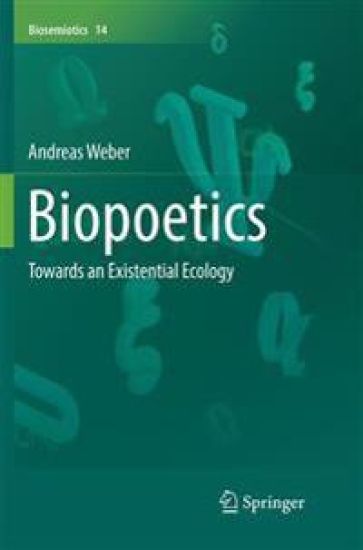
Biopoetics

Biopoetics

Andreas Weber

Springer
2018
nidottu
Meaning, feeling and expression – the experience of inwardness – matter most in human existence. The perspective of biopoetics shows that this experience is shared by all organisms. Being alive means to exist through relations that have existential concern, and to express these dimensions through the body and its gestures. All life takes place within one poetic space which is shared between all beings and which is accessible through subjective sensual experience. We take part in this through our empirical subjectivity, which arises from the experiences and needs of living beings, and which makes them open to access and sharing in a poetic objectivity. Biopoetics breaks free from the causal-mechanic paradigm which made biology unable to account for mind and meaning. Biology becomes a science of expression, connection and subjectivity which can understand all organisms including humans as feeling agents in a shared ecology of meaningful relations, embedded in a symbolical and material metabolism of the biosphere.
Alfred Veber. Izbrannoe. Krizis evropejskoj kultury

Alfred Veber. Izbrannoe. Krizis evropejskoj kultury

Andreas Weber

Tsentr Gumanitarnykh Initsiativ
2017
sidottu
Alfred Veber- nemetskij sotsiolog, kulturolog, istorik, ostro chuvstvujuschij kharakter i napravlennost sotsialnoj istorii i politicheskikh vejanij. Potrjasennyj svidetel dvukh katastrof evropejskoj istorii, i osobenno Germanii, on v dvukh, publikuemykh v dannom tome knigakh "Tretij ili chetvertyj chelovek" (1953) i "Proschanie s prezhnej istoriej" (1946) i nebolshikh sbornikakh statej, posvjaschennykh samym ostrym problemam sovremennoj istorii, ischet otveta o smysle istorii, vozmozhnostjakh i dolge cheloveka, roli mass i objazannostjakh pered nimi i obschestvom v tselom dukhovnykh i politicheskikh liderov. Odna iz osnovnykh ego myslej - bezvozvratnoe zavershenie dlitelnogo istoricheskogo puti evropejskoj kultury i nastuplenie printsipialno novoj epokhi, ochertanija kotoroj mozhno lish ugadyvat.
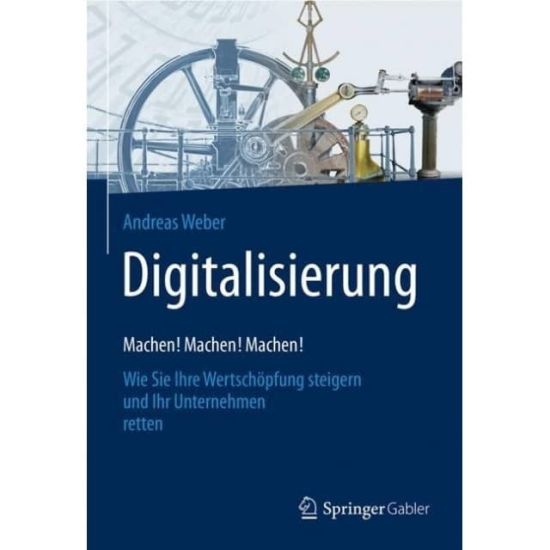
Digitalisierung – Machen! Machen! Machen!

Digitalisierung – Machen! Machen! Machen!

Andreas Weber

Springer-Verlag Berlin and Heidelberg GmbH Co. KG
2017
sidottu
Andreas Weber vermittelt Unternehmern und Managern die überlebenswichtige Facette der Digitalisierung mithilfe eines selbst entwickelten Modells. In dessen Mittelpunkt steht der Mensch: der Kunde im Fokus einer veränderten Wertschöpfungskette, die Mitarbeiter mit Ihrem Engagement, ihrer Kreativität und Wandlungsfähigkeit und last not least die Führungskräfte als deren Vorbilder und Befähiger sowie als strategische Pioniere. Daten sind der Treibstoff, ihre Integration ist das Geschäft. Nur eine kundenzentrierte Supply Chain ermöglicht unternehmerisches Wachstum und garantiert den unternehmerischen Fortbestand. Ansprechende Grafiken erläutern die eingängige Darstellung Schritt für Schritt. Sie eröffnet dem Leser den Ausblick auf die kommenden fünf Jahre, in denen sich entscheidet, wer am Markt überlebt. Das Buch ist Weckruf und Ansporn, endlich digital zu handeln, um den Unternehmenserfolg zu sichern und zu steigern.
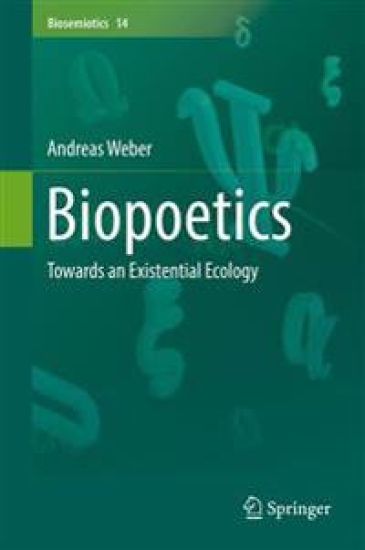
Biopoetics

Biopoetics

Andreas Weber

Springer
2016
sidottu
Meaning, feeling and expression – the experience of inwardness – matter most in human existence. The perspective of biopoetics shows that this experience is shared by all organisms. Being alive means to exist through relations that have existential concern, and to express these dimensions through the body and its gestures. All life takes place within one poetic space which is shared between all beings and which is accessible through subjective sensual experience. We take part in this through our empirical subjectivity, which arises from the experiences and needs of living beings, and which makes them open to access and sharing in a poetic objectivity. Biopoetics breaks free from the causal-mechanic paradigm which made biology unable to account for mind and meaning. Biology becomes a science of expression, connection and subjectivity which can understand all organisms including humans as feeling agents in a shared ecology of meaningful relations, embedded in a symbolical and material metabolism of the biosphere.