Kirjojen hintavertailu. Mukana 12 595 353 kirjaa ja 12 kauppaa.

Kirjailija

Andreja Kutnar

Kirjat ja teokset yhdessä paikassa: 7 kirjaa, julkaisuja vuosilta 2014-2023, suosituimpien joukossa Contemporary Slovenian Timber Architecture for Sustainability. Vertaile teosten hintoja ja tarkista saatavuus suomalaisista kirjakaupoista.

7 kirjaa

Kirjojen julkaisuhaarukka 2014-2023.

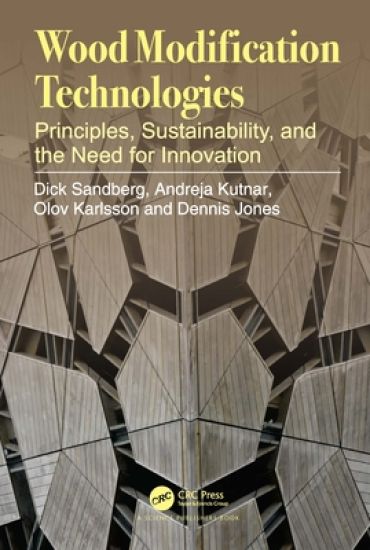
Wood Modification Technologies

Wood Modification Technologies

Dick Sandberg; Andreja Kutnar; Olov Karlsson; Dennis Jones

TAYLOR FRANCIS LTD
2023
nidottu
The market for durable products using modified wood has increased substantially during the last few years. This is partly because of the restriction on the use of toxic preservatives due to environmental concerns, and to lower maintenance cost and time. Furthermore, as sustainability becomes a greater concern, the environmental impact of construction and interior materials is factored in planning by considering the whole life cycle and embodied energy of the materials used.Wood is modified to improve its intrinsic properties, enhance the range of applications of timber, and to acquire the form and functionality desired by engineers without calling the environmental friendliness into question. Wood modification processes are at various stages of development, and the challenges faced in scaling up to industrial applications differ. The aim of this book is to put together the key elements of the changes of wood constituents and the related changes in wood properties of modified wood. Further, a selection of the principal technologies implemented in wood modification are presented. This work is intended for researchers, professionals of timber construction, as well as students studying the science of materials, civil engineering and architecture. This work is not exhaustive, but intends to deliver an outline of the scientific disciplines necessary to apprehend the technologies of wood modification and its behavior during treatment, as well as during its use.
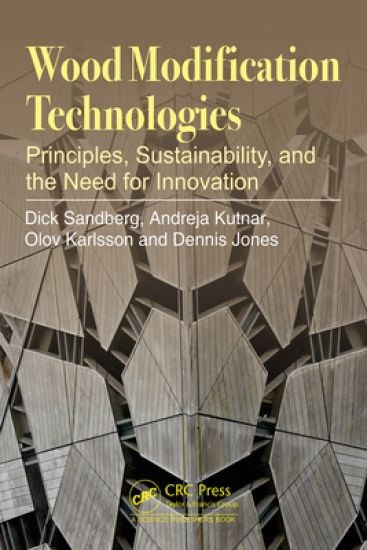
Wood Modification Technologies

Wood Modification Technologies

Dick Sandberg; Andreja Kutnar; Olov Karlsson; Dennis Jones

CRC Press
2021
sidottu
The market for durable products using modified wood has increased substantially during the last few years. This is partly because of the restriction on the use of toxic preservatives due to environmental concerns, and to lower maintenance cost and time. Furthermore, as sustainability becomes a greater concern, the environmental impact of construction and interior materials is factored in planning by considering the whole life cycle and embodied energy of the materials used.Wood is modified to improve its intrinsic properties, enhance the range of applications of timber, and to acquire the form and functionality desired by engineers without calling the environmental friendliness into question. Wood modification processes are at various stages of development, and the challenges faced in scaling up to industrial applications differ. The aim of this book is to put together the key elements of the changes of wood constituents and the related changes in wood properties of modified wood. Further, a selection of the principal technologies implemented in wood modification are presented. This work is intended for researchers, professionals of timber construction, as well as students studying the science of materials, civil engineering and architecture. This work is not exhaustive, but intends to deliver an outline of the scientific disciplines necessary to apprehend the technologies of wood modification and its behavior during treatment, as well as during its use.
Bio-based Building Skin

Bio-based Building Skin

Andreja Kutnar; Marcin Brzezicki; Jakub Sandak

Saint Philip Street Press
2020
pokkari
This book provides a compendium of material properties, demonstrates several successful examples of bio-based materials' application in building facades, and offers ideas for new designs and novel solutions. It features a state-of-the-art review, addresses the latest trends in material selection, assembling systems, and innovative functions of facades in detail. Selected case studies on buildings from diverse locations are subsequently presented to demonstrate the successful implementation of various biomaterial solutions, which defines unique architectural styles and building functions. The structures, morphologies and aesthetic impressions related to bio-based building facades are discussed from the perspective of art and innovation; essential factors influencing the performance of materials with respect to functionality and safety are also presented. Special emphasis is placed on assessing the performance of a given facade throughout the service life of a building, and after its end. The book not only provides an excellent source of technical and scientific information, but also contributes to public awareness by demonstrating the benefits to be gained from the proper use of bio-based materials in facades. As such, it will appeal to a broad audience including architects, engineers, designers and building contractors.; Presents case-studies and latest trends in material selection, assembling systems, and innovative functions of facades Discusses structure morphologies and aesthetic impressions related to bio-based building facades Highlights factors influencing performance of facades, with a special focus on service life of the building This work was published by Saint Philip Street Press pursuant to a Creative Commons license permitting commercial use. All rights not granted by the work's license are retained by the author or authors.
Bio-based Building Skin

Bio-based Building Skin

Andreja Kutnar; Marcin Brzezicki; Jakub Sandak

Saint Philip Street Press
2020
sidottu
This book provides a compendium of material properties, demonstrates several successful examples of bio-based materials' application in building facades, and offers ideas for new designs and novel solutions. It features a state-of-the-art review, addresses the latest trends in material selection, assembling systems, and innovative functions of facades in detail. Selected case studies on buildings from diverse locations are subsequently presented to demonstrate the successful implementation of various biomaterial solutions, which defines unique architectural styles and building functions. The structures, morphologies and aesthetic impressions related to bio-based building facades are discussed from the perspective of art and innovation; essential factors influencing the performance of materials with respect to functionality and safety are also presented. Special emphasis is placed on assessing the performance of a given facade throughout the service life of a building, and after its end. The book not only provides an excellent source of technical and scientific information, but also contributes to public awareness by demonstrating the benefits to be gained from the proper use of bio-based materials in facades. As such, it will appeal to a broad audience including architects, engineers, designers and building contractors.; Presents case-studies and latest trends in material selection, assembling systems, and innovative functions of facades Discusses structure morphologies and aesthetic impressions related to bio-based building facades Highlights factors influencing performance of facades, with a special focus on service life of the building This work was published by Saint Philip Street Press pursuant to a Creative Commons license permitting commercial use. All rights not granted by the work's license are retained by the author or authors.
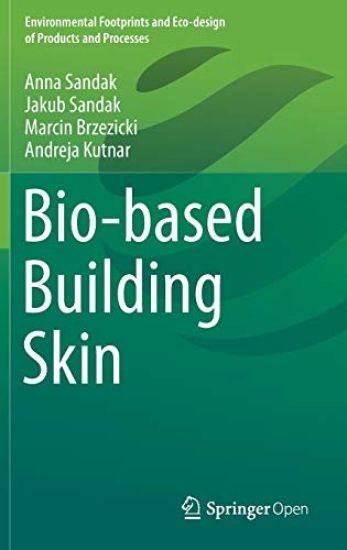
Bio-based Building Skin

Bio-based Building Skin

Anna Sandak; Jakub Sandak; Marcin Brzezicki; Andreja Kutnar

Springer Verlag, Singapore
2019
sidottu
This book provides a compendium of material properties, demonstrates several successful examples of bio-based materials’ application in building facades, and offers ideas for new designs and novel solutions. It features a state-of-the-art review, addresses the latest trends in material selection, assembling systems, and innovative functions of facades in detail. Selected case studies on buildings from diverse locations are subsequently presented to demonstrate the successful implementation of various biomaterial solutions, which defines unique architectural styles and building functions. The structures, morphologies and aesthetic impressions related to bio-based building facades are discussed from the perspective of art and innovation; essential factors influencing the performance of materials with respect to functionality and safety are also presented. Special emphasis is placed on assessing the performance of a given facade throughout the service life of a building, and after its end. The book not only provides an excellent source of technical and scientific information, but also contributes to public awareness by demonstrating the benefits to be gained from the proper use of bio-based materials in facades. As such, it will appeal to a broad audience including architects, engineers, designers and building contractors.
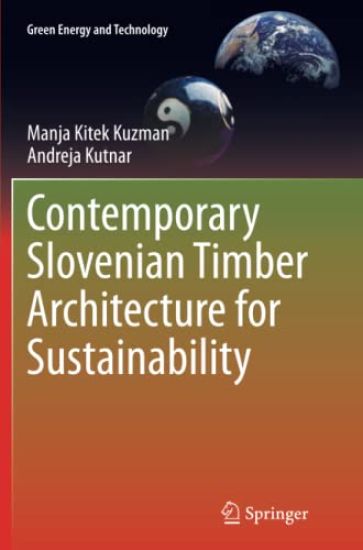
Contemporary Slovenian Timber Architecture for Sustainability

Contemporary Slovenian Timber Architecture for Sustainability

Manja Kitek Kuzman; Andreja Kutnar

Springer International Publishing AG
2016
nidottu
The book presents Slovenia’s contemporary timber architecture. Thanks to its abundant forests, Slovenia has preserved the tradition of wood construction. As much as 60% of its surface is covered by forests. Slovenia is also the third most forested country in Europe. The high share of forest-covered surface allows for a sustainable production of high-quality wood. In the past, wood was used primarily in the construction of farm buildings, but now timber architecture is used for everything from residences and office buildings to public buildings such as community centres and schools. Timber construction is becoming increasingly popular. Apart from larger companies taking this approach, a great number of wooden houses have sprung up, built either on personal initiative or with the support of carpenter workshops. Slovenian timber architecture has taken a new approach to environmental and energy-efficiency problems and received great international recognition. The book discusses over fifty projects built over a ten-year period, and includes descriptions, photographs and plans. The projects include residential areas, administration, and office as well as tourist, educational and industrial buildings. Timber architecture is presented as an integral part of the Slovenian landscape. The monograph will be useful to designers and future experts in their planning of optimal timber buildings and will highlight the main benefits of using timber construction.
Contemporary Slovenian Timber Architecture for Sustainability

Contemporary Slovenian Timber Architecture for Sustainability

Manja Kitek Kuzman; Andreja Kutnar

Springer International Publishing AG
2014
sidottu
The book presents Slovenia’s contemporary timber architecture. Thanks to its abundant forests, Slovenia has preserved the tradition of wood construction. As much as 60% of its surface is covered by forests. Slovenia is also the third most forested country in Europe. The high share of forest-covered surface allows for a sustainable production of high-quality wood. In the past, wood was used primarily in the construction of farm buildings, but now timber architecture is used for everything from residences and office buildings to public buildings such as community centres and schools. Timber construction is becoming increasingly popular. Apart from larger companies taking this approach, a great number of wooden houses have sprung up, built either on personal initiative or with the support of carpenter workshops. Slovenian timber architecture has taken a new approach to environmental and energy-efficiency problems and received great international recognition. The book discusses over fifty projects built over a ten-year period, and includes descriptions, photographs and plans. The projects include residential areas, administration, and office as well as tourist, educational and industrial buildings. Timber architecture is presented as an integral part of the Slovenian landscape. The monograph will be useful to designers and future experts in their planning of optimal timber buildings and will highlight the main benefits of using timber construction.