Kirjojen hintavertailu. Mukana 12 556 254 kirjaa ja 12 kauppaa.

Kirjailija

Andres Cruz

Kirjat ja teokset yhdessä paikassa: 11 kirjaa, julkaisuja vuosilta 2012-2023, suosituimpien joukossa Le CMI comme outil de contrôle fiscal appliqué par les entreprises. Vertaile teosten hintoja ja tarkista saatavuus suomalaisista kirjakaupoista.

Mukana myös kirjoitusasut: Andrés Cruz

11 kirjaa

Kirjojen julkaisuhaarukka 2012-2023.

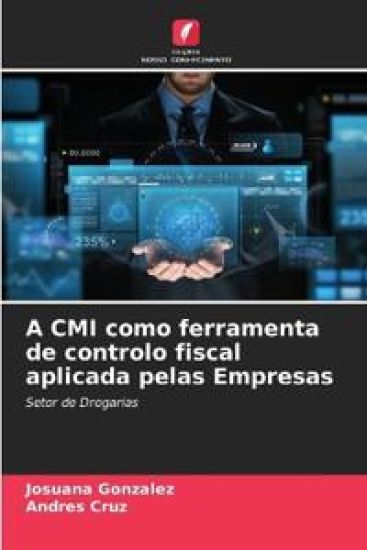
A CMI como ferramenta de controlo fiscal aplicada pelas Empresas

A CMI como ferramenta de controlo fiscal aplicada pelas Empresas

Josuana Gonzalez; Andres Cruz

Edicoes Nosso Conhecimento
2023
pokkari
O principal objetivo deste manuscrito proporcionar a possibilidade de controlar e avaliar o planejamento tribut rio, uma vez que o mundo tribut rio n o se limita lei, necessitando de outras ferramentas que contribuam para o fortalecimento da aplica o. Destaca-se tamb m como o contribuinte pode desenvolver ferramentas baseadas no sistema de controlo de gest o e nos seus indicadores.
La CMI come strumento di controllo fiscale applicato dalle aziende

La CMI come strumento di controllo fiscale applicato dalle aziende

Josuana Gonzalez; Andres Cruz

Edizioni Sapienza
2023
pokkari
L'obiettivo principale di questo manoscritto fornire la possibilit di controllare e valutare la pianificazione fiscale, poich il mondo fiscale non si limita alla legge, ma richiede altri strumenti che contribuiscano a rafforzarne l'applicazione. Si evidenzia inoltre come il contribuente possa sviluppare strumenti basati sul sistema di controllo di gestione e sui suoi indicatori.
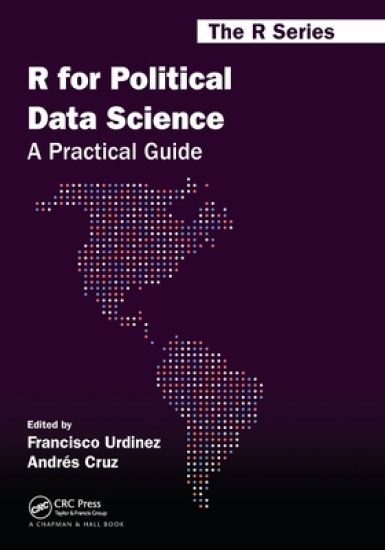
R for Political Data Science

R for Political Data Science

Francisco Urdinez; Andres Cruz

TAYLOR FRANCIS LTD
2022
nidottu
R for Political Data Science: A Practical Guide is a handbook for political scientists new to R who want to learn the most useful and common ways to interpret and analyze political data. It was written by political scientists, thinking about the many real-world problems faced in their work. The book has 16 chapters and is organized in three sections. The first, on the use of R, is for those users who are learning R or are migrating from another software. The second section, on econometric models, covers OLS, binary and survival models, panel data, and causal inference. The third section is a data science toolbox of some the most useful tools in the discipline: data imputation, fuzzy merge of large datasets, web mining, quantitative text analysis, network analysis, mapping, spatial cluster analysis, and principal component analysis.Key features: Each chapter has the most up-to-date and simple option available for each task, assuming minimal prerequisites and no previous experience in R Makes extensive use of the Tidyverse, the group of packages that has revolutionized the use of R Provides a step-by-step guide that you can replicate using your own data Includes exercises in every chapter for course use or self-study Focuses on practical-based approaches to statistical inference rather than mathematical formulae Supplemented by an R package, including all dataAs the title suggests, this book is highly applied in nature, and is designed as a toolbox for the reader. It can be used in methods and data science courses, at both the undergraduate and graduate levels. It will be equally useful for a university student pursuing a PhD, political consultants, or a public official, all of whom need to transform their datasets into substantive and easily interpretable conclusions.
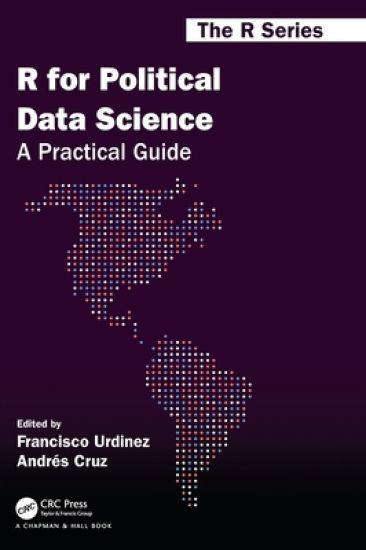
R for Political Data Science

R for Political Data Science

Francisco Urdinez; Andres Cruz

CRC Press
2020
sidottu
R for Political Data Science: A Practical Guide is a handbook for political scientists new to R who want to learn the most useful and common ways to interpret and analyze political data. It was written by political scientists, thinking about the many real-world problems faced in their work. The book has 16 chapters and is organized in three sections. The first, on the use of R, is for those users who are learning R or are migrating from another software. The second section, on econometric models, covers OLS, binary and survival models, panel data, and causal inference. The third section is a data science toolbox of some the most useful tools in the discipline: data imputation, fuzzy merge of large datasets, web mining, quantitative text analysis, network analysis, mapping, spatial cluster analysis, and principal component analysis.Key features: Each chapter has the most up-to-date and simple option available for each task, assuming minimal prerequisites and no previous experience in R Makes extensive use of the Tidyverse, the group of packages that has revolutionized the use of R Provides a step-by-step guide that you can replicate using your own data Includes exercises in every chapter for course use or self-study Focuses on practical-based approaches to statistical inference rather than mathematical formulae Supplemented by an R package, including all dataAs the title suggests, this book is highly applied in nature, and is designed as a toolbox for the reader. It can be used in methods and data science courses, at both the undergraduate and graduate levels. It will be equally useful for a university student pursuing a PhD, political consultants, or a public official, all of whom need to transform their datasets into substantive and easily interpretable conclusions.