Kirjojen hintavertailu. Mukana 12 595 353 kirjaa ja 12 kauppaa.
Kirjailija
Andres Duany
Kirjat ja teokset yhdessä paikassa: 6 kirjaa, julkaisuja vuosilta 2010-2021, suosituimpien joukossa Rural urbanism. Vertaile teosten hintoja ja tarkista saatavuus suomalaisista kirjakaupoista.
Thomas Melin; Andrés Duany; Elizabeth Plater-Zyberk; Susan Parham; Cecilia Tacoli; Sibella Kraus; Charles Waldheim; Randall Arendt; James Howard Kunstler
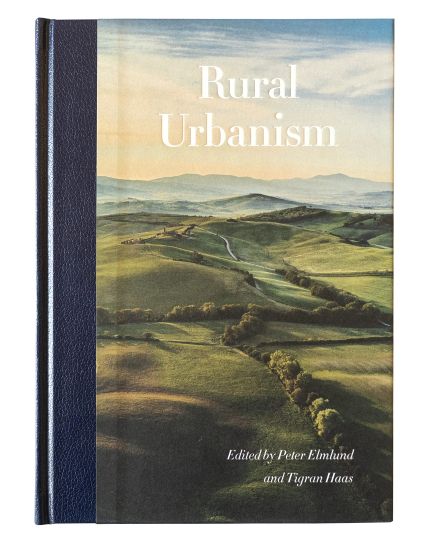
When summer arrives, tourists replace the city s usual residents, who instead flock to the countryside. But more and more people are moving to or closer to big cities, and they no longer work the land. At the same time, we are still as dependent on what the countryside has to offer in terms of food. What role will our rural designs and the cultivation of organic food play in the future? New Ruralism and Rural Agrarian Urbanism may provide solutions to these challenges. This book, with contributions from leading experts in the field, addresses issues such as sustainable food production and community planning.
For a decade, Suburban Nation has given voice to a growing movement in North America to put an end to suburban sprawl and replace the last century's automobile-based settlement patterns with a return to more traditional planning. Founders of the Congress for the New Urbanism, Andres Duany and Elizabeth Plater-Zyberk are at the forefront of the movement, and even their critics, such as Fred Barnes in The Weekly Standard, recognized that "Suburban Nation is likely to become this movement's bible." A lively lament about the failures of postwar planning, this is also that rare book that offers solutions: "an essential handbook" (San Francisco Chronicle). This tenth anniversary edition includes a new preface by the authors.
Publisher's Note: Products purchased from Third Party sellers are not guaranteed by the publisher for quality, authenticity, or access to any online entitlements included with the product.Everyone is calling for smart growth...but what exactly is it? In The Smart Growth Manual, two leading city planners provide a thorough answer. From the expanse of the metropolis to the detail of the window box, they address the pressing challenges of urban development with easy-to-follow advice and broad array of best practices. With their landmark book Suburban Nation, Andres Duany and Jeff Speck "set forth more clearly than anyone has done in our time the elements of good town planning" (The New Yorker). With this long-awaited companion volume, the authors have organized the latest contributions of new urbanism, green design, and healthy communities into a comprehensive handbook, fully illustrated with the built work of the nation's leading practitioners. "The Smart Growth Manual is an indispensable guide to city planning. This kind of progressive development is the only way to fully restore our economic strength and create new jobs, new industries, and a renewed ability to compete in the first rank of world economies." -- Gavin Newsom, Mayor of San Francisco "Authors Andres Duany, Jeff Speck, and Mike Lydon have created The Smart Growth Manual, a resource which not only explains the overarching ideals of smart growth, but a manual that takes the time to show smart growth principles at each geographic scale (region, neighborhood, street, building). I highly recommend [it] as a part of any community participant’s or urban planner’s desktop references." -- LocalPlan.orgPlanetizen Top 10 Books – 2010 On the ninth annual list of the ten best books in urban planning, design and development:"The goal of The Smart Growth Manual is clear from page 1: to create a guidebook for smart growth following the pattern of the Charter for New Urbanism. Duany, Speck and Lydon have achieved that in spades (the Charter is included in the appendix, in case we missed the connection). It even clears up some of the architectural arguments that attach themselves to New Urbanists, such as this segment of Section 14.1, Regional Design; 'While new buildings should not be compelled to mimic their historic predecessors, designers should pay attention to local practices regarding materials and colors, roof pitches, eave lengths, window-to-wall ratios, and the socially significant relationship of buildings to their site and the street; these have usually evolved in intelligent response to local conditions.' In addition to making the old 'traditional vs. modern' argument irrelevant, Duany, Speck and Lydon have truly managed to boil down the best parts of current practices into a highly readable, portable book."
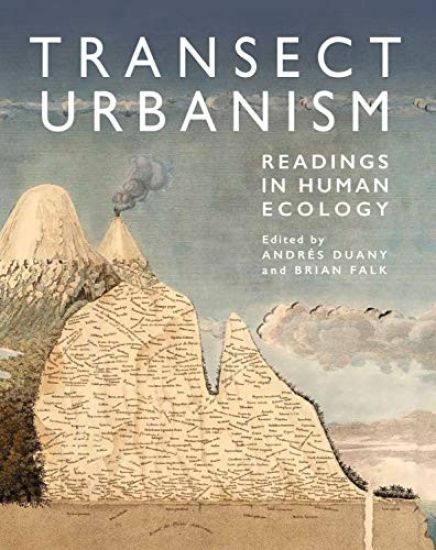
Transect Urbanism: Readings in Human Ecology is the definitive reference on the Rural-to-Urban Transect, a compilation of the most important essays, diagrams, and images on the subject. It provides historical, practical, and theoretical insights into one of the most effective urban planning methodologies developed in the 20th Century. The Transect is a unifying theory, serving as a framework for the various fields of urban design. The editors selected the most important previously published essays and commissioned preeminent academics and professionals to write on the use of the Transect in their areas of expertise, including retail, zoning, thoroughfare design, environmental sustainability, and philosophy. As diagrams and drawings are essential to the understanding and use of the Transect, this book also contains the most complete collection of Transect images ever published. Transect Urbanism will serve as a primary reference source for academics, students, and practitioners interested in creating great places.
Short-term, community-based projects - from pop-up parks to open streets initiatives - have become a powerful and adaptable new tool of urban activists, planners, and policy-makers seeking to drive lasting improvements in their cities and beyond. These quick, often low-cost, and creative projects are the essence of the Tactical Urbanism movement. Whether creating vibrant plazas seemingly overnight or re-imagining parking spaces as local gathering places, they offer a way to gain public and government support for investing in permanent projects, inspiring residents and civic leaders to experience and shape urban spaces in a new way. Tactical Urbanism, written by Mike Lydon and Anthony Garcia, two founders of the movement, promises to be the foundational guide for urban transformation. The authors begin with an in-depth history of the Tactical Urbanism movement and its place among other social, political, and urban planning trends, and a detailed set of case studies demonstrate the breadth and scalability of tactical urbanism interventions. Finally, the book provides a detailed toolkit for conceiving, planning, and carrying out projects, including how to adapt them based on local needs and challenges. Tactical Urbanism will inspire and empower a new generation of engaged citizens, urban designers, land use planners, architects, and policymakers to become key actors in the transformation of their communities.
Zoning reform is essential to allow the walkable, mixed-use neighborhoods that residents desire and to create the economically sustainable development cities require. Zoning reform is essential to offer an alternative to sprawl, preserve open lands, and reduce energy use and carbon emissions.The SmartCode is a unified development ordinance that incorporates the proven Transect-based planning principles of New Urbanism and Smart Growth. As a model ordinance, the SmartCode is written in a concise, flexible template to be calibrated for local conditions and used in towns, cities, regions, and private developments.The nonprofit Center for Applied Transect Studies provides the SmartCode for free use to encourage zoning reform. It has been implemented in hundreds of cities around the world. Modules on 28 subjects have been created to supplement the base SmartCode. The modules can be found at transect.org.