
Kirjailija
Andrés Neuman
Kirjat ja teokset yhdessä paikassa: 21 kirjaa, julkaisuja vuosilta 2013-2026, suosituimpien joukossa The Things We Don't Do. Vertaile teosten hintoja ja tarkista saatavuus suomalaisista kirjakaupoista.
Mukana myös kirjoitusasut: Andres Neuman
21 kirjaa
Kirjojen julkaisuhaarukka 2013-2026.
The moving story of a man becoming a father, written by the winner of the 2009 Alfaguara Award."I am delighted that we are together, my son, becoming what we will both be."A man awaits his son's birth. Captivated, he follows the mother's pregnancy, imagining the child that will transform his house, his language, his relationship, and his family history. For a year, he annotates the memorable first steps leading the three of them into these new existential situations: being a father, a mother, a son; three different characters in a universal story, told in newly born words. A situation further complicated when the child begins speaking and articulating his world.A Father Is Born is a lyrical tale that resonates both on intimate and collective levels. Its understanding of fatherhood faces masculinity with the miracle of life and its incessant rereading of the present. In a time that redefines traditionally attributed roles, A Father Is Born accepts Anne Waldman's invitation: "Tell the man to give up tumult for the while / To wonder at the sight of baby's beauty." But it is also, and above all, a love statement.

EL GANADOR DEL PREMIO ALFAGUARA VUELVE A LA NOVELA CON LA VIDA DE MAR A MOLINER EN EL 125 ANIVERSARIO DE SU NACIMIENTO «Mar a Moliner hizo una proeza con muy pocos precedentes: escribi sola, en su casa, con su propia mano, el diccionario m s completo, til y divertido de la lengua castellana . --Gabriel Garc a M rquez «Andr s Neuman nos revela la literatura que habita en un diccionario y en la vida de su creadora, acerc ndonos a un personaje fabuloso y haci ndole justicia a una rebelde en tiempos oscuros, tan sutil como radical . --Jazmina Barrera Solemos identificar a Mar a Moliner con su diccionario, «el m s completo, til y divertido de la lengua castellana , seg n Garc a M rquez. Pero por qu se sent a escribirlo a los cincuenta a os, en plena dictadura franquista? C mo pudo completar, pr cticamente sola, el diccionario de autora m s importante de todos los tiempos? Hasta que empieza a brillar cuenta la historia ntima de Mar a Moliner, partiendo de una atractiva premisa literaria: narrar de cuerpo entero a la protagonista a trav s de su v nculo con la lengua. A la vez, nos propone una sugerente hip tesis: y si su diccionario fuese tambi n una suerte de autobiograf a oculta? Esta es la vida novelada de una figura apasionante, retratada desde una infancia dif cil hasta un final insospechado, pasando por su extraordinaria labor como bibliotecaria en la Rep blica o su pol mica candidatura a la Real Academia. Entre la investigaci n y la imaginaci n, combinando la comedia, el drama familiar y la tragedia colectiva, se abre paso la historia de una resistencia secreta. Un acto de justicia con el legado de una mujer que vivi a contracorriente y explor las palabras hasta que empezaron a brillar. ENGLISH DESCRIPTION THE WINNER OF THE ALFAGUARA PRIZE BRINGS US THIS NOVEL ABOUT THE LIFE OF MAR A MOLINER ON THE 125TH ANNIVERSARY OF HER BIRTH."Mar a Moliner accomplished a nearly unprecedented feat: Writing alone, at home, by hand, she produced the most complete, useful and entertaining dictionary of the Spanish language." - Gabriel Garc a M rquez"Andr s Neuman reveals the literary aspects of Moliner's dictionary and the life of its creator, introducing us to an extraodinary human being who dared to rebel in dark times in subtle but radical ways." -Jazmina BarreraWhen we think of Mar a Moliner, it's usually of her dictionary, "the most complete, useful and entertaining in the Spanish language," as Garc a M rquez described it. But why, at the age of 50, did she decide to write it, at the height of the Franco dictatorship? How did she manage to complete such a daunting task practically on her own? Until It Begins to Shine is a fictionalized version of Mar a Moliner's life told from a unique perspective: her fascination with language. It also poses an intriguing hypothesis: What if the dictionary were also a type of coded autobiography of its author? The novel traces Moliner's extraordinary life, from her difficult childhood through her important work as a librarian under the Republic and controversial nomination to Spain's Royal Academy. A blend of research and imagination, comedy, family drama and collective tragedy, it is the story of clandestine resistance, an attempt to do justice to the legacy of a woman who went against the tide and explored the power of words until she made them shine.
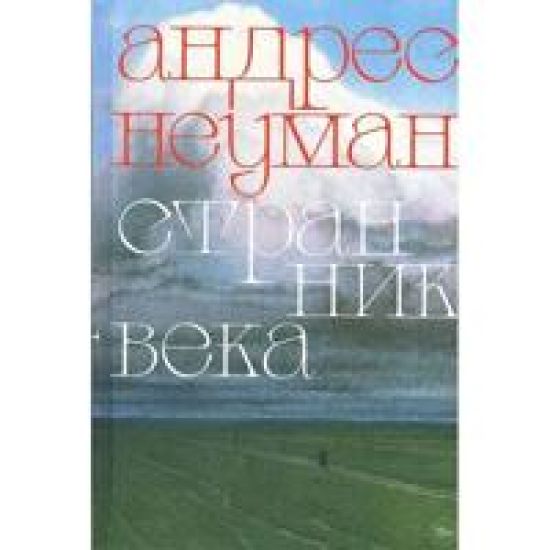
Roman predstavljaet soboj grandioznyj literaturnyj eksperiment - popytku uvidet XIX vek iz veka XXI-go, issledovat istoki sovremennykh konfliktov. Eto svoeobraznyj dialog mezhdu klassicheskim romanom i avangardistskoj formoj, kotoryj svjazyvaet istoriju i problemy sovremennosti: emigratsiju, multikulturalizm, natsionalizm, zhenskuju emansipatsiju, i vse eto vstroeno v jarkuju sjuzhetnuju liniju s intrigami, zagadkami, jumorom v sochetanii s ostro-individualnym stilem."Literatura XXI veka prinadlezhit Neumanu i ego krovnym bratjam" (Roberto Bolano).Roman udostoen premii Alfaguara, odnoj iz samykh prestizhnykh literaturnykh premij XXI veka i rjada drugikh.
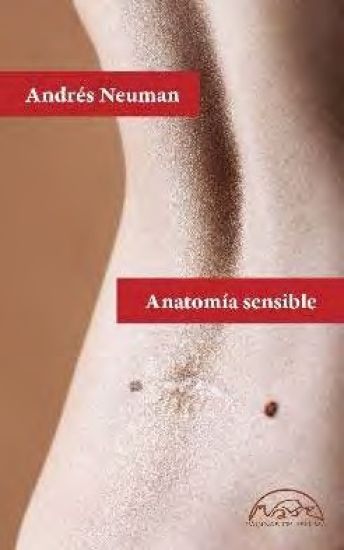
In the era of compulsive touch-ups and digital poses, perhaps it is time to re-read our body in order to rescue it. The thirty chapters of Sensitive Anatomy form a celebration of the body in its entirety. This is a poetic, political and erotic journey across the very matter that makes us. It is a book that reveals how we see ourselves and how we are made to see. It stands against the culture of Photoshop, against oppressive images, against edits and erasures. In this way, Neuman continues to extend the limits of short-form prose with irony and aplomb. Body as style, style as body.

Once Upon Argentina tells the sentimental and political story of a family that comes from everywhere, and of a country's wandering, migratory culture In the beginning it was Jacobo, born in tsarist Russia, who fled to Buenos Aires and married a young Lithuanian woman named Lidia. Or was it Ren , a French sculptor who knelt before no one, and his wife Louise Blanche, who left France only to end up in a remote town in northern Argentina. Descended from these colorful, half-forgotten character, the young narrator of this novel employs dazzling prose to construct a journey through a family tree populated with endearing, eccentric, unforgettable figures, along with an intelligent and personal account of the construction of contemporary Argentina, from Yrigoyen to Menem, through Peronism and the nightmare of dictatorships. These stories intersect, intertwining like a set of Matryoshka dolls or hall of mirrors, letting the personal and political histories of the twentieth century reflect off of one another. With extraordinary delicacy and intensity that combines elegy, tragedy, and humor, Andr s Neuman unpacks a territory as real as it is fantastic, as strange as it is our own.
POR EL GANADOR DEL PREMIO ALFAGUARA Y PREMIO DE LA CR TICA. Despu s de Umbilical, uno de los libros del a o seg n El Cultural, Neuman lleva m s lejos «uno de los mejores homenajes a la paternidad (Babelia) Las emociones de un padre ante la iniciaci n verbal de su hijo impulsan este libro repleto de hallazgos. Sus p ginas exploran el enigma de los aprendizajes esenciales que jam s recordaremos: empezar a caminar, hablar, formar la identidad y organizar nuestra memoria. Construyendo un luminoso relato l rico, su voz rinde tributo a la primera infancia y a la lengua misma, fruto de un raro equilibrio entre enamoramiento y reflexi n. Peque o hablante pertenece a un g nero de literatura amorosa poco frecuente: la que un padre asombrado escribe para su hijo. Profundizando en el camino abierto por Umbilical, Neuman recrea con delicado humor los v rtigos del tiempo, los v nculos entre generaciones o los conflictos ntimos, dialogando con las actuales transformaciones en los roles familiares y en nuestra sensibilidad cotidiana. ENGLISH DESCRIPTION BY THE WINNER OF THE ALFAGUARA NOVEL PRIZE AND THE NATIONAL CRITICS AWARD. After Umbilical, one of the books of the year according to El Cultural, Neuman goes further, with "one of the greatest tributes to paternity" (Babelia.) A father's emotions when his son first speaks propel this book full of findings. Its pages explore the enigma of essential learnings we will never remember: how we first started to walk, talk, form our identity, and organize our memories. By building a bright lyrical tale, Neuman's voice pays tribute to early childhood and language itself, fruit of a rare balance between falling in love and reflection. Little Speaker belongs to an uncommon romance literary genre: that of a father in awe, writing for his son. In a way deepening the path opened by Umbilical, Neuman recreates with delicate humor the vertigo of time, inter-generational bonding, or intimate conflicts, conversing with the current transformations in family roles and our everyday sensibility.
Taut and contemplative, these poems ruminate on family, exile, love, and the vagaries of human perception. Love Training encapsulates Andrés Neuman’s work as a poet, spanning two decades in a single unified collection. The book is divided into three sections that complement and respond to each other. The first, “Love Training,” focuses on family, loss, relationships, desire, and a sense of anchoring in the world. The second, “Fictions of Sight,” is concerned with questions of perception, perspective, language and creativity. The third, “I Don’t Know Why,” is a whimsical set of interconnected poems that ask unanswered questions, serving as a kind of coda. While Andrés Neuman is a rightly celebrated and widely translated novelist, he is also a lucid—and quite prolific—poet. Love Training is the first volume to make his sensitive, incisive poems available in English.
Demetrio Rota, a garbage collector from Buenos Aires, sleeps in the afternoons and assembles puzzles at night before leaving for work. His daily life is mediocre and he keeps his balance through sheer exhaustion. However, through the puzzles, Demetrio inspects and sorts through his own memories. At the end of the journey through his history, the present seems to devour him, until he's left with only the emptiness of himself and his daily misery. A parable of memory and deterioration, Andr s Neuman's Bariloche juxtaposes the astonished memories of youth with a skeptical conscience; the impossible idealization of nature or first love with the moral and physical suffocation of the big city; being uprooted with returning to one's origins, with a language fascinated by both lyricism and rottenness.
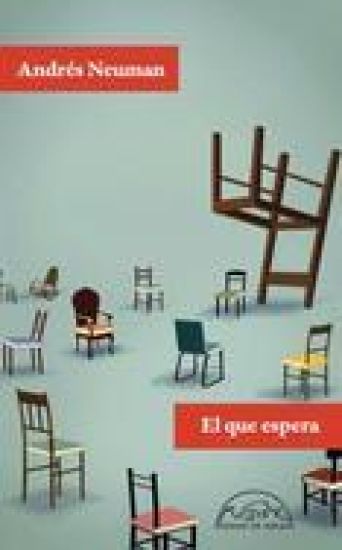
Hr. Watanabe, der som barn har overlevet atombomben i Hiroshima, hvor han mistede sin far, føler, at han flygter fra sine egne minder. Jordskælvet forud for Fukushima-ulykken forårsager en forskydning, der samtidig ripper op i den kollektive fortid. Fire kvinder fortæller om deres liv med og minder om Watanabe til en argentinsk journalist under en følelsesbetinget og politisk rundrejse til byerne Tokio, Paris, New York, Buenos Aires og Madrid. Denne blanding af sprog, lande og parforhold afslører, hvordan intet sker på et enkelt sted, hvordan hver begivenhed breder sig og skaber rystelser på den modsatte side af kloden. Måden, hvorpå samfund husker og – især – glemmer. I Brud sammenvæves kærlighed, humor, historie og skønheden, der kan opstå af ødelæggelse
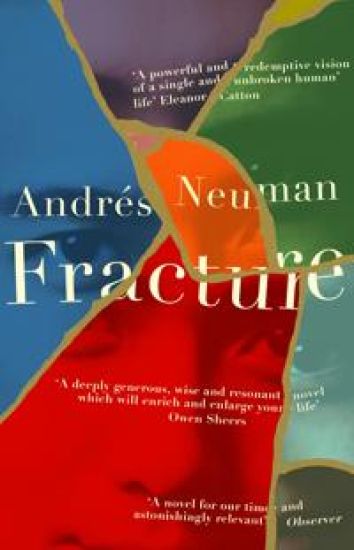
A survivor of the atomic bombs dropped in Nagasaki and Hiroshima, Mr Watanabe has evaded the memory for most of his nomadic life. When the 2011 earthquake strikes, triggering the Fukushima nuclear disaster, the past becomes the present, and Mr Watanabe begins a journey that will change everything. Written with intimacy and compassion, Fracture is a remarkable novel about collective trauma, love and the complexities of human life.
Critically acclaimed, prize-winning author Andr s Neuman's Fracture is an ambitious literary novel set against Japan's 2011 nuclear accident in a cross-cultural story about how every society remembers and forgets its catastrophes. Mr. Yoshie Watanabe, a former electronics company executive and a survivor of the atomic bomb, has always lived like a fugitive from his own memories. He's spent decades traveling the world, making a life in different languages, only to find himself home again, living in Tokyo in his old age. On the afternoon of March 11, 2011, Watanabe, like millions of others, is stunned by powerful tremors. A massive earthquake has struck to the north, triggering the Fukushima nuclear disaster--and a stirring of the collective past. As the catastrophe unfolds, Watanabe's mind, too, undergoes a tectonic shift. With his native land yet again under nuclear threat, he braces himself to make the most surprising decision of his nomadic life. Meanwhile, four women who have known him intimately at various points in time narrate their stories to a strangely obsessive Argentinian journalist. Their memories, colored by their respective cultures and describing different ways of loving, trace sociopolitical maps of Paris, New York, Buenos Aires, and Madrid over the course of the twentieth century. The result is a metalingual, border-defying constellation of fractures in life and nature--proof that nothing happens in only one place, that every human event reverberates to the ends of the earth. With unwavering empathy and bittersweet humor, and facing some of the most urgent environmental concerns of our time, Andr s Neuman's Fracture is a powerful novel about the resilience of humankind, and the beauty that can emerge from broken things.
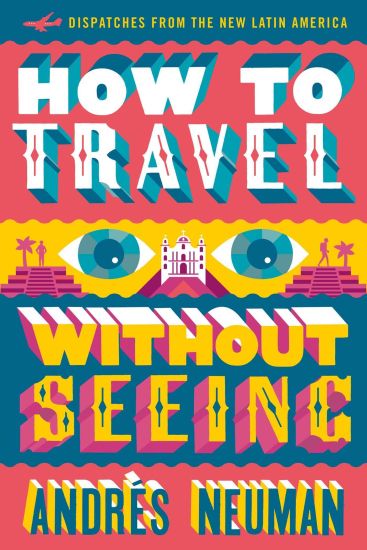
A dizzying, fast-paced tour of Latin America provides one of the Spanish-speaking world's most outstanding writers with the occasion for an experimental travelogue somewhere between personal diary and critical essay. Lamenting not having more time to get to know each of the 19 countries he visits after winning the Premio Alfaguara, Andres Neuman concludes that world travel consists mostly of 'not seeing'. Turning the fleeting nature of his trip into a creative and critical advantage, he writes a work that is whimsical and fun, poetic and aphoristic.
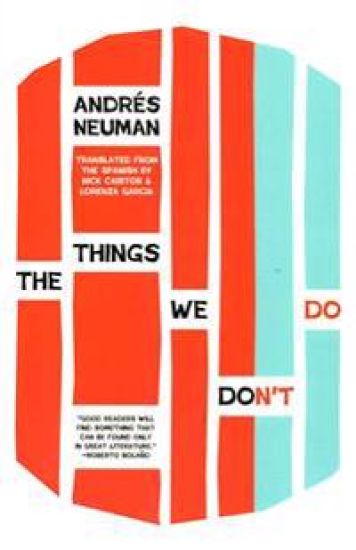
"Good readers will find something that can be found only in great literature, the kind written by real poets, a literature that dares to venture into the dark with open eyes and that keeps its eyes open no matter what . . . . The literature of the twenty-first century will belong to Neuman and a few of his blood brothers."--Roberto Bola o Playful, philosophizing, and gloriously unpredictable, Andr s Neuman's short stories consider love, lechery, history, mortality, family secrets, therapy, Borges, mysterious underwear, translators, and storytelling itself. Here a relationship turns on a line drawn in the sand; an analyst treats a patient who believes he's the real analyst; a discovery in a secondhand shop takes on a cruel significance; a man decides to go to work naked one day. In these small scenes and brief moments Neuman confounds our expectations with dazzling sleight of hand. With a variety of forms and styles, Neuman opens up the possibilities for fiction, calling to mind other greats of Latin American letters, such as Cort zar, Bola o, and Bioy Casares. Intellectually stimulating and told with a voice that is wry, questioning, sometimes mordantly funny, yet always generously humane, The Things We Don't Do confirms Neuman's place as one of the most dynamic authors writing today. Andr s Neuman was born in Buenos Aires, and grew up and lives in Spain. He was included in Granta's "Young Spanish-language Novelists" issue and is the author of almost twenty works, two of which--Traveler of the Century and Talking to Ourselves-- have been translated into English. Traveler of the Century won the Alfaguara Prize and the National Critics Prize, and was longlisted for the 2013 Best Translated book award, and shortlisted for the 2013 Independent Foreign Fiction Prize and the 2014 International IMPAC Dublin Literary Award. Nick Caistoris a prolific British translator and journalist, best known for his translations of Spanish and Portuguese literature. He is a past winner of the Valle-Incl n Prize for translation and is a regular contributor to BBC Radio 4, Times Literary Supplement, and the Guardian. Lorenza Garcia has lived for extended periods in Spain, France, and Iceland. Since 2007, she has translated over a dozen novels and works of non-fiction from French and Spanish.
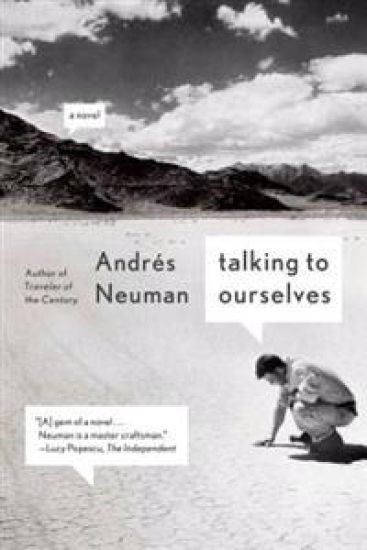
A searing family drama from one of Latin America's most original voicesOne trip. Two love stories. Three voices. Lito is ten years old and is almost sure he can change the weather when he concentrates very hard. His father, Mario, anxious to create a memory that will last for his son's lifetime, takes him on a road trip in a truck called Pedro. But Lito doesn't know that this might be their last trip: Mario is gravely ill. Together, father and son embark on a journey takes them through strange geographies that seem to meld the different parts of the Spanish-speaking world. In the meantime, Lito's mother, Elena, restlessly seeks support in books, and soon undertakes an adventure of her own that will challenge her moral limits. Each narrative--of father, son, and mother--embodies one of the different ways that we talk to ourselves: through speech, through thought, and through writing. While neither of them dares to tell the complete truth to the other two, their individual voices nonetheless form a poignant conversation. Sooner or later, we all face loss. Andr s Neuman movingly narrates the ways the lives of those who survive loss are transformed; how that experience changes our ideas about time, memory, and our own bodies; and how the acts of reading, and of sex, can serve as powerful modes of resistance. Talking to Ourselves presents a tender yet unsentimental portrait of the workings of love and family; a reflection both on grief and on the consolation of words. Neuman, the author of the award-winning Traveler of the Century, displays his characteristic warmth, bittersweet humor, and wide-ranging intellect, giving us the rich, textured, and strikingly different voices and experiences of three singular characters while presenting, above all, a profound tribute to those who have ever had to care for a loved one.
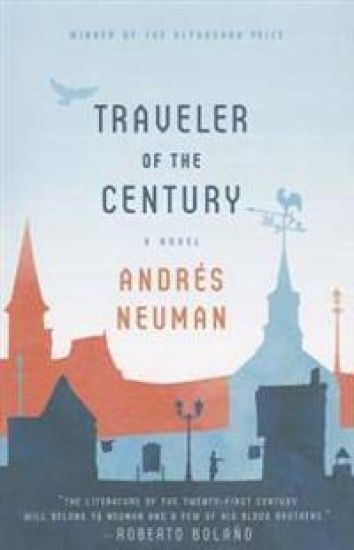
"The literature of the twenty-first century will belong to Neuman." --Roberto Bola o Searching for an inn, the enigmatic traveler Hans stops in a small city on the border between Saxony and Prussia. The next morning, Hans meets an old organ-grinder in the market square and immediately finds himself enmeshed in an intense debate--on identity and what it is that defines us--from which he cannot break free. Indefinitely stuck in Wandernburg until his debate with the organ-grinder is concluded, he begins to meet the various characters who populate the town, including a young freethinker named Sophie. Though she is engaged to be married, Sophie and Hans begin a relationship that defies contemporary mores about female sexuality and what can and cannot be said about it. Traveler of the Century is a deeply intellectual novel, chock-full of discussions about philosophy, history, literature, love, and translation. It is a book that looks to the past in order to have us reconsider the conflicts of our present. The winner of Spain's prestigious Alfaguara Prize and the National Critics Prize, Traveler of the Century marks the English-language debut of Andr s Neuman, a writer described by Roberto Bola o as being "touched by grace."