Kirjojen hintavertailu. Mukana 12 595 353 kirjaa ja 12 kauppaa.
Kirjailija
Andrew Ashworth
Kirjat ja teokset yhdessä paikassa: 10 kirjaa, julkaisuja vuosilta 2005-2027, suosituimpien joukossa The Criminal Process. Vertaile teosten hintoja ja tarkista saatavuus suomalaisista kirjakaupoista.
The fifth edition of The Criminal Process continues in the tradition of previous editions in providing an insightful and stimulating analysis of the key issues in criminal processes and procedures. The authors draw on arguments from the law, research, policy, and principle, to present an authoritative overview of this area of study.
This book explores the foundations of the principle of altruism and its relationship to the criminal law, examining the contrasting justifications for the duty of easy rescue and the duty of tolerance, both of which are based on altruism.Since the days of Lord Macaulay and James FitzJames Stephen, it has been said that English law does not usually punish omissions, and that altruistic duties are incompatible with the spirit of the common law. This book aims to show that this is not an accurate description of English criminal law, and that there is a strong case to be made for the opposite understanding, based on principles advanced by authors such as Adam Smith, Jeremy Bentham, John Stuart Mill and others. By analysing the duty of easy rescue – which imposes on individuals a duty to take steps to rescue a person in danger if this can be done without risk to the rescuer, or at least a duty to call the emergency services – and by comparing it with the well-known duties arising in cases of extreme necessity, it can be shown that altruism has plenty to say in different parts of the criminal law.Having established the case for criminalising the failure to provide a simple rescue, a detailed analysis is made of the form that this criminalisation should take, bearing in mind the basic principles of English law and considering the strengths and weaknesses of the duty of easy rescue as it is formulated in various continental systems, including the German, French, Spanish and Italian criminal codes.
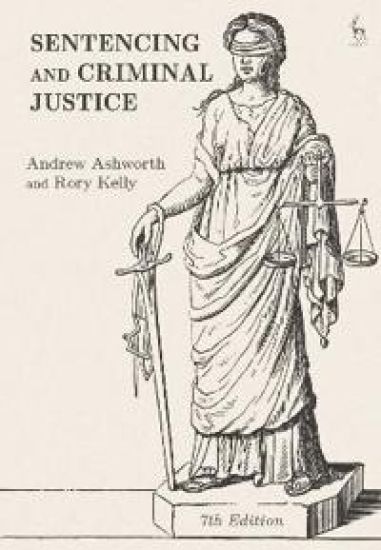
This revised and updated new edition focuses on major developments in sentencing law, practice and theory. Sentencing in England and Wales is now dominated by Sentencing Council guidelines, and scrutiny of those guidelines is central to this book. Issues of principle are identified and discussed, to include the constitutional position of the Sentencing Council; the meaning of, and challenges to, proportionality; and the sentencing of BAME offenders and women offenders. The book welcomes the new Sentencing Code, introduced as the Sentencing Act 2020, and critically examines the government’s plans for sentencing reform, set out in the 2020 White Paper A Smarter Approach to Sentencing. Throughout the book, sentencing is explored in its wider criminal justice context – making it essential reading for courses on sentencing, criminal justice and criminal law.
This book offers a set of essays, old and new, examining the positive obligations of individuals and the state in matters of criminal law. The centrepiece is a new, extended essay on the criminalisation of omissions-examining the duties to act imposed on individuals and organisations by the criminal law, and assessing their moral and social foundations. Alongside this is another new essay on the state’s positive obligations to put in place criminal laws to protect certain individual rights. Introducing the volume is the author’s much-cited essay on criminalisation, ‘Is the Criminal Law a Lost Cause?’. The book sets out to shed new light on contemporary arguments about the proper boundaries of the criminal law, not least by exploring the justifications for imposing positive duties (reinforced by the criminal law) on individuals and their relation to the positive obligations of the state.
This book arises from a three-year study of Preventive Justice directed by Professor Andrew Ashworth and Professor Lucia Zedner at the University of Oxford. The study seeks to develop an account of the principles and values that should guide and limit the state's use of preventive techniques that involve coercion against the individual. States today are increasingly using criminal law or criminal law-like tools to try to prevent or reduce the risk of anticipated future harm. Such measures include criminalizing conduct at an early stage in order to allow authorities to intervene; incapacitating suspected future wrongdoers; and imposing extended sentences or indefinate on past wrongdoers on the basis of their predicted future conduct - all in the name of public protection and security. The chief justification for the state's use of coercion is protecting the public from harm. Although the rationales and justifications of state punishment have been explored extensively, the scope, limits and principles of preventive justice have attracted little doctrinal or conceptual analysis. This book re-assesses the foundations for the range of coercive measures that states now take in the name of prevention and public protection, focussing particularly on coercive measures involving deprivation of liberty. It examines whether these measures are justified, whether they distort the proper boundaries between criminal and civil law, or whether they signal a larger change in the architecture of security. In so doing, it sets out to establish a framework for what we call 'Preventive Justice'.
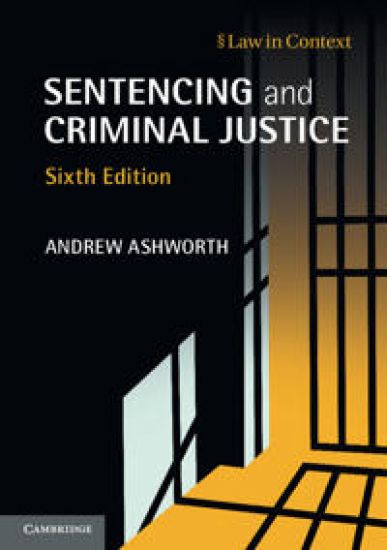
Now in its sixth edition, Sentencing and Criminal Justice has been extensively rewritten to reflect recent legislation, guidelines and judicial decisions. New material includes comparative sentencing research, which looks at models from other countries in comparison with the approach in England and Wales, and an additional chapter focusing on civil preventive orders and other ancillary orders. Written with clarity of expression coupled with critical analysis, this textbook offers an unrivalled combination of expertise, accessibility and coverage. This is the essential text for anyone interested in criminal justice.
This book arises from a three-year study of Preventive Justice directed by Professor Andrew Ashworth and Professor Lucia Zedner at the University of Oxford. The study seeks to develop an account of the principles and values that should guide and limit the state's use of preventive techniques that involve coercion against the individual. States today are increasingly using criminal law or criminal law-like tools to try to prevent or reduce the risk of anticipated future harm. Such measures include criminalizing conduct at an early stage in order to allow authorities to intervene; incapacitating suspected future wrongdoers; and imposing extended sentences or indefinate on past wrongdoers on the basis of their predicted future conduct - all in the name of public protection and security. The chief justification for the state's use of coercion is protecting the public from harm. Although the rationales and justifications of state punishment have been explored extensively, the scope, limits and principles of preventive justice have attracted little doctrinal or conceptual analysis. This book re-assesses the foundations for the range of coercive measures that states now take in the name of prevention and public protection, focussing particularly on coercive measures involving deprivation of liberty. It examines whether these measures are justified, whether they distort the proper boundaries between criminal and civil law, or whether they signal a larger change in the architecture of security. In so doing, it sets out to establish a framework for what we call 'Preventive Justice'.
This book offers a set of essays, old and new, examining the positive obligations of individuals and the state in matters of criminal law. The centrepiece is a new, extended essay on the criminalisation of omissions-examining the duties to act imposed on individuals and organisations by the criminal law, and assessing their moral and social foundations. Alongside this is another new essay on the state's positive obligations to put in place criminal laws to protect certain individual rights. Introducing the volume is the author's much-cited essay on criminalisation, 'Is the Criminal Law a Lost Cause?'. The book sets out to shed new light on contemporary arguments about the proper boundaries of the criminal law, not least by exploring the justifications for imposing positive duties (reinforced by the criminal law) on individuals and their relation to the positive obligations of the state.
The principle that a sentence should be proportionate to the seriousness of the offence remains at the centre of penal practice and scholarly debate. This volume explores highly topical aspects of proportionality theory that require examination and further analysis. von Hirsch and Ashworth explore the relevance of the principle of proportionality to the sentencing of young offenders, the possible reasons for departing from the principle when sentencing dangerous offenders, and the application of the principle to socially deprived offenders. They examine the claim that the principle tends to be associated with greater severity in sentencing, and explore the relevance of penance and of restorative justice to proportionality theory. Their examination of arguments and counter-arguments culminates in a re-statement of the main criteria for proportionate sentencing. The authors are well known for their previous writings on proportionality theory, and this volume broadens the theory to deal with important contemporary issues in crime and punishment.