
Kirjailija
Andrew Atherstone
Kirjat ja teokset yhdessä paikassa: 16 kirjaa, julkaisuja vuosilta 2007-2026, suosituimpien joukossa Archbishop Justin Welby. Vertaile teosten hintoja ja tarkista saatavuus suomalaisista kirjakaupoista.
16 kirjaa
Kirjojen julkaisuhaarukka 2007-2026.
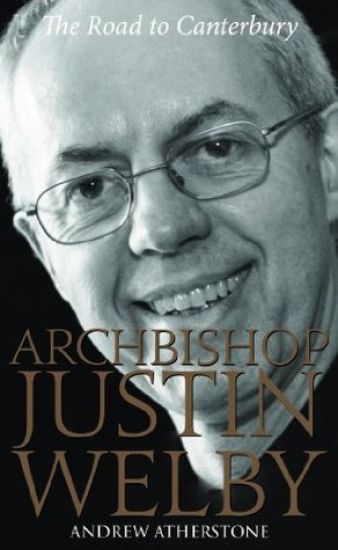
In this short, lively and informative book, Andrew Atherstone, explores Welbyâ??s life from his formative years, education, and eleven year career in the oil industry to his ministry, as well as his theology and world view, beginning with a concise examination of his writings and how they inform his thinking.

Charles Longley was Archbishop of Canterbury in the mid-1860s, at a crucial period for the development of the Church of England and the Anglican Communion. He was centrally involved in a series of major controversies concerning theological radicalism, ritualism, and the identity of the established church. He also inaugurated the first Lambeth Conference in 1867, with far-reaching consequences for international Anglicanism. This is the first ever study of Archbishop Longley's career. The first half of the book examines the theological disputes which dominated his archiepiscopate. The second half offers selections with commentary from his sermons, tracts, speeches and letters, so that Longley's opinions can be heard at first hand.
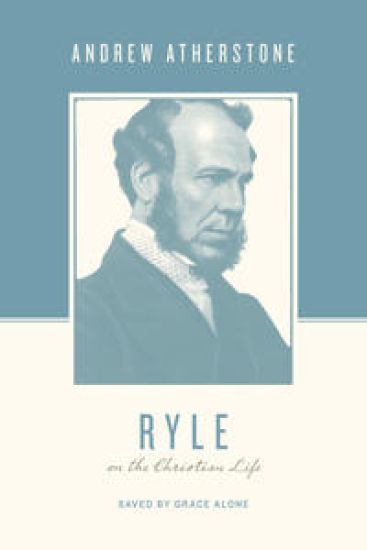
An Introduction to the Life and Work of J. C. Ryle John Charles Ryle (1816–1900), a lover of Puritan theology, was one of the most popular evangelical orators and lively tract writers. Known for his direct and punchy style, Ryle expressed gospel truths with clarity and vivacity, leaving a legacy that continues to shape Christians today. This book traces the life of J. C. Ryle, highlighting his work as a clergyman in the Church of England, the first Bishop of Liverpool, and a prolific tract writer. His tracts were designed to grab his readers’ attention, with pithy titles like Are You Forgiven?, Are You Happy?, Do You Believe?, and Repent or Perish!, Ryle on the Christian Life offers a fresh examination of Ryle’s timeless writings, delving into his profound wisdom on key topics such as Scripture, salvation, the cross of Christ, conversion, revival, sovereign grace, and more. Part of the Theologians on the Christian Life Series: Provides accessible introductions to some of church history’s greatest teachers Historical: Provides a compelling account of J. C. Ryle’s life as a clergyman, bishop, and tract writer, highlighting his lasting impact on the church Wise Teachings: Presents Ryle’s timeless teachings about Scripture, salvation, conversion, revival, grace, holiness, and more
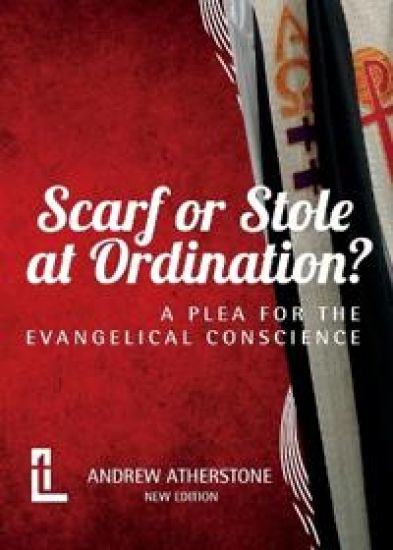
'I can only say that from my knowledge of the Bench of Bishops, which is considerable, I think it is inconceivable that any of the Bishops would press an ordination candidate, contrary to his conscience, to wear a stole at his ordination.'(Archbishop Michael Ramsey, House of Lords, July 1964)Although Archbishop Ramsey's declaration of liberty of conscience for Anglican ordinands may have been true in the 1960s, it is unfortunately not so today. Each year evangelical candidates in dioceses throughout the Church of England find themselves put under pressure to wear stoles at ordination.After a brief survey of the place of stoles within Anglicanism, at the Elizabethan Settlement and the Tractarian Revival, this booklet focuses upon the history of stoles at ordination in the mid-twentieth century, based on new research in Lambeth Palace Library. It appeals for a return to the days of generous Anglican attitudes, whereby every ordinand is given freedom of choice over whether to wear a scarf or a stole.Andrew Atherstone is Latimer Research Fellow, at Wycliffe Hall, Oxford, and a member of Oxford University's Faculty of Theology and Religion. He has published widely on contemporary Anglicanism.

The story of Alpha is of major significance for understanding the place of religious faith in the modern world, but that story has never been told - until now.Since its launch in 1993, the Alpha movement has evolved from 'supper party evangelism' in the Kensington suburbs into a global brand of Christian outreach. Today, over a million people attend Alpha every year, but the history of its rise to popularity has never been documented. What caused such spiritual renewal in an age of scepticism? And what propelled Alpha into a phenomenon that is recognised across the globe?Alpha is far more than an introductory course to Christianity. At the core of its brand identity is a 'repackaging' of the Christian message for contemporary audiences. Innovation and cultural adaptability are built into Alpha's DNA, one of the chief reasons for its longevity and influence. Nimbly utilising the multimedia and digital revolutions, it has contextualised into cultures and languages across the planet. And led by charismatic, savvy individuals, it has attracted people from across the social spectrum, making waves in national media.Andrew Atherstone leaves no stone unturned as he presents this fascinating history. With exclusive access to original archives, Atherstone recounts the miraculous stories of HTB's early years, the first full account of Nicky Gumbel's conversion, and the strategic decisions that launched Alpha onto the global stage of Christian influence.With sharp historical analysis, Andrew Atherstone uncovers the story of Christian resurgence in our contemporary age.

The story of Alpha is of major significance for understanding the place of religious faith in the modern world, but that story has never been told - until now.Since its launch in 1993, the Alpha movement has evolved from 'supper party evangelism' in the Kensington suburbs into a global brand of Christian outreach. Today, over a million people attend Alpha every year, but the history of its rise to popularity has never been documented. What caused such spiritual renewal in an age of scepticism? And what propelled Alpha into a phenomenon that is recognised across the globe?Alpha is far more than an introductory course to Christianity. At the core of its brand identity is a 'repackaging' of the Christian message for contemporary audiences. Innovation and cultural adaptability are built into Alpha's DNA, one of the chief reasons for its longevity and influence. Nimbly utilising the multimedia and digital revolutions, it has contextualised into cultures and languages across the planet. And led by charismatic, savvy individuals, it has attracted people from across the social spectrum, making waves in national media.Andrew Atherstone leaves no stone unturned as he presents this fascinating history. With exclusive access to original archives, Atherstone recounts the miraculous stories of HTB's early years, the first full account of Nicky Gumbel's conversion, and the strategic decisions that launched Alpha onto the global stage of Christian influence. With sharp historical analysis, Andrew Atherstone uncovers the story of Christian resurgence in our contemporary age.

Put on the Armor of God in Your Daily Battle Against Sin “True Christianity is a fight,” wrote J. C. Ryle in 1877. He argued that from the day of their conversion until the day they die, Christians are called to be soldiers for Christ in a war for their holiness. This inspiring call to action written more than 100 years ago continues to be a source of great encouragement and inspiration for believers today. In this addition to the Crossway Short Classics series, Ryle explains why the fight for holiness is one of absolute necessity for Christians. Identifying the three main enemies of every believer—the world, the flesh, and the devil—he emboldens them to “either fight or be lost” in their daily battle and offers biblical and historical examples of notable Christian “soldiers.” Fighting for Holiness is a bold reminder for believers to daily put on the whole armor of God and train their eyes on Christ. Spiritually Challenging and Inspiring: Helps believers identify and overcome 3 enemies: the world, the flesh, and the devil A Christian Classic: Content adapted from J. C. Ryle’s classic book Holiness Part of the Crossway Short Classics series

There is no better handbook for Anglican ministry than the Anglican ordinal - the authorized liturgy for ordaining new ministers. The ordinal contains a beautiful, succinct description of theological priorities and ministry models for today's Church. This booklet offers a simple exposition of the ordinal's primary themes. Anglican clergy are called to public ministry as messengers, sentinels, stewards, and shepherds. They are asked searching questions and they make solemn promises. The Holy Spirit's anointing is invoked upon their ministries, with the laying-on-of-hands, and they are gifted a Bible as the visual symbol of their new pastoral and preaching office. This booklet is a handy primer for ordinands and clergy, and all those responsible for their selection, training, and deployment.

At every level of church life from the local congregation to worldwide denominations, Christians can find themselves in turmoil and divided over a range of important issues. Many conclude that harmony is not achievable, and never will be. Can we, as Archbishop Justin Welby has asked, transform 'bad disagreement' into 'good disagreement'? What would that look like in practice? This book is designed to help readers unpack the idea of 'good disagreement' and apply it to their own church situations. It doesn't enter into specific contentious debates, but instead considers issues such as reconciliation, division, discipline, peacemaking, mediation and mission. It asks what needs to happen for those from differing viewpoints to both listen and be heard, and does not shy away from hard questions about unity in the gospel and the church's public witness. The book draws lessons from the New Testament, church history, and contemporary experience, with chapters from a dozen theologians and practitioners. They are editors Andrew Atherstone and Andrew Goddard, Tory Baucum, Martin Davie, Lis Goddard, Clare Hendry, Toby Howarth, Ashley Null, Ian Paul, Stephen Ruttle, Michael B. Thompson, and Tom Wright.
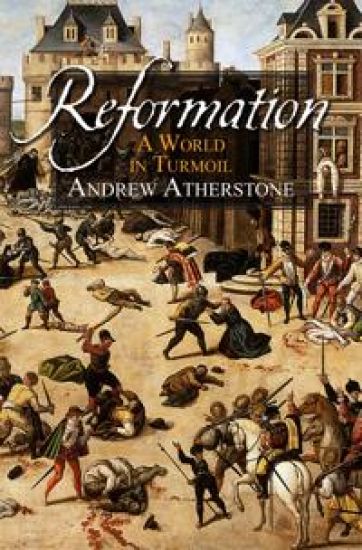
The Reformation marked a period of profound upheaval - one of the greatest turning points in the history of Christianity - and sent shock waves through the western world. In this book, Andrew Atherstone traces the dramatic and compelling story from the Renaissance to the sixteenth-century wars of religion, following the action from its beginnings in Germany, through Switzerland, France, Italy, England, Scotland, and the Netherlands. Focusing on the key personalities and events, he explains the often complex ideas that were at stake, and the political as well as religious issues involved. This is a lucid, authoritative account of a movement that changed the face of Europe forever. The great figures, such as Martin Luther and John Calvin, are brought vividly to life in an accessible, lively and engaging overview of this critical period.
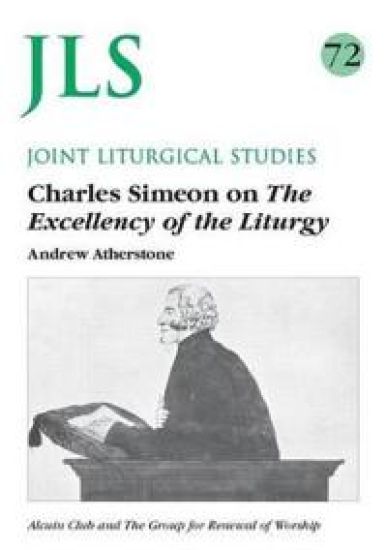
Charles Simeon on the Excellency of the Liturgy
Andrew Atherstone
Joint Liturgical Studies
2011
nidottu
Charles Simeon, the doyen of the evangelical movement in the Hanoverian Church of England, was a passionate advocate of Anglicanism’s liturgical heritage. His sermons on The Excellency of the Liturgy, delivered at Cambridge University in 1811, were amongst the most popular he ever preached. This Joint Liturgical Study offers an extended abridgement of The xcellency of the Liturgy, with a historical commentary to set the sermons in their context. It demonstrates both their devotional motivation and their polemical edge, and shows why Simeon rushed the sermons into print in the midst of widespread controversy over evangelical attitudes to the Book of Common Prayer.
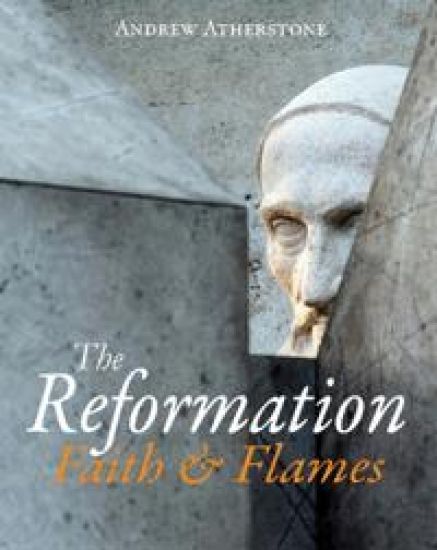
The Reformation marked a period of profound upheaval, possibly the greatest since Christianity was founded in the first century AD. This fully colour illustrated book brings the period to vivid life, looking at why the Reformation happened, how it happened, what it actually was and what it achieved. The key figures are brought to life in the context of the wider political and social implications. Illustrates the importance of Luther, Calvin and others in the course of church - and world - history.

Charles Golightly (1807-1885) was a notorious Protestant polemicist. His life was dedicated to resisting the spread of ritualism and liberalism within the Church of England and the University of England. For half of a century he led many memorable campaigns, such as building a martyrs' memorial and attempting to close a theological college. John Henry Newman, Samuel Wilberforce, and Benjamin Jowett were amongst his adversaries. This is the first study of Golightly's controversial career.

Charles Golightly (1807-1885) was a notorious Protestant polemicist. His life was dedicated to resisting the spread of ritualism and liberalism within the Church of England and the University of England. For half of a century he led many memorable campaigns, such as building a martyrs' memorial and attempting to close a theological college. John Henry Newman, Samuel Wilberforce, and Benjamin Jowett were amongst his adversaries. This is the first study of Golightly's controversial career.
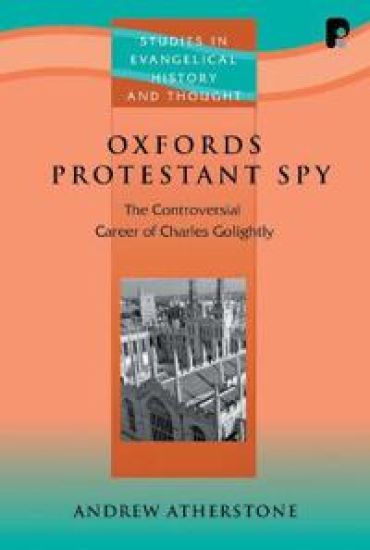
Charles Golightly (1807-85) was a notorious Protestant polemicist. His life was dedicated to resisting the spread of ritualism and liberalism within the Church of England and the University of Oxford. For half a century he led many memorable campaigns, such as building a martyr's memorial and attempting to close a theological college. John Henry Newman, Samuel Wilberforce, and Benjamin Jowett were among his adversaries. This is the first study of Golightly's controversial career.