Kirjojen hintavertailu. Mukana 12 390 323 kirjaa ja 12 kauppaa.
Kirjailija
Andrew Baker
Kirjat ja teokset yhdessä paikassa: 19 kirjaa, julkaisuja vuosilta 2001-2025, suosituimpien joukossa Secret Lives of Carnivorous Marsupials. Vertaile teosten hintoja ja tarkista saatavuus suomalaisista kirjakaupoista.
Acclaimed as the standard reference work on the law relating to time charters, this new edition provides a comprehensive treatment of the subject, accessible and useful both to shipping lawyers and to shipowners, charterers, P&I Clubs and other insurers. It provides full coverage of both English and U.S. law, now updated with all the important decisions since the previous edition.
Author Charlie May tags up once again with Author Andrew Baker, and Charlie's Granddaughter and Co-Author Hannah May Harper to bring you this amazing children's book. The Adventures Of Tucker Harper "The County Fair" is about a 10 year old girl her Boxer Bulldog Tucker, her older brother Sawyer and cousin Karson and a dream to sing on the Big Stage at the County Fair This story takes you on a journey from a poster in Hannah's class room, to practicing in her Dad and Moms garage with Tucker, Sawyer and Karson, an audition and finally the Big Stage at the County Fair
‘A delightful odyssey through the history, nostalgia, fascination and British love of cake. Quirky, charming, and fun.’ PRUE LEITH The British take cakes seriously. We hold strong opinions about how to bake a brownie with the perfect squidge, the correct proportions of icing to sponge, and whether it’s jam or cream first on our scones. Now – thanks to the success of a certain TV baking show – our flirtation with flour, fruit and frosting has become a full-blown love affair. But how did the humble cake evolve from a simple combination of starch and fat to the show-stopping bakes of today, taking pride of place at every meaningful life celebration? Travelling the country from Dundee to the Isle of Wight, writer Andrew Baker (by name, not occupation) serves up the story of our national obsession with cake, one slice at a time. On this greediest of quests, Andrew seeks to discover the ‘True Slice’ of each iconic cake. This enviable task sees him eat sponge sandwiched with jam and cream at Queen Victoria’s holiday home Osborne House, discover the illustrious yet scandal-filled history of the Battenberg’s saccharine squares and learn how a caterpillar enrobed in chocolate became a party-starting birthday centerpiece. From King Alfred’s oatcakes to The River Café’s revered Chocolate Nemesis, this is the crumb-spattered, buttercream-smeared story of the cakes that have claimed a place on British tables – and in our hearts.
An explosive, long-forgotten story of police violence that exposes the historical roots of today's criminal justice crisisOn a steamy Monday evening in 1900, New Orleans police officers confronted a black man named Robert Charles as he sat on a doorstep in a working-class neighborhood where racial tensions were running high. What happened next would trigger the largest manhunt in the city's history, while white mobs took to the streets, attacking and murdering innocent black residents during three days of bloody rioting. Finally cornered, Charles exchanged gunfire with the police in a spectacular gun battle witnessed by thousands.Building outwards from these dramatic events, To Poison a Nation connects one city's troubled past to the modern crisis of white supremacy and police brutality. Historian Andrew Baker immerses readers in a boisterous world of disgruntled laborers, crooked machine bosses, scheming businessmen, and the black radical who tossed a flaming torch into the powder keg. Baker recreates a city that was home to the nation's largest African American community, a place where racial antagonism was hardly a foregone conclusion--but which ultimately became the crucible of a novel form of racialized violence: modern policing.A major new work of history, To Poison a Nation reveals disturbing connections between the Jim Crow past and police violence in our own times.
The animations in Fear Free Future are modern tales, that carry forward deep moral and spiritual values that make magic in your minds as children. As children we do not believe in political correctness - so neither do we - not one little bit. Our children are our future and they should be FEAR FREE.
Most living carnivorous marsupials lead a secretive and solitary existence. From tiny insect eaters to the formidable Tasmanian Devil, Secret Lives of Carnivorous Marsupials offers rare insight into the history and habits of these creatures – from their discovery by intrepid explorers and scientists to their unique life cycles and incredible ways of hunting prey. Secret Lives of Carnivorous Marsupials contains a guide to the world’s 136 living species of carnivorous marsupials and is packed with never-before-seen photos. Biogeography, relationships and conservation are also covered in detail. Readers are taken on a journey through remote Australia, the Americas and dark, mysterious New Guinea – some of the last truly wild places on Earth. The book describes frenzied mating sessions, minuscule mammals that catch prey far larger than themselves, and extinct predators including marsupial lions, wolves and even sabre-toothed kangaroos. Features A fascinating insight into the lives and behaviours of these secretive and solitary marsupials Extensively illustrated with stunning colour photographs Includes extinct species such as giant kangaroos, marsupial lions and tigers
The years 1942 to 1946 saw the acceleration of World War II, its conclusion, and the construction of a post-war order that was to culminate in the Cold War. Andrew Baker here examines the expansion of US political and economic power, and hegemony during this period, and the extent to which smaller states, particularly Australia, New Zealand, Canada, and South Africa, contested this expansion. Through successfully outlining and defending their own notions of sovereignty, property, and commercial rights, they were able to a make a significant contribution towards fashioning a post-war framework more conducive to states than empires. This analysis of the period immediately after World War II will appeal to researchers of history and international relations, as well as those interested in the political economy of the post-war world.
Acclaimed as the standard reference work on the law relating to time charters, this new edition provides a comprehensive treatment of the subject, accessible and useful both to shipping lawyers and to shipowners, charterers, P&I Clubs and other insurers. It provides full coverage of both English and U.S. law, now updated with all the important decisions since the previous edition.The English decisions covered in the new edition include: The Kos (the Supreme Court on the effect of withdrawing a ship with cargo on board); The Athena (nature of off-hire; meaning of 'loss of time’/'time thereby lost'); The Kyla (damage to ship and frustration); The Silver Constellation, The Savina Caylyn and The Rowan (oil company approval of chartered ships); The Captain Stefanos, The Saldanha, The Triton Lark and The Paiwan Wisdom (effects of piracy); The Kildare and The Wren (damages for early termination); The T S Singapore (off-hire where ship going 'towards but not to' the port ordered), and The Lehmann Timber, The Bulk Chile and The Western Moscow (owners' liens) The new edition also features many significant new U.S. decisions, including: Stolt-Nielsen v. Animal Feeds Intl. (Supreme Court rules class-action arbitration not permitted unless parties agree in arbitration agreement); ATHOS I (Circuit Court finds that safe berth provision in charterparty is a warranty and not merely a due diligence obligation); The M/V SAMHO DREAM (arbitrators direct petitioner to post $14.2M security on respondent’s counterclaim) and Maroc Fruit Board v. M/V VINSON (CP arbitration clause incorporated in bill of lading not "signed" or "contained in an exchange of letters or telegrams" under NY Convention).
The years 1942 to 1946 saw the acceleration of World War II, its conclusion and the construction of a post-war order that was to culminate in the Cold War. Andrew Baker here examines the expansion of US political and economic power and hegemony during this period, and the extent to which smaller states, particularly Australia, New Zealand, Canada and South Africa, contested this expansion. Through successfully outlining and defending their own notions of sovereignty, property and commercial rights, they were able to a make a significant contribution towards fashioning a post-war framework more conducive to states than empires. This analysis of the period immediately after World War II will appeal to researchers of history and international relations, as well as those interested in the political economy of the post-war world.
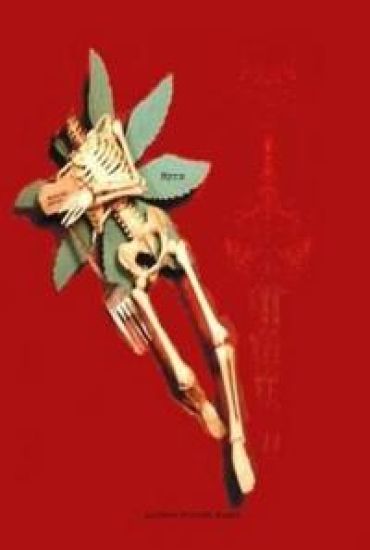
The last thing you are expecting is a cavalcade of characters intent on inciting your vision of religious well-being, but Mark says he sees something in you that will test the limits of your imagination. Mark, the nihilist atheist, wants you to reinvent the Bible. Soon you find yourself faced with an onslaught of information. You scurry between meetings with a Wiccan, a Santero, and a Muslim. You extract knowledge from a Jew and a Catholic and a Protestant. You suffer the rantings of a once executioner for the Georgia penal system, and have your head shaved by a young Hindu angling for Guru. And all the while Mark is there, informing your thoughts, drawing out your words with his smirk, with his sex.You are left to wonder if Mark and your eccentric, powdered wig wearing roommate Mabel are there as your lover, as your friend, or as your jailers. You are left to wonder if you can create the work Mark insists you'll produce or even make it out alive.
We are now in the era of the G8, although the G7 still exists as a grouping for Finance Ministers. Why do G7 finance ministries and central banks co-operate? What are the implications of this co-operation for US power and the abilities of the other six states to exercise leadership? What role do the G7 play in global financial governance? How much authority do they possess and how is that authority exercised? This is the first major monograph on the political economy of G7 finance ministry and central bank co-operation. It argues that to understand the contribution of the G7 to global financial governance it is necessary to locate the process in the context of a wider world financial order comprised of decentralized globalization. It also provides original case study material on the G7’s contribution to macroeconomic governance and to debates on the global financial architecture over the last decade. It assesses the G7’s role in producing a system of global financial governance based on market supremacy and technocratic transgovernmental consensus and articulates normative criticisms of the G7’s exclusivity. For researchers in the fields of IR/IPE generally, postgraduate students in the field of international organization and global governance, policy makers and financial journalists this is the most extensive analysis of the G7 and the political economy of global financial governance to date.
What is there against a Baboon's Left Testicle? And before you all scream "The right one of course " I feel duty bound to inform you that, in this case, you would be mistaken, for our baboon has suffered a most intimate and injurious injustice - his right testicle has been wrenched from its furry pouch by a person, or persons, unknown in order to fulfil a long-held prophesy and set afoot plans for world domination. And herein lies the confusion in our tale - does the offending scrotal-raider have the right one for the job or is it the wrong one, being the right one? Set alongside this an unlikely group of misfits - including some completely oblivious newly-weds, a 200 year old, dead, gay, unidextrous pie maker and his curious short-arsed lover by the name of Gerard O'nad, a murderous army of Welsh zombies and an all-stitching, all-dancing counter-army of equally murderous Pearly Kings and Queens and you have an almighty pile of baboon excrement - but an equally almighty 'bloody good read '
This all new book covering the brand new Snort version 2.6 from members of the Snort developers team. This fully integrated book and Web toolkit covers everything from packet inspection to optimizing Snort for speed to using the most advanced features of Snort to defend even the largest and most congested enterprise networks. Leading Snort experts Brian Caswell, Andrew Baker, and Jay Beale analyze traffic from real attacks to demonstrate the best practices for implementing the most powerful Snort features. The book will begin with a discussion of packet inspection and the progression from intrusion detection to intrusion prevention. The authors provide examples of packet inspection methods including: protocol standards compliance, protocol anomaly detection, application control, and signature matching. In addition, application-level vulnerabilities including Binary Code in HTTP headers, HTTP/HTTPS Tunneling, URL Directory Traversal, Cross-Site Scripting, and SQL Injection will also be analyzed. Next, a brief chapter on installing and configuring Snort will highlight various methods for fine tuning your installation to optimize Snort performance including hardware/OS selection, finding and eliminating bottlenecks, and benchmarking and testing your deployment. A special chapter also details how to use Barnyard to improve the overall performance of Snort. Next, best practices will be presented allowing readers to enhance the performance of Snort for even the largest and most complex networks. The next chapter reveals the inner workings of Snort by analyzing the source code. The next several chapters will detail how to write, modify, and fine-tune basic to advanced rules and pre-processors. Detailed analysis of real packet captures will be provided both in the book and the companion material. Several examples for optimizing output plugins will then be discussed including a comparison of MySQL and PostrgreSQL. Best practices for monitoring Snort sensors and analyzing intrusion data follow with examples of real world attacks using: ACID, BASE, SGUIL, SnortSnarf, Snort_stat.pl, Swatch, and more. The last part of the book contains several chapters on active response, intrusion prevention, and using Snort’s most advanced capabilities for everything from forensics and incident handling to building and analyzing honey pots.
We are now in the era of the G8, although the G7 still exists as a grouping for Finance Ministers. Why do G7 finance ministries and central banks co-operate? What are the implications of this co-operation for US power and the abilities of the other six states to exercise leadership? What role do the G7 play in global financial governance? How much authority do they possess and how is that authority exercised? This is the first major monograph on the political economy of G7 finance ministry and central bank co-operation. It argues that to understand the contribution of the G7 to global financial governance it is necessary to locate the process in the context of a wider world financial order comprised of decentralized globalization. It also provides original case study material on the G7’s contribution to macroeconomic governance and to debates on the global financial architecture over the last decade. It assesses the G7’s role in producing a system of global financial governance based on market supremacy and technocratic transgovernmental consensus and articulates normative criticisms of the G7’s exclusivity. For researchers in the fields of IR/IPE generally, postgraduate students in the field of international organization and global governance, policy makers and financial journalists this is the most extensive analysis of the G7 and the political economy of global financial governance to date.
Aimed at advanced undergraduate and beginning graduate students, this book provides a first taste of the theory of Lie groups as an appetiser for a more substantial further course. Lie theoretic ideas lie at the heart of much of standard undergraduate linear algebra and exposure to them can inform or motivate the study of the latter.The main focus is on matrix groups, i.e., closed subgroups of real and complex general linear groups. The first part studies examples and describes the classical families of simply connected compact groups. The second part introduces the idea of a lie group and studies the associated notion of a homogeneous space using orbits of smooth actions.Throughout, the emphasis is on providing an approach that is accessible to readers equipped with a standard undergraduate toolkit of algebra and analysis. Although the formal prerequisites are kept as low level as possible, the subject matter is sophisticated and contains many of the key themes of the fully developed theory, preparing students for a more standard and abstract course in Lie theory and differential geometry.