Kirjojen hintavertailu. Mukana 12 390 323 kirjaa ja 12 kauppaa.

Kirjailija

Andrew Brennan

Kirjat ja teokset yhdessä paikassa: 7 kirjaa, julkaisuja vuosilta 1988-2015, suosituimpien joukossa Understanding Environmental Philosophy. Vertaile teosten hintoja ja tarkista saatavuus suomalaisista kirjakaupoista.

7 kirjaa

Kirjojen julkaisuhaarukka 1988-2015.

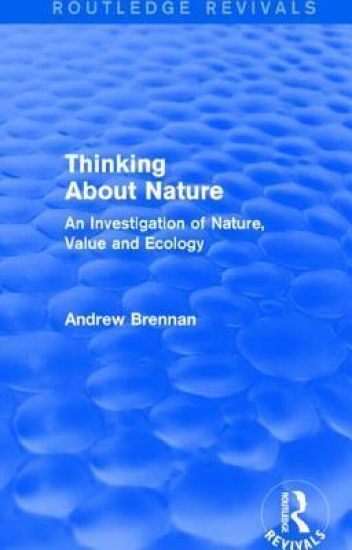
Thinking about Nature (Routledge Revivals)
Ecology – unlike astronomy, physics, or chemistry – is a science with an associated political and ethical movement: the Green Movement. As a result, the ecological position is often accompanied by appeals to holism, and by a mystical quasi-religious conception of the ecosystem. In this title, first published in 1988, Andrew Brennan argues that we can reduce much of the mysticism surrounding ecological discussions by placing them within a larger context, and illustrating that our individual interests are bound with larger, community interests. Using an interdisciplinary approach, which bridges the gap between the sciences, philosophy, and ethics, this is an accessible title, which will be of particular value to students with an interest in the philosophy of environmental science and ethics.

Thinking about Nature (Routledge Revivals)
Ecology – unlike astronomy, physics, or chemistry – is a science with an associated political and ethical movement: the Green Movement. As a result, the ecological position is often accompanied by appeals to holism, and by a mystical quasi-religious conception of the ecosystem. In this title, first published in 1988, Andrew Brennan argues that we can reduce much of the mysticism surrounding ecological discussions by placing them within a larger context, and illustrating that our individual interests are bound with larger, community interests. Using an interdisciplinary approach, which bridges the gap between the sciences, philosophy, and ethics, this is an accessible title, which will be of particular value to students with an interest in the philosophy of environmental science and ethics.
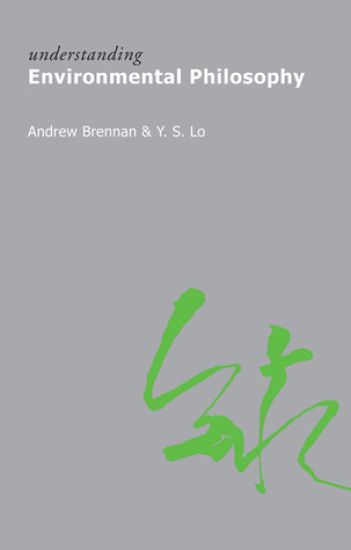
Understanding Environmental Philosophy

Understanding Environmental Philosophy

Andrew Brennan; Y.S. Lo

Acumen Publishing Ltd
2010
sidottu
Environmental philosophy is one of the exciting new fields of philosophy to emerge in the last forty years. "Understanding Environmental Philosophy" presents a comprehensive, critical analysis of contemporary philosophical approaches to current ecological concerns. Key ideas are explained, placed in their broader cultural, religious, historical, political and philosophical context, and their environmental policy implications are outlined. Central ideas and concepts about environmental value, individual wellbeing, ecological holism and the metaphysics of nature set the stage for a discussion of how to establish moral rules and priorities, and whether it is possible to transcend human-centred views of the world. The reader is also helped with an annotated guide to further reading, questions for discussion and revision as well as boxed studies highlighting key concepts and theoretical material. A clear and accessible introduction to this most dynamic of subjects, "Understanding Environmental Philosophy" will be invaluable for a wide range of readers.
Understanding Environmental Philosophy

Understanding Environmental Philosophy

Andrew Brennan; Y.S. Lo

Acumen Publishing Ltd
2010
nidottu
Environmental philosophy is one of the exciting new fields of philosophy to emerge in the last forty years. "Understanding Environmental Philosophy" presents a comprehensive, critical analysis of contemporary philosophical approaches to current ecological concerns. Key ideas are explained, placed in their broader cultural, religious, historical, political and philosophical context, and their environmental policy implications are outlined. Central ideas and concepts about environmental value, individual wellbeing, ecological holism and the metaphysics of nature set the stage for a discussion of how to establish moral rules and priorities, and whether it is possible to transcend human-centred views of the world. The reader is also helped with an annotated guide to further reading, questions for discussion and revision as well as boxed studies highlighting key concepts and theoretical material. A clear and accessible introduction to this most dynamic of subjects, "Understanding Environmental Philosophy" will be invaluable for a wide range of readers.
Logic: Key Concepts in Philosophy

Logic: Key Concepts in Philosophy

Laurence Goldstein; Andrew Brennan; Max Deutsch; Joe Y.F. Lau

Continuum International Publishing Group Ltd.
2005
nidottu
Key Concepts in Philosophy is a series of concise, accessible and engaging introductions to the core ideas and subjects encountered in the study of philosophy. Specially written to meet the needs of students and those with an interest in, but little prior knowledge of, philosophy, the books open up fascinating, yet sometimes difficult ideas. The series builds to give a solid grounding in philosophy and each book is also ideal as a companion to further study. An understanding of logic is fundamental to the study of philosophy. This stimulating and thorough guidebook offers clear explanation and exploration of the central issues and questions addressed when studying logic. The topics covered include: Reason and unreason; Proving a point; Entailment; Truth; The logic of components of speech and language. This is an invaluable resource for those studying logic for the first time, this text provides a sound grasp of a fascinating, but often complex - and even daunting - component of philosophy.
Conditions of Identity

Conditions of Identity

Andrew Brennan

Clarendon Press
1988
sidottu
This book sets out a new theory of the unity of objects. The author introduces the reader to the central problems faced by philosophical accounts of identity, problems which can, to a large extent, be solved using the theory developed in the book. In his consideration of the vexed issue of personal identity, the author argues that in our everyday thinking about persons we merge radically different kinds of notions. He suggests that our assessment of sameness of person is not founded on any determinate concept of person. Many central topics in epistemology and metaphysics are addressed in the course of the book and the author provides an original examination of each: the nature of physical objects, the metaphysics of possible worlds, the meaning of continuity in space and time and the nature of philosophical theorizing itself. The book is written in non-technical language and so will be of interest to the non-specialist philosopher.