Kirjojen hintavertailu. Mukana 12 459 402 kirjaa ja 12 kauppaa.

Kirjailija

Andrew Brown

Kirjat ja teokset yhdessä paikassa: 50 kirjaa, julkaisuja vuosilta 1970-2026, suosituimpien joukossa Roland Barthes: The Figures of Writing. Vertaile teosten hintoja ja tarkista saatavuus suomalaisista kirjakaupoista.

50 kirjaa

Kirjojen julkaisuhaarukka 1970-2026.

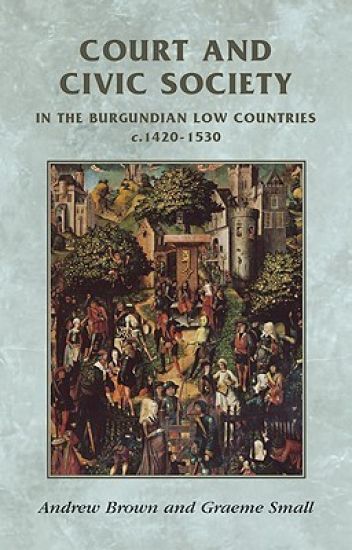
Court and Civic Society in the Burgundian Low Countries C.1420–1530

Court and Civic Society in the Burgundian Low Countries C.1420–1530

Andrew Brown; Graeme Small

Manchester University Press
2007
nidottu
This volume is the first ever attempt to unite and translate some of the key texts which informed Johan Huizinga’s famous study of the Burgundian court, The Waning of the Middle Ages, a work which has never gone out of print. It combines these texts with sources that Huizinga did not consider, those that illuminate the wider civic world that the Burgundian court inhabited and the dynamic interaction between court and city. Through these sources, and an introduction offering new perspectives on recent historiography, the book tests whether Huizinga’s controversial vision of the period still stands.Covering subjects including ceremonial events, such as the spectacles and gargantuan banquets that made the Burgundian dukes the talk of Europe, the workings of the court, and jousting, archery and rhetoric competitions, the book will appeal to students of late medieval and early modern Europe and to those with wider interests in court culture, ritual and ceremony.
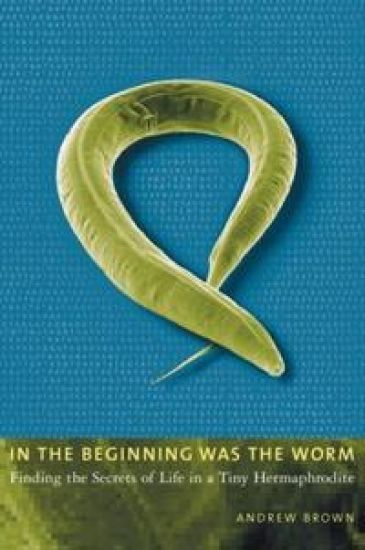
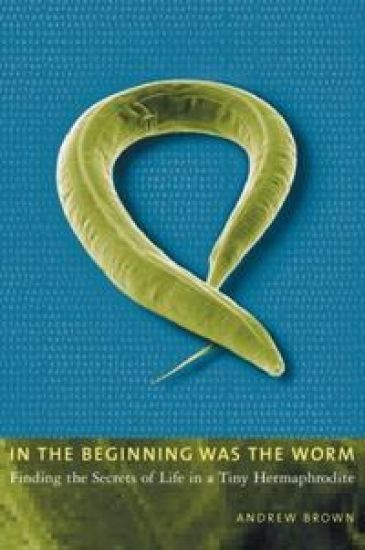
In the Beginning Was the Worm

In the Beginning Was the Worm

Andrew Brown

Columbia University Press
2005
pokkari
This is the story of how three men won the Nobel Prize for their research on the humble nematode worm C. elegans; how their extraordinary discovery led to the sequencing of the human genome; how a global multibillion-dollar industry was born; and how the mysteries of life were revealed in a tiny, brainless worm. In 1998 the nematode worm-perhaps the most intensively studied animal on earth-was the first multicellular organism ever to have its genome sequenced and its DNA mapped and read. "When we understand the worm, we will understand life," predicted John Sulston, one of the three Nobel laureates, and his prediction proved astonishingly accurate. Four years later, the research that led to this extraordinary event garnered three scientists a Nobel Prize. Along with Robert Horvitz and Sydney Brenner, Sulston discovered the phenomenon of programmed cell death in the worm, an essential concept that explains how biological development occurs in animal life and, as Horvitz later showed, how it occurs in human life. C. elegans is about as simple as an animal can be, but understanding its genetic organization is helping to reveal the mechanisms of life and, by extension, the mechanisms of our own lives. In the Beginning Was the Worm shows that in order to unlock the secrets of the human genome we must first understand the worm. But this story is about more than just the worm. It is about how an eccentric group of impassioned scientists toiled in near anonymity for years, driven only by a deep passion for knowledge and scientific discovery. It is the story of countless hours of research, immense ambition, and one of the greatest discoveries in human history.
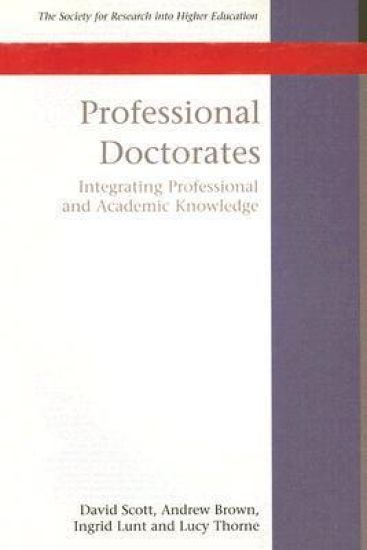
Professional Doctorates: Integrating Academic and Professional Knowledge

Professional Doctorates: Integrating Academic and Professional Knowledge

David Scott; Andrew Brown; Ingrid Lunt; Lucy Thorne

Open University Press
2004
nidottu
- What are professional doctorates?- How do they change professional knowledge and improve practice? - How can universities organise doctoral programmes to facilitate professional learning and development? - What is the most appropriate relationship between professional and academic knowledge?This book examines the relationship between advanced study on higher education courses and professional practice. It explores contributions made by research on practice to professional development. The editors document and explain strategies that universities use:- in recruitment - aims and purposes of the degree- selection of content and focus- assessment procedures- curricular structures- pedagogy- teaching strategies- conditions for learning- support for professionals- relations with interested bodies and stakeholders. The book uses in-depth case studies of three professional doctorates: the doctorate in business administration (DBA), the engineering doctorate (DEng) and the education doctorate (EdD).Examining Professional Doctorates makes an important contribution to this neglected area of research. Essential reading for policy makers in higher education and anyone interested in professional doctoral study.
In the Beginning Was the Worm

In the Beginning Was the Worm

Andrew Brown

Columbia University Press
2003
sidottu
This is the story of how three men won the Nobel Prize for their research on the humble nematode worm C. elegans; how their extraordinary discovery led to the sequencing of the human genome; how a global multibillion-dollar industry was born; and how the mysteries of life were revealed in a tiny, brainless worm. In 1998 the nematode worm-perhaps the most intensively studied animal on earth-was the first multicellular organism ever to have its genome sequenced and its DNA mapped and read. "When we understand the worm, we will understand life," predicted John Sulston, one of the three Nobel laureates, and his prediction proved astonishingly accurate. Four years later, the research that led to this extraordinary event garnered three scientists a Nobel Prize. Along with Robert Horvitz and Sydney Brenner, Sulston discovered the phenomenon of programmed cell death in the worm, an essential concept that explains how biological development occurs in animal life and, as Horvitz later showed, how it occurs in human life. C. elegans is about as simple as an animal can be, but understanding its genetic organization is helping to reveal the mechanisms of life and, by extension, the mechanisms of our own lives. In the Beginning Was the Worm shows that in order to unlock the secrets of the human genome we must first understand the worm. But this story is about more than just the worm. It is about how an eccentric group of impassioned scientists toiled in near anonymity for years, driven only by a deep passion for knowledge and scientific discovery. It is the story of countless hours of research, immense ambition, and one of the greatest discoveries in human history.
Labour, Politics and the State in Industrialising Thailand
In this book Brown argues that workers in East and Southeast Asia are significant actors in political change. Critically examining the themes of labour weakness, political exclusion and insignificance of 'class factors' he aims to bring workers back from the margins, demonstrating that both in the present and past the state has been entangled in processes that determine the forms of their struggles. This book presents new empirical data, important historical material and an innovative approach to workers and politics.
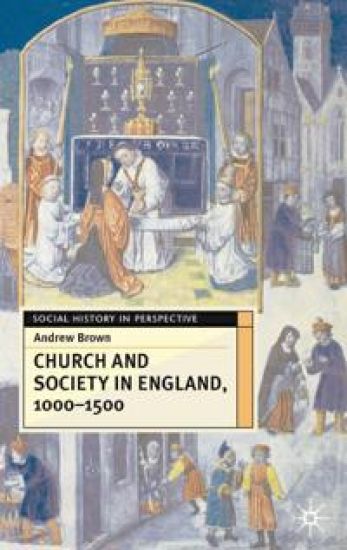
Church And Society In England 1000-1500

Church And Society In England 1000-1500

Andrew Brown

Red Globe Press
2003
nidottu
What impact did the Church have on society? How did social change affect religious practice? Within the context of these wide-ranging questions, this study offers a fresh interpretation of the relationship between Church, society and religion in England across five centuries of change. Andrew Brown examines how the teachings of an increasingly 'universal' Church decisively affected the religious life of the laity in medieval England. However, by exploring a broad range of religious phenomena, both orthodox and heretical (including corporate religion and the devotional practices surrounding cults and saints) Brown shows how far lay people continued to shape the Church at a local level. In the hands of the laity, religious practices proved malleable. Their expression was affected by social context, status and gender, and even influenced by those in authority. Yet, as Brown argues, religion did not function simply as an expression of social power - hierarchy, patriarchy and authority could be both served and undermined by religion. In an age in which social mobility and upheaval, particularly in the wake of the Black Death, had profound effects on religious attitudes and practices, Brown demonstrates that our understanding of late medieval religion should be firmly placed within this context of social change.
Church And Society In England 1000-1500

Church And Society In England 1000-1500

Andrew Brown

Red Globe Press
2003
sidottu
What impact did the Church have on society? How did social change affect religious practice? Within the context of these wide-ranging questions, this study offers a fresh interpretation of the relationship between Church, society and religion in England across five centuries of change.Andrew Brown examines how the teachings of an increasingly 'universal' Church decisively affected the religious life of the laity in medieval England. However, by exploring a broad range of religious phenomena, both orthodox and heretical (including corporate religion and the devotional practices surrounding cults and saints) Brown shows how far lay people continued to shape the Church at a local level.In the hands of the laity, religious practices proved malleable. Their expression was affected by social context, status and gender, and even influenced by those in authority. Yet, as Brown argues, religion did not function simply as an expression of social power - hierarchy, patriarchy and authority could be both served and undermined by religion. In an age in which social mobility and upheaval, particularly in the wake of the Black Death, had profound effects on religious attitudes and practices, Brown demonstrates that our understanding of late medieval religion should be firmly placed within this context of social change.
The Euro

The Euro

Philip Arestis; Andrew Brown; Malcolm Sawyer

Edward Elgar Publishing Ltd
2001
sidottu
European economic and monetary union continues to be the subject of intense controversy, and the launch of a single currency in January 1999 served to concentrate this debate around one issue: is the euro in the interests of Europe? This pertinent book attempts to address this contentious question.The authors offer a sustained argument that the single currency as currently implemented does not promise to deliver prolonged growth. They contend that the economic impact of the euro, and its accompanying institutions, is likely to be destabilising and deflationary; that the political impact is profoundly undemocratic and that the social consequences are likely to be deleterious. They do not reject the concept of a single currency but are highly critical of policy arrangements such as the Stability and Growth Pact which govern the euro. The authors propose alternative policy and institutional arrangements within which the euro should be embedded. They demonstrate that these would have the benefits of a single currency whilst avoiding many of the potential costs identified by detractors. EMU will continue to cause huge changes in the social and economic sphere of Europe. This book does not attempt to polarise the debate by simply advocating for or against the euro, but instead puts the situation into context, identifies potential problems and proposes possible remedies. It will be required reading for economists, political scientists, politicians and policymakers.