Kirjojen hintavertailu. Mukana 12 473 942 kirjaa ja 12 kauppaa.

Kirjailija

Andrew C. Scott

Kirjat ja teokset yhdessä paikassa: 6 kirjaa, julkaisuja vuosilta 2001-2020, suosituimpien joukossa Fire on Earth. Vertaile teosten hintoja ja tarkista saatavuus suomalaisista kirjakaupoista.

6 kirjaa

Kirjojen julkaisuhaarukka 2001-2020.

Fire

Fire

Andrew C. Scott

Oxford University Press
2020
nidottu
Fire is rarely out of the headlines, from large natural wildfires raging across the Australian or Californian countrysides to the burning of buildings such as the disasters of Grenfell tower and Notre Dame. Fire on these scales can represent a serious risk to human life and property. But the advent of fire made and controlled by humans also represented a crucial point in our evolution, allowing us to cook our food, forge our weapons, and warm our homes. This Very Short Introduction covers the fundamentals of fire, whether wild or under human control, starting with the basics of ignition, combustion, and fuel. Andrew Scott considers both natural wildfires and the role of humans in making and suppressing fire. Despite frightening reports of wildfire destruction, he also shows how landscape fires have been part of our planet's history for 400 million years, and do not always have to be extinguished. He also considers the problem of fires in urban settings, including new ways to prevent fires. The cost of wildfire can be steep - as well as the burning, post-fire erosion and flooding can have a great impact on both humans and the environment. It can also have a lasting effect in shaping ecosystems and plant life. Scott ends by examining the relationship between fire and the climate, and considering the future of wildfire in a warming world. ABOUT THE SERIES: The Very Short Introductions series from Oxford University Press contains hundreds of titles in almost every subject area. These pocket-sized books are the perfect way to get ahead in a new subject quickly. Our expert authors combine facts, analysis, perspective, new ideas, and enthusiasm to make interesting and challenging topics highly readable.
Burning Planet

Burning Planet

Andrew C. Scott

Oxford University Press
2018
sidottu
Raging wildfires have devastated vast areas of California and Australia in recent years, and predictions are that we will see more of the same in coming years, as a result of climate change. But this is nothing new. Since the dawn of life on land, large-scale fires have played their part in shaping life on Earth. Andrew Scott tells the whole story of fire's impact on our planet's atmosphere, climate, vegetation, ecology, and the evolution of plant and animal life. It has caused mass extinctions, and it has propelled the spread of flowering plants. The exciting evidence we can now draw on has been preserved in fossilized charcoal, found in rocks hundreds of millions of years old, from all over the world. These reveal incredibly fine details of prehistoric plants, and tell us about climates from deep in earth's history. They also give us insight into how early hominids and humans tamed fire and used it. Looking at the impact of wildfires in our own time, Scott also looks forward to how we might better manage them in future, as climate change has an increasing effect on our world.
Fire on Earth

Fire on Earth

Andrew C. Scott; David M. J. S. Bowman; William J. Bond; Stephen J. Pyne; Martin E. Alexander

Wiley-Blackwell
2014
sidottu
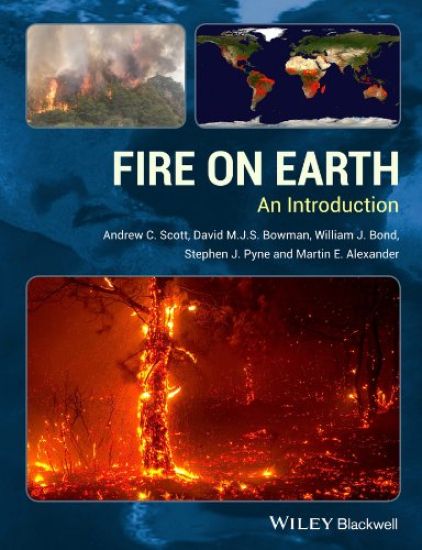
Earth is the only planet known to have fire. The reason is both simple and profound: fire exists because Earth is the only planet to possess life as we know it. Fire is an expression of life on Earth and an index of life’s history. Few processes are as integral, unique, or ancient. Fire on Earth puts fire in its rightful place as an integral part of the study of geology, biology, human history, physics, and global chemistry. Fire is ubiquitous in various forms throughout Earth, and belongs as part of formal inquiries about our world. In recent years fire literature has multiplied exponentially; dedicated journals exist and half a dozen international conferences are held annually. A host of formal sciences, or programs announcing interdisciplinary intentions, are willing to consider fire. Wildfire also appears routinely in media reporting. This full-colour text, containing over 250 illustrations of fire in all contexts, is designed to provide a synthesis of contemporary thinking; bringing together the most powerful concepts and disciplinary voices to examine, in an international setting, why planetary fire exists, how it works, and why it looks the way it does today. Students, lecturers, researchers and professionals interested in the physical, ecological and historical characteristics of fire will find this book, and accompanying web-based material, essential reading for undergraduate and postgraduate courses in all related disciplines, for general interest and for providing an interdisciplinary foundation for further study. A comprehensive approach to the history, behaviour and ecological effects of fire on earthTimely introduction to this important subject, with relevance for global climate change, biodiversity loss and the evolution of human culture.Provides a foundation for the interdisciplinary field of Fire ResearchAuthored by an international team of leading experts in the fieldAssociated website provides additional resources
Fire on Earth

Fire on Earth

Andrew C. Scott; David M. J. S. Bowman; William J. Bond; Stephen J. Pyne; Martin E. Alexander

Wiley-Blackwell
2014
nidottu
Earth is the only planet known to have fire. The reason is both simple and profound: fire exists because Earth is the only planet to possess life as we know it. Fire is an expression of life on Earth and an index of life’s history. Few processes are as integral, unique, or ancient. Fire on Earth puts fire in its rightful place as an integral part of the study of geology, biology, human history, physics, and global chemistry. Fire is ubiquitous in various forms throughout Earth, and belongs as part of formal inquiries about our world. In recent years fire literature has multiplied exponentially; dedicated journals exist and half a dozen international conferences are held annually. A host of formal sciences, or programs announcing interdisciplinary intentions, are willing to consider fire. Wildfire also appears routinely in media reporting. This full-colour text, containing over 250 illustrations of fire in all contexts, is designed to provide a synthesis of contemporary thinking; bringing together the most powerful concepts and disciplinary voices to examine, in an international setting, why planetary fire exists, how it works, and why it looks the way it does today. Students, lecturers, researchers and professionals interested in the physical, ecological and historical characteristics of fire will find this book, and accompanying web-based material, essential reading for undergraduate and postgraduate courses in all related disciplines, for general interest and for providing an interdisciplinary foundation for further study. A comprehensive approach to the history, behaviour and ecological effects of fire on earthTimely introduction to this important subject, with relevance for global climate change, biodiversity loss and the evolution of human culture.Provides a foundation for the interdisciplinary field of Fire ResearchAuthored by an international team of leading experts in the fieldAssociated website provides additional resources
At the Crossroads of Time

At the Crossroads of Time

Andrew C. Scott

Amberley Publishing
2020
sidottu
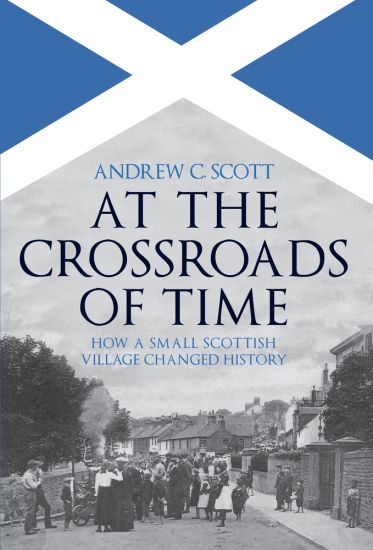
Unlike many other small villages in the UK, Lesmahagow has many claims to fame because of its location and geological heritage and due to many of its sometime residents having taken up influential roles in the history of the nation. Andrew C. Scott’s family lived in the village for more than three centuries, and in this book he explores the fascinating story of this unassuming settlement. More than 400 million years ago the earliest fishes swam in its lagoons together with giant sea-scorpions. The fossils of these amazing creatures are famous worldwide. The coals, formed from peats when the area lay across the equator, fuelled a number of revolutions in energy supply. Important to Scott is not simply the industrial ecology, but the networks of families and people who made the local community. Inventors from Lesmahagow designed new machines such as the pedal bike, and experimented with innovative industrial developments at New Lanark, bordering Lesmahagow on the River Clyde. Even the pioneering ‘man-midwife’ William Smellie was born there. The end of the nineteenth and early part of the twentieth century saw the remarkable increase in schooling for all the children of the village, inspired by one teacher in particular - Matthew Glover. His own children, James and Edward Glover, went on to distinguish themselves in the new academic discipline of psychology. However, it is one class of 1924 that catches the eye, with three boys going on to distinguish themselves, two becoming knights of the realm and one becoming a cabinet minister. Another village boy, John Cairncross, is best known as the fifth Cambridge spy.
Fossil Woods and Other Geological Specimens

Fossil Woods and Other Geological Specimens

Andrew C. Scott; David Freedberg

Harvey Miller Publishers
2001
sidottu
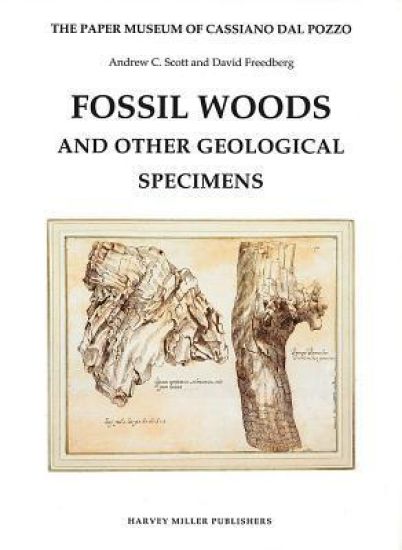
This new Catalogue Raisonne, Part III in the series on Natural History, is based on the collection originally formed by Prince Federico Cesi in the early 17th century and later acquired by Cassiano. These drawings constitute the first truly scientific study of fossilized woods and are executed with such finesse, skill and detail that they will be of immense interest both to art-historians and to historians of science. The drawings, the majority of which have remained unstudied and unpublished until now, include specimens of wood and animal fossils, ammonites and concretions, pyrits and baked clays, as well as a series of field drawings giving the sites where these specimens were found. The introductory essays discuss the background to Cesi's project as well as the importance of the drawings to the history of seventeenth- century culture and science. 424p, 242 illus with 62 in color (Harvey Miller 2000)