Kirjojen hintavertailu. Mukana 12 595 353 kirjaa ja 12 kauppaa.

Kirjailija

Andrew Cranston

Kirjat ja teokset yhdessä paikassa: 4 kirjaa, julkaisuja vuosilta 2023-2025, suosituimpien joukossa Dreams of the everyday. Vertaile teosten hintoja ja tarkista saatavuus suomalaisista kirjakaupoista.

4 kirjaa

Kirjojen julkaisuhaarukka 2023-2025.

Dreams of the everyday

Dreams of the everyday

Andrew Cranston; Winifred Nicholson

5b
2025
sidottu
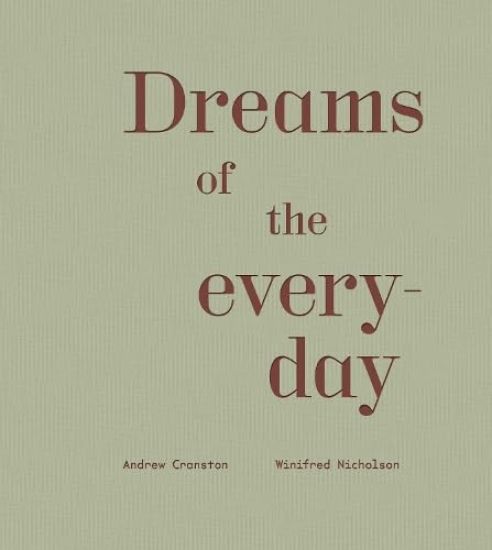
‘As a painter I have, as Bonnard put it, ‘a morbid sensitivity to surface’, and this aspect of Nicholson’s work is one that I keep returning to. In her early paintings there is this shifting tonal fog within her paint that keeps the eye ever so slightly active, as opposed to a total, inert flatness that stops the eye dead. There’s a certain hesitancy in her touch, doubt even, that is so gentle. A warm human wobble. —Andrew Cranston 5b presents a new title co-published with Ingleby Gallery on the occasion of Dreams of the everyday, an exhibition which brings together the paintings of Winifred Nicholson (b. 1893, d. 1981) and Andrew Cranston (b. 1969) at The Pier Arts Centre in Stromness, Orkney, and The Holburne Museum in Bath. The two painters, though distanced by time and place, are connected by their commitment to a kind of painting that values intimacy over showmanship. The earliest and most recent works in the exhibition are separated by a century – and whilst Nicholson often travelled from her base at Bankshead in Cumbria to paint in Cornwall, Paris, Greece, and on the west coast of Scotland, Cranston, originally from Hawick, has resolutely remained living and working in Glasgow. The richly illustrated publication features extracts of text by both artists and a conversation between Cranston, gallerist Richard Ingleby and the exhibition's curator Jonathan Anderson, and would not exist without the generosity of JW Anderson Ltd.
Andrew Cranston – Never a Joiner

Andrew Cranston – Never a Joiner

Andrew Cranston

Anomie Publishing
2023
sidottu
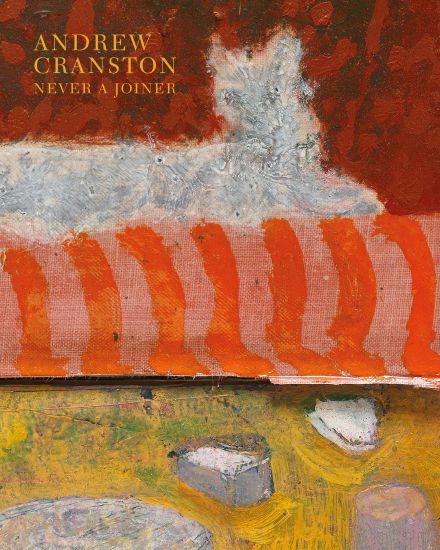
Andrew Cranston (b.1969, Hawick, Scotland; lives and works in Glasgow) is a painter-storyteller, a way of working that is enhanced by his often painting on the linen-bound covers of old books. His stories coalesce in the process of making – the paintings emerging gradually through the manipulation of his materials: layering, lacquering, bleaching, collaging and constantly re-working his way into images that seem to shift backwards and forwards in time. He once described a work as ‘a painting that came out of my brush one day’, a statement that sums up his approach. They are resolutely contemporary in spirit and yet connected by a strong thread to painters of the past, especially perhaps to the intimism of Vuillard and Bonnard, or to Matisse or Munch. These are narrative paintings, drawn from the artist’s memory and observations of life and liberally sprinkled with references to cinema, literature and art history. This publication presents a selection of the book cover paintings for which Cranston has become so well known in recent years. The cover image is a detail of _Cat and cheeseboard_ (2018) in which a cat sits on the upholstered arm of a sofa surveying what the artist describes as ‘a selection of bries and camemberts, as mousetraps’. Other animals pop up from time to time – a horse, some fish, a leopard; the skeleton of an elk. There are still lifes with fruit, flowers and/or pottery, and lots of landscapes, from the bleak to the fantastical. There are peopled and unpeopled interiors, portraits of family members and celebrities (occasionally curious hybrids thereof), and childhood memories from school classrooms and classical music-filled assemblies to holidays in Switzerland and visits to granny’s flat. And there are quite a few watering cans too. Each featured painting is accompanied by a text based on notes made by the artist before, during or after making a work. Mostly private thoughts, memories and anecdotes, these fragments jotted down on scraps of paper or tapped into his mobile phone were never intended to be published, but the resulting texts offer personal observations and reflections that Cranston considers ‘something like album sleeve notes where a musical artist might give some background to each song’. The texts are at times amusing, at others melancholic and moving, offering illuminating insights into the mind and life of the artist and the subjects, references and influences that feed into his painting practice. There are notes about technique and colour, about family and friends, about particular places at certain moments in time. For Cranston, writing has become ‘another way of engaging with painting and of activating the interesting afterlife that a work can have when it leaves the studio and goes out into the world.’ _Andrew Cranston – Never a Joiner_ has been produced by Ingleby, Edinburgh, and co-published with Anomie Publishing, London. It has been published to coincide with an exhibition of the same name at Ingleby, Edinburgh, and launched as part of the Edinburgh Art Festival 2023.Andrew Cranston was born in Hawick in the Scottish Borders in 1969 and currently lives and works in Glasgow. He studied at Gray’s School of Art in Aberdeen and at the Royal College of Art in London. Cranston has exhibited widely in the UK and USA and his work is housed in many museums and institutions across the world. _**Edited by Richard and Florence Ingleby, and designed by Jo Deans, Identity**_ _**A foil-stamped, linen-covered hardback book with dust jacket, printed and bound in Antwerp Co-published in 2023 by Ingleby, Edinburgh, and Anomie Publishing, London**_ _**Launched as part of the Edinburgh Art Festival 2023**_
Carole Gibbons

Carole Gibbons

Andrew Cranston

5b
2023
sidottu
Texts by Andrew Cranston and Lucy Stein “The best painting shuts me up. I mean painting like Henri Matisse, or Pierre Bonnard, or Edvard Munch, or Paula Modersohn-Becker. Or Carole Gibbons. ” – Andrew Cranston 5b is honoured to publish the first monograph on the work of painter Carole Gibbons (b. 1935), one of the most distinctive and imaginative artists to have come out of Glasgow in the latter half of the 20th century. Her paintings burst with colour, hinting at narratives of both darkness and light. Rich in symbolism and narrative, the works fuse art-historical and mythological motifs with Gibbons' own lived experience, offering insights into a passionate and deeply-felt inner life. Despite being one of the first women to exhibit in Glasgow's Third Eye Centre (now the CCA), Gibbons' oeuvre remains largely unknown. Heralded in her early career by peers Alasdair Gray, Douglas Abercrombie, and Alan Fletcher, Gibbons' life and work were subsequently plagued by misfortune, tragedy, and prejudice. Aside from an influential period in Spain, Gibbons has spent most of her life working in her Finnieston home where she raised her son, Henry. It is the scene of her most potent works: still lifes charged with the influence of Braque and Kirkeby, rendered in layers of murky earth tones, iridescent pigment, and astonishing washes of radiant colour. Long overdue, the publication provides an eclectic survey of Gibbons' work, spanning various periods and subjects (mythological abstraction, self-portraits, the unconscious, domestic interiors) from large-scale canvases to works on paper, and includes texts by contemporary artists Lucy Stein and Andrew Cranston, which highlight the relevance of her legacy today.
Andrew Cranston

Andrew Cranston

Andrew Cranston

5b
2023
nidottu
Our debut publication by Andrew Cranston pays tribute to a pocketbook the artist has carried with him for years: a slim but charming volume containing a collection of paintings and prints by Swiss-born German artist Paul Klee. This well-worn paperback, with its yellowed pages and gatefold images, has been a continued and convenient point of reference for Cranston, with the reproductions inside bearing a significant influence on many of the works included in 'What made you stop here?', the artist's first institutional solo show at The Hepworth Wakefield. As with the original titles of the Fontana Pocket Library of Great Art series to which the Klee book belongs, the object of this publication is to introduce the work of Andrew Cranston to the general reader at a price and in a format suitable to their pocket. In keeping with this model, Cranston's latest publication functions as an accessible entry point to his work, focusing on a rich selection of the artist's large-scale works, alongside several watercolours and a suite of new etchings. The book opens with an illuminating essay by Oli Hazzard, which grapples with all things Cranston: questions of perception, memory, and storytelling, all of which is controlled by an astonishing handling of colour, materiality, and composition. Each painting is presented alongside an accompanying interpretation by Liza Dimbleby—impressionistic passages of thoughtful wonder, imbued with formal curiosity and guided by years of friendship and conversation with the artist.