Kirjojen hintavertailu. Mukana 12 390 323 kirjaa ja 12 kauppaa.

Kirjailija

Andrew Cumbers

Kirjat ja teokset yhdessä paikassa: 6 kirjaa, julkaisuja vuosilta 2009-2020, suosituimpien joukossa The Case for Economic Democracy. Vertaile teosten hintoja ja tarkista saatavuus suomalaisista kirjakaupoista.

6 kirjaa

Kirjojen julkaisuhaarukka 2009-2020.

The Case for Economic Democracy

The Case for Economic Democracy

Andrew Cumbers

Polity Press
2020
nidottu
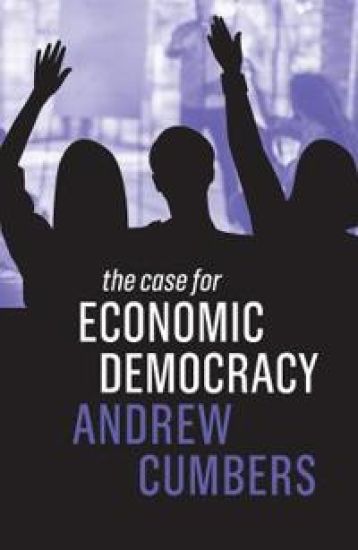
The idea that the people have a right to shape political decisions through democratic means is widely accepted. The same cannot be said of the decisions that impact on our everyday economic life in the workplace and beyond. Andrew Cumbers shows why this is wrong, and why, in the context of the rising tide of populism and the perceived crisis of liberal democracy, economic democracy's time has come. Four decades of market deregulation, financialisation, economic crisis and austerity has meant a loss of economic control and security for the majority of the world's population. The solution must involve allowing people to 'take back control' of their economic lives. Cumbers goes beyond older traditions of economic democracy to develop an ambitious new framework that includes a traditional concern with workplace rights and collective bargaining, but shifts the focus to include consideration of individual economic rights and processes of public engagement and deliberation beyond the workplace. This topical and original book will be essential reading for anyone interested in radical solutions for our economic and political crises.
The Case for Economic Democracy

The Case for Economic Democracy

Andrew Cumbers

Polity Press
2020
sidottu
The idea that the people have a right to shape political decisions through democratic means is widely accepted. The same cannot be said of the decisions that impact on our everyday economic life in the workplace and beyond. Andrew Cumbers shows why this is wrong, and why, in the context of the rising tide of populism and the perceived crisis of liberal democracy, economic democracy's time has come. Four decades of market deregulation, financialisation, economic crisis and austerity has meant a loss of economic control and security for the majority of the world's population. The solution must involve allowing people to 'take back control' of their economic lives. Cumbers goes beyond older traditions of economic democracy to develop an ambitious new framework that includes a traditional concern with workplace rights and collective bargaining, but shifts the focus to include consideration of individual economic rights and processes of public engagement and deliberation beyond the workplace. This topical and original book will be essential reading for anyone interested in radical solutions for our economic and political crises.
An Introduction to Economic Geography

An Introduction to Economic Geography

Danny MacKinnon; Andrew Cumbers

Routledge
2018
nidottu
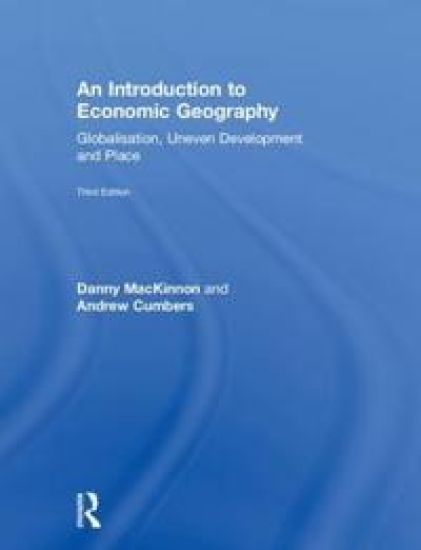
In the context of great economic turmoil and uncertainty, the emergent conflict between continued globalisation and growing economic nationalism means that a geographical economic perspective has never been so important. An Introduction to Economic Geography guides students through the key debates of this vibrant area, exploring the range of ideas and approaches that invigorate the wider discipline. This third edition includes new chapters on finance, cities and the digital economy, consumption and the environment. Underpinned by the themes of globalisation, uneven development and place, the text conveys the diversity of contemporary economic geography and explores the social and spatial effects of global economic restructuring. It combines a critical geographical perspective on the changing economic landscape with an appreciation of contemporary themes such as neoliberalism, financialisation, innovation and the growth of new technologies. An Introduction to Economic Geography is an essential textbook for undergraduate students taking courses in Economic Geography, Globalisation Studies and more broadly in Human Geography. It will also be of much interest to those in Planning, Business and Management Studies and Economics.
An Introduction to Economic Geography

An Introduction to Economic Geography

Danny MacKinnon; Andrew Cumbers

Routledge
2018
sidottu
In the context of great economic turmoil and uncertainty, the emergent conflict between continued globalisation and growing economic nationalism means that a geographical economic perspective has never been so important. An Introduction to Economic Geography guides students through the key debates of this vibrant area, exploring the range of ideas and approaches that invigorate the wider discipline. This third edition includes new chapters on finance, cities and the digital economy, consumption and the environment. Underpinned by the themes of globalisation, uneven development and place, the text conveys the diversity of contemporary economic geography and explores the social and spatial effects of global economic restructuring. It combines a critical geographical perspective on the changing economic landscape with an appreciation of contemporary themes such as neoliberalism, financialisation, innovation and the growth of new technologies. An Introduction to Economic Geography is an essential textbook for undergraduate students taking courses in Economic Geography, Globalisation Studies and more broadly in Human Geography. It will also be of much interest to those in Planning, Business and Management Studies and Economics.
Global Justice Networks

Global Justice Networks

Paul Routledge; Andrew Cumbers

Manchester University Press
2016
nidottu
This book provides a critical investigation of what has been termed the ‘global justice movement’. Through a detailed study of a grassroots peasants’ network in Asia (People’s Global Action), an international trade union network (the International Federation of Chemical, Energy, Mining and General Workers) and the Social Forum process, it analyses some of the global justice movement’s component parts, operational networks and their respective dynamics, strategies and practices. The authors argue that the emergence of new globally-connected forms of collective action against neoliberal globalisation are indicative of a range of place-specific forms of political agency that coalesce across geographic space at particular times, in specific places, and in a variety of ways. Rather than being indicative of a coherent ‘movement’, the authors argue that such forms of political agency contain many political and geographical fissures and fault-lines, and are best conceived of as ‘global justice networks’: overlapping, interacting, competing, and differentially-placed and resourced networks that articulate demands for social, economic and environmental justice. Such networks, and the social movements that comprise them, characterise emergent forms of trans-national political agency. The authors argue that the role of key geographical concepts of space, place and scale are crucial to an understanding of the operational dynamics of such networks. Such an analysis challenges key current assumptions in the literature about the emergence of a global civil society.
Global Justice Networks

Global Justice Networks

Paul Routledge; Andrew Cumbers

Manchester University Press
2009
sidottu
This book provides a critical investigation of what has been termed the ‘global justice movement’. Through a detailed study of a grassroots peasants’ network in Asia (People’s Global Action), an international trade union network (the International Federation of Chemical, Energy, Mining and General Workers) and the Social Forum process, it analyses some of the global justice movement’s component parts, operational networks and their respective dynamics, strategies and practices. The authors argue that the emergence of new globally-connected forms of collective action against neoliberal globalisation are indicative of a range of place-specific forms of political agency that coalesce across geographic space at particular times, in specific places, and in a variety of ways. Rather than being indicative of a coherent ‘movement’, the authors argue that such forms of political agency contain many political and geographical fissures and fault-lines, and are best conceived of as ‘global justice networks’: overlapping, interacting, competing, and differentially-placed and resourced networks that articulate demands for social, economic and environmental justice. Such networks, and the social movements that comprise them, characterise emergent forms of trans-national political agency. The authors argue that the role of key geographical concepts of space, place and scale are crucial to an understanding of the operational dynamics of such networks. Such an analysis challenges key current assumptions in the literature about the emergence of a global civil society.This book is relevant to United Nations Sustainable Development Goal 16, Peace, justice and strong institutions