Kirjojen hintavertailu. Mukana 12 390 323 kirjaa ja 12 kauppaa.

Kirjailija

Andrew D Evans

Kirjat ja teokset yhdessä paikassa: 3 kirjaa, julkaisuja vuosilta 2009-2010, suosituimpien joukossa Anthropology at War. Vertaile teosten hintoja ja tarkista saatavuus suomalaisista kirjakaupoista.

Mukana myös kirjoitusasut: Andrew D. Evans

3 kirjaa

Kirjojen julkaisuhaarukka 2009-2010.

Anthropology at War

Anthropology at War

Andrew D Evans

University of Chicago Press
2010
sidottu
Between 1914 and 1918, German anthropologists conducted their work in the midst of full-scale war. The discipline was relatively new in German academia when World War I broke out, and, as Andrew D. Evans reveals in this illuminating book, its development was profoundly altered by the conflict. As the war shaped the institutional, ideological, and physical environment for anthropological work, the discipline turned its back on its liberal roots and became a nationalist endeavor primarily concerned with scientific studies of race. Combining intellectual and cultural history with the history of science, "Anthropology at War" examines both the origins and consequences of this shift. Evans locates its roots in the decision to allow scientists access to prisoner-of-war camps, which prompted them to focus their research on racial studies of the captives. Caught up in war-time nationalism, a new generation of anthropologists began to portray the country's political enemies as racially different. After the war ended, the importance placed on racial conceptions and categories persisted, paving the way for the politicization of scientific inquiry in the years of the ascendancy of National Socialism.
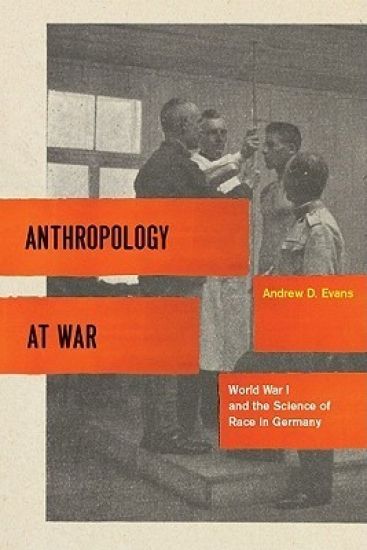
Anthropology at War – World War I and the Science of Race in Germany
Between 1914 and 1918, German anthropologists conducted their work in the midst of full-scale war. The discipline was relatively new in German academia when World War I broke out, and, as Andrew D. Evans reveals in this illuminating book, its development was profoundly altered by the conflict. As the war shaped the institutional, ideological, and physical environment for anthropological work, the discipline turned its back on its liberal roots and became a nationalist endeavor primarily concerned with scientific studies of race. Combining intellectual and cultural history with the history of science, "Anthropology at War" examines both the origins and consequences of this shift. Evans locates its roots in the decision to allow scientists access to prisoner-of-war camps, which prompted them to focus their research on racial studies of the captives. Caught up in war-time nationalism, a new generation of anthropologists began to portray the country's political enemies as racially different. After the war ended, the importance placed on racial conceptions and categories persisted, paving the way for the politicization of scientific inquiry in the years of the ascendancy of National Socialism.

Bird Conservation and Agriculture

Bird Conservation and Agriculture

Jeremy D. Wilson; Andrew D. Evans; Philip V. Grice

Cambridge University Press
2009
pokkari
Writing for researchers, professionals and graduate students, the authors summarize the collapse of populations of many farmland bird species in the twentieth century, one of the biggest conservation problems of the day. They firstly set the historical context of change in agriculture and bird communities since the eighteenth century, and introduce the bird communities of agricultural land today. They then provide an overview of this very active area of applied conservation science, including in-depth case studies of 16 species that, taken together, illustrate the many ways that agricultural intensification has affected bird populations. Moreover, they show how this evidence base, coupled with recent greening of agriculture policy, has provided opportunities to manage agricultural land to better integrate the needs of food production and bird conservation. They conclude by looking forward to challenges that the conservation of bird populations on agricultural land is likely to face in the near future.