Kirjojen hintavertailu. Mukana 12 536 635 kirjaa ja 12 kauppaa.

Kirjailija

Andrew Davis

Kirjat ja teokset yhdessä paikassa: 46 kirjaa, julkaisuja vuosilta 2010-2026, suosituimpien joukossa Pearson Baccalaureate: Environmental Systems and Societies bundle 2nd edition. Vertaile teosten hintoja ja tarkista saatavuus suomalaisista kirjakaupoista.

46 kirjaa

Kirjojen julkaisuhaarukka 2010-2026.

The Philosophy of Special Providences

The Philosophy of Special Providences

Andrew Davis

Anatiposi Verlag
2023
sidottu
Reprint of the original, first published in 1872. The publishing house Anatiposi publishes historical books as reprints. Due to their age, these books may have missing pages or inferior quality. Our aim is to preserve these books and make them available to the public so that they do not get lost.
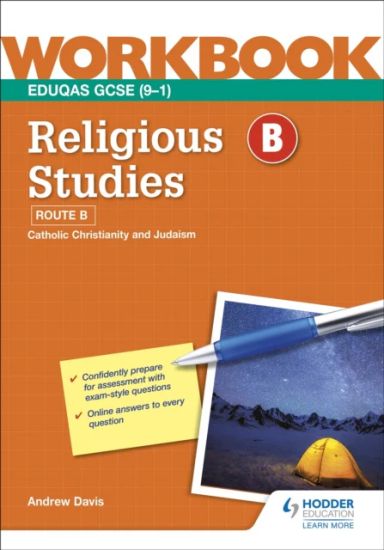
Eduqas GCSE (9–1) Religious Studies: Route B Workbook
Build the confidence, knowledge and skills your students need to succeed in Eduqas GCSE Religious Studies Route B.This time-saving, write-in workbook can be used be flexibly for classwork or homework, throughout the course or for revision and exam practice.- Improve understanding through a range of activities that enable students to review, reinforce and apply their knowledge across each component of the course- Prepare for assessment with exam-style questions to help students practice and perfect their technique- Encourage independent study and progression with the answers available onlineThis workbook covers:- Component 1: Foundational Catholic Theology- Component 2: Applied Catholic Theology- Component 3: Judaism
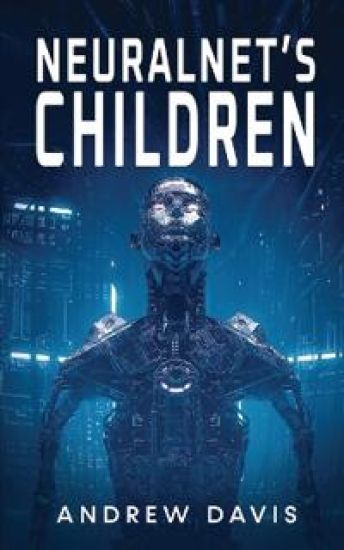
Neuralnet's Children

Neuralnet's Children

Andrew Davis

Burton Mayers Books
2022
nidottu
Set a century or so within the future, Simon, a child prodigy, is being bullied, not only by his fellow school students but even by his class teacher. In spite of his remarkable abilities, he appears helpless in the face of his enemies who grow more violent in their attacks, and he can not reveal his non-human identification to anyone. His similarly talented fellow pupil Alice befriends him. What does she know? Can they help each other? Dark forces, led by a mysterious cleric, will challenge their very survival. But help arrives from unexpected sources.
The Referable Speaker

The Referable Speaker

Michael Port; Andrew Davis

Page Two Books, Inc.
2021
pokkari
Use the gigs you get to get the gigs you want. You spend a ton of time building your personal brand to generate more speaking opportunities. You write a blog, record podcasts, post on Instagram, and upload to YouTube. You refine your speaking website, work on that book, participate in Clubhouse, and comment on LinkedIn. You share your expertise and insight freely. All of that hard work might get you one gig. And, unfortunately, none of those things will guarantee you the next gig. But what if you became a referable speaker?In this ground-breaking guide to building a speaking career, New York Times bestselling author Michael Port, co-founder of Heroic Public Speaking, teams up with bestselling author and world-renowned keynote speaker Andrew Davis to show you the fastest, most practical way to increase your fee and generate more leads. Discover precisely how event organizers select their keynote speakers, what you can do to win them over, and even how to set your fee. Port and Davis show you why you need to stop investing in marketing yourself as a great speaker and start investing in your speech. Because, unless you're famous, event organizers won't buy you (or your personal brand). They'll buy your speech, then your idea, then you―in that order. You'll learn exactly how 81 speakers built sustainable speaking revenues by evaluating the three F+E+E Factors and 10 sub-factors-factors that turn novice presenters into transformational keynote speakers. And you'll evaluate how to make the most meaningful impact through 58 professional speaker case studies based on six years of industry data. See how elegantly simple it is to make the leap from breakout rooms to the keynote stage. You'll leave with an entirely new, eye-opening, and refreshing understanding of how the speaking business really works and how you can make an impact fast.Do you have what it takes to become a referable speaker?You do. Go ahead, take a look inside
Oxford IB Diploma Programme: IB Prepared: Environmental Systems and Societies (Online)
IB Prepared resources are developed directly with the IB to provide the most up-to-date, authentic and authoritative guidance on DP assessment. IB Prepared: Environmental Systems and Societies combines a concise review of course content with strategic guidance, past paper material and exam-style practice opportunities, allowing learners to consolidate the knowledge and skills that are essential to success.
Oxford IB Diploma Programme: IB Prepared: Environmental Systems and Societies
IB Prepared resources are developed directly with the IB to provide the most up-to-date, authentic and authoritative guidance on DP assessment. IB Prepared: Environmental Systems and Societies combines a concise review of course content with strategic guidance, past paper material and exam-style practice opportunities, allowing learners to consolidate the knowledge and skills that are essential to success.
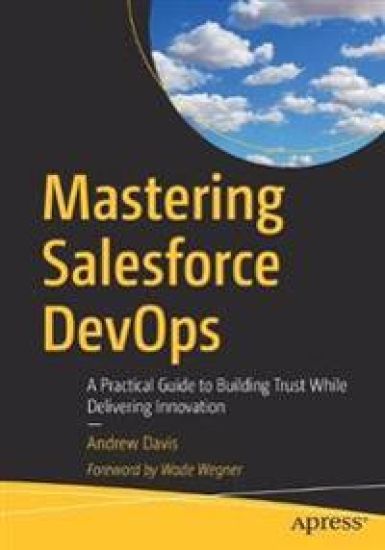
Mastering Salesforce DevOps

Mastering Salesforce DevOps

Andrew Davis

APress
2019
nidottu
This practical guide brings DevOps principles to Salesforce development. It fits together two major movements within the IT world: the movement to Software/Platform as a Service (SaaS/PaaS), and the DevOps movement. While SaaS and PaaS allow companies to invest in their core competencies rather than maintain their own infrastructure, the goal of DevOps is to optimize the process of delivering software innovation and value. The release of Salesforce DX in late 2017 unlocks the possibility of a true DevOps workflow on Salesforce. But DevOps is new to the Salesforce world and there is not a widespread understanding of its goals and methods, and so adoption of Salesforce DX is still in the early stages. Mastering Salesforce DevOps explains how to build a powerful and comprehensive DevOps workflow for Salesforce—allowing you to finally deploy the world's most innovative platform using the world's most effective and efficient techniques. It addresses theneed for a comprehensive guide to DevOps for Salesforce, allowing teams to bring proven practices from the IT world to resolve the hardest problems facing Salesforce developers today. What You Will LearnImprove company performance and software delivery performance using Salesforce DXTranslate DevOps concepts into the unique language and practices of SalesforceUnderstand why and how you can implement Salesforce DX to achieve greater productivity and innovationEnable continuous delivery on SalesforceBuild packages and architect code so it can be deployed easilyAllow admins to participate in what has traditionally been a developer workflowKnow the techniques for reducing the stress and risk of deploymentApply the full range of automated tests that can be used on Salesforce Who This Book Is for Salesforce developers, release managers, and those managing Salesforce development teams who need a guide to DevOps, and DevOps specialists who need to apply familiar concepts to Salesforce
Internal Assessment for Environmental Systems and Societies for the IB Diploma
Support students through the Internal Assessment with advice and guidance including how to choose a topic, approach the investigation and analyse and evaluate results.- Build investigative and analytical skills through a range of strategies and detailed examiner advice and expert tips- Ensure understanding of all IB requirements with clear, concise explanations on the assessment objectives and rules on academic honesty, as well as explicit reference to the IB Learner Profile and ATLS throughout- Encourage students to achieve the best grade with advice and tips, including common mistakes to avoid, exemplars, worked answers and commentary, helping students to see the application of facts, principles and concepts- Reinforce comprehension of the skills with activity questions- Support visual learners with infographics at the start of every chapter
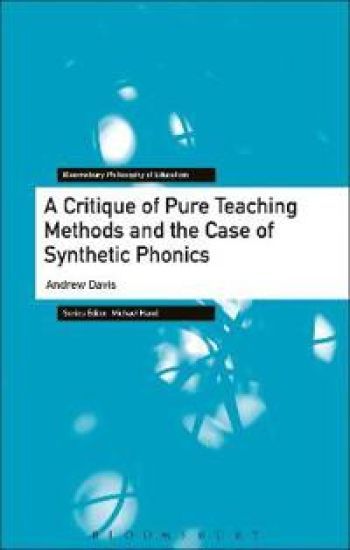
A Critique of Pure Teaching Methods and the Case of Synthetic Phonics
A Critique of Pure Teaching Methods and the Case of Synthetic Phonics examines how research into the effectiveness of teaching methods can and should relate to what takes place in the classroom. The discussion brings to light some important features of the way we classify teaching activities. The classifications are unlike those we use in natural science – for instance, how we classify drug dosages. This point has very important implications for what should be considered the appropriate relationships between educational research and classroom practice.Andrew Davis applies the results of this discussion to the teaching of early reading, focussing in particular on the approach known as synthetic phonics. He provides a philosophical investigation into the nature of reading, and into the concepts that feature in approaches to teaching it, such as the idea of building words from letter sounds, the nature of words themselves and reading for meaning. He concludes with a discussion of why this matters so much, reflecting on how stories and books can be part of a child’s emerging identity within the family. He explores how values of family life should be weighed against the importance of achievements in school, and argues for the claim that school reading policies of certain kinds may have a destructive impact if they are felt to trump the private interests of children and their families.
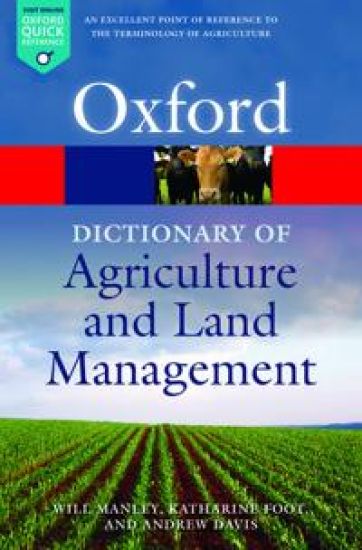
A Dictionary of Agriculture and Land Management

A Dictionary of Agriculture and Land Management

Will Manley; Katharine Foot; Andrew Davis

Oxford University Press
2019
nidottu
This brand new Dictionary of Agriculture and Land Management addresses the increasing overlap between agricultural sectors and the demands of the management of rural land and property. It covers the main areas of agricultural management, husbandry, environment, estate management, rural recreation, woodland and forestry, as well as general terms such as organizations, policies, and legislation. In over 2,000 clear and concise A to Z entries, it offers authoritative and up-to-date information, and the content is enhanced by entry-level web links that are listed on a dedicated companion website. Useful tables and line drawings complement the entries, and make this volume an excellent point of reference for anyone who needs a guide to agricultural terminology. The most up-to-date dictionary of its kind, it is a must-have for students of agriculture and land management, as well as for professionals in the agricultural and land-management sectors.
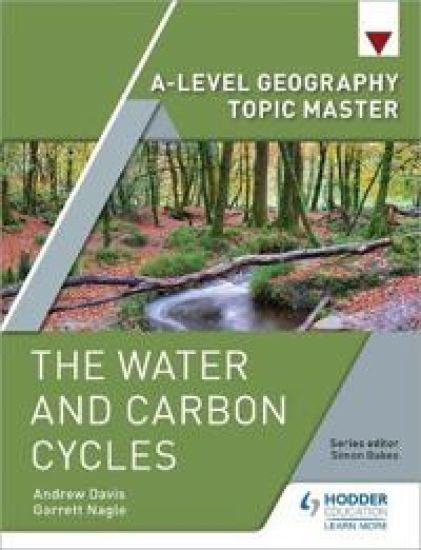
A-level Geography Topic Master: The Water and Carbon Cycles

A-level Geography Topic Master: The Water and Carbon Cycles

Garrett Nagle; Andrew Davis

Hodder Education
2018
nidottu
Exam board: AQA, Edexcel, OCR, WJEC/EduqasLevel: A-levelSubject: GeographyFirst teaching: September 2016First exams: Summer 2017 (AS); Summer 2018 (A-level)Master the in-depth knowledge and higher-level skills that A-level Geography students need to succeed; this focused topic book extends learning far beyond your course textbooks.Blending detailed content and case studies with questions, exemplars and guidance, this book:- Significantly improves students' knowledge and understanding of A-level content and concepts, providing more coverage of The Water and Carbon Cycles than your existing resources- Strengthens students' analytical and interpretative skills through questions that involve a range of geographical data sources, with guidance on how to approach each task- Demonstrates how to evaluate issues, with a dedicated section in every chapter that shows how to think geographically, consider relevant evidence and structure a balanced essay- Equips students with everything they need to excel, from additional case studies and definitions of key terminology, to suggestions for further research and fieldwork ideas for the Independent Investigation- Helps students check, apply and consolidate their learning, using end-of-chapter refresher questions and discussion points, plus tailored advice for the AQA, Edexcel, OCR and WJEC/Eduqas specifications- Offers trusted and reliable content, written by a team of highly experienced senior examiners and reviewed by academics with unparalleled knowledge of the latest geographical theories
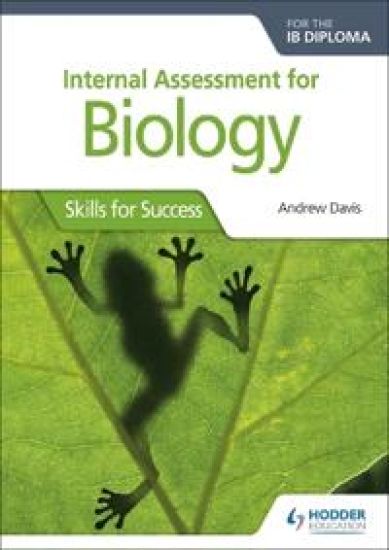
Internal Assessment for Biology for the IB Diploma
Exam board: International BaccalaureateLevel: IB DiplomaSubject: BiologyFirst teaching: September 2014First exams: Summer 2016Aim for the best Internal Assessment grade with this year-round companion, full of advice and guidance from an experienced IB Diploma Biology teacher.- Build your skills for the Individual Investigation with prescribed practicals supported by detailed examiner advice, expert tips and common mistakes to avoid.- Improve your confidence by analysing and practicing the practical skills required, with comprehension checks throughout.- Prepare for the Internal Assessment report through exemplars, worked answers and commentary. - Navigate the IB requirements with clear, concise explanations including advice on assessment objectives and rules on academic honesty.- Develop fully rounded and responsible learning with explicit reference to the IB learner profile and ATLs.
A Critique of Pure Teaching Methods and the Case of Synthetic Phonics
A Critique of Pure Teaching Methods and the Case of Synthetic Phonics examines how research into the effectiveness of teaching methods can and should relate to what takes place in the classroom. The discussion brings to light some important features of the way we classify teaching activities. The classifications are unlike those we use in natural science – for instance, how we classify drug dosages. This point has very important implications for what should be considered the appropriate relationships between educational research and classroom practice.Andrew Davis applies the results of this discussion to the teaching of early reading, focussing in particular on the approach known as synthetic phonics. He provides a philosophical investigation into the nature of reading, and into the concepts that feature in approaches to teaching it, such as the idea of building words from letter sounds, the nature of words themselves and reading for meaning. He concludes with a discussion of why this matters so much, reflecting on how stories and books can be part of a child’s emerging identity within the family. He explores how values of family life should be weighed against the importance of achievements in school, and argues for the claim that school reading policies of certain kinds may have a destructive impact if they are felt to trump the private interests of children and their families.
Sonata Fragments

Sonata Fragments

Andrew Davis

Indiana University Press
2017
sidottu
In Sonata Fragments, Andrew Davis argues that the Romantic sonata is firmly rooted, both formally and expressively, in its Classical forebears, using Classical conventions in order to convey a broad constellation of Romantic aesthetic values. This claim runs contrary to conventional theories of the Romantic sonata that place this nineteenth-century musical form squarely outside inherited Classical sonata procedures. Building on Sonata Theory, Davis examines moments of fracture and fragmentation that disrupt the cohesive and linear temporality in piano sonatas by Chopin, Brahms, and Schumann. These disruptions in the sonata form are a narrative technique that signify temporal shifts during which we move from the outer action to the inner thoughts of a musical agent, or we move from the story as it unfolds to a flashback or flash-forward. Through an interpretation of Romantic sonatas as temporally multi-dimensional works in which portions of the music in any given piece can lie inside or outside of what Sonata Theory would define as the sonata-space proper, Davis reads into these ruptures a narrative of expressive features that mark these sonatas as uniquely Romantic.
Sonata Fragments

Sonata Fragments

Andrew Davis

Indiana University Press
2017
pokkari
In Sonata Fragments, Andrew Davis argues that the Romantic sonata is firmly rooted, both formally and expressively, in its Classical forebears, using Classical conventions in order to convey a broad constellation of Romantic aesthetic values. This claim runs contrary to conventional theories of the Romantic sonata that place this nineteenth-century musical form squarely outside inherited Classical sonata procedures. Building on Sonata Theory, Davis examines moments of fracture and fragmentation that disrupt the cohesive and linear temporality in piano sonatas by Chopin, Brahms, and Schumann. These disruptions in the sonata form are a narrative technique that signify temporal shifts during which we move from the outer action to the inner thoughts of a musical agent, or we move from the story as it unfolds to a flashback or flash-forward. Through an interpretation of Romantic sonatas as temporally multi-dimensional works in which portions of the music in any given piece can lie inside or outside of what Sonata Theory would define as the sonata-space proper, Davis reads into these ruptures a narrative of expressive features that mark these sonatas as uniquely Romantic.
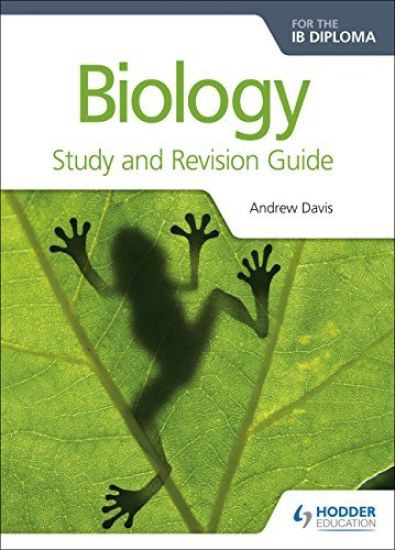
Biology for the IB Diploma Study and Revision Guide

Biology for the IB Diploma Study and Revision Guide

Andrew Davis; C. J. Clegg

Hodder Education
2017
nidottu
Exam Board: IBLevel: IBSubject: BiologyFirst Teaching: September 2014First Exam: Summer 16Stretch your students to achieve their best grade with these year round course companions; providing clear and concise explanations of all syllabus requirements and topics, and practice questions to support and strengthen learning. - Consolidate revision and support learning with a range of exam practice questions and concise and accessible revision notes- Practise exam technique with tips and trusted guidance from examiners on how to tackle questions- Focus revision with key terms and definitions listed for each topic/sub topic
Environmental Systems and Societies for the IB Diploma Study and Revision Guide
Exam Board: IBLevel: Standard levelSubject: Environmental Systems & SocietiesFirst Teaching: September 2015First Exam: Summer 2017Stretch your students to achieve their best grade with these year round course companions; providing clear and concise explanations of all syllabus requirements and topics, and practice questions to support and strengthen learning. - Consolidate revision and support learning with a range of exam practice questions and concise and accessible revision notes- Practise exam technique with tips and trusted guidance from examiners on how to tackle questions- Focus revision with key terms and definitions listed for each topic/sub topic
Mathematical Knowledge for Primary Teachers

Mathematical Knowledge for Primary Teachers

Andrew Davis; Maria Goulding; Jennifer Suggate

Routledge
2017
sidottu
Now in its fifth edition, the best-selling text Mathematical Knowledge for Primary Teachers provides trainee teachers with clear information about the fundamental mathematical ideas taught in primary schools.With rigorous and comprehensive coverage of all the mathematical knowledge primary teachers need, the text goes beyond rules and routines to help readers deepen their understanding of mathematical ideas and increase their confidence in teaching these ideas. The book has been updated to incorporate changes in the National Curriculum and the associated tests. In addition, Chapter 1 has been expanded to discuss mathematical understanding in the light of the challenges posed by the current changes. These include the re-introduction of traditional calculation methods for multiplication and division, the early coverage of abstract fractions calculations and much more.Features include:¦ ‘Check’ questions to test the reader’s understanding¦ ‘Challenges’ to increase teachers’ confidence and stretch their mathematical abilities¦ ‘Links with the classroom’ to emphasise the relevance of ideas to the classroom context¦ Straightforward coverage from theory to practice for all aspects of the Mathematics Framework.The book is accompanied by eResources which contains further visual activities and support, designed to scaffold and support the reader’s own understanding. Essential reading for all practising and trainee primary teachers, this book is ideal for those who wish to increase their mathematical understanding and confidence in presenting mathematics in the classroom.
Mathematical Knowledge for Primary Teachers

Mathematical Knowledge for Primary Teachers

Andrew Davis; Maria Goulding; Jennifer Suggate

Routledge
2017
nidottu
Now in its fifth edition, the best-selling text Mathematical Knowledge for Primary Teachers provides trainee teachers with clear information about the fundamental mathematical ideas taught in primary schools.With rigorous and comprehensive coverage of all the mathematical knowledge primary teachers need, the text goes beyond rules and routines to help readers deepen their understanding of mathematical ideas and increase their confidence in teaching these ideas. The book has been updated to incorporate changes in the National Curriculum and the associated tests. In addition, Chapter 1 has been expanded to discuss mathematical understanding in the light of the challenges posed by the current changes. These include the re-introduction of traditional calculation methods for multiplication and division, the early coverage of abstract fractions calculations and much more.Features include:¦ ‘Check’ questions to test the reader’s understanding¦ ‘Challenges’ to increase teachers’ confidence and stretch their mathematical abilities¦ ‘Links with the classroom’ to emphasise the relevance of ideas to the classroom context¦ Straightforward coverage from theory to practice for all aspects of the Mathematics Framework.The book is accompanied by eResources which contains further visual activities and support, designed to scaffold and support the reader’s own understanding. Essential reading for all practising and trainee primary teachers, this book is ideal for those who wish to increase their mathematical understanding and confidence in presenting mathematics in the classroom.