Kirjojen hintavertailu. Mukana 12 525 644 kirjaa ja 12 kauppaa.

Kirjailija

Andrew Elfenbein

Kirjat ja teokset yhdessä paikassa: 10 kirjaa, julkaisuja vuosilta 1995-2025, suosituimpien joukossa The Quyre. Vertaile teosten hintoja ja tarkista saatavuus suomalaisista kirjakaupoista.

10 kirjaa

Kirjojen julkaisuhaarukka 1995-2025.

The Quyre

The Quyre

Andrew Elfenbein; Andy Elfenbein

Dreamspinner Press LLC
2025
nidottu
Forest just wants to be left alone to work in his gym and maybe webcam a cute guy. He never expected to get dragged into a magical war between bands of fairies, much less to discover his cute guy- a fairy- thinks he can somehow stop the Quyre. Forest is just a mortal. They can't really expect him to save the day. Can they? More importantly, can he?
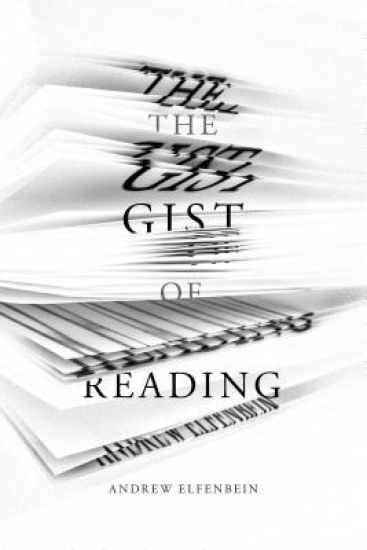
The Gist of Reading

The Gist of Reading

Andrew Elfenbein

STANFORD UNIVERSITY PRESS
2018
sidottu
What happens to books as they live in our long-term memory? Why do we find some books entertaining and others not? And how does literary influence work on writers in different ways? Grounded in the findings of empirical psychology, this book amends classic reader-response theory and attends to neglected aspects of reading that cannot be explained by traditional literary criticism. Reading arises from a combination of two kinds of mental work: automatic and controlled processes. Automatic processes, such as the ability to see visual symbols as words, are the result of constant practice; controlled processes, such as predicting what might occur next in a story, arise from readers' conscious use of skills and background knowledge. When we read, automatic and controlled processes work together to create the "gist" of reading, the constant interplay between these two kinds of processes. Andrew Elfenbein not only explains how we read today, but also uses current knowledge about reading to consider readers of past centuries, arguing that understanding gist is central to interpreting the social, psychological, and political impact of literary works. The result is the first major revisionary account of reading practices in literary criticism since the 1970s.
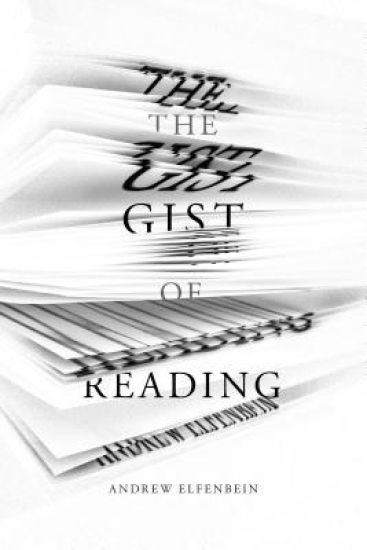
The Gist of Reading

The Gist of Reading

Andrew Elfenbein

Stanford University Press
2018
pokkari
What happens to books as they live in our long-term memory? Why do we find some books entertaining and others not? And how does literary influence work on writers in different ways? Grounded in the findings of empirical psychology, this book amends classic reader-response theory and attends to neglected aspects of reading that cannot be explained by traditional literary criticism. Reading arises from a combination of two kinds of mental work: automatic and controlled processes. Automatic processes, such as the ability to see visual symbols as words, are the result of constant practice; controlled processes, such as predicting what might occur next in a story, arise from readers' conscious use of skills and background knowledge. When we read, automatic and controlled processes work together to create the "gist" of reading, the constant interplay between these two kinds of processes. Andrew Elfenbein not only explains how we read today, but also uses current knowledge about reading to consider readers of past centuries, arguing that understanding gist is central to interpreting the social, psychological, and political impact of literary works. The result is the first major revisionary account of reading practices in literary criticism since the 1970s.
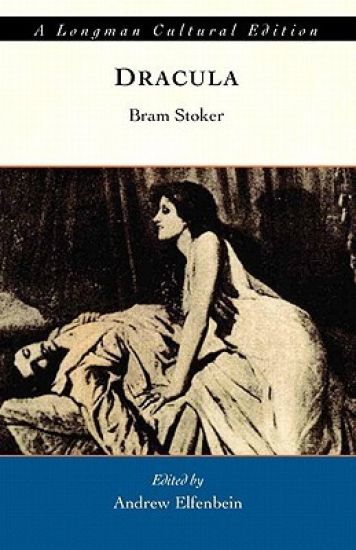
Dracula, A Longman Cutural Edition

Dracula, A Longman Cutural Edition

Bram Stoker; Andrew Elfenbein

Pearson
2010
nidottu
From Longman's Cultural Edition series, this new edition of Dracula, edited by Andrew Elfenbein, recovers the cultural complexity of Bram Stoker's novel and offers a wide array of contextualizing documents, including contemporary reviews and articles about Eastern Europe, science, gender, and media. Rather than tracing Dracula through all his later incarnations, this edition offers ways to understand the late Victorian origins of Bram Stoker’s remarkable book. While Dracula never simply reflects contemporary trends, reading it with knowledge of contemporary events and debates can clarify what may otherwise seem puzzling. Throughout, Stoker emphasizes that his vampire story takes place not in a hazy, fictional past, but in a sharply realized England of the 1890s. The materials in the sections of Cultural Contexts illuminate the references to Victorian culture in Stoker’s version of this seemingly timeless story.
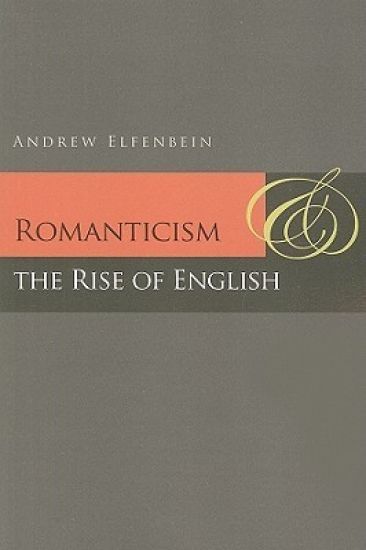
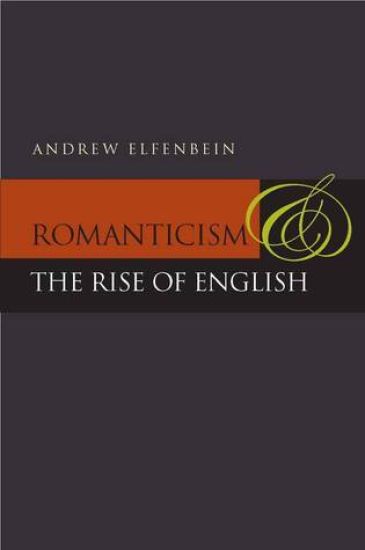
Romanticism and the Rise of English

Romanticism and the Rise of English

Andrew Elfenbein

Stanford University Press
2010
pokkari
Named a CHOICE Outstanding Academic Title for 2009 Romanticism and the Rise of English addresses a peculiar development in contemporary literary criticism: the disappearance of the history of the English language as a relevant topic. Elfenbein argues for a return not to older modes of criticism, but to questions about the relation between literature and language that have vanished from contemporary investigation. His book is an example of a kind of work that has often been called for but rarely realized—a social philology that takes seriously the formal and institutional forces shaping the production of English. This results not only in a history of English, but also in a recovery of major events shaping English studies as a coherent discipline. This book points to new directions in literary criticism by arguing for the need to reconceptualize authorial agency in light of a broadened understanding of linguistic history.
Romanticism and the Rise of English

Romanticism and the Rise of English

Andrew Elfenbein

Stanford University Press
2008
sidottu
Named a CHOICE Outstanding Academic Title for 2009 Romanticism and the Rise of English addresses a peculiar development in contemporary literary criticism: the disappearance of the history of the English language as a relevant topic. Elfenbein argues for a return not to older modes of criticism, but to questions about the relation between literature and language that have vanished from contemporary investigation. His book is an example of a kind of work that has often been called for but rarely realized—a social philology that takes seriously the formal and institutional forces shaping the production of English. This results not only in a history of English, but also in a recovery of major events shaping English studies as a coherent discipline. This book points to new directions in literary criticism by arguing for the need to reconceptualize authorial agency in light of a broadened understanding of linguistic history.
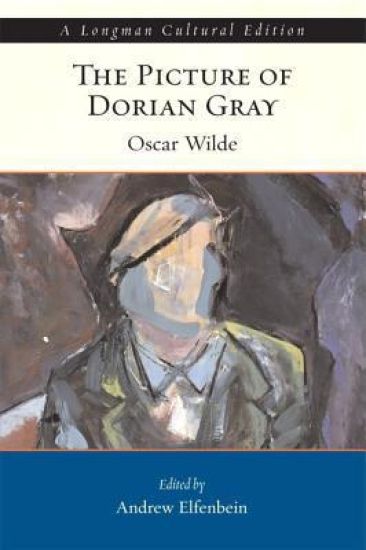
Picture of Dorian Gray, The, A Longman Cultural Edition

Picture of Dorian Gray, The, A Longman Cultural Edition

Oscar Wilde; Andrew Elfenbein

Pearson
2007
nidottu
From Longman's new Cultural Editions Series, Oscar Wilde's The Picture of Dorian Gray, edited by Andrew Elfenbein, includes the novel and contextual materials from the era of Oscar Wilde. This edition of Oscar Wilde's classic work, The Picture of Dorian Gray, highlights the novel's modernity in both its form and its revolutionary content, and traces its links to modernist literature and the culture of modernity alike. Previous editions of the novel have only seen it in a late Victorian context, or as an extension of the aesthetic theories of Walter Pater and the “art for art's sake” movement. As presented in this new edition, however, the freshness and originality of the book emerges, along with its strong social messages. The book is a pastiche of genres that propels nineteenth-century realism into twentieth-century modernism ahead of its own time. Wilde's novel offers a myth for modernity whose hold on the cultural imagination has only strengthened over time-Dorian Gray's uncanny bond with his own portrait underscores the loss of selfhood everyone experiences in a world of images and copies, paves the way for the discourses of homosexuality and the understanding of lifestyle as identity so current today, and provides clues to the mysteries of modern ethics and politics. The edition also emphasizes the role of gender and the rise of female emancipation underlying the Sybil Vane subplot, a focus on women that intensifies the book's relevance to modern transformations of men and women alike.
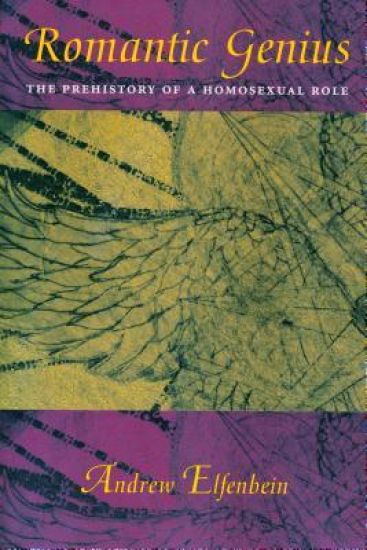
Romantic Genius

Romantic Genius

Andrew Elfenbein

Columbia University Press
1999
sidottu
Surprisingly little has been written about homosexuality in British Romantic writing, and, similarly, little discussion has emerged about homosexual themes in the lives and poetic careers of the major Romantics. In Romantic Genius, Andrew Elfenbein explores the correspondence between the stereotypes applied to the "genius" and those applied to the homosexual, showing the centrality of disreputable desires to the works of Romantic male authors-from William Beckford to Samuel Taylor Coleridge to William Blake-as well as to the writings of lesser-known but equally significant female authors of the period.
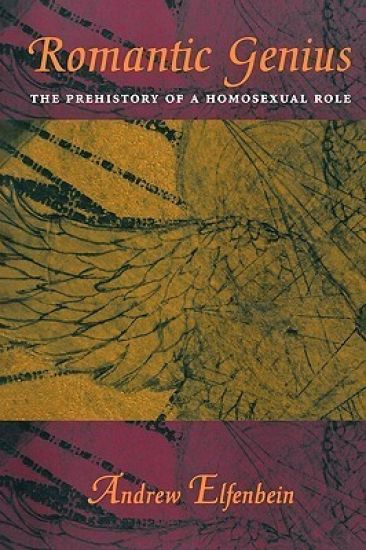
Romantic Genius

Romantic Genius

Andrew Elfenbein

Columbia University Press
1999
pokkari
Surprisingly little has been written about homosexuality in British Romantic writing, and, similarly, little discussion has emerged about homosexual themes in the lives and poetic careers of the major Romantics. In Romantic Genius, Andrew Elfenbein explores the correspondence between the stereotypes applied to the "genius" and those applied to the homosexual, showing the centrality of disreputable desires to the works of Romantic male authors-from William Beckford to Samuel Taylor Coleridge to William Blake-as well as to the writings of lesser-known but equally significant female authors of the period.
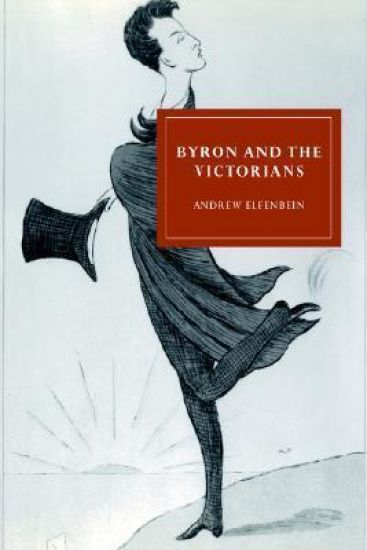
Byron and the Victorians

Byron and the Victorians

Andrew Elfenbein

Cambridge University Press
1995
sidottu
This book is the first full-length study of Byron’s influence on Victorian writers, concentrating on Carlyle, Emily Brontë, Tennyson, Bulwer Lytton, Disraeli, and Wilde. It has two emphases, theoretical and literary-historical. Its theoretical project is to revise earlier understanding of literary influence through a demonstration of the ways that institutions of cultural production mediate the access that later writers have to earlier ones. Its literary-historical project is to suggest the many different responses that Victorian writers had to Byron and to his celebrity in British culture. It argues that defining oneself against Byron became a ritual of the Victorian authorial career. Victorian writers did not reject Byron outright: instead, they defined themselves through fictions of personal development away from values associated with Byron towards those associated with themselves as mature Victorian writers.