Kirjojen hintavertailu. Mukana 12 152 606 kirjaa ja 12 kauppaa.

Kirjailija

Andrew Feenberg

Kirjat ja teokset yhdessä paikassa: 16 kirjaa, julkaisuja vuosilta 1987-2027, suosituimpien joukossa The New Lukács. Vertaile teosten hintoja ja tarkista saatavuus suomalaisista kirjakaupoista.

16 kirjaa

Kirjojen julkaisuhaarukka 1987-2027.

The New Lukács

The New Lukács

Andrew Feenberg

Verso Books
2027
nidottu
Drawing deeply from the well of German philosophy, Lukács forged a bold, new understanding of Marxism-one that broke with the standard interpretations shaped by Engels and early orthodoxy. Here Feenberg offers clear, accessible explanations of the key concepts that define Lukács's thought: reification, totality, and praxis. Rather than framing Marxism as a battle between idealism and materialism, Lukács illuminated the central role of consciousness, social meaning, and human agency in shaping history. Inspired by the Russian Revolution and the political upheavals that followed World War I, his vision of Marxism placed revolutionary praxis-the power of thought and action to transform reality-at its heart. Attacked by orthodox Marxists, History and Class Consciousness was marginalized for decades, its radical insights buried. But in the 1960s, the student movements rediscovered Lukács's work, recognizing it as a foundational text of Western Marxism. Today, as new generations grapple with questions of alienation, ideology, and political change, Lukács's work feels more relevant than ever. Feenberg demystifies this classic, offering a vital guide for anyone seeking to understand, and transform, the world.
The Ruthless Critique of Everything Existing
For several years after 1968, Herbert Marcuse was one of the most famous philosophers in the world. He became the face of Frankfurt School Critical Theory for a generation in turmoil. His fame rested on two remarkable books, Eros and Civilization and One-Dimensional Man. These two books represent the utopian hopes and dystopian fears of the time. In the 1960s and 70s, young people seeking a theoretical basis for their revolution found it in his work. Marcuse not only supported their struggles against imperialism and race and gender discrimination, he foresaw the far-reaching implications of the destruction of the natural environment. Marcuse's Marxism was influenced by Husserl and Heidegger, Hegel and Freud. These eclectic sources grounded an original critique of advanced capitalism focused on the social construction of subjectivity and technology. Marcuse contrasted the "one-dimensionality" of conformist experience with the "new sensibility" of the New Left. The movement challenged a society that "delivered the goods" but devastated the planet with its destructive science and technology. A socialist revolution would fail if it did not transform these instruments into means of liberation, both of nature and human beings. This aspiration is alive today in the radical struggle over climate change. Marcuse offers theoretical resources for understanding that struggle.
Tecnossistema: A vida social da razão

Tecnossistema: A vida social da razão

Andrew Feenberg

Independently Published
2019
nidottu
A modernidade reivindica ser uma forma racional de vida social e, de facto, baseia-se em artefatos t cnicos projetados racionalmente e em institui es informadas pelas disciplinas t cnicas racionais. Isto n o tem precedentes. Atrav s de hist ria humana, a racionalidade tinha sido confinada a tarefas espec ficas, mais do que a organizar a sociedade como um todo. Uma vez assinalada, a estranheza do nosso modo moderno de vida inspira reflex o. Qual hoje a natureza e o papel da racionalidade na sociedade? Este livro inspira-se na filosofia e na sociologia da tecnologia para propor uma resposta.
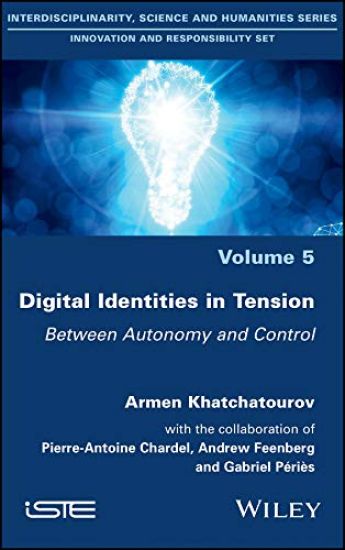
Digital Identities in Tension

Digital Identities in Tension

Armen Khatchatourov; Pierre-Antoine Chardel; Gabriel Peries; Andrew Feenberg

ISTE Ltd
2019
sidottu
Digital Identities in Tension deals with the ambivalence of universal digitalization. While this transformation opens up new possibilities, it also redistributes the interplay of constraints and incentives, and tends insidiously to create a greater malleability of individuals. Today, companies and states are increasingly engaged in the surveillance and management of our digital identities. In response, we must study the effects that the new industrial, economic and political logics have on ethical issues and our ability to act. This book examines the effects of digitalization on new modes of existence and subjectivation in many spheres: digital identity management systems, Big Data and machine learning, the Internet of Things, smart cities, etc. The study of these transformations is one of the major conditions for more responsible modes of data governance to emerge.
Technosystem

Technosystem

Andrew Feenberg

Harvard University Press
2017
sidottu
We live in a world of technical systems designed in accordance with technical disciplines and operated by personnel trained in those disciplines. This is a unique form of social organization that largely determines our way of life, but the actions of individuals and social protest still play a role in developing and purposing these rational systems. In Technosystem, Andrew Feenberg builds a theory of both the threats of technocratic modernity and the potential for democratic change.Feenberg draws on the tradition of radical social criticism represented by Herbert Marcuse and the Frankfurt School, which recognized the social effects of instrumental rationality but did not advance a convincing alternative to the new forms of domination imposed by rational systems. That is where the fine-grained analyses of Science, Technology, and Society (STS) studies can contribute. Feenberg uses these approaches to reconcile the claims of rationality with the agency of a public increasingly mobilized to intervene in technically based decisions. The resulting social theory recognizes emerging forms of resistance, such as protests and hacking, as essential expressions of public life in the “rational society.”Combining the most salient insights from critical theory with the empirical findings of STS, Technosystem advances the philosophical debate over the nature and practice of reason in modern society.
The Philosophy of Praxis

The Philosophy of Praxis

Andrew Feenberg

Verso Books
2014
nidottu
The early Marx called for the "realization of philosophy" through revolution. Revolution thus becomes a critical philosophical concept for Marxism, a view elaborated in the later praxis philosophies of Lukács, and the Frankfurt School. These philosophers argue that fundamental philosophical problems are, in reality, social problems abstractly conceived. This argument has two implications: on the one hand, philosophical problems are significant insofar as they reflect real social contradictions; on the other hand, philosophy cannot resolve the problems it identifies because only social revolution can eliminate their causes.Realizing Philosophy traces the evolution of this argument in the writings of Marx, Lukács, Adorno and Marcuse. This reinterpretation of the philosophy of praxis shows its continuing relevance to contemporary discussions in Marxist political theory, continental philosophy and science and technology studies.
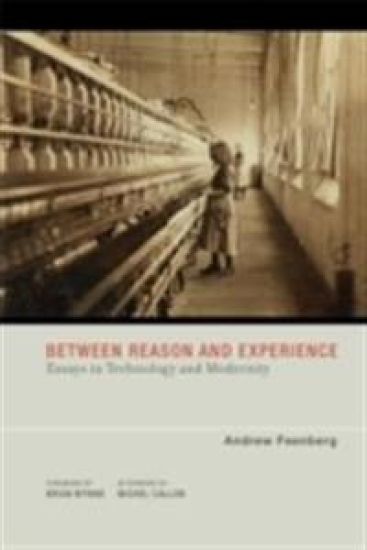
Between Reason and Experience

Between Reason and Experience

Andrew Feenberg; Michel Callon

MIT Press
2010
pokkari
A leading philosopher of technology calls for the democratic coordination of technical rationality with everyday experience.The technologies, markets, and administrations of today's knowledge society are in crisis. We face recurring disasters in every domain: climate change, energy shortages, economic meltdown. The system is broken, despite everything the technocrats claim to know about science, technology, and economics. These problems are exacerbated by the fact that today powerful technologies have unforeseen effects that disrupt everyday life; the new masters of technology are not restrained by the lessons of experience, and accelerate change to the point where society is in constant turmoil. In Between Reason and Experience, leading philosopher of technology Andrew Feenberg makes a case for the interdependence of reason-scientific knowledge, technical rationality-and experience. Feenberg examines different aspects of the tangled relationship between technology and society from the perspective of critical theory of technology, an approach he has pioneered over the past twenty years. Feenberg points to two examples of democratic interventions into technology: the Internet (in which user initiative has influenced design) and the environmental movement (in which science coordinates with protest and policy). He examines methodological applications of critical theory of technology to the case of the French Minitel computing network and to the relationship between national culture and technology in Japan. Finally, Feenberg considers the philosophies of technology of Heidegger, Habermas, Latour, and Marcuse. The gradual extension of democracy into the technical sphere, Feenberg argues, is one of the great political transformations of our time.
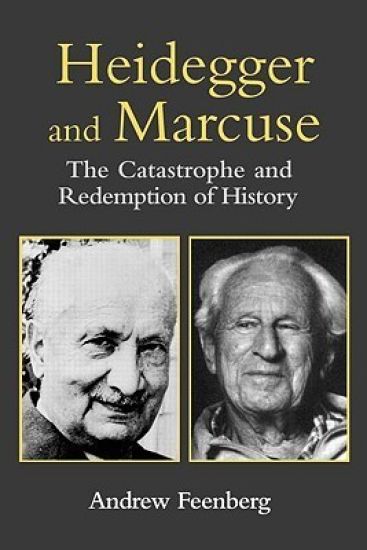
Heidegger and Marcuse

Heidegger and Marcuse

Andrew Feenberg

Routledge
2004
nidottu
First published in 2005. Herbert Marcuse was Martin Heidegger’s most famous student. He claimed to have left existentialism behind in 1933 when Heidegger was declared first Nazi rector of Freiburg University and Marcuse fled into exile.The contentious relations between these two thinkers reflected the split in twentieth-century continental philosophy between exist- entialism and Marxism. But Andrew Feenberg’s careful study of Heidegger’s early lectures, as well as of previously unpublished work by Marcuse, suggests that the famous student remained closer than he cared to admit to the even more famous teacher. Heidegger and Marcuse examines for the first time Marcuse’s remarkable attemptsin his early and late work to bridge the gap between existentialism and Marxism in a radical critical theory.
Heidegger and Marcuse

Heidegger and Marcuse

Andrew Feenberg

Routledge
2004
sidottu
First published in 2005. Herbert Marcuse was Martin Heidegger’s most famous student. He claimed to have left existentialism behind in 1933 when Heidegger was declared first Nazi rector of Freiburg University and Marcuse fled into exile.The contentious relations between these two thinkers reflected the split in twentieth-century continental philosophy between exist- entialism and Marxism. But Andrew Feenberg’s careful study of Heidegger’s early lectures, as well as of previously unpublished work by Marcuse, suggests that the famous student remained closer than he cared to admit to the even more famous teacher. Heidegger and Marcuse examines for the first time Marcuse’s remarkable attemptsin his early and late work to bridge the gap between existentialism and Marxism in a radical critical theory.
Transforming Technology

Transforming Technology

Andrew Feenberg

Oxford University Press Inc
2002
nidottu
Thoroughly revised, this new edition of Critical Theory of Technology rethinks the relationships between technology, rationality, and democracy, arguing that the degradation of labor--as well as of many environmental, educational, and political systems--is rooted in the social values that preside over technological development. It contains materials on political theory, but the emphasis has shifted to reflect a growing interest in the fields of technology and cultural studies.
When Poetry Ruled the Streets

When Poetry Ruled the Streets

Andrew Feenberg; Jim Freedman; Douglas Kellner

State University of New York Press
2001
pokkari
Offers a complete survey of the French May Events of 1968 through narrative, analysis, and documents.More than a history, this book is a passionate reliving of the French May Events of 1968. The authors, ardent participants in the movement in Paris, documented the unfolding events as they pelted the police and ran from the tear gas grenades. Their account is imbued with the impassioned efforts of the students to ignite political awareness throughout society. Feenberg and Freedman select documents, graffiti, brochures, and posters from the movement and use them as testaments to a very different and exciting time. Their commentary, informed by the subsequent development of French culture and politics, offers useful background information and historical context for what may be the last great revolutionary challenge to the capitalist system.
Questioning Technology

Questioning Technology

Andrew Feenberg

Routledge
1999
sidottu
In this extraordinary introduction to the study of the philosophy of technology, Andrew Feenberg argues that techonological design is central to the social and political structure of modern societies. Environmentalism, information technology, and medical advances testify to technology's crucial importance.In his lucid and engaging style, Feenberg shows that technology is the medium of daily life. Every major technical changes reverberates at countless levels: economic, political, and cultural. If we continue to see the social and technical domains as being seperate, then we are essentially denying an integral part of our existence, and our place in a democratic society.Questioning Tecchnology convinces us that it is vital that we learn more about technology the better to live with it and to manage it.
Questioning Technology

Questioning Technology

Andrew Feenberg

Routledge
1999
nidottu
In this extraordinary introduction to the study of the philosophy of technology, Andrew Feenberg argues that techonological design is central to the social and political structure of modern societies. Environmentalism, information technology, and medical advances testify to technology's crucial importance.In his lucid and engaging style, Feenberg shows that technology is the medium of daily life. Every major technical changes reverberates at countless levels: economic, political, and cultural. If we continue to see the social and technical domains as being seperate, then we are essentially denying an integral part of our existence, and our place in a democratic society.Questioning Tecchnology convinces us that it is vital that we learn more about technology the better to live with it and to manage it.
Marcuse

Marcuse

Andrew Feenberg; Robert Pippin; Charles P. Webel

Praeger Publishers Inc
1987
nidottu
Distinguished scholars--Jurgen Habermas, Claus Offe, Douglas Kellner, and Martin Jay, among others--draw upon historical, theoretical, and biographical information to assess Marcuse's philosophy, from its grounding in classical German idealism, through the break with Heidegger, to his role in the American counterculture of the sixties and seventies. Indispensable for anyone interested in an in-depth understanding of one of the most burning issues of our time: the relation of critical theory to social action.
Marcuse

Marcuse

Andrew Feenberg; Robert Pippin; Charles P. Webel

Praeger Publishers Inc
1987
sidottu
Distinguished scholars--Jurgen Habermas, Claus Offe, Douglas Kellner, and Martin Jay, among others--draw upon historical, theoretical, and biographical information to assess Marcuse's philosophy, from its grounding in classical German idealism, through the break with Heidegger, to his role in the American counterculture of the sixties and seventies. Indispensable for anyone interested in an in-depth understanding of one of the most burning issues of our time: the relation of critical theory to social action.