
Kirjojen hintavertailu. Mukana 12 390 323 kirjaa ja 12 kauppaa.

Kirjailija

Andrew Feldmár

Kirjat ja teokset yhdessä paikassa: 3 kirjaa, julkaisuja vuosilta 2014-2025, suosituimpien joukossa Radical Adventure. Vertaile teosten hintoja ja tarkista saatavuus suomalaisista kirjakaupoista.

Mukana myös kirjoitusasut: Andrew Feldmar

3 kirjaa

Kirjojen julkaisuhaarukka 2014-2025.

Radical Adventure

Radical Adventure

Andrew Feldmár

KARNAC BOOKS
2025
pokkari
At age twenty-seven, Andrew Feldmár accepted a tentative offer from his supervisor, Zenon Pylyshyn, a participant in the first experiments with LSD-25, to experience an LSD trip. Following that initiation, he took various other substances, always returning to LSD. During his apprenticeship with R. D. Laing, he was trained in Laing’s approach to LSD-therapy. A few years later, the use of these substances was prohibited. Now, after more than forty years, research has begun again into the healing possibilities of psychedelic psychotherapy. A movement has begun to have psychedelics, entheogens, and empathogens accepted worldwide as legal. However, training in how to use them varies. Feldmár details fascinating stories of patients whose recovery hinged upon their use of LSD. He talks of how a single session of MDMA assisted many to attain insights that enabled their psychotherapy to proceed faster and deeper than before. He wants his experiences to help the next generation of psychedelic psychotherapists. They demonstrate that the most important aspect of psychedelic psychotherapy is the human connection: being involved and engaged with the other. There cannot be a protocol to follow, programmed music played, orders given. The therapist needs to feel at home within the altered state of consciousness of the patient during the session. The only way to learn this is through apprenticeship and time is running out as the older generation who worked in this way is dying out. The gains are high with this type of therapy, but so are the dangers. Thus, the focus needs to be not on the drug, but on the relationship between the therapist and the patient. Psychedelic psychotherapy is not for everyone but done well with the right patient and therapist, it can be transformative.
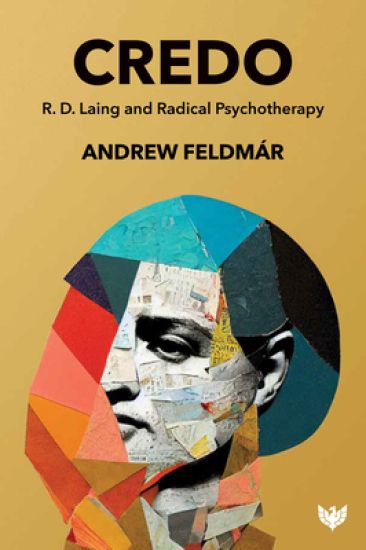
Credo

Credo

Andrew Feldmár

KARNAC BOOKS
2023
pokkari
Tamás Vekerdy, one of the most well-known Hungarian psychologists, called Credo an ’essential insight not just into Feldmár’s life but into the world and the era that we currently live in.’ Feldmár was three and a half years old when the Arrow Cross came and took his mother to Auschwitz, his father to labour service, and his grandmother to the ghetto. A young Catholic woman hid him for a year and a half – perhaps she inspired Feldmár to become the kind stranger in many other people's lives years later. Feldmár was sixteen in 1956 when the revolution was crushed, and he escaped from Hungary to Canada all by himself. He fled from bleak prospects and a controlling, critical mother into the unknown. He ended up in Toronto, Canada, and became an academic. In the early 1970s, he met the person who radically changed his thinking: R. D. Laing. The book’s longest chapter, ’Journal Entries’, comes from notes Feldmár took in 1974–1975 when he studied with Laing in London. He adds notes and remarks in the present to the past, increasing the tension in the already fascinating passages. Following this is the text of an important conversation with Laing, covering topics such as love, therapy, and change. Next is a paper by his lifelong friend Francis Huxley, ’Shamanism, Healing, and R. D. Laing’. The book concludes with perhaps its most influential chapter, ’Fantasy and Reality’. Here, Feldmár speculates on the fundamental elements of his approach to psychotherapy: the nature of responsibility and ethics, politics, freedom, individuality, community, solidarity, will, and relationships. The bond between Feldmár and Laing permeates every page of Credo. The reader can closely follow Feldmár's remarkable journey of how their relationship shaped his therapeutic approach and helped him develop into the radical and inspirational psychotherapist he is today. This book is essential reading for all psychotherapists, psychoanalysts, and fans of R. D. Laing.
The Secret Life of Babies

The Secret Life of Babies

Mia Kalef; Andrew Feldmar

North Atlantic Books,U.S.
2014
pokkari
A bold affirmation that we are sentient before conception and in the womb, The Secret Life of Babies reveals author Mia Kalef's groundbreaking findings: babies are able to remember their earliest experiences, this consciousness precedes the physical development of the brain itself, and medical interventions during birth--like forceps and Cesareans--can imprint our relationships with the world and disconnect us from our sustainable place in the ecosystem. Kalef provides a six-step protocol for detecting these individual imprints and taking reparative steps for physiological and emotional balance and release. This book offers us an articulate guide to a transformation that can restore our essential nature. From the table of contents: Foreword by Andrew FeldmarIntroduction: The Myth: Science and Experience The Quest: Sparking the Conversation Who Is This Book For? A Song Worth SingingPART ONE: ScienceChapter 1: The First Principle: Babies Remember Their Experiences The Controversy A Place to Begin and End: Returning to Wholeness Essential Nature Essential Movements The Mechanisms The Model Perspectives and PurposesChapter 2: The Second Principle: Consciousness Precedes the Brain Architecture That Supports It The Biological Paradox Brains, Fields, and Development The Effects of Chemical and Emotional FieldsChapter 3: The Third Principle: Babies Are Our Barometers Dominance versus Emergence Historical Cultural Indicators Present-Day Cultural IndicatorsPART TWO: ExperienceChapter 4: The Fourth Principle: It Is Never Too Late to Heal The Vision Horizon Preparing the Way Reclaiming the Body: The Path Home The PrototypePART THREE: MarriageChapter5: The Intuitive Recovery Project The Anatomy of the Intuitive Recovery Project The ProjectChapter 6: Summary