Kirjojen hintavertailu. Mukana 12 459 402 kirjaa ja 12 kauppaa.
Kirjailija
Andrew Francis
Kirjat ja teokset yhdessä paikassa: 17 kirjaa, julkaisuja vuosilta 2008-2023, suosituimpien joukossa What in God's Name Are You Eating?. Vertaile teosten hintoja ja tarkista saatavuus suomalaisista kirjakaupoista.
In contemporary Western society the church has been pushed to the margins, leading experts to describe the current era as a time 'after Christendom'. Many traditional churches and congregations are struggling, a condition worsened by the COVID-19 pandemic regulations. As the practice of churchgoing wanes, the performance of the sacrament is called into question. How can we bring the traditional, communal experience of sacrament into the modern world? In Sacraments after Christendom, Andrew Francis and Janet Sutton tackle this question head-on, exploring and discussing the enactment of the sacrament in the context of church decline and an increasingly isolated world. In doing so, they deconstruct traditional perceptions and broaden our understanding of ritual and community in order to rediscover the truth of the sacrament.
Before COVID-19 reshaped the way we looked at the world and life's big questions, the Western church was already being pushed from the center to the margins of society. We are entering a time which the experts call ""after Christendom."" New and emerging churches are appearing and many traditional congregations are struggling. How can we do all that Jesus wants us to do as we follow him? Jesus was baptized and shared bread and wine with his disciples--as the church does today. Most Christians believe baptism and the bread-and-wine moment are sacraments. What does that mean? There are many other Christians who believe that anointing, confirmation, marriage, ordaining Christian leaders, and penance (or reconciliation) are also sacraments. Are they? Why should we believe that? Who tells us that we should? This book takes a dynamic approach, calling for a new way in thinking about, discussing, and sharing the sacraments. How do our past practices measure up to the mission of God today? What is the Holy Spirit saying? What are you going to do? This book sets the agenda
This popular work has established itself as an essential guide for the practitioner requiring an understanding of the law of restrictive covenants affecting freehold land. In this book a complex topic is made intelligible by easily understood text, complemented by flowcharts and checklists. This enables the adviser to solve problems quickly and accurately. The author brings his extensive experience of cases involving covenants to the work, dealing with points that arise in practice both comprehensively and with authority. The work considers all the key areas of law and practice affecting restrictive covenants. This new edition has been completely revised and updated with more detailed treatment of major issues affecting restrictive covenants.
Jesus told his disciples to go to a town and to find someone who would receive them as a guest. They were encouraged to eat within the community, build friendships, make contacts and teach the gospel. In this exciting book, Andrew Francis urges us to notice the order. The disciples were to seek the welfare of others by praying for and healing them - in other words, by meeting their obvious needs. It was only then that teaching and telling about the 'reign of God' would begin. This was Jesus' strategy for mission. Andrew Francis suggests that it should be ours today.
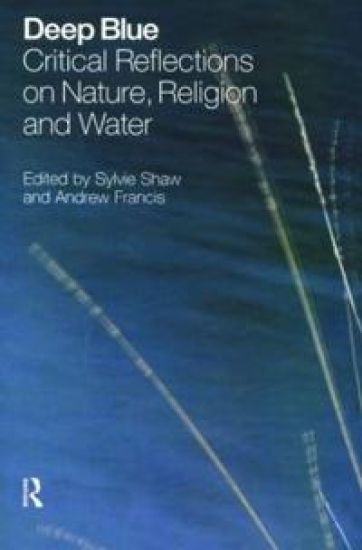
Nature religions look to rivers, lakes and oceans for inspiration and spiritual transformation. 'Deep Blue' brings together the work of influential scholars in the field of nature religion, ranging across anthropology, mythology, sociology and psychology. The essays examine the interrelationship between spiritual practice, critical thinking, and environmental concern. Tracing the ancient history of humanity's close relationship with both salt and fresh water, the book calls for a sustainable relationship with water in contemporary western culture. 'Deep Blue' will be of interest to students of paganism and religion, environmental researchers and activists, and all those involved in the intersection between religion and ecology.
Following significant changes in the legal profession since the 1980s, how do new organizational forms and actors at the edge of the law impact upon our understanding of the changing nature of the core values of mainstream legal professionalism? This methodological approach brings together a series of case studies built on original empirical research and focuses on those operating at the margins of legal professionalism in England and Wales. Also including comparative material on the US and Canada, the issues discussed are relevant for common law countries more generally and the analysis reveals the ways in which an increasingly fluid, fragmented and heterogeneous legal profession is responding to the challenges it faces in the early twenty-first century.
Andrew Francis' Culture and Commerce in Conrad's Asian Fiction is the first book-length critical study of commerce in Conrad's work. It reveals not only the complex connections between culture and commerce in Conrad's Asian fiction, but also how he employed commerce in characterization, moral contexts, and his depiction of relations at a point of advanced European imperialism. Conrad's treatment of commerce - Arab, Chinese and Malay, as well as European - is explored within a historically specific context as intricate and resistant to traditional readings of commerce as simple and homogeneous. Through the analysis of both literary and non-literary sources, this book examines capitalism, colonialism and globalization within the commercial, political and social contexts of colonial Southeast Asia.
This book is a study of the treatment of New Zealand’s German-speaking settlers during the course of the Great War. As with Britain’s other dominions, New Zealand’s German and Austro-Hungarian residents were subject to a raft of legislation which placed restrictions on their employment and activities, while those considered a danger to domestic security found themselves interned for the duration of the conflict. This book examines public, press and political responses to their presence, and describes how patriotic associations, trade organizations, xenophobic politicians and journalists undertook a vigorous anti-alien campaign resulting, in a number of instances, in anti-German riots. Central to this book is an examination of the extent to which proimperial sentiment, concepts of citizenship and national identity, increasing European settlement and a progressively volatile European scene set the tone for the manner with which the dominion’s British settlers treated its enemy alien counterparts. Themes discussed include the public’s reaction to war; the government’s internment policy; the establishment of anti-German trade organizations; and the challenges facing Prime Minister William Massey, whose wish to remain fair and just towards enemy aliens often brought him into direct conflict with the more hostile anti-German elements within New Zealand society.
Following significant changes in the legal profession since the 1980s, how do new organizational forms and actors at the edge of the law impact upon our understanding of the changing nature of the core values of mainstream legal professionalism? This methodological approach brings together a series of case studies built on original empirical research and focuses on those operating at the margins of legal professionalism in England and Wales. Also including comparative material on the US and Canada, the issues discussed are relevant for common law countries more generally and the analysis reveals the ways in which an increasingly fluid, fragmented and heterogeneous legal profession is responding to the challenges it faces in the early twenty-first century.
Nature religions look to rivers, lakes and oceans for inspiration and spiritual transformation. 'Deep Blue' brings together the work of influential scholars in the field of nature religion, ranging across anthropology, mythology, sociology and psychology. The essays examine the interrelationship between spiritual practice, critical thinking, and environmental concern. Tracing the ancient history of humanity's close relationship with both salt and fresh water, the book calls for a sustainable relationship with water in contemporary western culture. 'Deep Blue' will be of interest to students of paganism and religion, environmental researchers and activists, and all those involved in the intersection between religion and ecology.