Kirjailija
Andrew Gardner
Kirjat ja teokset yhdessä paikassa: 11 kirjaa, julkaisuja vuosilta 2004-2026, suosituimpien joukossa Exposing Jack. Vertaile teosten hintoja ja tarkista saatavuus suomalaisista kirjakaupoista.
11 kirjaa
Kirjojen julkaisuhaarukka 2004-2026.
The Hammersmith Nude Murders is the name of a series of six murders in West London, England, in 1964 and 1965. The victims, all sex workers, were found undressed in or near the River Thames. Two earlier murders, committed in West London in 1959 and 1963, have also been linked by some investigators to the same perpetrator. There have been at least eight other publications covering these crimes, with speculation about who was responsible, but none conclusively identifying any individual. Despite intense media interest and one of the biggest manhunts in Scotland Yard's history, the case is unsolved. Forensic evidence gathered at the time is believed to have been destroyed or lost. In this book the authors have identified a viable new suspect who had the Method, Motive and Opportunity to have committed these murders. He was a minder in the illegal drinking dens, both The Tennis Club and The Jazz Club, a taxi driver from Notting Hill who in 1964 moved to a flat at 3 Amelia House off Queen Caroline Street just half a mile from where Hannah Tailford was found in The Thames, he rubbed shoulders with the last 5 victims, whose Fiancé was a hairdresser to at least five of the victims and who enjoyed forced deep fellation; a fetish that the lead officer, Chief Superintendent John Du Rose identified as the cause of asphyxiation to each of the victims.
Excavation in the Roman Legionary Fortress at Caerleon
Peter Guest; Andrew Gardner
Archaeopress
2025
nidottu
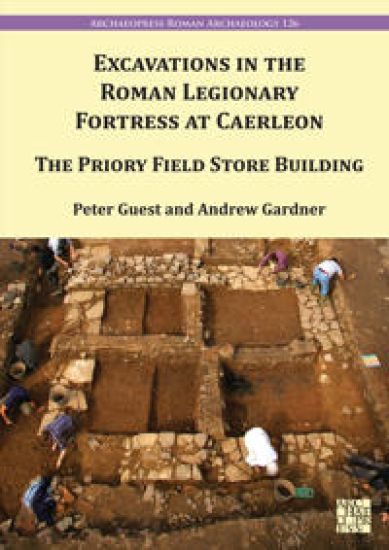
The Priory Field excavation was a research, training and engagement project that investigated a large courtyard store-building in the legionary fortress of Isca at Caerleon. This was the first legionary store excavated to modern standards in the Roman Empire. The excavation exposed the building’s main entranceway and two small adjoining rooms, as well as four squarer storerooms. The coins and pottery provide an excellent chronological sequence for the store, which was constructed around AD 90-110 and remained in use until the end of the 3rd century, after which it fell into a derelict state before being partially demolished and levelled by around 350. Debris from the building’s collapse and demolition sealed the floors of two store rooms, one of which was littered with military finds, many of which survived in a very fragile condition. These included the highly fragmentary remains of a rare example of an elaborately decorated horse’s headpiece, at least one set of dismantled lorica segmentata body armour, as well as another set of unusual scale armour. Two new buildings were constructed among the ruins of the old and partially demolished legionary store, including one 3 room cottage-like building. Radiocarbon dates demonstrate this building was constructed and in use between 430 and 600. This is the first new structure at a Roman site definitively dated to the post-Roman 5th and 6th centuries from Wales (and, arguably, from Britain), and it has an important story to tell about life in Isca after the ending of Britannia, c. 410.
This illustrated collection of heartfelt letters is about the many beautiful hopes and dreams that fathers have for their children. A perfect gift for any dad When you grow up, I hope you... ...let your smile change the world...feel you are loved, in every cell of your body...learn how to help those who need a hand Eighteen dads from different walks of life took turns finishing that sentence. Some of them expressed hope that their children would dream big and be kind. Others wanted their kids to have love and respect for themselves and others. What they all share is a wish to express their support for their children as they learn and grow. Whether you are celebrating Father's Day, birthdays, or another momentous event, this anthology of letters is a great way to celebrate father figures everywhere.
Love, Dad: Inspiring Notes from Fathers to Kids
Joel Warsh; Andrew Gardner
Random House Books for Young Readers
2025
sidottu
This illustrated collection of heartfelt letters is about the many beautiful hopes and dreams that fathers have for their children. A perfect gift for any dad When you grow up, I hope you... ...let your smile change the world...feel you are loved, in every cell of your body...learn how to help those who need a hand Eighteen dads from different walks of life took turns finishing that sentence. Some of them expressed hope that their children would dream big and be kind. Others wanted their kids to have love and respect for themselves and others. What they all share is a wish to express their support for their children as they learn and grow. Whether you are celebrating Father's Day, birthdays, or another momentous event, this anthology of letters is a great way to celebrate father figures everywhere.
What makes a Baptist church Baptist? Casual observers might be tempted to stereotype the churches of the American South, but scholar Andrew B. Gardner paints a portrait of one North Carolina congregation that defies easy categorization. Established in 1958 in the college town of Chapel Hill, North Carolina, the Olin T. Binkley Memorial Baptist Church immediately sought to establish a welcoming religious community—focusing initially on bringing in both Black and White congregants and, as ideas about inclusivity developed, on accepting all people, regardless of identity. By naming itself for a theologically progressive preacher and professor, the fledgling church signaled a perspective unfamiliar to Baptists in the South, which gave the church a radical edge. The church’s first pastor, Robert Seymour, also possessed a progressive vision that resonated with his congregants and pushed them to commit to justice and equality. Soon after its founding, the church strived to challenge inequality in segregated Chapel Hill. Although it remained predominantly White well into the twenty-first century, Binkley evolved to become increasingly aware of issues of gender equality, equity, LGBTQ inclusion, and climate justice. Addressing these issues was Binkley’s way of building God’s kingdom on earth as it is in heaven.Binkley: A Congregational History tells the story of a single church with a complicated past, demonstrating that, while liberal in heritage, it operated with an unconsciously White, heteronormative worldview that slowly evolved into a distinct expression of faith. The author also draws on scholarship within the broader field of American religious history to position Binkley—with all its complexities, conflicts, and nuances—within the broader context of twentieth-century liberal Protestantism. Perhaps most importantly, Gardner tells the story of a place animated by a vision of Christianity that is often overlooked or drowned out by larger and louder Christian groups. He compellingly shows how this progressive vision of Christianity has shaped Binkley’s commitment to its community and beyond.
How to Become Rich: 30 Crucial Inconvenient Truths About Rich People Most People Ignore
David James; Andrew Gardner
Independently Published
2019
nidottu
How Not To Get Murdered In Thailand
Andrew Gardner
Createspace Independent Publishing Platform
2014
nidottu
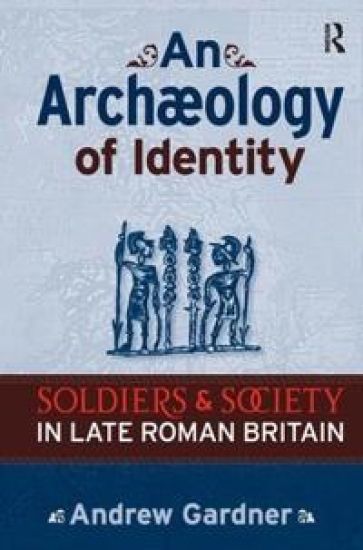
What happened to Roman soldiers in Britain during the decline of the empire in the 4th and 5th centuries? Did they withdraw, defect, or go native? More than a question of military history, this is the starting point for Andrew Gardner’s incisive exploration of social identity in Roman Britain, in the Roman Empire, and in ancient society. Drawing on the sociological theories of Anthony Giddens and others, Gardner shapes an approach that focuses on the central role of practice in the creation and maintenance of identities—nationalist, gendered, class, and ethnic. This theory is then tested against the material remains of Roman soldiers in Britain to show how patterning of stratigraphy, architecture, and artifacts supports his theoretical construct. The result is a retelling of the story of late Roman Britain sharply at odds with the traditional text-driven histories and a theory of human action that offers much to current debates across the social sciences.
Political Ecology Across Spaces, Scales, and Social Groups
Susan Paulson; Lisa L. Gezon; Arturo Escobar; Andrew Gardner; Mette Brodgen; James Greenberg; Hanne Svarstad; Michael Dove; Alf Hornborg; Charles Stevens; Josiah Heyman; Fiona Mackenzie; Anne Ferguson; William Derman
Rutgers University Press
2004
nidottu
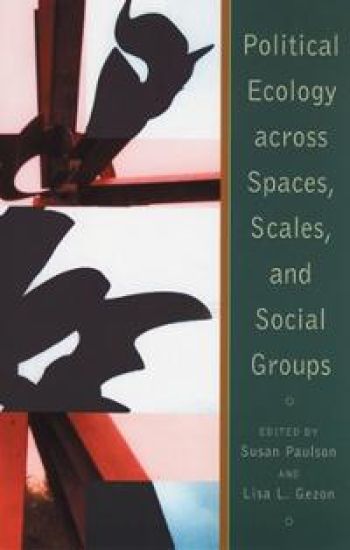
Environmental issues have become increasingly prominent in local struggles, national debates, and international policies. In response, scholars are paying more attention to conventional politics and to more broadly defined relations of power and difference in the interactions between human groups and their biophysical environments. Such issues are at the heart of the relatively new interdisciplinary field of political ecology, forged at the intersection of political economy and cultural ecology.This volume provides a toolkit of vital concepts and a set of research models and analytic frameworks for researchers at all levels. The two opening chapters trace rich traditions of thought and practice that inform current approaches to political ecology. They point to the entangled relationship between humans, politics, economies, and environments at the dawn of the twenty-first century and address challenges that scholars face in navigating the blurring boundaries among relevant fields of enquiry. The twelve case studies that follow demonstrate ways that culture and politics serve to mediate human-environmental relationships in specific ecological and geographical contexts. Taken together, they describe uses of and conflicts over resources including land, water, soil, trees, biodiversity, money, knowledge, and information; they exemplify wide-ranging ecological settings including deserts, coasts, rainforests, high mountains, and modern cities; and they explore sites located around the world, from Canada to Tonga and cyberspace.