Kirjojen hintavertailu. Mukana 12 595 353 kirjaa ja 12 kauppaa.

Kirjailija

Andrew Guthrie Ferguson

Kirjat ja teokset yhdessä paikassa: 7 kirjaa, julkaisuja vuosilta 2012-2026, suosituimpien joukossa Your Data Will Be Used Against You. Vertaile teosten hintoja ja tarkista saatavuus suomalaisista kirjakaupoista.

7 kirjaa

Kirjojen julkaisuhaarukka 2012-2026.

Your Data Will Be Used Against You

Your Data Will Be Used Against You

Andrew Guthrie Ferguson

NEW YORK UNIVERSITY PRESS
2026
sidottu
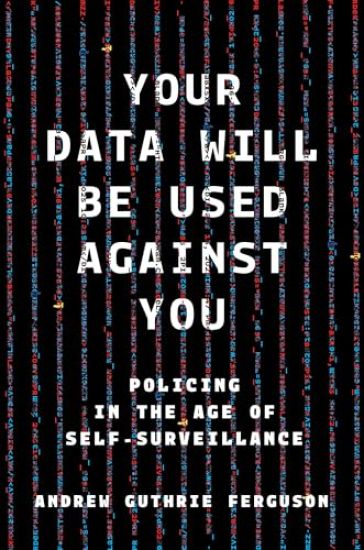
Interrogates how digital self-surveillance can be turned against us by police, prosecutors, and political whims For consumers living in a digitally-connected world, smart technologies have built an inescapable trap of digital self-surveillance. Smart cars, smart homes, smart watches, and smart medical devices track our most private activities and intimate patterns. While these devices allow users to receive personal insights by monitoring their every move, that data can be accessed by police and prosecutors looking to find incriminating clues. Digital technology exposes everyone, everywhere, all at once and we have few laws to regulate it. In Your Data Will Be Used Against You, Andrew Guthrie Ferguson warns us of how the rise of sensor-driven technology, social media monitoring, and artificial intelligence can be weaponized against democratic values and personal freedoms. At the same time, that data will solve crimes, radically transforming how criminal cases are prosecuted. Ferguson explores how this proliferation of private data in combination with public surveillance networks promises new ways to solve previously unsolvable crimes but also leaves us vulnerable to governmental overreach and abuse. He argues for legal interventions that address the threat of digital self-surveillance and provides concrete suggestions about how legislators, judges, and communities should respond. As consumers, citizens, and potential subjects of surveillance, the questions in this book must be confronted now, before the trap of surveillance captures us completely. Providing a stark warning of the dangers of digital self-surveillance, Your Data Will be Used Against You is a defense of civil liberties against the growing threat of data-driven policing.
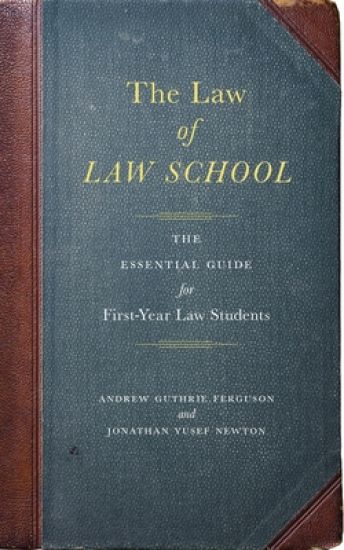
The Law of Law School

The Law of Law School

Andrew Guthrie Ferguson; Jonathan Yusef Newton

New York University Press
2020
pokkari
Offers one hundred rules that every first year law student should live by "Dear Law Student: Here's the truth. You belong here." Law professor Andrew Ferguson and former student Jonathan Yusef Newton open with this statement of reassurance in The Law of Law School. As all former law students and current lawyers can attest, law school is disorienting, overwhelming, and difficult. Unlike other educational institutions, law school is not set up simply to teach a subject. Instead, the first year of law school is set up to teach a skill set and way of thinking, which you then apply to do the work of lawyering. What most first-year students don't realize is that law school has a code, an unwritten rulebook of decisions and traditions that must be understood in order to succeed. The Law of Law School endeavors to distill this common wisdom into one hundred easily digestible rules. From self-care tips such as "Remove the Drama," to studying tricks like "Prepare for Class like an Appellate Argument," topics on exams, classroom expectations, outlining, case briefing, professors, and mental health are all broken down into the rules that form the hidden law of law school. If you don't have a network of lawyers in your family and are unsure of what to expect, Ferguson and Newton offer a forthright guide to navigating the expectations, challenges, and secrets to first-year success. Jonathan Newton was himself such a non-traditional student and now shares his story as a pathway to a meaningful and positive law school experience. This book is perfect for the soon-to-be law school student or the current 1L and speaks to the growing number of first-generation law students in America.
The Law of Law School

The Law of Law School

Andrew Guthrie Ferguson; Jonathan Yusef Newton

New York University Press
2020
sidottu
Offers one hundred rules that every first year law student should live by "Dear Law Student: Here's the truth. You belong here." Law professor Andrew Ferguson and former student Jonathan Yusef Newton open with this statement of reassurance in The Law of Law School. As all former law students and current lawyers can attest, law school is disorienting, overwhelming, and difficult. Unlike other educational institutions, law school is not set up simply to teach a subject. Instead, the first year of law school is set up to teach a skill set and way of thinking, which you then apply to do the work of lawyering. What most first-year students don't realize is that law school has a code, an unwritten rulebook of decisions and traditions that must be understood in order to succeed. The Law of Law School endeavors to distill this common wisdom into one hundred easily digestible rules. From self-care tips such as "Remove the Drama," to studying tricks like "Prepare for Class like an Appellate Argument," topics on exams, classroom expectations, outlining, case briefing, professors, and mental health are all broken down into the rules that form the hidden law of law school. If you don't have a network of lawyers in your family and are unsure of what to expect, Ferguson and Newton offer a forthright guide to navigating the expectations, challenges, and secrets to first-year success. Jonathan Newton was himself such a non-traditional student and now shares his story as a pathway to a meaningful and positive law school experience. This book is perfect for the soon-to-be law school student or the current 1L and speaks to the growing number of first-generation law students in America.
The Rise of Big Data Policing

The Rise of Big Data Policing

Andrew Guthrie Ferguson

New York University Press
2019
pokkari
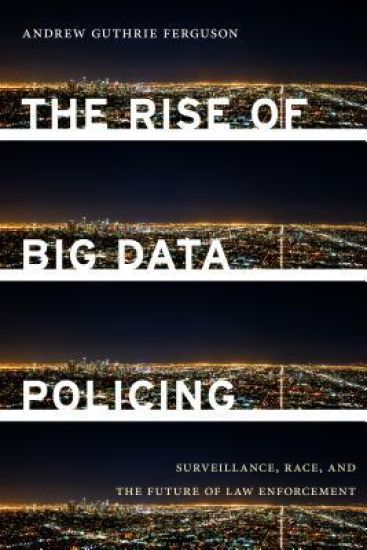
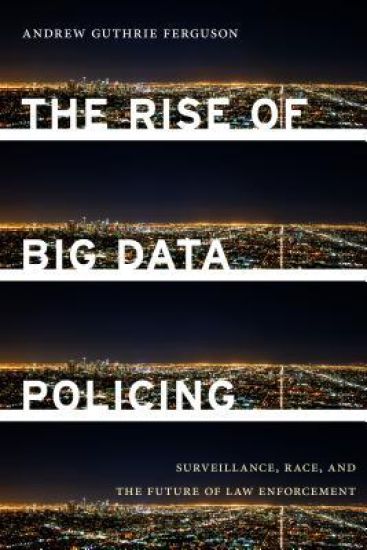
Winner, 2018 Law & Legal Studies PROSE Award The consequences of big data and algorithm-driven policing and its impact on law enforcement In a high-tech command center in downtown Los Angeles, a digital map lights up with 911 calls, television monitors track breaking news stories, surveillance cameras sweep the streets, and rows of networked computers link analysts and police officers to a wealth of law enforcement intelligence. This is just a glimpse into a future where software predicts future crimes, algorithms generate virtual "most-wanted" lists, and databanks collect personal and biometric information. The Rise of Big Data Policing introduces the cutting-edge technology that is changing how the police do their jobs and shows why it is more important than ever that citizens understand the far-reaching consequences of big data surveillance as a law enforcement tool. Andrew Guthrie Ferguson reveals how these new technologies —viewed as race-neutral and objective—have been eagerly adopted by police departments hoping to distance themselves from claims of racial bias and unconstitutional practices. After a series of high-profile police shootings and federal investigations into systemic police misconduct, and in an era of law enforcement budget cutbacks, data-driven policing has been billed as a way to "turn the page" on racial bias. But behind the data are real people, and difficult questions remain about racial discrimination and the potential to distort constitutional protections. In this first book on big data policing, Ferguson offers an examination of how new technologies will alter the who, where, when and how we police. These new technologies also offer data-driven methods to improve police accountability and to remedy the underlying socio-economic risk factors that encourage crime. The Rise of Big Data Policing is a must read for anyone concerned with how technology will revolutionize law enforcement and its potential threat to the security, privacy, and constitutional rights of citizens. Read an excerpt and interview with Andrew Guthrie Ferguson in The Economist.
The Rise of Big Data Policing

The Rise of Big Data Policing

Andrew Guthrie Ferguson

New York University Press
2017
sidottu
Winner, 2018 Law & Legal Studies PROSE Award The consequences of big data and algorithm-driven policing and its impact on law enforcement In a high-tech command center in downtown Los Angeles, a digital map lights up with 911 calls, television monitors track breaking news stories, surveillance cameras sweep the streets, and rows of networked computers link analysts and police officers to a wealth of law enforcement intelligence. This is just a glimpse into a future where software predicts future crimes, algorithms generate virtual "most-wanted" lists, and databanks collect personal and biometric information. The Rise of Big Data Policing introduces the cutting-edge technology that is changing how the police do their jobs and shows why it is more important than ever that citizens understand the far-reaching consequences of big data surveillance as a law enforcement tool. Andrew Guthrie Ferguson reveals how these new technologies —viewed as race-neutral and objective—have been eagerly adopted by police departments hoping to distance themselves from claims of racial bias and unconstitutional practices. After a series of high-profile police shootings and federal investigations into systemic police misconduct, and in an era of law enforcement budget cutbacks, data-driven policing has been billed as a way to "turn the page" on racial bias. But behind the data are real people, and difficult questions remain about racial discrimination and the potential to distort constitutional protections. In this first book on big data policing, Ferguson offers an examination of how new technologies will alter the who, where, when and how we police. These new technologies also offer data-driven methods to improve police accountability and to remedy the underlying socio-economic risk factors that encourage crime. The Rise of Big Data Policing is a must read for anyone concerned with how technology will revolutionize law enforcement and its potential threat to the security, privacy, and constitutional rights of citizens. Read an excerpt and interview with Andrew Guthrie Ferguson in The Economist.
Why Jury Duty Matters

Why Jury Duty Matters

Andrew Guthrie Ferguson

New York University Press
2012
pokkari
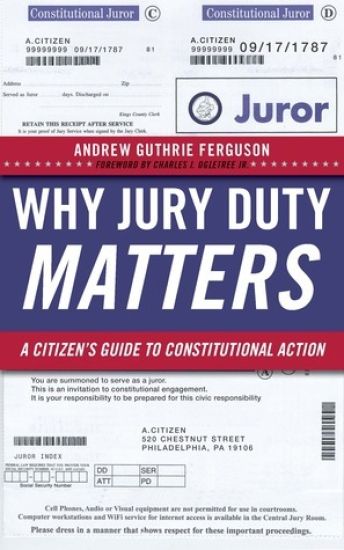
An argument for the constitutional responsibility to participate in jury duty It's easy to forget how important the jury really is to America. The right to be a juror is one of the fundamental rights guaranteed to all eligible citizens. The right to trial by jury helped spark the American Revolution, was quickly adopted at the Constitutional Convention, and is the only right that appears in both the Constitution and the Bill of Rights. But for most of us, a jury summons is an unwelcome inconvenience. Who has time for jury duty? We have things to do. In Why Jury Duty Matters, Andrew Guthrie Ferguson reminds us that whether we like it or not, we are all constitutional actors. Jury duty provides an opportunity to reflect on that constitutional responsibility. Combining American history, constitutional law, and personal experience, the book engages citizens in the deeper meaning of jury service. Interweaving constitutional principles into the actual jury experience, this book is a handbook for those Americans who want to enrich the jury experience. It seeks to reconnect ordinary citizens to the constitutional character of a nation by focusing on the important, and largely ignored, democratic lessons of the jury. Jury duty is a shared American tradition. It connects people across class and race, creates habits of focus and purpose, and teaches values of participation, equality, and deliberation. We know that juries are important for courts, but we don't know that jury service is important for democracy. This book inspires us to re-examine the jury experience and act on the constitutional principles that guide our country before, during, and after jury service.
Why Jury Duty Matters

Why Jury Duty Matters

Andrew Guthrie Ferguson

New York University Press
2012
sidottu
An argument for the constitutional responsibility to participate in jury duty It's easy to forget how important the jury really is to America. The right to be a juror is one of the fundamental rights guaranteed to all eligible citizens. The right to trial by jury helped spark the American Revolution, was quickly adopted at the Constitutional Convention, and is the only right that appears in both the Constitution and the Bill of Rights. But for most of us, a jury summons is an unwelcome inconvenience. Who has time for jury duty? We have things to do. In Why Jury Duty Matters, Andrew Guthrie Ferguson reminds us that whether we like it or not, we are all constitutional actors. Jury duty provides an opportunity to reflect on that constitutional responsibility. Combining American history, constitutional law, and personal experience, the book engages citizens in the deeper meaning of jury service. Interweaving constitutional principles into the actual jury experience, this book is a handbook for those Americans who want to enrich the jury experience. It seeks to reconnect ordinary citizens to the constitutional character of a nation by focusing on the important, and largely ignored, democratic lessons of the jury. Jury duty is a shared American tradition. It connects people across class and race, creates habits of focus and purpose, and teaches values of participation, equality, and deliberation. We know that juries are important for courts, but we don't know that jury service is important for democracy. This book inspires us to re-examine the jury experience and act on the constitutional principles that guide our country before, during, and after jury service.