Kirjojen hintavertailu. Mukana 12 564 825 kirjaa ja 12 kauppaa.

Kirjailija

Andrew Horton

Kirjat ja teokset yhdessä paikassa: 9 kirjaa, julkaisuja vuosilta 1992-2020, suosituimpien joukossa Ernie Kovacs & Early TV Comedy. Vertaile teosten hintoja ja tarkista saatavuus suomalaisista kirjakaupoista.

9 kirjaa

Kirjojen julkaisuhaarukka 1992-2020.

Ernie Kovacs & Early TV Comedy

Ernie Kovacs & Early TV Comedy

Andrew Horton

University of Texas Press
2010
pokkari
Among the pioneers of television, Ernie Kovacs was one of the most original and imaginative comedians. His zany, irreverent, and surprising humor not only entertained audiences throughout the 1950s and early 1960s, but also inspired a host of later comedies and comedians, including Monty Python, David Letterman, much of Saturday Night Live, Rowan and Martin's Laugh-In, Captain Kangaroo, and even Sesame Street. Kovacs created laughter through wildly creative comic jokes, playful characterizations, hilarious insights, and wacky experiments. "Nothing in moderation," his motto and epitaph, sums up well Kovacs's wholehearted approach to comedy and life. In this book, Andrew Horton offers the first sustained look at Ernie Kovacs's wide-ranging and lasting contributions to the development of TV comedy. He discusses in detail Kovacs's work in New York, which included The Ernie Kovacs Show (CBS prime time 1952–1953), The Ernie Kovacs Show (NBC daytime variety 1956–1957), Tonight (NBC late-night comedy/variety 1956-1957), and a number of quiz shows. Horton also looks at Kovacs's work in Los Angeles and in feature film comedy. He vividly describes how Kovacs and his comic co-conspirators created offbeat characters and zany situations that subverted expectations and upended the status quo. Most of all, Horton demonstrates that Kovacs grasped the possibility for creating a fresh genre of comedy through the new medium of television and exploited it to the fullest.
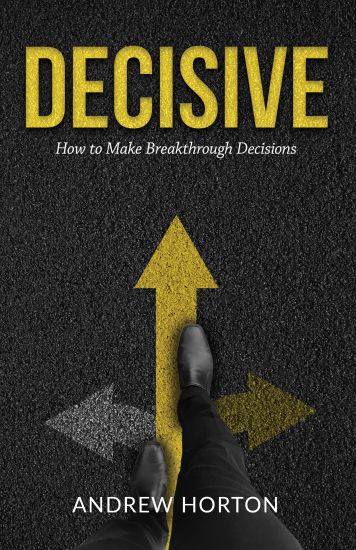
Decisive: How to Make Breakthrough Decisions
This book will help you make better decisions. It will also give you an edge as a leader by introducing you to the game changing theory of Causal Economics. Successful people work hard, yet there's a deeper, common thread that guides them forward--powerful decisions. Do you want to make better decisions? Do you NEED to make better decisions? Are you relying on outdated management decision theories?Andrew Horton helps leaders change their organizations and the world through better decisions. As the founder of an exciting new stream of Behavioral Economics--Causal Economics--and an award-winning technology marketing executive with more than 20 years direct experience making big impact decisions--his perspective is unique. His work is published in peer reviewed academic journals and he is regularly called upon to make submissions and review those of others. Andrew's expertise is constantly in demand from top brands. He holds an advanced economics degree from Western University and an MBA from The Ivey School of Business."DECISIVE presents a fresh approach to leadership decision making. It's not the same old buzzwords, being grounded in equally innovative economic principles." John Cardella, Former CPO, Ceridian, Canada."This book is a refreshing chance to think outside the box.". Carl Gomez, Former Economist with TD and RBC."No matter what your current leadership expertise, DECISIVE can help you look deeper and potentially get better." Eric Sorrentino, Chapter President, Ivey Alumni Network, London, Ontario.
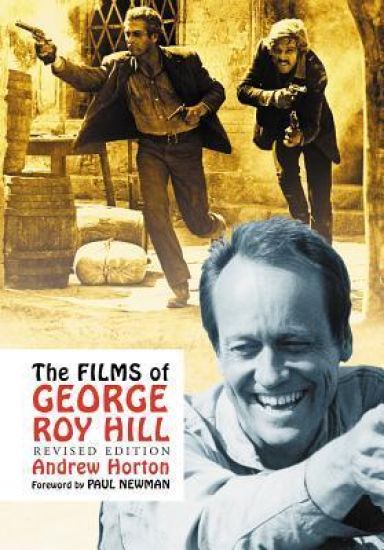
The Films of George Roy Hill, rev. ed.

The Films of George Roy Hill, rev. ed.

Andrew Horton

McFarland Co Inc
2010
pokkari
As late as 1976, George Roy Hill was the first and only director to have two all-time, top-ten, box-office hits: Butch Cassidy and the Sundance Kid and The Sting (both starring Robert Redford and Paul Newman). A filmmaker with backgrounds in music, drama and television, he was a popular storyteller. His films reflect an ironic, bittersweet vision of life. The stories entertain, but the subtext is often disturbing. Hill felt that all of his major characters "create an environment, a fantasy, an illusion, and then go on to make it happen." Individual chapters study in detail the art, craft and style of each of his films, including Period of Adjustment, Toys in the Attic, The World of Henry Orient, Hawaii, The Great Waldo Pepper, Slap Shot, Thoroughly Modern Millie, Slaughterhouse Five, A Little Romance, The World According to Garp, The Little Drummer Girl and Hill's last, Funny Farm.
Screenwriting for a Global Market

Screenwriting for a Global Market

Andrew Horton; Bernard Gordon

University of California Press
2004
pokkari
Cinema is a truly global phenomenon and screenwriters who limit their ambitions to Hollywood can unnecessarily limit their careers. This book, loaded with information on every page, provides the practical know-how for breaking into the global marketplace. It is the first book to offer specific advice on writing for screens large and small, around the world from Hollywood to New Zealand, from Europe to Russia, and for alternative American markets including Native American, regional, and experimental. The book provides valuable insider information, such as: Twenty-five per cent of German television is written by Hollywood writers. Screenwriters just need to know how to reach that market; Many countries, including those in the European Union, have script development money available - to both foreign and local talent - from government-sponsored film funds; and, the web's influence on the film industry has been profound, and here you can find out how to network through the web. The book also lists the key web addresses for writers. Andrew Horton, author of two acclaimed books on screenwriting, includes personal essays by accomplished screenwriters from around the world and offers insightful case studies of several films and television scripts, among them: "My Big Fat Greek Wedding"; "Crouching Tiger, Hidden Dragon"; and, "The Sopranos". Full of endless enthusiasm for great films and great scripts, this book will be an essential resource for both aspiring writers and accomplished writers hoping to expand their horizons, improve their skills, and increase their chances for success. It includes an interview with Terry Gilliam and contributions from: Bernard Gordon, writer for "The Day of the Triffids" and "The Thin Red Line"; Lew Hunter, Chair of Screenwriting at UCLA; Karen Hall, writer/producer for "Judging Amy" and "M*A*S*H"; and other screenwriters.
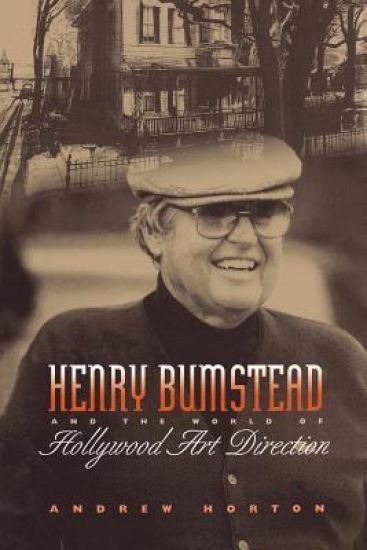
Henry Bumstead and the World of Hollywood Art Direction

Henry Bumstead and the World of Hollywood Art Direction

Andrew Horton

University of Texas Press
2003
pokkari
From a hotel in Marrakech in The Man Who Knew Too Much, to small-town Alabama in To Kill a Mockingbird, to Mission Control in Space Cowboys, creating a fictional, yet wholly believable world in which to film a movie has been the passion and life's work of Henry Bumstead, one of Hollywood's most celebrated production designers. In a career that has spanned nearly seventy years, Bumstead has worked on more than one hundred movies and television films. His many honors include Academy Awards for Art Direction for To Kill a Mockingbird and The Sting, as well as nominations for Vertigo and The Unforgiven. This popularly written and extensively illustrated book tells the intertwining stories of Henry Bumstead's career and the evolution of Hollywood art direction. Andrew Horton combines his analysis of Bumstead's design work with wide-ranging interviews in which Bumstead talks about working with top directors, including Alfred Hitchcock, George Roy Hill, Robert Mulligan, and Clint Eastwood, as well as such stars as Paul Newman, Robert Redford, Doris Day, Jimmy Stewart, Sidney Poitier, Bill Cosby, Jerry Lewis, and James Cagney. Numerous production drawings, storyboards, and film stills illustrate how Bumstead's designs translated to film. This portrait of Bumstead's career underscores an art director's crucial role in shaping the look of a film and also tracks the changes in production design from the studio era through location shooting to today's use of high-tech special effects.
Writing the Character-Centered Screenplay, Updated and Expanded edition
'We need good screenwriters who understand character'. Everywhere Andrew Horton traveled in researching this book - from Hollywood to Hungary - he heard the same refrain. Yet most of the standard how-to books on screenwriting follow the film industry's earlier lead in focusing almost exclusively on plot and formulaic structures. With this book, Horton, a film scholar and successful screenwriter, provides the definitive work on the character-based screenplay. Exceptionally wide-ranging - covering American, international, mainstream, and 'off-Hollywood' films, as well as television - the book offers creative strategies and essential practical information. Horton begins by placing screenwriting in the context of the storytelling tradition, arguing through literary and cultural analysis that all great stories revolve around a strong central character. He then suggests specific techniques and concepts to help any writer - whether new or experienced - build more vivid characters and screenplays. Centering his discussion around four film examples - including "Thelma & Louise" and "The Silence of the Lambs" - and the television series, "Northern Exposure", he takes the reader step-by-step through the screenwriting process, starting with the development of multi-dimensional characters and continuing through to rewrite. Finally, he includes a wealth of information about contests, fellowships, and film festivals. Espousing a new, character-based approach to screenwriting, this engaging, insightful work will prove an essential guide to all of those involved in the writing and development of film scripts.
Laughing Out Loud

Laughing Out Loud

Andrew Horton

University of California Press
2000
pokkari
Whoever wrote "Make 'em laugh!" knew that it's easier said than done. But people love to laugh, and good comedy will always sell. With the help of this complete and entertaining guide, writers and would-be writers for film and television can look forward to writing comedy that goes far beyond stereotypic jokes and characters. In "Laughing Out Loud", award-winning screenwriter and author Andrew Horton blends history, theory, and analysis of comedy with invaluable advice. Using examples from Chaplin to Seinfeld, Aristophanes to Woody Allen, Horton describes comedy as a perspective rather than merely as a genre and then goes on to identify the essential elements of comedy. His lively overview of comedy's history traces its two main branches - anarchistic comedy and romantic comedy - from ancient Greece through contemporary Hollywood, by way of commedia dell'arte, vaudeville, and silent movies. Television and international cinema are included in Horton's analysis, which leads into an up-close review of the comedy chemistry in a number of specific films and television shows. The rest of the book is a practical guide to writing feature comedy and episodic TV comedy, complete with schedules and exercises designed to unblock any writer's comic potential. The appendices offer tips on networking, marketing, and even producing comedies, and are followed by a list of recommended comedies and a bibliography.
The Films of Theo Angelopoulos

The Films of Theo Angelopoulos

Andrew Horton

Princeton University Press
1999
pokkari
Greek film director Theo Angelopoulos is one of the most influential and widely respected filmmakers in the world today, yet his films are still largely unknown to the American public. In the first book in English to focus on Angelopoulos's unique cinematic vision, Andrew Horton provides an illuminating contextual study that attempts to demonstrate the quintessentially Greek nature of the director's work. Horton situates the director in the context of over 3,000 years of Greek culture and history. Somewhat like Andrei Tarkovsky in Russia or Antonioni in Italy, Angelopoulos has used cinema to explore the history and individual identities of his culture. With such far-reaching influences as Greek myth, ancient tragedy and epic, Byzantine iconography and ceremony, Greek and Balkan history, modern Greek pop culture including bouzouki music, shadow puppet theater, and the Greek music hall tradition, Angelopoulos emerges as an original "thinker" with the camera, and a distinctive director who is bound to make a lasting contribution to the art form. In a series of films including The Travelling Players, Voyage to Cythera, Landscape in the Mist, The Suspended Step of the Stork, and most recently in Ulysses' Gaze starring Harvey Keitel (winner of the 1995 Cannes Film Festival Grand Prix), Angelopoulos has developed a remarkable cinematic style, characterized by carefully composed scenes and an enormous number of extended long shots. In an age of ever decreasing attention spans, Angelopoulos offers a cinema of contemplation.
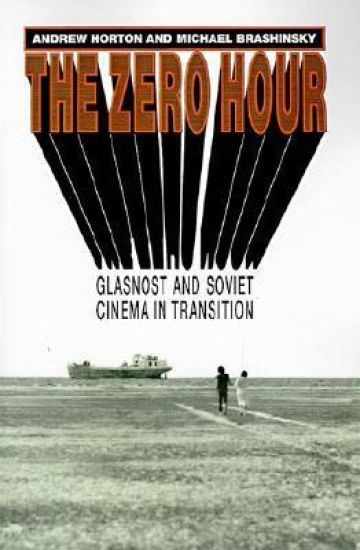
The Zero Hour

The Zero Hour

Andrew Horton; Michael Brashinsky

Princeton University Press
1992
pokkari
Now faced with the "zero hour" created by a new freedom of expression and the dramatic breakup of the Soviet Union, Soviet cinema has recently become one of the most interesting in the world, aesthetically as well as politically. How have Soviet filmmakers responded to the challenges of glasnost? To answer this question, the American film scholar Andrew Horton and the Soviet critic Michael Brashinsky offer the first book-length study of the rapid changes in Soviet cinema that have been taking place since 1985. What emerges from their collaborative dialogue is not only a valuable work of film criticism but also a fascinating study of contemporary Soviet culture in general. Horton and Brashinsky examine a wide variety of films from BOMZH (initials standing for homeless drifter) through Taxi Blues and the glasnost blockbuster Little Vera to the Latvian documentary Is It Easy to Be Young? and the "new wave" productions of the "Wild Kazakh boys." The authors argue that the medium that once served the Party became a major catalyst for the deconstruction of socialism, especially through documentary filmmaking. Special attention is paid to how filmmakers from 1985 through 1990 represent the newly "discovered" past of the pre-glasnost era and how they depict troubled youth and conflicts over the role of women in society. The book also emphasizes the evolving uses of comedy and satire and the incorporation of "genre film" techniques into a new popular cinema. An intriguing discussion of films of Georgia, Estonia, Latvia, Lithuania, and Kazakhstan ends the work.