
Kirjailija
Andrew Hoskins
Kirjat ja teokset yhdessä paikassa: 13 kirjaa, julkaisuja vuosilta 2004-2026, suosituimpien joukossa Memorybot. Vertaile teosten hintoja ja tarkista saatavuus suomalaisista kirjakaupoista.
13 kirjaa
Kirjojen julkaisuhaarukka 2004-2026.

Snapchat’s apparent guarantor of ephemerality for its users reflects a key theme of digital media and everyday life, namely privacy as a central concern and pursuit of those active in using digital and social media. Snapchat is also indicative of the compulsion of connectivity and an example of the reciprocal, or rather the obligatory, nature of retweeting, following, linking and liking required to establish and sustain digital presence and value. Covering topics such as Snapchat's Spectacles, sexting, cyber bullying and privacy, this short student-friendly book will explore the history, business model, cultural impact, and future of the 'snap.' Discussion questions and further resources help students to engage critically with the way Snapchat impacts everyday life.
Sharded Media is the story of how the unleashing of individual public opinion and rage became the most valuable of political currency. The digital’s sharding of experience through personal networks, platforms, recommendations and peer-linked sources, has splintered political awareness, experience and activity. Rage, resentment, hypocrisy, and a hyporeal, self-curated reality, have fractured the political landscape. This book takes the rise of Donald J. Trump as both a symptom and a catalyst of this phenomenon, embodying the public's disenchantment with liberal democracy and its embrace of a more visceral, emotionally-driven politics. We consider how economic devastation wrought by global neoliberalism and zombie capitalism fuelled public rage against the mainstream, ending in a supreme yet odd coalition for Trump, with an elite which leveraged technology with anti-democratic sentiments to further its goals. We show how the liberal mainstream news media (MSM) made facts and truth their USP, their core pitch for trust, in precisely the period when they became most elusive. It was the MSM that seduced a middle ground of America to believe that they were reality, pushing the deplorables to its margins, until the margins became the reality.

Radical War: Data, Attention and Control in the Twenty-First Century
Matthew Ford; Andrew Hoskins
Oxford University Press
2022
nidottu
This book examines the digital explosion that has ripped across the battlefield, weaponizing our attention and making everyone a participant in wars without end. "Smart" devices, apps, archives and algorithms remove the bystander from war, collapsing the distinctions between audience and actor, soldier and civilian, media and weapon. This has ruptured our capacity to make sense of war. Now we are all either victims or perpetrators. In Radical War, Ford and Hoskins reveal how contemporary war is legitimized, planned, fought, experienced, remembered and forgotten in a continuous and connected way, through digitally saturated fields of perception. Plotting the emerging relationship between data, attention and the power to control war, the authors chart the complex digital and human interdependencies that sustain political violence today. Through a unique, interdisciplinary lens, they map our disjointed experiences of conflict and illuminate this dystopian new ecology of war.
This book examines the digital explosion that has ripped across the battlefield, weaponising our attention and making everyone a participant in wars without end. 'Smart' devices, apps, archives and algorithms remove the bystander from war, collapsing the distinctions between audience and actor, soldier and civilian, media and weapon. This has ruptured our capacity to make sense of war. Now we are all either victims or perpetrators. In 'Radical War', Ford and Hoskins reveal how contemporary war is legitimised, planned, fought, experienced, remembered and forgotten in a continuous and connected way, through digitally saturated fields of perception. Plotting the emerging relationship between data, attention and the power to control war, the authors chart the complex digital and human interdependencies that sustain political violence today. Through a unique, interdisciplinary lens, they map our disjointed experiences of conflict and illuminate this dystopian new ecology of war.
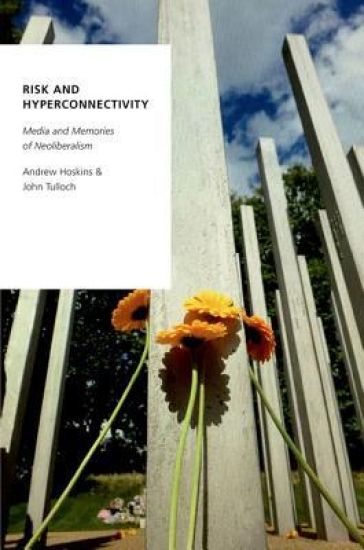
Risk and Hyperconnectivity brings together for the first time three paradigms: new risk theory, neoliberalization theory, and connectivity theory, to illuminate how the kaleidoscope of risk events in the opening years of the new century has recharged a neoliberal battlespace of media, economy, and security. Hoskins and Tulloch argue that hyperconnectivity is both a conduit of risk and a form of risk in itself, and that it alters the ways in which we experience events and remember them. Through interdisciplinary dialogue and case study analysis they offer original perspectives on the key questions of risk of our age, including: What is the path to a 'balance' between individual privacy and state (or corporate) security? Is hyperconnectivity itself a new risk condition of our time? How do remembering and forgetting shape citizen insecurity and cultures of risk, and legitimize neoliberal governance? How do journalists operate as 'public intellectuals' of risk? Through probing a series of risk events that have already scarred the twenty-first century, Hoskins and Tulloch show how both established and emergent media are central in shaping past, present and future horizons of neoliberalism, while also propelling wide pressure for its alternatives on those ranging from economics students worldwide to potential political leaders cultivated by austerity policies.
Risk and Hyperconnectivity brings together for the first time three paradigms: new risk theory, neoliberalization theory, and connectivity theory, to illuminate how the kaleidoscope of risk events in the opening years of the new century has recharged a neoliberal battlespace of media, economy, and security. Hoskins and Tulloch argue that hyperconnectivity is both a conduit of risk and a form of risk in itself, and that it alters the ways in which we experience events and remember them. Through interdisciplinary dialogue and case study analysis they offer original perspectives on the key questions of risk of our age, including: What is the path to a balance between individual privacy and state (or corporate) security? Is hyperconnectivity itself a new risk condition of our time? How do remembering and forgetting shape citizen insecurity and cultures of risk, and legitimize neoliberal governance? How do journalists operate as public intellectuals of risk? Through probing a series of risk events that have already scarred the twenty-first century, Hoskins and Tulloch show how both established and emergent media are central in shaping past, present and future horizons of neoliberalism, while also propelling wide pressure for its alternatives on those ranging from economics students worldwide to potential political leaders cultivated by austerity policies.
This book examines the circulation and effects of radical discourse by analysing the role of mass media coverage in promoting or hindering radicalisation and acts of political violence.There is a new environment of conflict in the post-9/11 age, in which there appears to be emerging threats to security and stability in the shape of individuals and groups holding or espousing radical views about religion, ideology, often represented in the media as oppositional to Western values. This book asks what, if anything is new about these radicalising discourses, how and why they relate to political acts of violence and terror, and what the role of the mass media is in promoting or hindering them.This includes exploring how the acts themselves and explanations for them on the web are picked up and represented in mainstream television news media or Big Media, through the journalistic and editorial uses of words, phrases, graphics, images, and videos. It analyses how interpretations of the term 'radicalisation' are shaped by news representations through investigating audience responses, understandings and misunderstandings. Transnational in scope, this book seeks to contribute to an understanding of the connectivity and relationships that make up the new media ecology, especially those that appear to transcend the local and the global, accelerate the dissemination of radicalising discourses, and amplify media/public fears of political violence.This book will be of interest to students of security studies, media studies, terrorism studies, political science and sociology.
This book examines the circulation and effects of radical discourse by analysing the role of mass media coverage in promoting or hindering radicalisation and acts of political violence.There is a new environment of conflict in the post-9/11 age, in which there appears to be emerging threats to security and stability in the shape of individuals and groups holding or espousing radical views about religion, ideology, often represented in the media as oppositional to Western values. This book asks what, if anything is new about these radicalising discourses, how and why they relate to political acts of violence and terror, and what the role of the mass media is in promoting or hindering them.This includes exploring how the acts themselves and explanations for them on the web are picked up and represented in mainstream television news media or Big Media, through the journalistic and editorial uses of words, phrases, graphics, images, and videos. It analyses how interpretations of the term 'radicalisation' are shaped by news representations through investigating audience responses, understandings and misunderstandings. Transnational in scope, this book seeks to contribute to an understanding of the connectivity and relationships that make up the new media ecology, especially those that appear to transcend the local and the global, accelerate the dissemination of radicalising discourses, and amplify media/public fears of political violence.This book will be of interest to students of security studies, media studies, terrorism studies, political science and sociology.
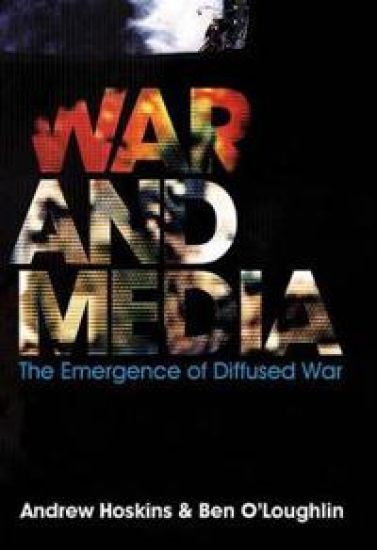
The trinity of government, military and publics has been drawn together into immediate and unpredictable relationships in a "new media ecology" that has ushered in new asymmetries in the waging of war and terror. To help us understand these new relationships, Andrew Hoskins and Ben O'Loughlin here provide a timely, comprehensive and highly readable survey of the field of war and media. War is diffused through a complex mesh of our everyday media. Paradoxically, this both facilitates and contains the presence and power of enemies near and far. The conventions of so-called traditional warfare have been splintered by the availability and connectivity of the principal locus of war today: the electronic and digital media. Hoskins and O'Loughlin identify and illuminate the conditions of what they term "diffused war" and the new challenges it raises for the actors who wage and counter warfare, for their agents and mechanisms of the new media and for mass publics. This book offers an invaluable review of the key literature and presents a fresh approach to the understanding of the dynamic relationships between war and media. It will be welcomed by a broad range of students taking courses on war and media and related modules, especially in media, communication and cultural studies, politics and international relations, sociology, journalism, and security studies.
The trinity of government, military and publics has been drawn together into immediate and unpredictable relationships in a "new media ecology" that has ushered in new asymmetries in the waging of war and terror. To help us understand these new relationships, Andrew Hoskins and Ben O'Loughlin here provide a timely, comprehensive and highly readable survey of the field of war and media. War is diffused through a complex mesh of our everyday media. Paradoxically, this both facilitates and contains the presence and power of enemies near and far. The conventions of so-called traditional warfare have been splintered by the availability and connectivity of the principal locus of war today: the electronic and digital media. Hoskins and O'Loughlin identify and illuminate the conditions of what they term "diffused war" and the new challenges it raises for the actors who wage and counter warfare, for their agents and mechanisms of the new media and for mass publics. This book offers an invaluable review of the key literature and presents a fresh approach to the understanding of the dynamic relationships between war and media. It will be welcomed by a broad range of students taking courses on war and media and related modules, especially in media, communication and cultural studies, politics and international relations, sociology, journalism, and security studies.
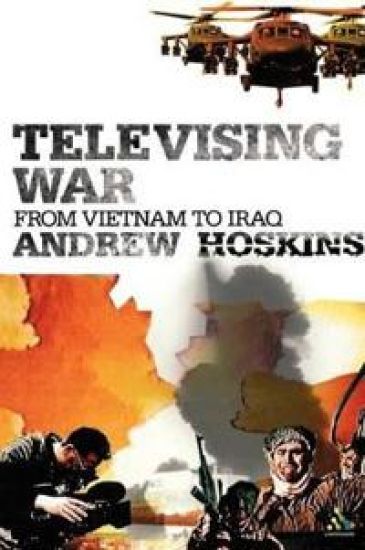
The recent Iraq War has been heavily scrutinised by all aspects of the media. Never before have so many images of conflict been so accessible to the public. Andrew Hoskins analyses the relationship the media has had on the public's perception on the Iraq war and how the governments in the US, the UK and Iraq have tried to manipulate the public conscience via the media.