Kirjojen hintavertailu. Mukana 12 152 606 kirjaa ja 12 kauppaa.
Kirjailija
Andrew J. Nathan
Kirjat ja teokset yhdessä paikassa: 13 kirjaa, julkaisuja vuosilta 1986-2022, suosituimpien joukossa Living with the Dragon. Vertaile teosten hintoja ja tarkista saatavuus suomalaisista kirjakaupoista.
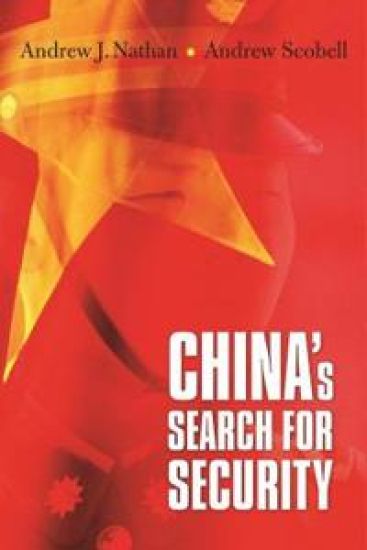
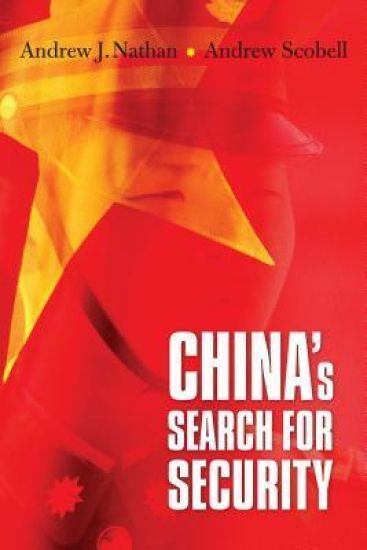
Despite its impressive size and population, economic vitality, and drive to upgrade its military, China remains a vulnerable nation surrounded by powerful rivals and potential foes. Understanding China's foreign policy means fully appreciating these geostrategic challenges, which persist even as the country gains increasing influence over its neighbors. Andrew J. Nathan and Andrew Scobell analyze China's security concerns on four fronts: at home, with its immediate neighbors, in surrounding regional systems, and in the world beyond Asia. By illuminating the issues driving Chinese policy, they offer a new perspective on the country's rise and a strategy for balancing Chinese and American interests in Asia. Though rooted in the present, Nathan and Scobell's study makes ample use of the past, reaching back into history to illuminate the people and institutions shaping Chinese strategy today. They also examine Chinese views of the United States; explain why China is so concerned about Japan; and uncover China's interests in such problematic countries as North Korea, Iran, and the Sudan. The authors probe recent troubles in Tibet and Xinjiang and explore their links to forces beyond China's borders. They consider the tactics deployed by mainland China and Taiwan, as Taiwan seeks to maintain autonomy in the face of Chinese advances toward unification. They evaluate the strengths and weaknesses of China's three main power resources-economic power, military power, and soft power. The authors conclude with recommendations for the United States as it seeks to manage China's rise. Chinese policymakers understand that their nation's prosperity, stability, and security depend on cooperation with the United States. If handled wisely, the authors believe, relations between the two countries can produce mutually beneficial outcomes for both Asia and the world.
Despite its impressive size and population, economic vitality, and drive to upgrade its military, China remains a vulnerable nation surrounded by powerful rivals and potential foes. Understanding China's foreign policy means fully appreciating these geostrategic challenges, which persist even as the country gains increasing influence over its neighbors. Andrew J. Nathan and Andrew Scobell analyze China's security concerns on four fronts: at home, with its immediate neighbors, in surrounding regional systems, and in the world beyond Asia. By illuminating the issues driving Chinese policy, they offer a new perspective on the country's rise and a strategy for balancing Chinese and American interests in Asia. Though rooted in the present, Nathan and Scobell's study makes ample use of the past, reaching back into history to illuminate the people and institutions shaping Chinese strategy today. They also examine Chinese views of the United States; explain why China is so concerned about Japan; and uncover China's interests in such problematic countries as North Korea, Iran, and the Sudan. The authors probe recent troubles in Tibet and Xinjiang and explore their links to forces beyond China's borders. They consider the tactics deployed by mainland China and Taiwan, as Taiwan seeks to maintain autonomy in the face of Chinese advances toward unification. They evaluate the strengths and weaknesses of China's three main power resources-economic power, military power, and soft power. The authors conclude with recommendations for the United States as it seeks to manage China's rise. Chinese policymakers understand that their nation's prosperity, stability, and security depend on cooperation with the United States. If handled wisely, the authors believe, relations between the two countries can produce mutually beneficial outcomes for both Asia and the world.
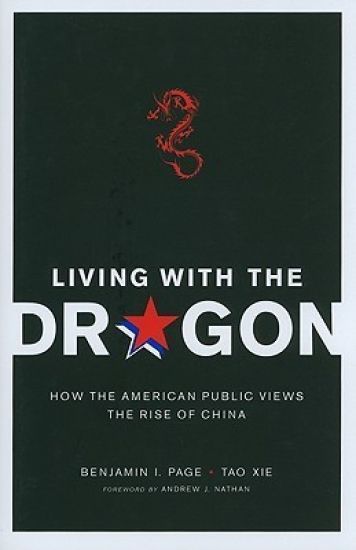
It is widely believed that most Americans not only distrust but also despise China. Considering the country's violent political history, unprecedented economic rise, and growing military capabilities, China has become America's strongest market competitor and arguably the most challenging global threat to the United States. Nevertheless, a full consideration of American opinion proves the opposite to be true. Carefully analyzing all available polls and surveys, Benjamin I. Page and Tao Xie find most Americans favor peaceful engagement with China. The public view has been surprisingly coherent and consistent, changing only in response to major events and new information. While a majority of Americans are not happy that China's economy is projected to become as large as that of the United States, they are prepared to live with it. "Unfair" Chinese trade practices and their impact on American jobs and wages are a concern, along with the quality and safety of Chinese-made goods. However, Americans favor free trade with China, provided it is tempered with environmental and workplace protections. They also believe that the United States should "balance" Chinese power through alliances with neighboring countries, such as Japan. Yet they oppose military action to defend Taiwan. Page and Xie examine these opinions in relation to facts about China and in light of current U.S. debates on diplomacy and policy.
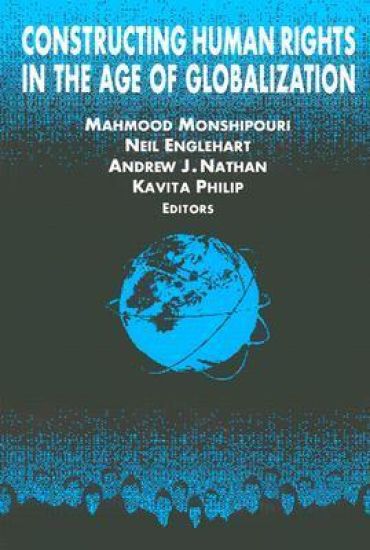
Both human rights and globalization are powerful ideas and processes, capable of transforming the world in profound ways. Notwithstanding their universal claims, however, the processes are constructed, and they draw their power from the specific cultural and political contexts in which they are constructed. Far from bringing about a harmonious cosmopolitan order, they have stimulated conflict and opposition. In the context of globalization, as the idea of human rights has become universal, its meaning has become one more terrain of struggle among groups with their own interests and goals. Part I of this volume looks at political and cultural struggles to control the human rights regime -- that is, the power to construct the universal claims that will prevail in a territory -- with respect to property, the state, the environment, and women. Part II examines the dynamics and counterdynamics of transnational networks in their interactions with local actors in Iran, China, and Hong Kong. Part III looks at the prospects for fruitful human rights dialogiue between competing universalisms that by definition are intolerant of conradiction and averse to compromise.
Both human rights and globalization are powerful ideas and processes, capable of transforming the world in profound ways. Notwithstanding their universal claims, however, the processes are constructed, and they draw their power from the specific cultural and political contexts in which they are constructed. Far from bringing about a harmonious cosmopolitan order, they have stimulated conflict and opposition. In the context of globalization, as the idea of human rights has become universal, its meaning has become one more terrain of struggle among groups with their own interests and goals. Part I of this volume looks at political and cultural struggles to control the human rights regime -- that is, the power to construct the universal claims that will prevail in a territory -- with respect to property, the state, the environment, and women. Part II examines the dynamics and counterdynamics of transnational networks in their interactions with local actors in Iran, China, and Hong Kong. Part III looks at the prospects for fruitful human rights dialogiue between competing universalisms that by definition are intolerant of conradiction and averse to compromise.
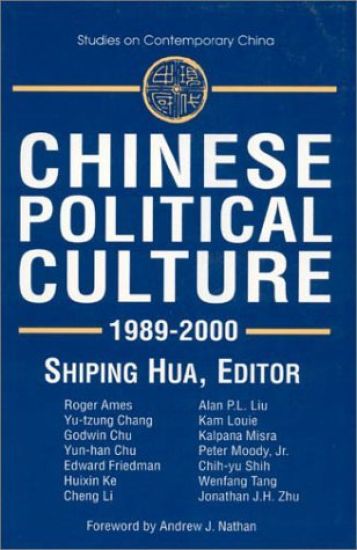
Until this book, there has been no comprehensive, methodologically aware study of all aspects of Chinese political culture. The book is organized into three major areas: Chinese identities and popular culture (regional identities, anti-politics attitudes, Hong Kong identity); public opinion surveys (the Beijing area, Chinese workers, the Shanghai area); and ideological debates (the "new" Confucianism, masculinity and Confucianism, why authoritarianism is popular in China, the decline of Chinese official ideology). Here is the first work that reveals just how much, how rapidly, and how dramatically China is changing and why our perceptions of China must keep pace.
Until this book, there has been no comprehensive, methodologically aware study of all aspects of Chinese political culture. The book is organized into three major areas: Chinese identities and popular culture (regional identities, anti-politics attitudes, Hong Kong identity); public opinion surveys (the Beijing area, Chinese workers, the Shanghai area); and ideological debates (the "new" Confucianism, masculinity and Confucianism, why authoritarianism is popular in China, the decline of Chinese official ideology). Here is the first work that reveals just how much, how rapidly, and how dramatically China is changing and why our perceptions of China must keep pace.
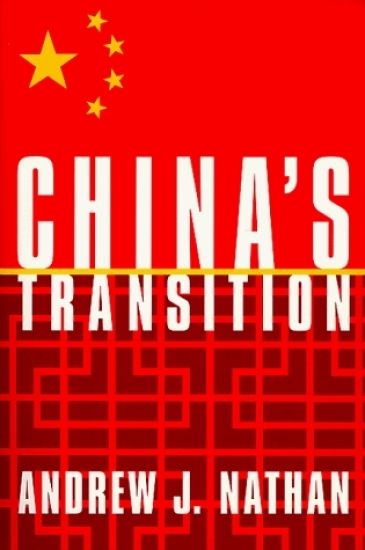
With more than one billion people, China represents both an ocean of economic opportunity and a frustrating backwater of continuing brutal political repression. What are the prospects for democratic evolution in a nation with one of the world's poorest human rights records? How have other nations responded to China since the recent, dramatic opening of its economic system-and how should they respond in the future? These are some of the most important questions confronting both the United States and the international community. On democracy, human rights, and the move to integrate China into the international economy; on Mao Zedong's regime and the reform since his death; and on the Taiwan experiment and Hong Kong's reintegration with China, Nathan offers an accessible introduction to the intricate web of contemporary Chinese politics and China's changing place in the global system.
Many see China and the United States on the path to confrontation. The Chinese leadership violates human rights norms. It maintains a harsh rule in Tibet, spars aggressively with Taiwan, and is clamping down on Hong Kong. A rising power with enormous assets, China increasingly considers American interests an obstacle to its own. But, the authors argue, the United States is the least of China's problems. Despite its sheer size, economic vitality, and drive to upgrade its military forces, China remains a vulnerable power, crowded on all sides by powerful rivals and potential foes. As it has throughout its history, China faces immense security challenges, and their sources are at and within China's own borders. China's foreign policy is calibrated to defend its territorial integrity against antagonists who are numerous, near, and strong. The authors trace the implications of this central point for China's relations with the United States and the rest of the world.
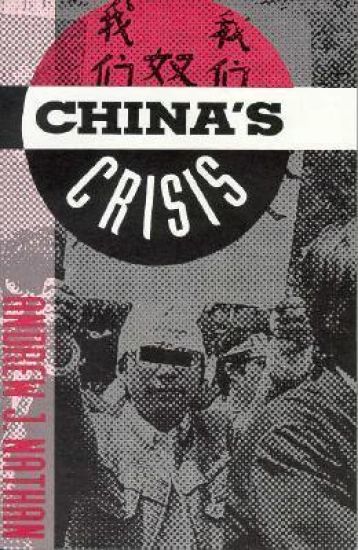
Nathan explored the roots of the Tiananmen tragedy in Deng Xiaoping's ten-year reform. How will cultural values and attitudes shape China's political development? What will be the impact of Taiwan, Hong Kong, and the West? Drawing on ground-breaking empirical research, Nathan measures the expectations of individual Chinese and their attitudes toward government and democracy.
What do the Chinese mean when they say that their political systems is "democratic"? With recent improvements in relations between China and the West, this question is basic to an understanding of the Chinese people in their state. In Chinese Democracy, Andrew Nathan investigates in depth the nature and meaning of "democracy" in China today, beginning with a vivid history of the short-lived Democracy Movement of 1978-1981, when groups of young people in a number of Chinese cities started issuing outspoken publications and putting up posters detailing their complaints and opinions. Nathan constructs - for the first time - a poignant picture of this burst of liberal activity, and at the same time he shows how distinctly Chinese it was and how the roots of its failure lay as much in history as in current political necessity. readers of this book will gain a new perspective on the nature of democracy as the Chinese practice it.