Kirjojen hintavertailu. Mukana 12 459 402 kirjaa ja 12 kauppaa.

Kirjailija

Andrew J. Williams

Kirjat ja teokset yhdessä paikassa: 10 kirjaa, julkaisuja vuosilta 2012-2024, suosituimpien joukossa Conflict and Development. Vertaile teosten hintoja ja tarkista saatavuus suomalaisista kirjakaupoista.

10 kirjaa

Kirjojen julkaisuhaarukka 2012-2024.

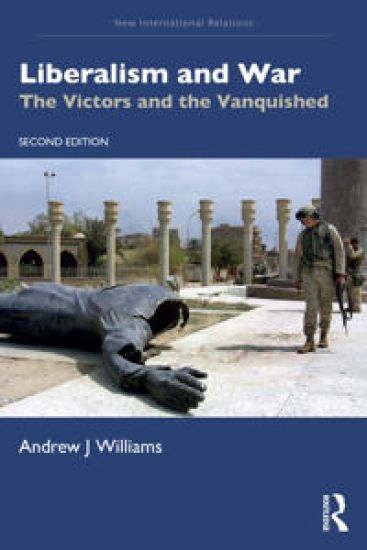
Liberalism and War

Liberalism and War

Andrew J. Williams

TAYLOR FRANCIS LTD
2024
nidottu
In this book, leading scholar Andrew J. Williams examines contemporary liberal thinking on the ending of wars and puts it into its historical context. Using a vast range of archival material, he examines the main strategies used by liberal states to consolidate their gains in the aftermath of war and prevent conflict re-occurring.Considering historical wars from the nineteenth century to the withdrawal from Afghanistan in 2021 and the war in Ukraine since 2022, Williams explores the continuities and changes within western liberalism in response to war and the encouragement of peace. These include, in recent times, the emergence of ‘neoliberalism’, a growing revulsion against ‘humanitarian intervention’ and the evolution of legal attempts to control illiberal regimes. He shows how liberalism and the articulation of international norms and institutions sprang out of historical traditions linked to colonialism but also out of a desire to promote liberty and justice. He examines the attitudes and practices that have distorted liberalism’s essentially emancipatory nature into one that has encouraged hubris in foreign policy and an increasingly divisive set of economic, political and social policies. He suggests that a new liberal impulse to encourage the spread of democracy and international justice is possible, one that returns to a more realistic approach to intervention in international conflicts.The book will appeal to scholars and students of war, conflict and political theory interested in the historical perceptions at the heart of many of the mistakes made by liberalism in the ending of wars. It will also give hope to those who still believe that liberalism can be the organising feature of a just and equitable world order.
Liberalism and War

Liberalism and War

Andrew J. Williams

TAYLOR FRANCIS LTD
2024
sidottu
In this book, leading scholar Andrew J. Williams examines contemporary liberal thinking on the ending of wars and puts it into its historical context. Using a vast range of archival material, he examines the main strategies used by liberal states to consolidate their gains in the aftermath of war and prevent conflict re-occurring.Considering historical wars from the nineteenth century to the withdrawal from Afghanistan in 2021 and the war in Ukraine since 2022, Williams explores the continuities and changes within western liberalism in response to war and the encouragement of peace. These include, in recent times, the emergence of ‘neoliberalism’, a growing revulsion against ‘humanitarian intervention’ and the evolution of legal attempts to control illiberal regimes. He shows how liberalism and the articulation of international norms and institutions sprang out of historical traditions linked to colonialism but also out of a desire to promote liberty and justice. He examines the attitudes and practices that have distorted liberalism’s essentially emancipatory nature into one that has encouraged hubris in foreign policy and an increasingly divisive set of economic, political and social policies. He suggests that a new liberal impulse to encourage the spread of democracy and international justice is possible, one that returns to a more realistic approach to intervention in international conflicts.The book will appeal to scholars and students of war, conflict and political theory interested in the historical perceptions at the heart of many of the mistakes made by liberalism in the ending of wars. It will also give hope to those who still believe that liberalism can be the organising feature of a just and equitable world order.
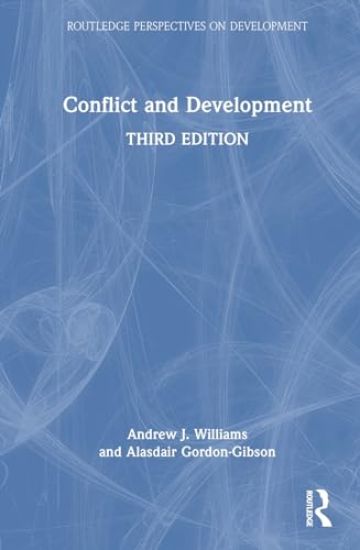
Conflict and Development

Conflict and Development

Andrew J. Williams; Alasdair Gordon-Gibson

TAYLOR FRANCIS LTD
2024
sidottu
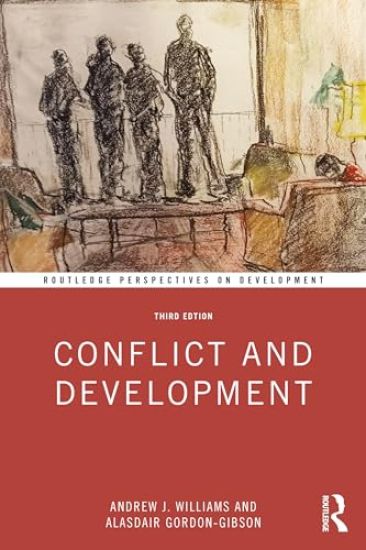
Fully revised and updated in its third edition, this timely book brings together the study of conflict and war and the problems surrounding the economic development of developing societies that are most prone to experiencing problems in moving on after war.The book does so by reflecting on the issues surrounding war as it unfolds and after it has (in principle) ‘ended’, within the context of the history, present-day problems and future prospects. The book aims to highlight the possibilities, successes and failures of past and present policies that bring ‘development’ to countries and peoples that want to be more involved in deciding their own futures after conflict and war, and often find themselves subject to what can be seen as arbitrary and even alien ways of thinking and acting by institutions in which they theoretically have membership and agency but often do not in practice. The case studies have been fully updated to reflect changes and developments since the second edition of this text, and there are questions at the end of each chapter to promote reflection. This new edition presents a deeper dive into the history of conflict and the emergence of new theories and policy guidance about present and future options in the fields of conflict and development.Accessible and engaging, this textbook is a pivotal resource for a nexus of subjects related to the often separated fields of conflict and development studies, as well as practitioners in this area.
Conflict and Development

Conflict and Development

Andrew J. Williams; Alasdair Gordon-Gibson

TAYLOR FRANCIS LTD
2024
nidottu
Fully revised and updated in its third edition, this timely book brings together the study of conflict and war and the problems surrounding the economic development of developing societies that are most prone to experiencing problems in moving on after war.The book does so by reflecting on the issues surrounding war as it unfolds and after it has (in principle) ‘ended’, within the context of the history, present-day problems and future prospects. The book aims to highlight the possibilities, successes and failures of past and present policies that bring ‘development’ to countries and peoples that want to be more involved in deciding their own futures after conflict and war, and often find themselves subject to what can be seen as arbitrary and even alien ways of thinking and acting by institutions in which they theoretically have membership and agency but often do not in practice. The case studies have been fully updated to reflect changes and developments since the second edition of this text, and there are questions at the end of each chapter to promote reflection. This new edition presents a deeper dive into the history of conflict and the emergence of new theories and policy guidance about present and future options in the fields of conflict and development.Accessible and engaging, this textbook is a pivotal resource for a nexus of subjects related to the often separated fields of conflict and development studies, as well as practitioners in this area.
France, Britain and the United States in the Twentieth Century: Volume 2, 1940–1961
"In his account of the relationship between France, the UK and the US Andrew Williams successfully intertwines diplomatic history with international thought. We are presented with a historical stage that includes both the doers and the thinkers of the age, and as a result this is a must read for both diplomatic historians and historians of international thought. The second in a multivolume study, this volume takes the story beyond the fall of France into the war years, the period of post-war reconstruction, and the Cold War. As with the first volume, Williams is an excellent guide, stepping over the ruins of past worlds, and introducing us to an epoch with more than its fair share of both visionaries and villains. Yet in this second volume the stakes are higher, as the United States comes to terms with its role as the paramount world power, Britain faces a world that challenges its imperial order, and France is picking up the pieces from its defeat."Lucian Ashworth,Memorial University, Canada"Following on from his outstanding first volume reviewing the complex interwar relationships between France, Britain and the United States, Williams’ second volume is an indispensable and lucid overview of the vitally important era of post-war reconstruction. From national post-war developments to institutional structures and superpower shifts, Williams examines clearly and engagingly the final passing of pre-modern power structures and the emergence of a new Europe."Amelia Hadfield, University of Surrey, UK"At a time of intense debates about Europe, the ‘Anglosphere’ and empires old and new, Andrew Williams’s book is a timely demonstration that the weight of emotion in the shaping of foreign policy and its makers should not be forgotten. Unearthing some of the ‘forces profondes’ in diplomacy and reflecting on feelings of humiliation and liberation in national constructs, Andrew Williams discusses the cultural conceptions and misconceptions that French, American and British diplomats had of each other, thereby revisiting the reasons why the ‘special relationship’ was largely a myth – but one which had tangible consequences on French and British policies in their retreat from empire. By connecting the personal and the national, the structural and accidental, Williams offers essential insights into the major conflicts of the period and their impact on diplomatic cultures across the Atlantic."Mélanie Torrent, Université Picardie Jules Verne, Amiens, FranceThe second volume of this study of France’s unique contribution to the international relations of the last century covers the period from the Fall of France in 1940 to Charles de Gaulle’s triumphant return to power in the late 1950s. France had gone from being a victorious member of the coalition with Britain and the United States that won the First World War to a defeated nation in a few short weeks. France then experienced the humiliation of collaboration with and occupation by the enemy, followed by resistance and liberation and a slow return to global influence over the next twenty years. This volume examines how these processes played out by concentrating on France’s relations with Britain and the United States, most importantly over questions of post-war order, the integration of Europe and the withdrawal from Empire.
Disease Prevention

Disease Prevention

John Frank; Ruth Jepson; Andrew J. Williams

Oxford University Press
2016
nidottu
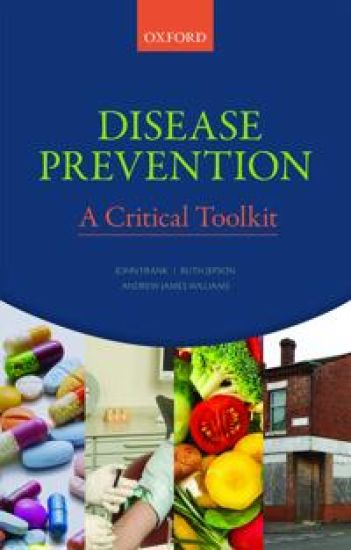
Preventive medical interventions and non-medicalised public health programmes that promise health benefits in the future, from actions taken now, carry a strong ethical requirement of 'first, do no harm' or primum non nocere. New preventive advice and interventions are being promoted on a daily basis, Disease Prevention: A Critical Toolkit provides a set of appraisal tools to guide those considering a preventive action to make sure that it is effective (does more good than harm), efficient (is a competitive use of scarce resources), and equitable in its impact across society. Case studies and worked examples illustrate the risks and benefits of specific preventive interventions. Divided into 10 chapters this practical and concise book focuses on multiple aspects of prevention including the hierarchy of preventive options; the assessment of causation; finding and appraising scientific evidence; prevention directed at entire populations (as opposed to individuals); measuring chronic disease risk factors and medically managing them: statin treatment of high cholesterol; PSA screening for prostate cancer; genetic screening for future disease risk; and assessing the health equity implications of prevention. Aimed at front-line public health and primary care professionals, Disease Prevention: A Critical Toolkit will equip them with the up-to-date skills necessary to help them better inform and serve their patients and communities.
Conflict and Development

Conflict and Development

Andrew J. Williams; Roger Macginty

Routledge
2016
sidottu
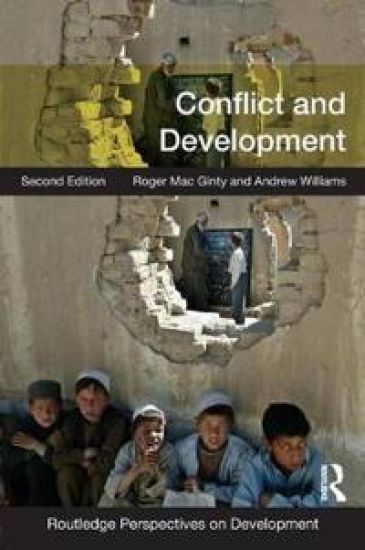
In the five years since the first edition of Conflict and Development was published the awareness of the relationship between conflicts and development has grown exponentially. Developmental factors can act as a trigger for violence, as well as for ending violence and for triggering post-conflict reconstruction. The book explores the complexity of the links between violent conflict (usually civil wars) and development, under-development and uneven development. The second edition incorporates significant changes in the field including the G7+ initiative, the New Deal on Fragile States, World Trade talks, major policy documents from the UNDP and World Bank and updates on the Afghanistan and Iraq wars.
Conflict and Development

Conflict and Development

Andrew J. Williams; Roger Macginty

Routledge
2016
nidottu
In the five years since the first edition of Conflict and Development was published the awareness of the relationship between conflicts and development has grown exponentially. Developmental factors can act as a trigger for violence, as well as for ending violence and for triggering post-conflict reconstruction. The book explores the complexity of the links between violent conflict (usually civil wars) and development, under-development and uneven development. The second edition incorporates significant changes in the field including the G7+ initiative, the New Deal on Fragile States, World Trade talks, major policy documents from the UNDP and World Bank and updates on the Afghanistan and Iraq wars.
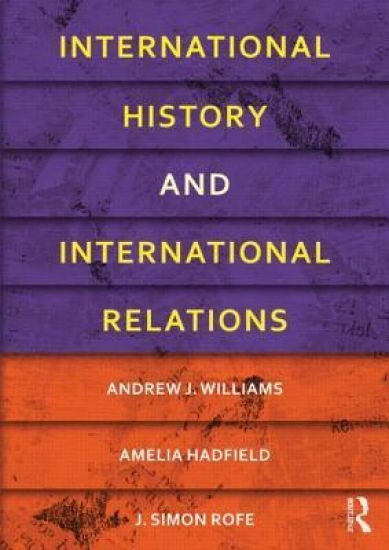
International History and International Relations

International History and International Relations

Andrew J. Williams; Amelia Hadfield; J. Simon Rofe

Routledge
2012
nidottu
This innovative new textbook seeks to provide undergraduate students of international relations with valuable and relevant historical context, bridging the gap and offering a genuinely interdisciplinary approach. Each chapter integrates both historical analysis and literature and applies this to an international relations context in an accessible fashion, allowing students to understand the historical context in which these core issues have developed.The book is organised thematically around the key issues in international relations such as war, peace, sovereignty, identity, empire and international organisations. Each chapter provides an overview of the main historical context, theories and literature in each area and applies this to the study of international relations. Providing a fresh approach, this work will be essential reading for all students of international relations and international relations theory.
International History and International Relations

International History and International Relations

Andrew J. Williams; Amelia Hadfield; J. Simon Rofe

Routledge
2012
sidottu
This innovative new textbook seeks to provide undergraduate students of international relations with valuable and relevant historical context, bridging the gap and offering a genuinely interdisciplinary approach. Each chapter integrates both historical analysis and literature and applies this to an international relations context in an accessible fashion, allowing students to understand the historical context in which these core issues have developed.The book is organised thematically around the key issues in international relations such as war, peace, sovereignty, identity, empire and international organisations. Each chapter provides an overview of the main historical context, theories and literature in each area and applies this to the study of international relations. Providing a fresh approach, this work will be essential reading for all students of international relations and international relations theory.