Kirjojen hintavertailu. Mukana 12 390 323 kirjaa ja 12 kauppaa.
Kirjailija
Andrew Jones
Kirjat ja teokset yhdessä paikassa: 51 kirjaa, julkaisuja vuosilta 1981-2026, suosituimpien joukossa Stickmaking: A Complete Course. Vertaile teosten hintoja ja tarkista saatavuus suomalaisista kirjakaupoista.
A complete introduction to stickmaking, explaining how to make a wide range of traditional walking sticks, market sticks and crooks. Expanded to include more detailed coverage of tools, moulds, formers, jigs and materials, this book is the ultimate, comprehensive guide. From seasoning woods, shaping, carving and shanking handles, to a wide range of coloring and finishing methods, all aspects of this long established craft are covered. Stickmaking provides a thorough course in the craft suitable for beginners and enthusiasts alike.
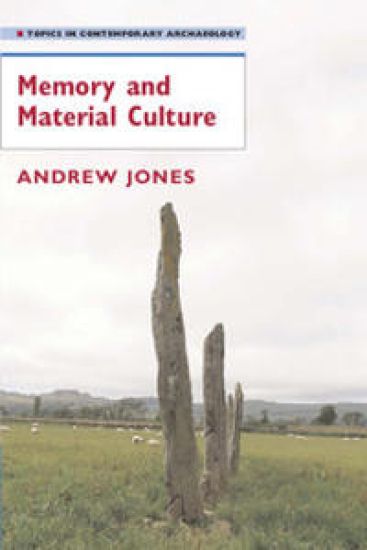
We take for granted the survival into the present of artifacts from the past. Indeed the discipline of archaeology would be impossible without the survival of such artifacts. What is the implication of the durability or ephemerality of past material culture for the reproduction of societies in the past? In this book, Andrew Jones argues that the material world offers a vital framework for the formation of collective memory. He uses the topic of memory to critique the treatment of artifacts as symbols by interpretative archaeologists and artifacts as units of information (or memes) by behavioral archaeologists, instead arguing for a treatment of artifacts as forms of mnemonic trace that have an impact on the senses. Using detailed case studies from prehistoric Europe, he further argues that archaeologists can study the relationship between mnemonic traces in the form of networks of reference in artifactual and architectural forms.
We take for granted the survival into the present of artifacts from the past. Indeed the discipline of archaeology would be impossible without the survival of such artifacts. What is the implication of the durability or ephemerality of past material culture for the reproduction of societies in the past? In this book, Andrew Jones argues that the material world offers a vital framework for the formation of collective memory. He uses the topic of memory to critique the treatment of artifacts as symbols by interpretative archaeologists and artifacts as units of information (or memes) by behavioral archaeologists, instead arguing for a treatment of artifacts as forms of mnemonic trace that have an impact on the senses. Using detailed case studies from prehistoric Europe, he further argues that archaeologists can study the relationship between mnemonic traces in the form of networks of reference in artifactual and architectural forms.
"Applied Econometrics for Health Economists" introduces readers to the appropriate econometric techniques for use with different forms of survey data, known collectively as microeconometrics. The book provides a complete illustration of the steps involved in doing microeconometric research. The only study to deal with practical analysis of qualitative and categorical variables, it also emphasises applied work, illustrating the use of relevant computer software applied to large-scale survey datasets. This is a comprehensive reference guide - it contains a glossary of terms, a technical appendix, software appendix, references, and suggestions for further reading. It is concise and easy to read - technical details are avoided in the main text and key terms are highlighted. It is essential reading for health economists as well as undergraduate and postgraduate students of health economics. "Given the extensive use of individual-level survey data in health economics, it is important to understand the econometric techniques available to applied researchers. Moreover, it is just as important to be aware of their limitations and pitfalls. The purpose of this book is to introduce readers to the appropriate econometric techniques for use with different forms of survey data - known collectively as microeconometrics." - Andrew Jones, in the Preface.
The Dictionary of Globalization provides a critical overview of the contemporary globalization debate, bringing together all the disparate elements of a vast and ever-growing literature. Framed by a lively introductory chapter which examines the emergence and propulsion of this concept into widespread usage, the dictionary comprises an A-Z of entries covering every major aspect of the globalization debate from 9/11 to Zapatistas, the World Bank to the World Social Forum. The entries, ranging from 100 to 500 words in length, are divided into three core categories: institutions and organizations processes and phenomena key thinkers Each entry is accompanied by a few carefully selected recommendations for further reading to help students deepen their understanding of the topic in question. The dictionary also concludes with a section of additional readings grouped around key themes such as economic, political and cultural globalization. Designed to facilitate the readers own critical engagement with the complex ideas behind different perspectives on globalization, the dictionary is an invaluable guide for students, researchers and policy-makers.
The Dictionary of Globalization provides a critical overview of the contemporary globalization debate, bringing together all the disparate elements of a vast and ever-growing literature. Framed by a lively introductory chapter which examines the emergence and propulsion of this concept into widespread usage, the dictionary comprises an A-Z of entries covering every major aspect of the globalization debate from 9/11 to Zapatistas, the World Bank to the World Social Forum. The entries, ranging from 100 to 500 words in length, are divided into three core categories: institutions and organizations processes and phenomena key thinkers Each entry is accompanied by a few carefully selected recommendations for further reading to help students deepen their understanding of the topic in question. The dictionary also concludes with a section of additional readings grouped around key themes such as economic, political and cultural globalization. Designed to facilitate the readers own critical engagement with the complex ideas behind different perspectives on globalization, the dictionary is an invaluable guide for students, researchers and policy-makers.
This pocket-sized informative travel guide is a companion to the principal Celtic sites in England, Scotland, Wales and Ireland. The stories of saints associated with the sites are given, as well as practical information, maps and other places of interest nearby.
Is archaeology an art or a science? This question has been hotly debated over the last few decades with the rise of archaeological science. At the same time, archaeologists have seen a change in the intellectual character of their discipline, as many writers have adopted approaches influenced by social theory. The discipline now encompasses both archaeological scientists and archaeological theorists, and discussion regarding the status of archaeology remains polarised. In this 2001 book, Andrew Jones argues that we need to analyse the practice of archaeology. Through an analysis of archaeological practice, influenced by recent developments in the field of science studies, and with the aid of extensive case studies, he develops a new framework which allows the interpretative and methodological components of the discipline to work in tandem. His reassessment of the status and character of archaeology will be of interest to students, scholars and professionals.
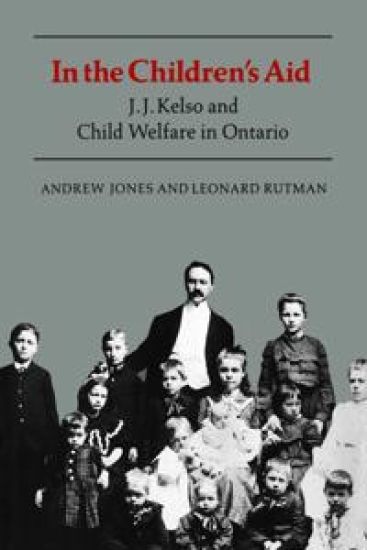
The present system of child welfare in Canada dates from 1893, the year in which the Ontario Legislature passed 'An Act for the Prevention of Cruelty to, and better Protection of, Children.' The Act provided for the establishment of Children's Aid Societies with extensive legal powers to intervene in cases of child neglect and cruelty, and gave officials sanction to the foster care system. These radical departures from earlier policy resulted from the actions of John Joseph Kelso, the man who was named as the first Superintendent of Neglected and Dependent Children – a position created by the same Act. At 29, Kelso was already one of Ontario's leading proponents of child welfare reform. He had earlier stimulated the formation of the Toronto Humane Society and subsequently guides its early growth. In 1888 he had formed the Children's Fresh Air Fund and the Santa Claus Fund, out of which, in 1891, he founded the Toronto Children's Aid Society. From 1893 to his retirement in 1934, Kelso directed and promoted the establishment and development of Children's Aid Societies in Ontario and played an important role in their spread to other provinces. In 1921 he was appointed administrator of Ontario's first Adoption Act and the Children of Unmarried Parents Act. His reform activities extended into the children's court movement, the closing of reformatories, organization of playgrounds, and advocacy of mothers' allowances. This biography provides an account of Kelso's life and career as a social reformer, and reveals him as the undisputed chief architect and builder of Ontario's welfare system. It will interest the academic and professionals as it traces the roots of social welfare services and the profession of social work, and the general reader interested in Canadian history and social reform.