Kirjojen hintavertailu. Mukana 12 390 323 kirjaa ja 12 kauppaa.

Kirjailija

Andrew Kohut

Kirjat ja teokset yhdessä paikassa: 2 kirjaa, julkaisuja vuosilta 2000-2007, suosituimpien joukossa The Diminishing Divide. Vertaile teosten hintoja ja tarkista saatavuus suomalaisista kirjakaupoista.

2 kirjaa

Kirjojen julkaisuhaarukka 2000-2007.

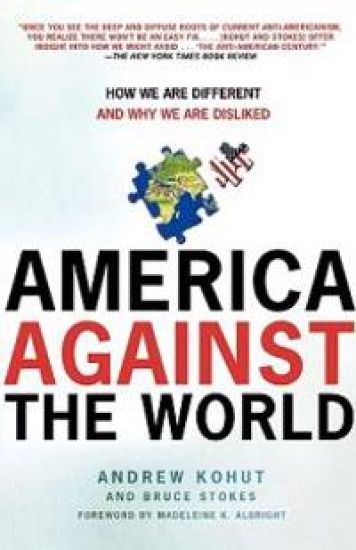
America Against the World: How We Are Different and Why We Are Disliked
"Once you see the deep and diffuse roots of current anti-Americanism, you realize there won't be an easy fix."--The New York Times Book Review The rise of anti-Americanism is the most pressing challenge facing us. In America Against the World, Pew Research Center president Andrew Kohut and Bruce Stokes consider the surprising findings of Pew's unprecedented survey of world opinion to understand why the world has turned against America: where once we were considered the champion of democracy, we are now seen as a militant hyperpower. The answer: Americans' go-it-alone attitudes have pushed the world away. From our business endeavors abroad to the Bush administration's preemptive war policy, exceptional individualism--in particular, our belief in personal responsibility and our unclouded optimism--have encouraged the world to view the United States as a bully and a threat. Former secretary of state Madeleine K. Albright argues in her foreword that we cannot stop the spread of anti-Americanism without truly understanding who we are. America Against the World provides the insights to take that step.
The Diminishing Divide

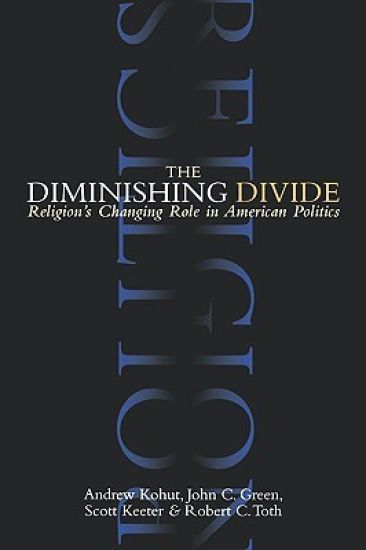
The Diminishing Divide

Andrew Kohut; John C. Green; Scott Keeter

Brookings Institution
2000
nidottu
"The First Amendment of the U.S. Constitution forbids the creation of an official state church, and we hear the phrase ""separation of church and state"" so frequently that it may surprise us to note that no such barrier exists between religion and politics. Religion is, and always has been, woven into the fabric of American political life. In the last two decades, however, the role of religion in politics has become more direct—almost a blunt, self-conscious force in the political process. The national consequences of this ""diminishing divide"" between religion and politics have brought new groups into politics, altered party coalitions, and influenced campaigns and election results. Churches and other religious institutions have become more actively engaged in the political process, and religious people have increased the level and broadened the range of their political participation. While the public is more accepting of the role of religion in shaping today's political landscape, the issue of how much political power certain religious groups enjoy continues to provoke concern.Drawing on extensive survey data from the Pew Research Center, the National Election Studies, and other sources, The Diminishing Divide illuminates the historical relationship between religion and politics in the United States and explores the ways in which religion will continue to alter the political landscape in the century before us. A historical overview of religion in U.S. politics sets the tone as the book examines the patchwork quilt of American religion and the changing role of religious institutions in American political life since the 1960s. The book explores the complex relations between religion and political attitudes, as well as that of religion and political behavior—particularly with respect to party affiliation and voting habits. Finally, The Diminishing Divide offers a look at the future. As candidates and elected officials increasingly air their personal faith in public places with apparent political intent, and as parishioners are marshaled into political action by clergy and political groups, the authors lay out the background against which religion's power in American political life will be played in the new century."