Kirjojen hintavertailu. Mukana 12 595 353 kirjaa ja 12 kauppaa.

Kirjailija

Andrew Lambert

Kirjat ja teokset yhdessä paikassa: 22 kirjaa, julkaisuja vuosilta 2001-2026, suosituimpien joukossa Nelson. Vertaile teosten hintoja ja tarkista saatavuus suomalaisista kirjakaupoista.

22 kirjaa

Kirjojen julkaisuhaarukka 2001-2026.

Nelson

Nelson

Andrew Lambert

Faber Faber
2005
pokkari
'Fascinating . . . Shot through with fresh insights . . . No previous biography has attempted anything so comprehensive.' ObserverNelson is a thrilling new appraisal of Horatio Nelson, the greatest practitioner of naval command the world has ever seen. It explores the professional, personal, intellectual and practical origins of one man's genius, to understand how the greatest warrior that Britain has ever produced transformed the art of conflict, and enabled his country to survive the challenge of total war and international isolation. In Nelson, Andrew Lambert - described by David Cannadine as 'the outstanding British naval historian of his generation' - is able to offer new insights into the individual quality which led Byron rightly to celebrate Nelson's genius as 'Britannia's God of War'. He demonstrates how Admiral Nelson elevated the business of naval warfare to the level of the sublime. Nelson's unique gift was to take that which other commanders found complex, and reduce it to simplicity. Where his predecessors and opponents saw a particular battle as an end in itself, Nelson was always a step ahead - even in the midst of terrifying, close-quarters action, with officers and men struck down all around him. 'Excellent . . . Worthy of the stirring events [it celebrates].' Independent
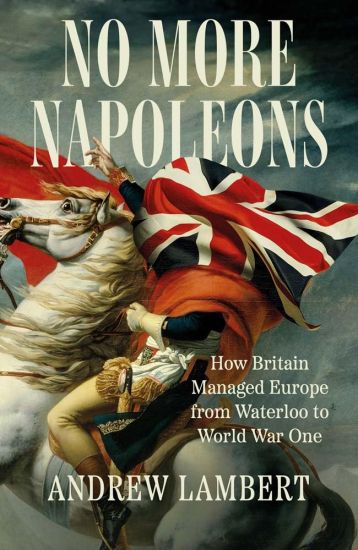
No More Napoleons

No More Napoleons

Andrew Lambert

YALE UNIVERSITY PRESS
2025
sidottu
How, for just over a century, Britain ensured it would not face another Napoleon Bonaparte—manipulating European powers while building a global maritime empire At the conclusion of the Napoleonic Wars, a fragile peace emerged in Europe. The continent’s borders were redrawn, and the French Empire, once a significant threat to British security, was for now cut down to size. But after decades of ceaseless conflict, Britain’s economy was beset by a crippling debt. How could this small, insular seapower state secure order across the Channel? Andrew Lambert argues for a dynamic new understanding of the nineteenth century, showing how British policymakers shaped a stable European system that it could balance from offshore. Through judicious deployment of naval power against continental forces, and the defence strategy of statesmen such as the Duke of Wellington, Britain ensured that no single European state could rise to pose a threat, rebuilt its economy, and established naval and trade dominance across the globe. This is the remarkable story of how Britain kept a whole continent in check—until the final collapse of this delicately balanced order at the outset of World War One.
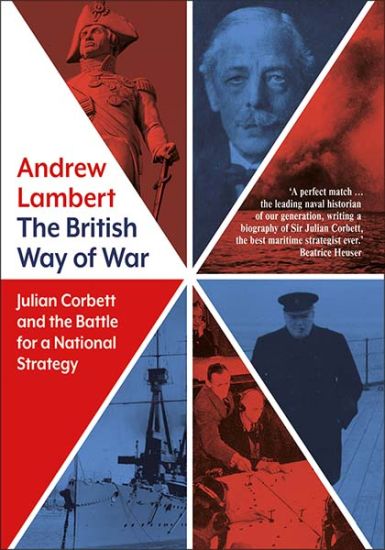
The British Way of War

The British Way of War

Andrew Lambert

Yale University Press
2021
sidottu
How a strategist's ideas were catastrophically ignored in 1914—but shaped Britain’s success in the Second World War and beyond Leading historian Andrew Lambert shows how, as a lawyer, civilian, and Liberal, Julian Corbett (1854–1922) brought a new level of logic, advocacy, and intellectual precision to the development of strategy. Corbett skillfully integrated classical strategic theory, British history, and emerging trends in technology, geopolitics, and conflict to prepare the British state for war. He emphasized that strategy is a unique national construct, rather than a set of universal principles, and recognized the importance of domestic social reform and the evolving British Commonwealth. Corbett's concept of a maritime strategy, dominated by the control of global communications and economic war, survived the debacle of 1914–18, when Britain used the German "way of war" at unprecedented cost in lives and resources. It proved critical in the Second World War, shaping Churchill’s conduct of the conflict from the Fall of France to D-Day. And as Lambert shows, Corbett’s ideas continue to influence British thinking.
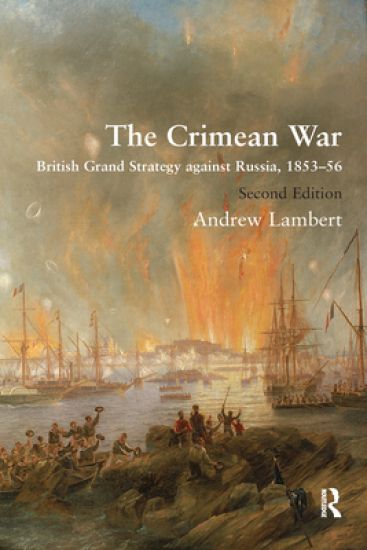
The Crimean War

The Crimean War

Andrew Lambert

Routledge
2020
nidottu
In contrast to every other book about the conflict Andrew Lambert's ground-breaking study The Crimean War: British Grand Strategy against Russia, 1853-1856 is neither an operational history of the armies in the Crimea, nor a study of the diplomacy of the conflict. The core concern is with grand strategy, the development and implementation of national policy and strategy. The key concepts are strategic, derived from the works of Carl von Clausewitz and Sir Julian Corbett, and the main focus is on naval, not military operations. This original approach rejected the 'Continentalist' orthodoxy that dominated contemporary writing about the history of war, reflecting an era when British security policy was dominated by Inner German Frontier, the British Army of the Rhine and Air Force Germany. Originally published in 1990 the book appeared just as the Cold War ended; the strategic landscape for Britain began shifting away from the continent, and new commitments were emerging that heralded a return to maritime strategy, as adumbrated in the defence policy papers of the 1990s. With a new introduction that contextualises the 1990 text and situates it in the developing historiography of the Crimean War the new edition makes this essential book available to a new generation of scholars.
Seapower States

Seapower States

Andrew Lambert

Yale University Press
2019
pokkari
One of the most eminent historians of our age investigates the extraordinary success of five small maritime states “A superb survey of the perennial opportunities and risks in what Herman Melville called ‘the watery part of the world.’”—William Anthony Hay, Wall Street Journal Andrew Lambert, author of The Challenge: Britain Against America in the Naval War of 1812—winner of the prestigious Anderson Medal—turns his attention to Athens, Carthage, Venice, the Dutch Republic, and Britain, examining how their identities as “seapowers” informed their actions and enabled them to achieve success disproportionate to their size. Lambert demonstrates how creating maritime identities made these states more dynamic, open, and inclusive than their lumbering continental rivals. Only when they forgot this aspect of their identity did these nations begin to decline. Recognizing that the United States and China are modern naval powers—rather than seapowers—is essential to understanding current affairs, as well as the long-term trends in world history. This volume is a highly original “big think” analysis of five states whose success—and eventual failure—is a subject of enduring interest, by a scholar at the top of his game.
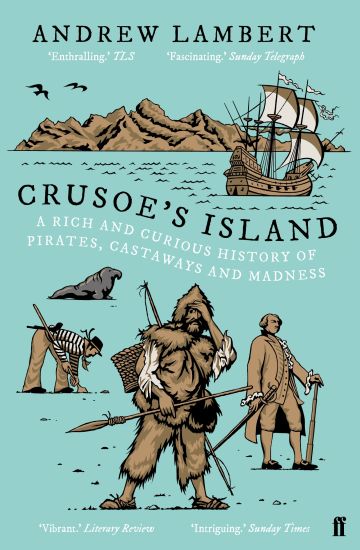
Crusoe's Island

Crusoe's Island

Andrew Lambert

Faber Faber
2017
nidottu
Originally named Juan Fernández, the island of Robinson Crusoe in the South Pacific was the inspiration for Defoe's classic novel about the adventures of a shipwrecked sailor. Yet the complex story of Britain's relationship with this distant, tiny island is more surprising, more colourful and considerably darker. Drawing on voyage accounts, journal entries, maps and illustrations, acclaimed historian Andrew Lambert brings to life the voices of the visiting sailors, scientists, writers and artists, from the early encounters of the 1500s and the perilous journeys of the eighteenth-century explorers, to the naval conflicts of the First World War and the environmental concerns of more recent years. Crusoe's Island explores why we are still not willing to give up on the specks of land at the far ends of the earth.
The Challenge

The Challenge

Andrew Lambert

Faber Faber
2013
pokkari
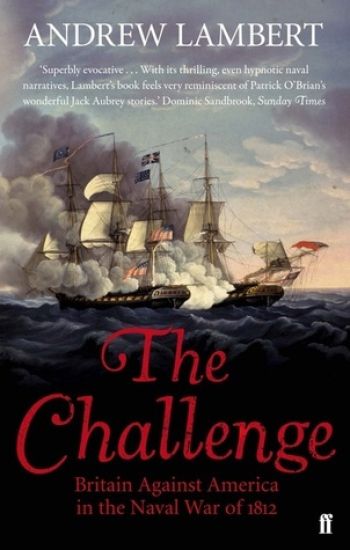
In the summer of 1812 Britain stood alone, fighting for her very survival against a vast European Empire. Only the Royal Navy stood between Napoleon's legions and ultimate victory. In that dark hour America saw its chance to challenge British dominance: her troops invaded Canada and American frigates attacked British merchant shipping, the lifeblood of British defence. War polarised America. The south and west wanted land, the north wanted peace and trade. But America had to choose between the oceans and the continent. Within weeks the land invasion had stalled, but American warships and privateers did rather better, and astonished the world by besting the Royal Navy in a series of battles. Then in three titanic single ship actions the challenge was decisively met. British frigates closed with the Chesapeake, the Essex and the President, flagship of American naval ambition. Both sides found new heroes but none could equal Captain Philip Broke, champion of history's greatest frigate battle, when HMS Shannon captured the USS Chesapeake in thirteen blood-soaked minutes. Broke's victory secured British control of the Atlantic, and within a year Washington, D.C. had been taken and burnt by British troops.
The Dreadnought and the Edwardian Age

The Dreadnought and the Edwardian Age

Andrew Lambert

Ashgate Publishing Limited
2011
sidottu
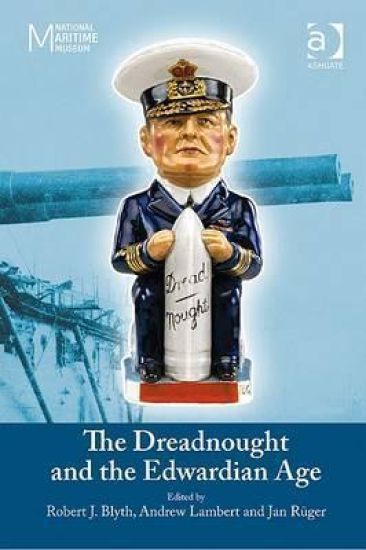
HMS Dreadnought (1906) is closely associated with the age of empire, the Anglo-German antagonism and the naval arms race before the First World War. Yet it was also linked with a range of other contexts - political and cultural, national and international - that were central to the Edwardian period. The chapters in this volume investigate these contexts and their intersection in this symbolically charged icon of the Edwardian age. In reassessing the most famous warship of the period, this collection not only considers the strategic and operational impact of this 'all big gun' battleship, but also explores the many meanings Dreadnought had in politics and culture, including national and imperial sentiment, gender relations and concepts of masculinity, public spectacle and images of technology, and ideas about modernity and decline. The volume brings together historians from different backgrounds, working on naval and technological history, politics and international relations, as well as culture and gender. This diverse approach to the subject ensures that the book offers a timely revision of the Dreadnought and the Edwardian Age.'
The Gates of Hell: Sir John Franklin's Tragic Quest for the North West Passage
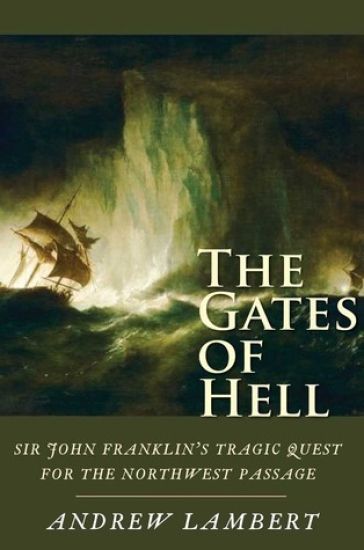
From one of our foremost naval historians, the compelling story of the doomed Arctic voyage of the HMS Erebus and the HMS Terror, commanded by Captain Sir John Franklin. Andrew Lambert, a leading authority on naval history, reexamines the life of Sir John Franklin and his final, doomed Arctic voyage. Franklin was a man of his time, fascinated, even obsessed with, the need to explore the world; he had already mapped nearly two-thirds of the northern coastline of North America when he undertook his third Arctic voyage in 1845, at the age of fifty-nine.His two ships were fitted with the latest equipment; steam engines enabled them to navigate the pack ice, and he and his crew had a three-year supply of preserved and tinned food and more than one thousand books. Despite these preparations, the voyage ended in catastrophe: the ships became imprisoned in the ice, and the men were wracked by disease and ultimately wiped out by hypothermia, scurvy, and cannibalism.Franklin's mission was ostensibly to find the elusive North West Passage, a viable sea route between Europe and Asia reputed to lie north of the American continent. Lambert shows for the first time that there were other scientific goals for the voyage and that the disaster can only be understood by reconsidering the original objectives of the mission. Franklin, commonly dismissed as a bumbling fool, emerges as a more important and impressive figure, in fact, a hero of navigational science.
Franklin

Franklin

Andrew Lambert

Faber Faber
2010
pokkari
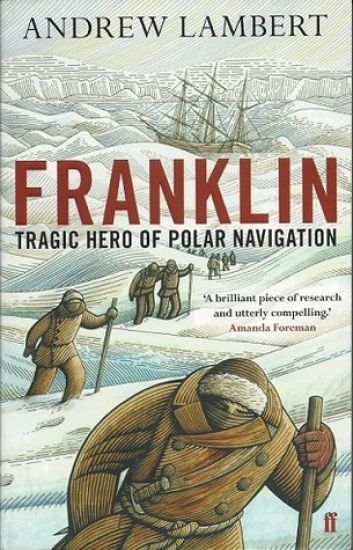
In 1845 Captain Sir John Franklin led a large, well equipped expedition to complete the conquest of the Canadian Arctic, to find the fabled North West Passage connecting the North Atlantic to the North Pacific. Yet Franklin, his ships and his men were fated never to return. The cause of their loss remains a mystery. In Franklin, Andrew Lambert presents a gripping account of the worst catastrophe in the history of British exploration, and the dark tales of cannibalism that surround the fate of those involved.Shocked by the disappearance of all 129 officers and men, and sickened by reports of cannibalism, the Victorians re-created Franklin as the brave Christian hero who laid down his life, and those of his men. Later generations have been more sceptical about Franklin and his supposed selfless devotion to duty. But does either view really explain why this outstanding scientific navigator found his ships trapped in pack ice seventy miles from magnetic north?In 2014 Canadian explorers discovered the remains of Franklin's ship. His story is now being brought to a whole new generation, and Andrew Lambert's book gives the best analysis of what really happened to the crew. In its incredible detail and its arresting narrative, Franklin re-examines the life and the evidence with Lambert's customary brilliance and authority. In this riveting story of the Arctic, he discovers a new Franklin: a character far more complex, and more truly heroic, than previous histories have allowed. '[A]nother brilliant piece of research combined with old-fashioned detective work . . . utterly compelling.' Dr Amanda Foreman
Admirals

Admirals

Andrew Lambert

Faber Faber
2009
pokkari
The true story of how Britain's maritime power helped gain this country unparalleled dominance of the world's economy, Admirals celebrates the rare talents of the men who shaped the most successful fighting force in world history. Told through the lives and battles of eleven of our most remarkable admirals - men such as James II and Robert Blake - Andrew Lambert's book stretches from the Spanish Armada to the Second World War, culminating with the spirit which led Andrew Browne Cunningham famously to declare, when the army feared he would lose too many ships, 'it takes three years to build a ship; it takes three centuries to build a tradition.'
Li Zehou and Twentieth-Century Chinese Philosophy: An Introduction to World Philosophies
This guide introduces the work of one of China's most creative philosophers, Li Zehou. Written at an introductory level, it covers the key components of Li's broader philosophical vision, providing an explanation of his influences, his philosophical innovations, and the critical reception of his work in both China and the West. Each chapter focuses on a central idea characterizing Li's work, from his debt to Marx in his construction of Chinese cultural identity theory and his discussion of the Book of Changes to his work on yin-yang theory, pragmatic reasoning and account of the historical evolution of conceptions of beauty. Together with a comprehensive bibliography and suggestions for further reading, each chapter includes a list of questions to guide classroom discussions. By making helpful and informative connections to more familiar thinkers and topics from American pragmatism and contemporary aesthetics, Li Zehou and Twentieth-Century Chinese Philosophy benefits anyone interested in understanding more about contemporary Chinese thought.
Li Zehou and Twentieth-Century Chinese Philosophy: An Introduction to World Philosophies
This guide introduces the work of one of China's most creative philosophers, Li Zehou. Written at an introductory level, it covers the key components of Li's broader philosophical vision, providing an explanation of his influences, his philosophical innovations, and the critical reception of his work in both China and the West. Each chapter focuses on a central idea characterizing Li's work, from his debt to Marx in his construction of Chinese cultural identity theory and his discussion of the Book of Changes to his work on yin-yang theory, pragmatic reasoning and account of the historical evolution of conceptions of beauty. Together with a comprehensive bibliography and suggestions for further reading, each chapter includes a list of questions to guide classroom discussions. By making helpful and informative connections to more familiar thinkers and topics from American pragmatism and contemporary aesthetics, Li Zehou and Twentieth-Century Chinese Philosophy benefits anyone interested in understanding more about contemporary Chinese thought.
British Naval Intelligence through the Twentieth Century

British Naval Intelligence through the Twentieth Century

Andrew Boyd; Andrew Lambert

PEN SWORD BOOKS LTD
2025
nidottu
When published in 2020 it offered the first comprehensive account of how intelligence influenced and sustained British naval power from the mid nineteenth century through to the end of the Cold War. The book describes why and how intelligence was collected and assesses its real impact on policy and operations. It confirms that naval intelligence was critical to Britain's survival and ultimate victory in the two World Wars but significantly reappraises its role, highlighting the importance of communications intelligence to an effective blockade in the First, and according Ultra less dominance compared to other sources in the Second. It reveals that coverage of Germany before 1914 and of the three Axis powers in the interwar period was more comprehensive and effective than previously suggested; and while British power declined rapidly after 1945, the book shows how intelligence helped the Royal Navy to remain a significant global force for the rest of the twentieth century, and in submarine warfare, especially in the second half of the Cold War. This compelling history of naval intelligence, now in a new and revised paperback edition, will appeal to a wide body of naval historians and enthusiasts interested in the crucial part it played on naval policy and operations. **WINNER** of the Mountbatten Maritime Literary Award, 2021 **Highly Commended** by the Society for Nautical Research in their award for the 2021 Anderson Medal . Named as the Naval Review’s **Book of the Quarter.** '**British Naval Intelligence** is an unprecendented and important addition to our knowledge.' Professor Gwythian Prins 'An original and masterful history of British naval intelligence. Remarkably valuable, and in many ways the definitive, addition to the serious study of naval history.' Captain Stephen Maffeo 'A remarkable book which for the first time puts intelligence in its place and tells us what happened and why. For any modern naval officer, gives a systematic picture of naval warfare in a way not done by anybody else.' Rear Admiral James Goldrick
HMS Pickle

HMS Pickle

Peter Hore; Andrew Lambert

THE HISTORY PRESS LTD
2024
pokkari
The curiously named HMS Pickle was the second-smallest British ship in Nelson’s fleet at the Battle of Trafalgar. She acquired enduring fame, however, as the ship that carried Lord Collingwood’s dispatch announcing the death, in the midst of battle, of Nelson.A topsail schooner and deemed too small to take part in the line of battle, Pickle and ships like it were essential in the transmission of communication. Relaying messages between admiral and Admiralty, the rapid movement of these ships pioneered an early worldwide web of information that helped secure a British victory over Napoleon.In this revised and updated edition, Captain Peter Hore describes the Pickle’s beginnings as a civilian vessel, her arming for naval use and the pivotal role she played in Admiral Cornwallis’s inshore squadron keeping watch over the French and Spanish. This full and captivating history narrates a colourful story of one small ship and the courage and resolution of her determined crew.
The Channel Islands in Anglo-French Relations, 1689-1918

The Channel Islands in Anglo-French Relations, 1689-1918

Colin Partridge; Jean de Préneuf; Andrew Lambert

BOYDELL BREWER LTD
2024
sidottu
Examines how the Channel Islands have been crucial to Britain's successful maritime superiority in the English Channel. The Channel Islands have played a key role in both naval warfare and Anglo-French diplomacy, but this has not always been highlighted sufficiently even though Britain and France were at war for most of the period 1689-1815. This book considers a wide range of maritime subjects where the role of the Channel Islands has been significant, such as intelligence gathering, piracy and privateering, and naval strategy and control of the Channel. It also examines topics in relation to the Channel Islands specifically, such as surveying and hydrography, fortifications, trade and Channel Islands societies. It charts changes over time, including the impact of technological changes, from the wars of Louis XIV and William III, through the many Anglo-French wars of the eighteenth and early nineteenth centuries, and includes planning for wars which were anticipated but avoided. Throughout the issues are discussed from the perspectives of Britain, France and the Channel Islands themselves, equal weight being given to all three perspectives. Andrew Lambert is Professor of War Studies at King's College, London and one of Britain's foremost maritime and naval historians. Colin Partridge is a former consultant to the States of Guernsey's 'Fortress Guernsey' programme for the restoration and interpretation of Guernsey's fortifications. Jean de Préneuf is a Senior Lecturer at the University of Lille and Head of the Research, Teaching and Studies Unit at the Historical Branch of the French Ministry of Defence at Vincennes.
Favourite of Fortune

Favourite of Fortune

Andrew Bond; Frank Cowin; Andrew Lambert

PEN SWORD BOOKS LTD
2023
nidottu
The Royal Navy of Nelson's time was not short of heroes, nor of outstanding achievements, but even in this crowded field the career of Captain John Quilliam stands out - so often the right man in the right place at the right time, he was justly described by a contemporary as 'a favourite of fortune'. Born on the Isle of Man 250 years ago, Quilliam has until now evaded detailed study of his extraordinary life. Indeed, while celebrated as a Manx hero, in the wider world beyond the Island one of the most important men on the quarter deck of HMS Victory at the Battle of Trafalgar remains largely unrecognised. Trafalgar, however, was not even the high point of Quilliam's professional journey. From the lowest rung of the ladder in the dockyard at Portsmouth he climbed to become Victory's First Lieutenant, having already survived two of the bloodiest sea-battles of the era at Camperdown and Copenhagen. In the process he won a share in undreamed of wealth through the seizure of one of the largest hauls of Spanish gold ever taken by the Georgian navy. Promoted Post-Captain, Quilliam reached the apogee of his profession, commanding frigates in the Baltic and on the Newfoundland station in the War of 1812. There, in a bizarre twist worthy of a novel by O'Brian or Forester, he defeated an accusation of shirking an engagement with the American super-frigate President in a Court Martial brought by his own First Lieutenant. This first full biography of a far-from-ordinary naval officer is itself an unusual collaboration between three writers, each interested in different aspects of Quilliam's career, but united by a belief that it deserves a wider audience.
Sea Eagles of Empire

Sea Eagles of Empire

Simon Elliott; Andrew Lambert

THE HISTORY PRESS LTD
2022
pokkari
Winner of Military History Monthly’s 2017 Book of the Year AwardThe Classis Britannica was the Roman regional fleet controlling and protecting the waters around the British Isles – in other words, Britain’s first-ever navy.For over 200 years it played a key role in the northern frontiers of the Roman Empire: it helped to establish the province of Britannia and assisted in Roman military campaigns, as well as controlling the continental coast through to the Rhine Delta. Outside of war, the Classis Britannica also offered vital support for the civilian infrastructure of Roman Britain, assisting in administration, carrying out major building and engineering projects, and running industry. Later, its mysterious disappearance in the mid-third century ad would contribute to Britain finally leaving the Empire 150 years later. In Sea Eagles of Empire, acclaimed historian Simon Elliott tells its story for the very first time.