Kirjojen hintavertailu. Mukana 12 390 323 kirjaa ja 12 kauppaa.

Kirjailija

Andrew Lawson

Kirjat ja teokset yhdessä paikassa: 7 kirjaa, julkaisuja vuosilta 2006-2024, suosituimpien joukossa Downwardly Mobile. Vertaile teosten hintoja ja tarkista saatavuus suomalaisista kirjakaupoista.

7 kirjaa

Kirjojen julkaisuhaarukka 2006-2024.

Gardening with Colour at Coton Manor

Gardening with Colour at Coton Manor

Susie Pasley-Tyler; Andrew Lawson

Gemini Books Group Ltd
2024
sidottu
Voted 'The Nation's Favourite Garden' in 2019 by garden visitors in conjunction with English Garden magazine and the National Gardens Scheme, featured in the 2022 Channel 5 series on 'Great British Gardens', and described by Country Life as a 'Symphony of colour where flamingos mix with flowers', the garden at Coton Manor, in Northamptonshire, is a dream and a joy - and the passion of owner and hands-on gardener Susie Pasley-Tyler. In this book, Susie Pasley-Tyler charts how her love of gardening was born at Coton and imparts what she has learned over the past thirty years of developing its many and varied sites, the discoveries that have come to her, the mistakes she has made (and how they were repaired), and above all the sheer delight to be gained from gardening. Andrew Lawson, pre-eminent garden photographer and colour guru, says, 'Susie Pasley-Tyler's passion for her garden is infectious. Perhaps there should be a health warning that this book will make you want to follow her example, and think again about your own garden.' Experienced and novice gardeners alike will be encouraged and enlightened by Susie Pasley-Tyler's account of being at the helm of one of the finest gardens in England.
Shared Visions Shared Lives

Shared Visions Shared Lives

Andrew Lawson; Briony Lawson

Impress
2017
sidottu
Marking a celebratory exhibition in 2017 at Gothic House, their family home in Charlbury, Oxfordshire, this book brings together highlights of sculptures and paintings by Briony and Andrew Lawson. Over the last half-century, these two artists have been inspired by their surroundings to produce a dynamic and varied body of work. Their shared passion for the North Devon landscape is infused throughout much of their work. Briony Lawson has been sculpting in wood, stone and clay since her days as a student at City & Guilds Art School in London. Her prolific body of work draws on natural and organic subjects, often pared down to the most simple and elemental forms. Known worldwide as a garden photographer, Andrew Lawson was trained as a painter. His painting has always informed the eye behind the camera. This book surveys Andrew's work from his early school posters and from his student days at Oxford, to his subsequent paintings that draw inspiration from his favoured woodland and sea landscapes of Devon.
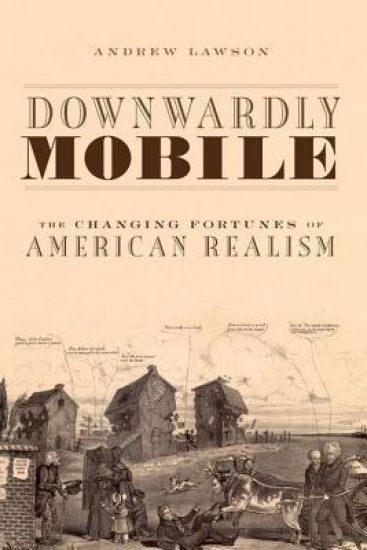
Downwardly Mobile

Downwardly Mobile

Andrew Lawson

Oxford University Press Inc
2014
nidottu
In the unstable economy of the nineteenth-century, few Americans could feel secure. Paper money made values less tangible, while a series of financial manias, panics, and depressions clouded everyday life with uncertainty and risk. In this groundbreaking study, Andrew Lawson traces the origins of American realism to a new structure of feeling: the desire of embattled and aspiring middle class for a more solid and durable reality. The story begins with New England authors Susan Warner and Rose Terry Cooke, whose gentry-class families became insolvent in the wake of the 1837 Panic, and moves to the western frontier, where the early careers of Rebecca Harding Davis and William Dean Howells were shaped by a constant struggle for social position and financial security. We see how the pull of downward social mobility affected even the outwardly successful, bourgeois family of Henry James in New York, while the drought-stricken wheat fields of Iowa and South Dakota produced the most militant American realist, Hamlin Garland. For these writers, realism offered to stabilize an uncertain world by capturing it with a new sharpness and accuracy. It also revealed a new cast of social actors-factory workers, slaves, farm laborers, the disabled, and the homeless, all victims of an unregulated market. Combining economic history and literary analysis to powerful effect, Downwardly Mobile shows how the fluctuating fortunes of the American middle class forced the emergence of a new kind of literature, while posing difficult political choices about how the middle class might remedy its precarious condition.
Anatomy for Anaesthetists

Anatomy for Anaesthetists

Harold Ellis; Andrew Lawson

John Wiley Sons Inc
2013
sidottu
Jubilee edition of the classic text first published in 1963 Anaesthetists require a particularly specialized knowledge of anatomy The anaesthetist must know intimately the respiratory passages, the major veins and the peripheral nerves to deliver safe and effective pain control. As one of the great teachers of anatomy, Professor Harold Ellis is eminently qualified to elegantly provide the anatomical detail required of anaesthetists. Modern approaches to practice, including the use of imaging to guide anaesthetic practice, add further depth to the fine full-colour anatomical illustrations. Designed for anaesthetists, Anatomy for Anaesthetists covers: • The Respiratory Pathway, Lungs, Thoracic Wall and Diaphragm • The Heart and Great Veins of the Neck • The Peripheral Nerves • The Autonomic Nervous System • The Cranial Nerves • The Anatomy of Pain Clinical Notes throughout provide the clinical context for the anatomical detail. Designed for trainees, but of continuing relevance to practicing anaesthetists, and now in its Golden Jubilee edition, Anatomy for Anaesthetists provides a central pillar of anaesthetic knowledge.
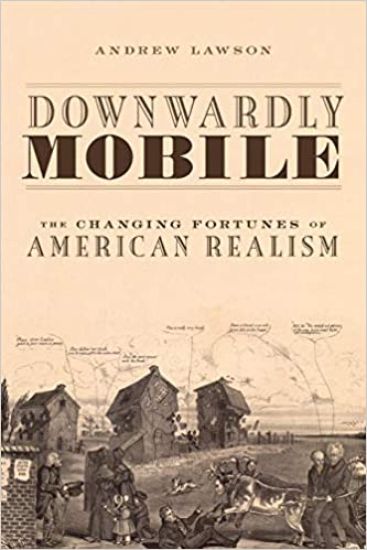
Downwardly Mobile

Downwardly Mobile

Andrew Lawson

Oxford University Press Inc
2012
sidottu
Downwardly Mobile explores the links between a growing sense of economic precariousness within the American middle class and the development of literary realism over the course of the nineteenth century by Rose Terry Cooke, Rebecca Harding Davis, William Dean Howells, Henry James, and Hamlin Garland. The book argues that, in each of these writers, the opacity and abstraction of social relationships in an expanding market economy combined with a sense of pervasive insecurity to produce a "hunger for the real" - a commitment to a mimetic literature capable of stabilizing the social world by capturing it with a new sharpness and accuracy. The book relocates the origins of literary realism in the antebellum period and a structure of feeling based in the residual household economy which prized the virtues of the local, the particular, and the concrete, against the alienating abstractions of the emerging market. In a parallel line of argument, the book explores the ways in which sympathetic identification with lower-class figures served to locate American realist authors in a confused and shifting social space.
Dream Gardens: 100 Inspirational Gardens

Dream Gardens: 100 Inspirational Gardens

Andrew Lawson; Tania Compton

Merrell Publishers Ltd
2009
nidottu
The perfect companion to Merrell's bestselling Dream Homes and More Dream Homes, Dream Gardens is a stylish sourcebook of 100 modern and contemporary gardens from around the world. Now available in paperback for the first time, this critically acclaimed volume presents an array of wonderful locations and garden-design ideas, from small, sophisticated, minimalist city gardens to large, richly planted gardens in breathtaking rural locations. Each garden is beautifully photographed to show all its key features and essential details, while concise descriptions explore the aims and achievements of some of today's most influential garden designers. With full captions identifying the plants depicted, Dream Gardens is a valuable source of information and inspiration.
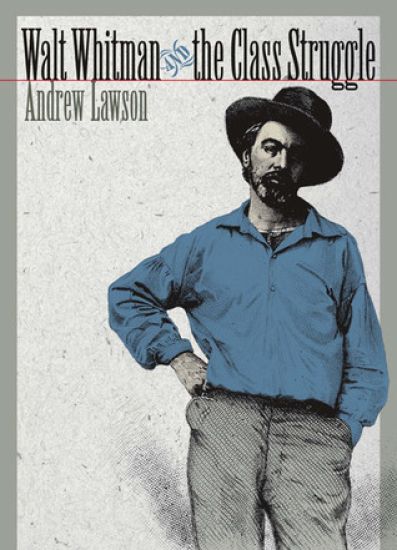
Walt Whitman and the Class Struggle

Walt Whitman and the Class Struggle

Andrew Lawson

University of Iowa Press
2006
sidottu
By reconsidering Whitman not as the proletarian voice of American diversity, but as a historically specific poet with roots in the antebellum lower middle class, Andrew Lawson in ""Walt Whitman and the Class Struggle"" defines the tensions and ambiguities about culture, class, and politics that underlie his poetry. Drawing on a wealth of primary sources from across the range of antebellum print culture, Lawson uses close readings of ""Leaves of Grass"" to reveal Whitman as an artisan and an autodidact ambivalently balanced between his sense of the injustice of class privilege and his desire for distinction. Consciously drawing upon the languages of both the elite culture above him and the vernacular culture below him, Whitman constructed a kind of middle linguistic register that attempted to filter these conflicting strata and defuse their tensions: ""You shall not look through my eyes either, nor take things from me, / You shall listen to all sides and filter them from yourself."" By exploring Whitman's internal struggle with the contradictions and tensions of his class identity, Lawson locates the source of his poetic innovation. By revealing a class-conscious and conflicted Whitman, he realigns our understanding of the poet's political identity and distinctive use of language, and thus valuably alters our perspective on his poetry.